This article contains affiliate links: if you buy through them we may earn a commission, at no extra cost to you. Read our affiliate disclosure.
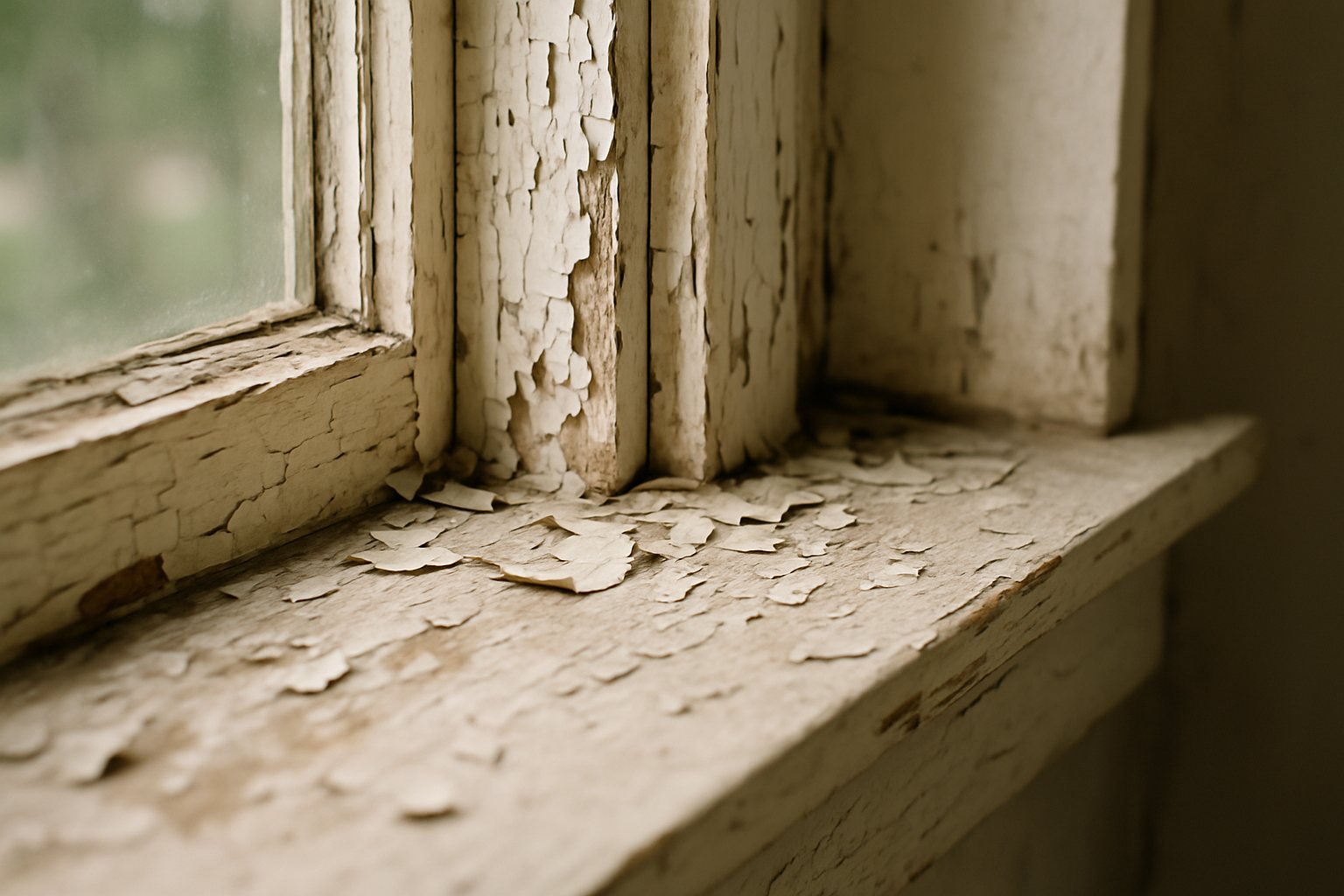
Lead paint is dangerous when it turns into chips or dust that people, especially young children, swallow or breathe. Intact lead paint in good condition is usually not an immediate problem, according to EPA, but paint that is peeling, rubbed by friction, knocked by doors or disturbed during renovation can create lead dust you can’t see. This guide explains when lead paint becomes a hazard under EPA and HUD definitions, who is most at risk, and the sensible next steps, without guessing about anyone’s health.
In short: homes built before 1978 may have lead-based paint; EPA estimates about three-quarters of them still contain some. Paint in good shape is usually not a hazard. It becomes one when it is deteriorating (peeling, chipping, chalking, cracking), when it sits on friction or impact surfaces such as windows, doors and stairs, when a child can chew it, or when sanding, scraping or demolition turn it into dust. Young children are the main concern. If you think there’s a problem, get the home tested by a certified professional and talk to your child’s doctor or your local health department.
Lead paint was banned for homes in 1978. Source: EPA
Why lead paint is still in so many homes
Lead-based paint was banned for residential use in 1978, as CDC notes, so the risk is concentrated in older housing. The older the home, the more likely it is to contain it. EPA gives these estimates for homes likely to have lead-based paint:
| Year built | Homes likely to have lead-based paint (EPA) |
|---|---|
| Before 1940 | 87% |
| 1940 to 1959 | 69% |
| 1960 to 1977 | 24% |
| 1978 and later | Lead-based paint banned for residential use |
CDC adds that about 29 million housing units have lead-based paint hazards, about 2.6 million of them homes with young children. Having lead paint somewhere in the house is not the same as having a hazard, though, and that distinction drives everything that follows.
Intact paint vs a lead paint hazard
EPA’s plain-language guidance says that if lead-based paint is in good shape, it is usually not a problem, and that deteriorating lead-based paint is a hazard that needs prompt attention. Federal rules put more detail on that. Under EPA’s hazard standards (40 CFR 745.65), these count as paint-lead hazards:
| Condition | What it means | Typical places |
|---|---|---|
| Deteriorated paint | Lead-based paint that is peeling, chipping, chalking or cracking, or otherwise damaged or separated from its surface | Anywhere inside or outside, including porches and siding |
| Friction surface | Lead-based paint on a surface subject to abrasion, where nearby dust tests show a dust-lead hazard | Some windows, floors, stairs |
| Impact surface | Damaged lead-based paint on a surface hit by repeated sudden force from a related part | Parts of door frames |
| Chewable surface | Lead-based painted surface a young child can mouth, with evidence of teeth marks | Surfaces within a young child’s reach, such as sills or railings |
For these rules, “lead-based paint” means paint with at least 1.0 milligram of lead per square centimeter, or 0.5 percent by weight. Paint below that level can still contain some lead; it just isn’t regulated as lead-based paint.
Why windows and doors matter so much
Every time an old window slides up and down or a door rubs its frame, a little paint is ground into fine dust. EPA notes that worn lead paint on surfaces with constant friction, such as doors and window sills, can produce chips and dust, and CDC lists windows, doors, floors, porches, stairways and cabinets as common places for lead dust. Settled dust can get back into the air when you sweep, vacuum or walk through, according to EPA. So a house can have a dust problem even when the walls look fine.
Lead dust and soil
EPA treats dust and bare soil as their own hazards. For dust, a 2024 EPA rule changed the standard: from January 12, 2026, any reportable level of lead in floor or window sill dust wipes, as analyzed by an EPA-recognized lab, counts as a dust-lead hazard, replacing the old 10 and 100 micrograms per square foot thresholds. EPA’s separate dust-lead action levels, at which it recommends abatement, are 5 micrograms per square foot on floors, 40 on window sills and 100 on window troughs. For soil, bare soil with 400 parts per million of lead or more in a play area, or an average of 1,200 ppm in the rest of the yard, is a soil-lead hazard. Our guides to lead dust testing and lead in soil testing explain how these are measured.
Renovation: the fastest way to make lead paint dangerous
Paint that has sat quietly under newer coats for decades can become a hazard in an afternoon. EPA warns that renovation or repair work may create large amounts of lead dust, and that even small dusty projects can pose risks to your family. CDC lists sanding, cutting and replacing windows among the common activities that create hazardous lead dust, and advises keeping children and pregnant women away from housing being renovated.
That’s why EPA requires contractors working on pre-1978 homes to be lead-safe certified and to follow specific work practices, and why some methods are off-limits, such as open-flame burning of painted surfaces. If you are planning work, read lead-safe renovation and the EPA RRP rule before anyone picks up a sander. If you want the paint gone or sealed for good, see lead paint removal, lead paint encapsulation and lead abatement.
Who is most at risk
- Young children. EPA calls young children the main concern because they crawl, play on floors and put fingers, toys and other objects in their mouths. CDC says children younger than 6 are more likely to be exposed because of hand-to-mouth behavior, and that no safe blood lead level in children has been identified.
- Pregnancy. The EPA/HUD disclosure fact sheet notes that if a pregnant person is exposed to lead, the developing baby can be exposed too, and the federal Lead Warning Statement names pregnant women as a group at particular risk.
- People doing the work. EPA notes that workers doing demolition, renovation and repair can be exposed and can carry lead dust home on clothes and tools.
For what lead exposure can do to health and how it is checked, see lead and health, lead and children and blood lead test. Those pages summarize CDC and other official sources; they don’t replace a doctor.
Signs that lead paint in your home may be a hazard
You can’t see lead, so these are only reasons to test, not proof of anything:
- The home was built before 1978, or you don’t know when.
- Paint is peeling, chipping, cracking or chalky (a white powder comes off on your hand).
- Old windows stick or leave paint flakes or dust in the sill or trough.
- You see teeth marks on painted sills or railings.
- There has been recent sanding, scraping, demolition or window replacement without lead-safe precautions.
- Exterior paint is flaking onto bare soil where children play.
What to do next
These steps come from CDC and EPA guidance. They reduce exposure while you get answers; they are not a fix for lead paint.
- Don’t disturb it. No dry sanding, scraping or heat until you know whether it’s lead-based paint and have a lead-safe plan.
- Keep children away from damaged paint. CDC advises making sure children can’t reach peeling paint or chewable surfaces painted with lead-based paint.
- Clean the wet way. CDC recommends regularly wet-mopping floors and wiping horizontal surfaces, since household dust can be a major source of lead, and washing children’s hands often.
- Get the home tested. A certified inspector can tell you where lead-based paint is; a certified risk assessor can tell you whether there are hazards now, including dust and soil. CDC suggests asking your state or local health department about testing paint and dust. Start with our lead paint testing hub and how to test for lead paint, then find certified people through find a lead professional.
- Talk to a doctor if you are worried about exposure. CDC says a blood lead test is the best way to find out if a child has been exposed, and to contact your child’s healthcare provider if you think your child has been exposed. Your local health department can help too.
- Renting? Tell your landlord in writing about deteriorating paint and contact your local health department. Before you signed, the landlord should have given you a lead disclosure; see lead paint disclosure.
For questions about lead in the home, the National Lead Information Center answers at 1-800-424-LEAD (5323). If someone may have swallowed paint chips or another lead-containing item, call Poison Control at 1-800-222-1222. In an emergency, call 911.
Home screening kits: useful, with limits
A swab test can give you a quick first look at a painted surface, but it is not a lab result and not a risk assessment. EPA recognizes three swab kits (LeadCheck, D-Lead and the Massachusetts kit), and only for tests done by certified renovators or trained professionals, and only to show that regulated lead-based paint is not present. LeadCheck and D-Lead are recognized for wood, ferrous metal, drywall and plaster; the Massachusetts kit for drywall and plaster only. Swabs also say nothing about dust on your floors. A mail-in lab kit analyzes a sample you collect. Compare them in home lead test vs lab testing and best lead paint test kits. These were in stock on Amazon when checked in October 2026:
LeadCheck Swabs, Instant Lead Test, 2 Swab Pack
- Seller says pink or red tip means lead
- For painted wood, metal, drywall per listing
- About $15, seen October 2026
Schneider Labs Lead Test Kit: Paint, Dust or Soil
- One sample of paint, dust or soil
- Results within 5 business days of arrival (seller)
- About $35, seen October 2026
Is lead paint dangerous? Common questions
Is lead paint dangerous if it’s painted over?
Intact paint under newer coats is usually not an immediate hazard, per EPA. It can become one if the top coats fail, if it is on a window or door that rubs, or if someone sands, scrapes or demolishes it. Ordinary paint is not the same as encapsulation; see lead paint encapsulation.
Is it dangerous to touch lead paint?
The main exposure routes official sources describe are swallowing chips or dust and breathing in dust. Touching paint leaves dust on hands that can then reach the mouth, which is why CDC stresses regular handwashing for children. Wash your hands after handling old painted items.
Is lead paint dangerous to adults?
Young children are the main concern, but adults can be exposed too, especially during renovation work, and exposure during pregnancy can reach the baby. If you have concerns about your own exposure, talk to your doctor.
Is peeling lead paint outside dangerous?
Yes, it can be. Deteriorated exterior paint counts as a hazard under EPA’s standards, and flakes can contaminate the soil around the house where children play.
How do I know if my paint has lead?
Only testing tells you. A certified inspector using an XRF analyzer or lab analysis of paint chips gives a reliable answer; home swabs are a screening tool. Start with how to test for lead paint.
Worried someone has been exposed to lead?
Testing your home finds the source; only a blood lead test shows whether a person has lead in their body. Here is how to get tested, and what the numbers mean.
How to test for lead poisoningBlood lead levels explainedLead screening for childrenTesting for adultsSymptoms
Leave a Reply