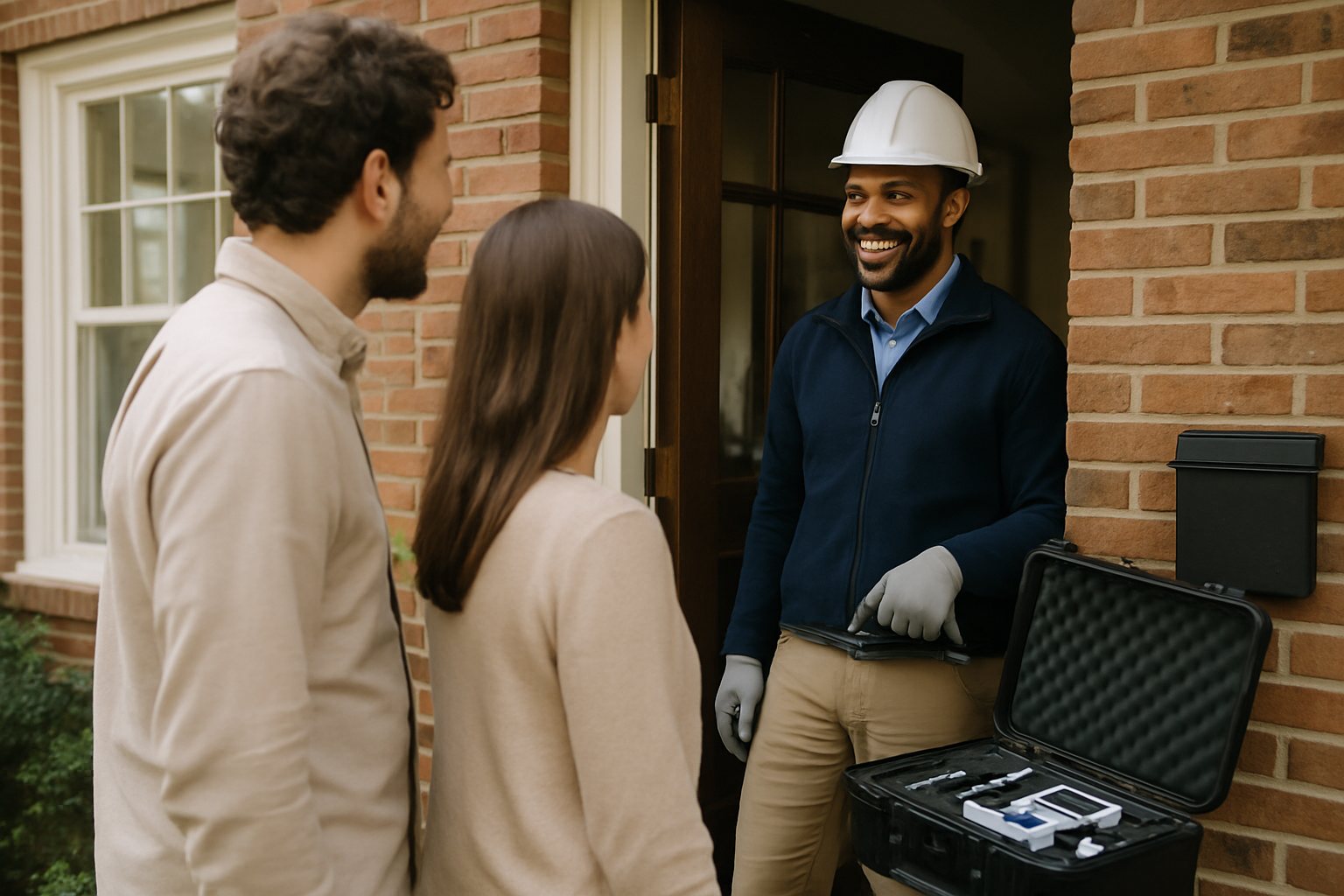
To find lead testing near you, first decide which kind of professional you need: a certified lead inspector or risk assessor to test a home, a lead-safe certified renovation firm for repairs, a certified abatement contractor to remove lead hazards for good, or a certified lab for water, dust or soil. Then check their certification on EPA’s or your state’s official list. This page explains each role, how certification works, and what to ask before you hire.
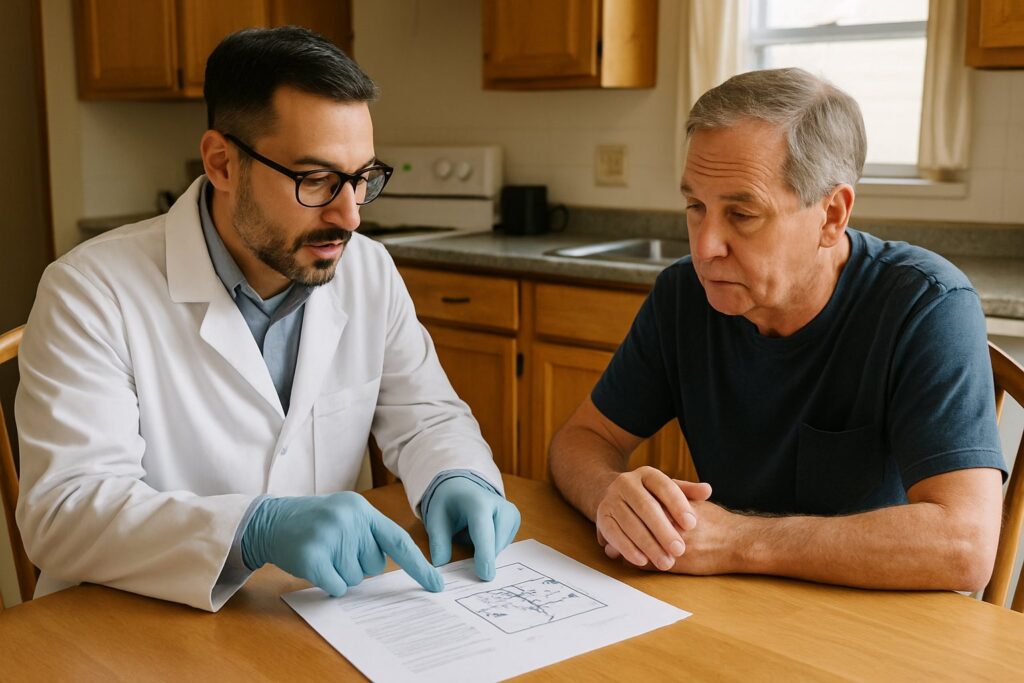
In short: for homes built before 1978, inspections, risk assessments and abatement must be done by certified people and firms, and paid renovation work that disturbs paint must be done by a lead-safe certified firm. EPA runs these programs in some states, and EPA-authorized state programs run them in others, and the two programs (abatement and renovation) have different lists of states. Use EPA’s firm locator or your state’s list, ask to see the certificate, and get a written report. LeadDetector is building its own directory of verified providers; until it opens, you can request help and we will point you in the right direction.
Which lead professional do you need?
| Professional | What they do | Hire them when |
|---|---|---|
| Lead inspector | Surface-by-surface check for lead-based paint and where it is | Buying, renting or planning to renovate an older home |
| Risk assessor | Finds lead hazards in paint, dust and soil, and suggests ways to control them | Children live there, a child has a high blood lead result, or you want to know what is dangerous now |
| Lead-safe certified renovation firm (RRP) | Renovation, repair and painting using lead-safe work practices | Any paid job that disturbs paint in a pre-1978 home or child care facility |
| Abatement contractor | Permanently removes, encloses or seals lead-based paint hazards | A risk assessment or a health or housing agency calls for abatement |
| Certified water lab | Analyzes drinking water samples for lead | You want a lab number for your tap water |
| Accredited lead lab (NLLAP) | Analyzes paint chips, dust wipes and soil | You or your inspector need lab results for those samples |
Inspector or risk assessor?
EPA draws a clear line. An inspection tells you whether a home has lead-based paint and where it is, surface by surface; it can be done only by a certified inspector or risk assessor. A risk assessment finds the presence, type, severity and location of lead hazards, including hazards in paint, dust and soil, and suggests ways to control them; only a certified risk assessor can do it. You can also order both together. Either way, you should get a written report. Our guides to lead paint inspection and how to choose a lead inspector go deeper.
Renovation firm or abatement contractor?
The two jobs can look alike, but EPA treats them as separate programs with separate certifications. Abatement is designed to permanently address existing lead-based paint hazards, by removing, sealing or enclosing the paint; painting over it with regular paint does not count. It may be ordered by a state or local government, for example after a child is found with lead poisoning, or done voluntarily. Renovation, repair and painting (RRP) is ordinary contracting work that happens to disturb paint, such as replacing windows or sanding. It is not designed to remove lead hazards, so the RRP rule is about doing the work without creating new ones. See lead abatement and lead-safe renovation (RRP).
Labs for water, dust and soil
For drinking water, EPA encourages people who want their water tested to contact a state-certified drinking water laboratory, and publishes links to each state’s lab certification program. For paint chips, dust wipes and soil, EPA keeps a list of labs recognized under its National Lead Laboratory Accreditation Program (NLLAP). More in lead water testing and lead dust and soil testing.
How certification works: EPA or your state
Federal law sets the rules, but EPA can authorize a state, tribe or territory to run its own program instead. Where a state is authorized, it trains, certifies and lists the professionals, and its own rules apply (they must be at least as protective as EPA’s). Where it is not, EPA does this directly. The catch is that inspection and abatement fall under one program and renovation under another, and the state lists are different.
| Program | Who it covers | Where EPA runs it | Everywhere else |
|---|---|---|---|
| Lead-Based Paint Activities | Inspectors, risk assessors, abatement supervisors and workers, project designers, and their firms | Alaska, Arizona, Florida, Idaho, Montana, Nevada, New Mexico, New York, South Carolina, South Dakota, Wyoming, American Samoa, Guam, Northern Mariana Islands, US Virgin Islands and most tribal lands | All other states run EPA-authorized programs, as do the Cherokee Nation, Upper Sioux Community, Lower Sioux Indian Community and the Minnesota Chippewa Tribe (Bois Forte) |
| Renovation, Repair and Painting (RRP) | Renovation firms and certified renovators, dust sampling technicians | Most states, tribes and territories | Alabama, Delaware, Georgia, Iowa, Kansas, Massachusetts, Mississippi, North Carolina, Oklahoma, Oregon, Rhode Island, Utah, Vermont, Washington, Wisconsin and the Minnesota Chippewa Tribe (Bois Forte) run their own |
So in California, for example, inspectors and abatement contractors are certified by the state, while renovation firms hold EPA lead-safe certification. In New York, EPA runs both. EPA notes that a firm working in more than one state may need both EPA and state certification. Both individuals and firms must be certified: under RRP, every firm, even a one-person business, needs firm certification, and EPA firm certifications last five years.
How to look up a certified professional
- EPA’s firm locator. EPA’s lead firm location search finds lead-safe certified renovation firms, and in EPA-run states, certified inspection, risk assessment and abatement firms.
- Your state’s list. If your state runs its own program, its health or environment agency keeps the list. EPA links to every authorized program from its pages on lead abatement and evaluation and RRP firm certification.
- Labs. Use EPA’s NLLAP list for paint, dust and soil, and EPA’s state drinking water lab certification contacts for water.
- Ask by phone. EPA’s National Lead Information Center, 1-800-424-LEAD (5323), can help you find a risk assessor or an accredited lab. Your local health department may also know local providers.
What to ask before you hire
- Which certification do you hold, and from whom? Ask for the certificate number for both the person and the firm, and check it on the EPA or state list. Make sure it matches the job: an RRP certificate is not an abatement or inspection certificate.
- Is this an inspection, a risk assessment or both? Ask what each will tell you and which one fits your goal.
- How will you test? XRF readings, paint chips, dust wipes, soil samples or water, and which accredited lab will analyze them.
- What will the written report include, and when will I get it?
- For renovation: who is the certified renovator on the job? EPA requires firms to give pre-renovation education, including the lead pamphlet, before work starts.
- For abatement: how will the work area be contained, and how will dust testing after the job show it meets EPA’s dust-lead action levels?
- Insurance, references and a written estimate, as with any contractor.
If a child in your home has a high blood lead result, your local health department may already be involved and may arrange or recommend a risk assessment. Health questions belong with your doctor; see lead poisoning for what the CDC says and who to call.
Our directory of verified lead professionals
Our directory lists certified lead professionals and labs copied from official public lists, with the source and the date we checked each one. It starts with EPA’s lab list and three states, and more states will follow. We never rank anyone or charge to be listed.
For other states, look up a firm on EPA’s firm locator or your state’s lead program, or tell us what you need and where, and we will help you find the right kind of certified professional. If you are a certified provider, you can ask to be listed.
Worried someone has been exposed to lead?
Testing your home finds the source; only a blood lead test shows whether a person has lead in their body. Here is how to get tested, and what the numbers mean.
How to test for lead poisoningBlood lead levels explainedLead screening for childrenTesting for adultsSymptoms
Frequently asked questions
How do I find lead testing near me?
Use EPA’s firm locator or your state’s certified list for inspectors and risk assessors, EPA’s NLLAP list for paint, dust and soil labs, and your state’s certified drinking water labs for water.
What is the difference between a lead inspection and a risk assessment?
An inspection finds where lead-based paint is. A risk assessment finds lead hazards in paint, dust and soil and suggests how to control them. Only certified risk assessors can do risk assessments.
Does my painter need lead certification?
Yes, if they are paid to disturb paint in a home or child care facility built before 1978. EPA requires the firm to be lead-safe certified, even a sole proprietor.
Is a lead-safe certified renovator an abatement contractor?
No. EPA treats abatement and RRP as separate programs with different certifications. Abatement requires abatement certification.
Does LeadDetector do inspections?
No. We explain testing and connect people with certified professionals and labs. Our verified directory is being built; you can request help now.