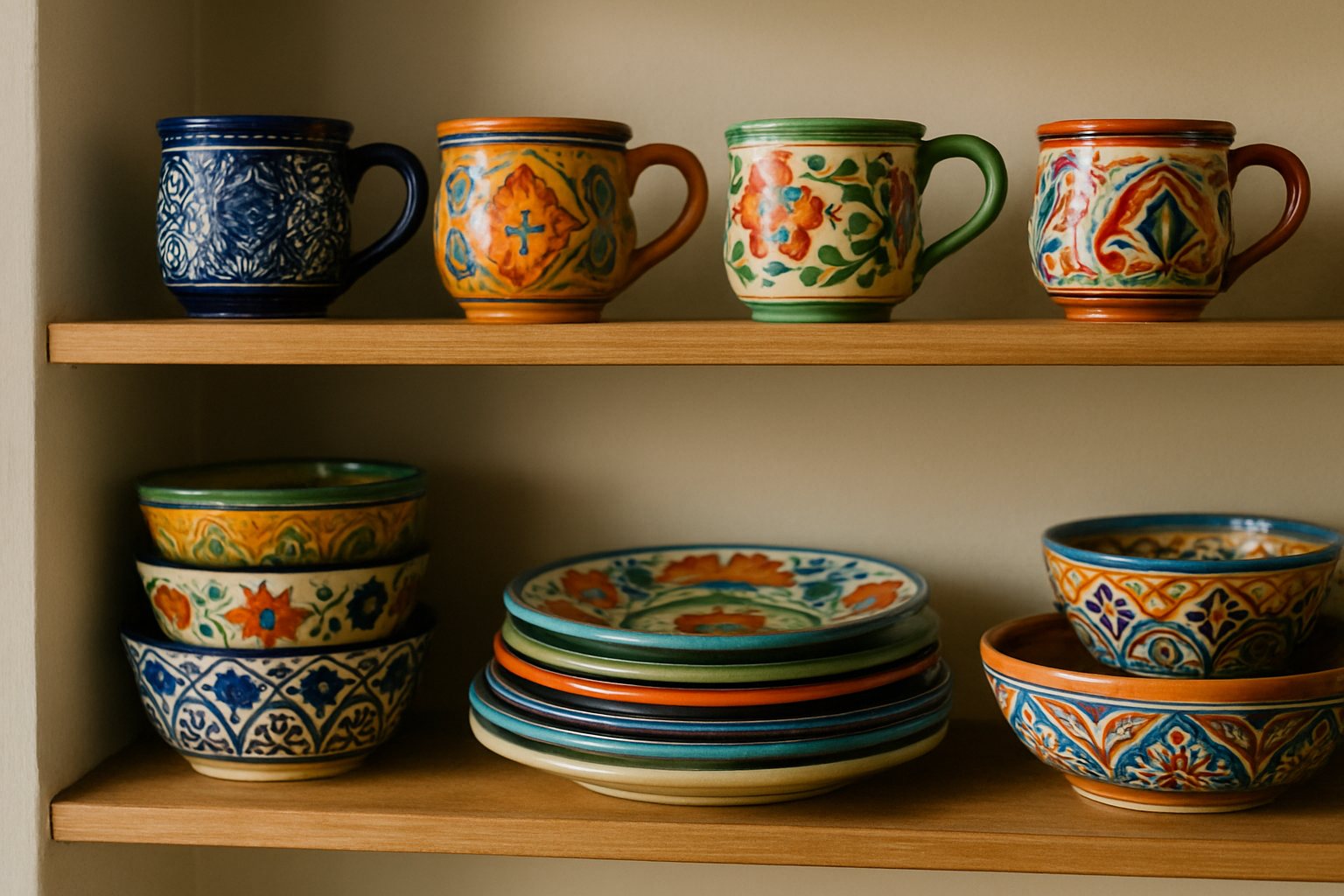
Lead can turn up in everyday things around the house: glazed dishes and pottery, some imported spices and cosmetics, older painted furniture, certain toys and jewelry, and some cookware. The good news is that most of these risks have clear warning signs, and federal agencies publish alerts and recalls you can check in minutes. This page walks through the common household items, what the FDA and the Consumer Product Safety Commission (CPSC) say about each, and how testing an item actually works.

In short: the household items most often named in federal lead alerts are traditional or old glazed pottery, ground cinnamon and other spices on FDA recall lists, kohl and similar eye cosmetics, some imported aluminum and brass cookware, and children’s products that break CPSC’s lead limits. Before testing anything, check the FDA and CPSC recall lists. Home swabs can flag lead on a surface but have no EPA recognition for dishes, toys or jewelry, so a lab is the way to get a real number. If someone may have been exposed, talk to a doctor; see lead poisoning.
Items to know about, at a glance
| Item | Why lead can be there | Who regulates it | Our guide |
|---|---|---|---|
| Pottery, ceramic dishes | Lead glazes that were not fired properly, or kiln residue | FDA | Pottery and dishes |
| Cinnamon and other spices | Contamination, sometimes deliberate adulteration | FDA | Cinnamon and spices |
| Kohl, kajal, surma | Lead compounds used as the pigment | FDA | This page |
| Toys, children’s jewelry | Lead paint, lead in metal parts | CPSC | Toys and jewelry |
| Insulated tumblers | Lead in a sealing pellet under the base cap | Maker statements | Stanley cups |
| Imported cookware | Aluminum and brass alloys that can leach lead | FDA | This page |
| Old painted furniture, antiques | Paint made before the 1978 ban | CPSC (new items) | This page |
Ceramics, dishes and pottery
The FDA explains that lead glaze is not automatically a problem: when pottery is fired at the right temperature for the right time, the lead is bound into the glaze. Trouble starts when it is not fired properly, and the lead can then get into food. The FDA has also received reports of traditional pottery labeled “lead free” that still released lead, possibly because it was fired in old kilns once used for lead glazes.
The FDA asks people to be cautious with pottery that is handmade with a crude or uneven shape, antique, damaged or heavily worn, bought from flea markets or street vendors, or brightly decorated in orange, red or yellow. Pieces marked “Not for Food Use” are decorative only. The FDA also says no amount of washing or boiling removes lead from pottery. Factory-made everyday dishes are much less likely to have problems, according to the same FDA page. More in our guide to lead in pottery and dishes.
Spices and cinnamon
Spices became a big lead story in late 2023, when the FDA investigated cinnamon applesauce pouches linked to children with high blood lead levels and traced the lead to the cinnamon. Since July 30, 2024, the FDA has kept a running public health alert on ground cinnamon products with elevated lead. Its latest update, on September 28, 2026, added another recalled brand, and the alert’s table now lists 21 brands with lead results from about 2 to 10.7 parts per million.
The FDA’s advice is to stop using and throw away the listed products, check your kitchen because ground spices last a long time, and talk to a healthcare provider if you think you were exposed. Because the list changes, read the current table on the FDA page rather than a copy. Our guide to lead in cinnamon and spices keeps track of what the FDA has published.
Cosmetics, kohl and traditional products
The FDA calls kohl, kajal, al-kahal, surma, tiro, tozali and kwalli illegal color additives in the US, and says lead, usually as lead sulfide, can make up more than half the weight of some kohl products. They are still brought in, for example in personal luggage. The FDA advises stopping use right away and asking a healthcare provider about testing children, and pregnant or nursing women, who have used them. Some eyeliners use the word “kohl” only for the shade, so check the ingredient list.
For ordinary cosmetics, the FDA reports that over 99% of lip products and externally applied cosmetics it looked at on the US market were below its recommended maximum of 10 ppm lead. EPA keeps a searchable list of agency fact sheets on heavy metals in cultural products, including religious powders, traditional medicines, spices and cookware, in many languages.
Toys and jewelry
Two federal limits apply here. The CPSC bans children’s products with more than 100 ppm lead in any accessible part, and a separate rule (16 CFR 1303) bans paint with more than 0.009% lead (90 ppm) on toys and other children’s articles and on furniture for consumer use. Used children’s products are mostly excluded from the 100 ppm rule, but the CPSC names children’s metal jewelry as an exception. Older toys, hand-me-downs and adult costume jewelry that a child chews on are the cases to think about. See lead in toys and jewelry.
Antiques and painted furniture
Lead paint for consumer use was banned in 1978, so cribs, chairs, dressers and toy chests painted before then may carry it. Chipping, peeling or chewed paint is the concern, because it turns into chips and dust a child can swallow. If you plan to strip or sand an old piece, test it first, and remember that sanding lead paint creates exactly the dust you want to avoid. Our lead paint testing hub covers swabs, lab paint-chip tests and inspections.
Tumblers, cups and cookware
Stanley 1913 says on its FAQ that it seals the vacuum insulation at the base of its products with an industry-standard pellet that includes lead, covered by a stainless steel layer, and that no lead is on any surface that touches you or your drink. It also says a product whose base cap comes off in ordinary use and exposes the seal is eligible for its Lifetime Warranty. Other insulated bottles may use a similar seal; ask the maker. Details in lead in Stanley cups.
Cookware is a separate issue. In August 2025 the FDA warned against certain imported aluminum, brass and aluminum-alloy cookware (sold as Hindalium, Hindolium, Indalium or Indolium) that may leach lead into food, and added more products in December 2025. The FDA says not to use the listed items and to throw them away rather than donate them.
How testing household items works
Testing an item is not the same as testing a wall. Here is what each method can and cannot tell you:
- Home swabs. The FDA notes that swab kits are sold for pottery: you rub the food surface and the swab changes color if lead comes off. But EPA’s recognition of swab kits covers paint on wood, ferrous metal, drywall and plaster only, and only for reliably showing a negative result. No kit is EPA-recognized for ceramics, toys, jewelry or spices, so treat a swab on those items as a rough screen, not a verdict. Our lead test kits hub explains the kits.
- Lab analysis. A lab can measure lead content or, for dishes, how much lead leaches out. The CPSC accepts specific methods for children’s products, including XRF (X-ray fluorescence) for some uniform materials and paint, and wet chemistry. Its list of CPSC-accepted labs is public; these labs mostly serve manufacturers, so ask before sending a personal item.
- Spices and food. There is no reliable home test. Rely on the FDA alert and recall lists.
How to check recalls
- Food, spices, cookware, cosmetics: search the FDA’s recalls, market withdrawals and safety alerts by brand, and read the current ground cinnamon alert.
- Toys, jewelry, furniture and other consumer products: search CPSC recalls, which can be filtered by hazard and category, and sign up for recall emails there.
- Report a problem: report an unsafe consumer product at SaferProducts.gov, and food or cosmetic problems to the FDA.
- Check the maker. For items with no recall, the maker’s own statement or test report is the next best source.
If a child has been eating from suspect dishes, using a recalled product, or chewing a painted or metal item, the FDA’s and CDC’s advice is the same: talk to a healthcare provider about a blood lead test. For a possible poisoning, call Poison Control at 1-800-222-1222.
Worried someone has been exposed to lead?
Testing your home finds the source; only a blood lead test shows whether a person has lead in their body. Here is how to get tested, and what the numbers mean.
How to test for lead poisoningBlood lead levels explainedLead screening for childrenTesting for adultsSymptoms
Frequently asked questions
Can I wash lead out of a dish or pot?
No. The FDA says no amount of washing, boiling or other process removes lead from pottery. If you cannot verify a piece, the FDA suggests not using it for food or drink.
Will a lead swab work on a mug or a toy?
It can show a color change, but EPA has recognized swab kits only for paint on wood, ferrous metal, drywall and plaster. For dishes, toys and jewelry, a lab test gives a real number.
Which cinnamon brands have lead?
The FDA’s ground cinnamon alert lists them with lot codes and dates, and it was last updated September 28, 2026. Check the FDA table itself, since brands are added over time.
What is the lead limit for children’s toys?
The CPSC limit is 100 ppm total lead in accessible parts of children’s products, and paint on toys and children’s articles may not contain more than 90 ppm (0.009%) lead.
Is kohl legal in the US?
No. The FDA identifies kohl, kajal, surma and similar products as illegal color additives because they are not approved and often contain high levels of lead.