This article contains affiliate links: if you buy through them we may earn a commission, at no extra cost to you. Read our affiliate disclosure.
A water filter removes lead only if it is certified for lead reduction: look for NSF/ANSI 53 with a lead claim for pitcher, faucet and under-sink filters, or NSF/ANSI 58 with a lead claim for reverse osmosis. A filter certified only to NSF/ANSI 42 is tested for taste, odor and particles, not lead.
In short: EPA and CDC both advise a certified filter when your water may contain lead. Certified filters are tested with water containing 150 parts per billion (ppb) of lead and must bring it to 5 ppb or less. Check the exact model on the certifier’s online listing, change the cartridge on schedule, and run only cold water through it. A filter protects you while you test your water and work on the source, such as a lead service line; it does not fix the pipes.
Which certifications mean lead reduction
| Standard | What it covers | Lead? |
|---|---|---|
| NSF/ANSI 53 | Health-related contaminants in filters such as pitchers, faucet mounts, refrigerator and under-sink carbon filters | Yes, when lead reduction is listed as a claim |
| NSF/ANSI 58 | Reverse osmosis systems | Yes, when lead reduction is listed as a claim |
| NSF/ANSI 42 | Aesthetic effects such as chlorine taste and odor, and particulate reduction | No |
The words “NSF certified” on a box are not enough on their own, because a product can be truthfully certified to NSF/ANSI 42 and do nothing for lead. EPA’s consumer guide explains that certifiers require their mark plus a statement of testing against NSF/ANSI 53 along with a claim of lead reduction. EPA also suggests looking for NSF/ANSI 42 Class I particulate reduction on the same filter. CDC gives the same advice: NSF/ANSI 53 for lead, and 42 for particulates.
NSF, the standards body, says it lowered the lead pass mark for NSF/ANSI 53 and 58 to 5 ppb. In the test, the filter is challenged with water containing 150 ppb of lead, ten times EPA’s current 15 ppb action level.
Types of lead water filters
| Type | How it works | Good to know |
|---|---|---|
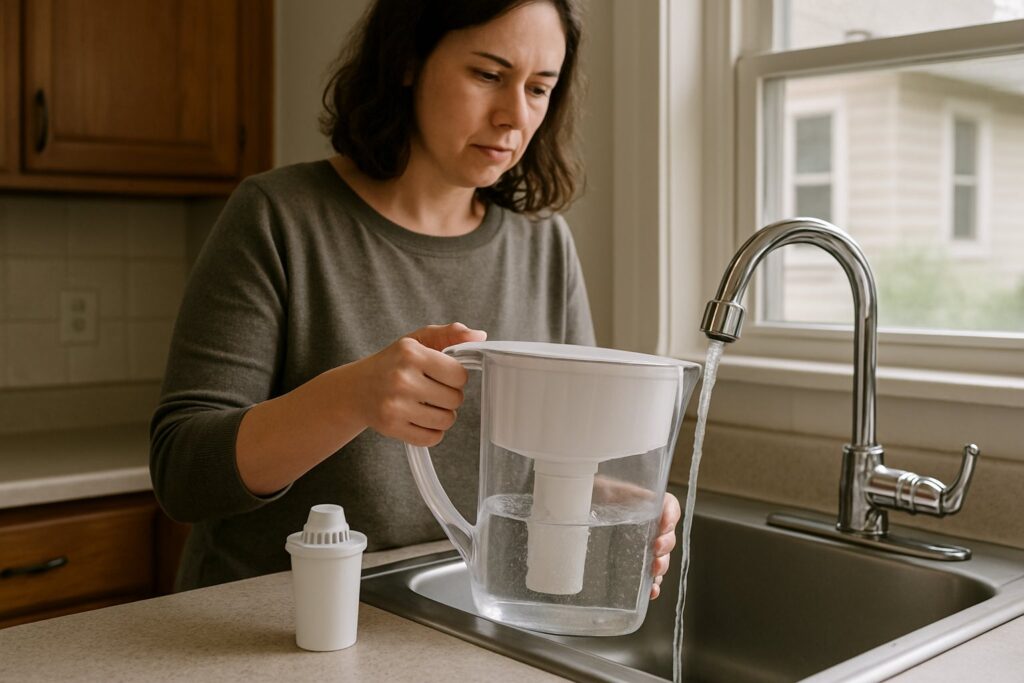
| Pitcher or dispenser | Water drips through a cartridge into the jug | No installation; slow; certification is often for a specific pitcher plus cartridge pairing |
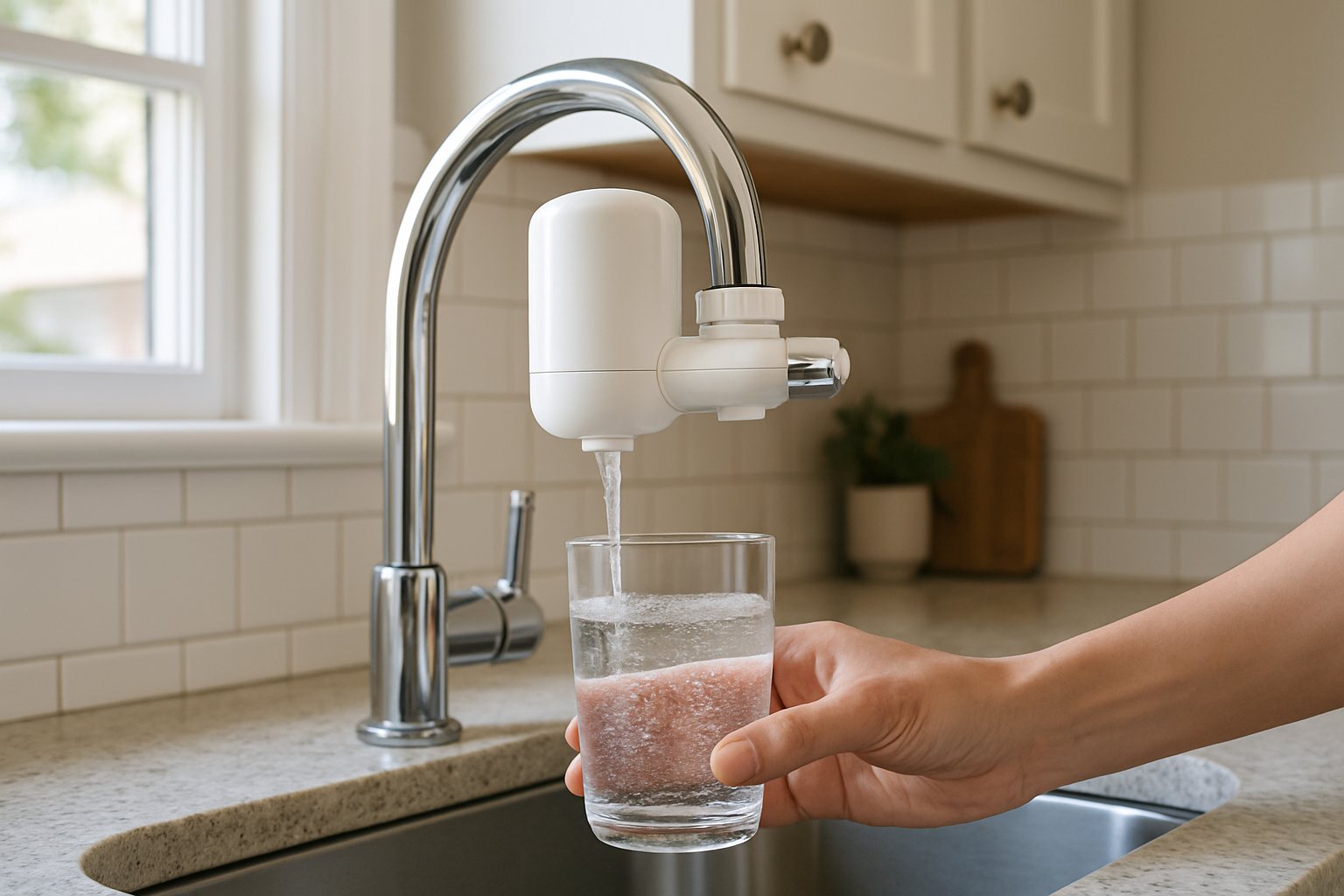
| Faucet mount | Clips onto the faucet with a switch for filtered water | Fast and cheap; usually needs a faucet with an external aerator, not pull-out sprayers |
| Under-sink (carbon) | Cartridge under the sink feeding the main faucet or a separate tap | Out of sight; needs installing; check the listing for the exact model and cartridge |
| Reverse osmosis (RO) | Membrane plus pre- and post-filters, usually with its own faucet and a tank | Look for NSF/ANSI 58 with a lead claim; more parts to install and maintain |
| Refrigerator filter | Cartridge inside the fridge for water and ice | Some are certified for lead, many are not; check the exact cartridge |
For our picks by type, see best water filters for lead.
How to verify a filter’s lead certification
- Find the certification mark on the box, the filter or the smallest package. EPA lists five ANSI-accredited certifiers: NSF, IAPMO R&T, WQA, UL Solutions and CSA.
- Read the text beside the mark. It should mention NSF/ANSI 53 (or 58 for RO) and a lead reduction claim.
- Check the performance data sheet. It sits inside the package or on the maker’s website and lists lead, the 150 ppb challenge and the 5 ppb maximum.
- Look up the exact model in the certifier’s online listing, for example NSF’s at info.nsf.org/Certified/DWTU/, WQA’s at find.wqa.org, or IAPMO’s at pld.iapmo.org. Match both the housing and the cartridge model numbers.
Be careful with look-alike replacement cartridges. A cheaper cartridge that “fits” a brand-name pitcher or faucet may not carry the same certification, and the maker’s certification applies to its own cartridge.
Replacement schedules
A lead certification holds only for the gallons the cartridge is rated for. EPA says to install and replace filters according to the directions. Makers rate their own cartridges, for example:
- PUR PLUS faucet filter (RF-9999): up to 100 gallons or about 3 months of regular use, per PUR; NSF’s listing also shows 100 gallons.
- Brita Elite pitcher filter (OB06): 120 gallons or about 6 months, per Brita; NSF’s listing shows 120 gallons.
Heavy use shortens the time, so a household that drinks and cooks only with filtered water may hit the gallon limit before the month count. Use the change indicator if your filter has one, and write the start date on the housing if it does not.
If your home has a lead service line
Where a lead service line exists, EPA says it is typically the largest source of lead in the water. EPA and CDC advice for these homes comes down to a few habits:
- Use a filter certified to reduce lead for drinking, cooking and baby formula, and do not run hot water through it.
- Use only cold water for drinking and cooking. Boiling does not remove lead.
- Flush water that has been sitting, by running the tap or doing laundry or dishes first. Ask your utility how long, since it depends on whether you have a lead line.
- Clean faucet aerators regularly, and be alert to construction that may disturb lead lines.
Under the Lead and Copper Rule Improvements, which take effect November 1, 2027, water systems must give each affected unit a certified pitcher or point-of-use filter plus six months of cartridges after replacing a lead service line, and after some work that disturbs one. They must also offer a follow-up lead test 3 to 6 months later. See lead service line replacement for how programs work.
A filter is not a substitute for knowing your numbers. Test before and after with a certified lab; see lead in water testing. If you are worried about exposure, talk to a doctor or your health department about a blood lead test (lead and health).
Certified lead filters you can buy
We checked each of these on NSF’s certified listings for NSF/ANSI 53 lead reduction, and all were in stock on Amazon when checked in October 2026. The PUR faucet systems fit most faucets with a visible external aerator, not pull-out or handheld faucets. The Brita Elite cartridge appears on NSF’s listing paired with Brita’s Tidal and Pacifica pitchers; Brita also states WQA certification.
PUR PLUS Horizontal Faucet Mount Filtration System
- Model PFM400H on NSF's lead reduction listing
- Includes 1 RF-9999 filter, 100 gallons
- About $33, seen October 2026
PUR PLUS Faucet Filter RF-9999, 2-Pack
- RF-9999 on NSF's lead reduction listing
- 100 gallons or about 3 months each
- About $28, seen October 2026
Brita Elite Replacement Filter, 1 Pack
- OB06 on NSF's lead listing with Tidal and Pacifica pitchers
- 120 gallons or about 6 months
- About $20, seen October 2026
Lead water filter FAQ
Do all Brita and PUR filters remove lead?
No. Each brand sells cartridges with different certifications. Check that the exact cartridge, and the pitcher or housing it goes in, is certified to NSF/ANSI 53 for lead.
Does NSF/ANSI 42 mean a filter removes lead?
No. NSF/ANSI 42 covers taste, odor and particles. Lead reduction is certified under NSF/ANSI 53, or NSF/ANSI 58 for reverse osmosis.
Do I need a whole-house filter for lead?
EPA’s advice centers on the water you drink and cook with, using certified point-of-use or pitcher filters. Lead can also come from faucets and plumbing after a whole-house unit, which is one reason filters at the tap are the usual advice.
Can I use a lead filter with hot water?
No. EPA says not to run hot water through these filters. Filter cold water and heat it afterwards.
How do I know my lead filter is still working?
You cannot tell by taste. Replace the cartridge at the rated gallons or months, whichever comes first, and use genuine cartridges listed for lead. If you want proof, have a certified lab test filtered water.
Should I filter water for baby formula?
EPA advises using only cold water for drinking, cooking and baby formula, and CDC notes that infants drink a lot of water for their size. If your water may contain lead, use filtered cold water certified for lead reduction, and ask your pediatrician about formula and testing.
Worried someone has been exposed to lead?
Testing your home finds the source; only a blood lead test shows whether a person has lead in their body. Here is how to get tested, and what the numbers mean.
How to test for lead poisoningBlood lead levels explainedLead screening for childrenTesting for adultsSymptoms