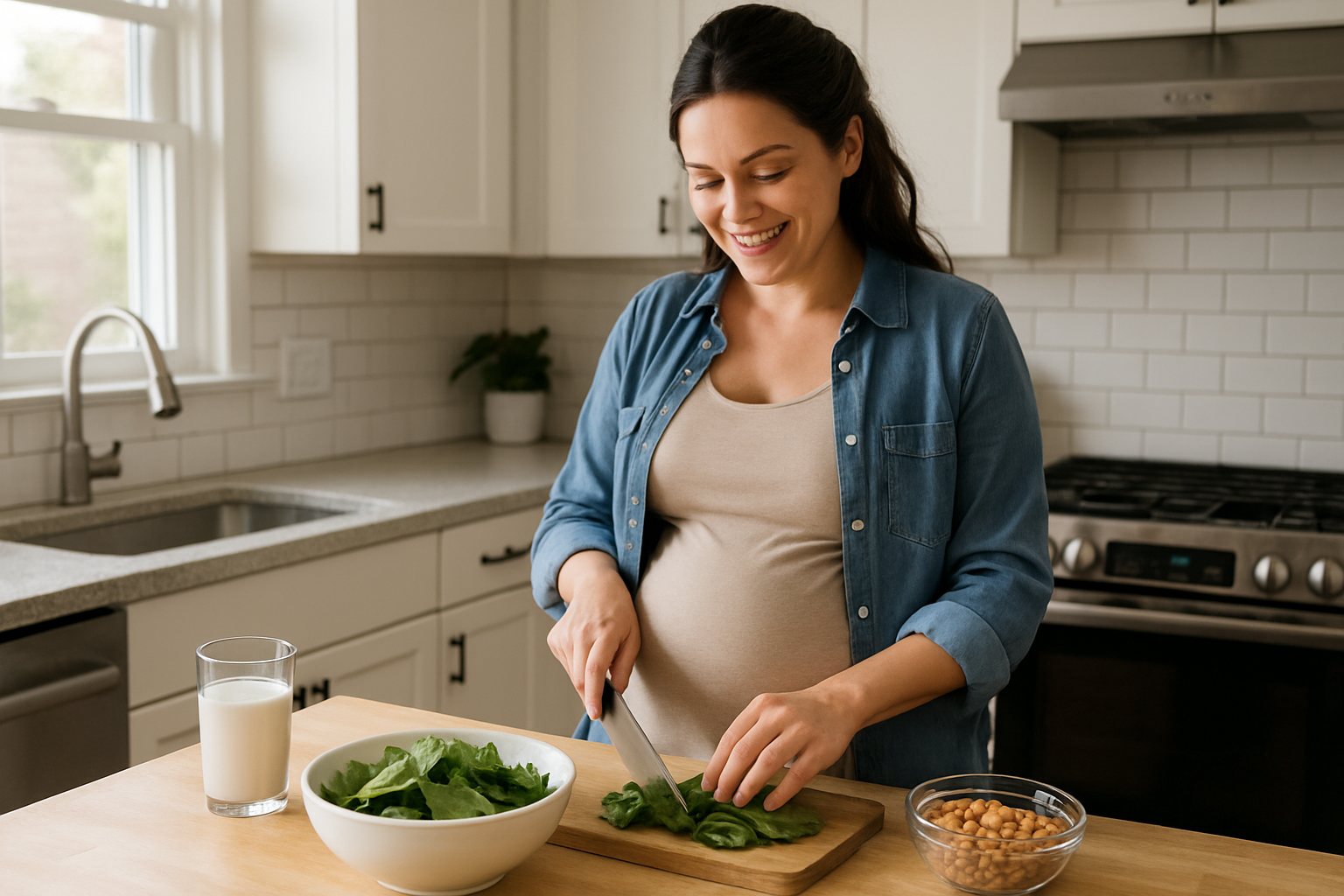
Lead poisoning in pregnancy matters because lead in the mother’s blood reaches the baby: the CDC says lead readily crosses the placenta, and lead stored in the mother’s bones can be released into the blood during pregnancy. Most people with lead exposure feel nothing, so the way to find it is a blood lead test, ordered by your health care provider when your history shows a risk.

In short: the CDC says lead in the blood during pregnancy can increase the risk for miscarriage, cause the baby to be born too early or too small, hurt the baby’s brain, kidneys and nervous system, and cause the child to have learning or behavior problems. Common sources include eating clay or soil (pica), imported remedies, cosmetics and spices, lead-glazed pottery, renovation of pre-1978 homes, and lead dust brought home from a household member’s job. The CDC recommends a risk check at the first prenatal visit and a blood test if any risk is found, and it says mothers below 40 µg/dL should breastfeed.
This guide explains what the CDC, the World Health Organization (WHO) and the FDA say. It is not medical advice. Your prenatal care provider decides whether you need a test and what a result means. For urgent questions about a possible poisoning, call Poison Control at 1-800-222-1222.
How lead reaches the baby
The WHO explains that lead is stored in the teeth and bones, where it builds up over time. That stored lead is why pregnancy is a special case.
- Through the placenta. The CDC’s 2010 Guidelines for the Identification and Management of Lead Exposure in Pregnant and Lactating Women say lead crosses the placenta by passive diffusion and has been measured in the fetal brain as early as the end of the first trimester. That is why the guidelines call preventing exposure “particularly important.”
- From the mother’s own bones. The CDC pregnancy page says lead stored in adults’ bones can be released into the blood during pregnancy, so blood lead levels can rise. The WHO says the same: bone lead released during pregnancy “becomes a source of exposure to the developing fetus.” Past exposure, even years before, can matter.
- After birth, through breast milk. The CDC says mothers can also expose infants to lead through breast milk (see breastfeeding below).
What lead exposure during pregnancy can do
The CDC’s “Risk Factors and Pregnancy” page lists four effects of lead in the blood during pregnancy. In its words, lead can:
- Increase risk for miscarriage
- Cause the baby to be born too early or too small
- Hurt the baby’s brain, kidneys, and nervous system
- Cause the child to have learning or behavior problems
The WHO fact sheet on lead says lead exposure during pregnancy “can cause reduced fetal growth and preterm birth,” and that there is no level of exposure to lead known to be without harmful effects.
The 2010 CDC guidelines add detail: studies link prenatal exposure, even with maternal levels below 10 µg/dL, to lower fetal growth and neurodevelopment; lead has been associated with high blood pressure in pregnancy; and the evidence on miscarriage and preterm delivery is more limited and mixed. The CDC has not named any blood lead level as safe for mother or baby. For the long-term picture, see effects of lead poisoning.
Common sources of lead for pregnant people
The 2010 guidelines name the groups most likely to be exposed: workers in certain jobs, recent immigrants, and people with habits such as pica or renovating older homes.
Pica: eating clay, soil and other non-food items
Some pregnant people feel an urge to eat clay, soil, plaster or paint chips. The CDC guidelines advise never eating or mouthing non-food items because they may contain lead, and note that pica is common in many parts of Africa, Asia and Central America. Tell your provider: it is a recognized risk factor, not a judgment.
Imported remedies, cosmetics, spices and candies
The guidelines advise avoiding imported cosmetics, food additives and medicines that may contain lead, such as azarcon, kohl, kajal and surma, and using caution with candies, spices and foods brought from abroad. The FDA warns that kohl can cause lead poisoning and advises asking a provider to test pregnant or nursing women who used it; it has also cautioned about some Ayurvedic products and issued alerts on ground cinnamon. Our guide to lead in cinnamon and spices lists the FDA alerts.
Pottery, crystal and metal cookware
The CDC guidelines advise against using imported lead-glazed pottery, pewter or brass for food, leaded crystal for drinks, and chipped or cracked dishes. The FDA says some traditional pottery labeled “lead free” still released lead, and in December 2024 it warned that certain imported aluminum, brass and Hindalium cookware can leach lead. See lead in pottery and dishes.
Renovation and old paint
The guidelines say to stay away from repair, repainting, renovation and remodeling work in homes built before 1978 and to avoid deteriorated lead paint. Work should be done by others using lead-safe renovation (RRP) practices while you are out of the home.
Jobs and hobbies, yours or a household member’s
The guidelines advise avoiding jobs or hobbies involving lead and guarding against take-home lead dust if a household member works with lead, such as in pre-1978 renovation or lead battery making or recycling. Dust carried home on clothes, shoes or skin settles in the car and home. Pregnant women at 10 µg/dL or higher should be removed from work exposure to lead. Our guide to lead testing for adults covers the jobs on the CDC list and the NIOSH advice for workers.
Concerns at a glance
| Concern | What CDC / WHO say | What you can do |
|---|---|---|
| Lead reaching the baby | Lead crosses the placenta; bone lead can be released into the blood during pregnancy (CDC, WHO) | Tell your provider about any past or present exposure, even years ago |
| Pregnancy outcomes | Can increase risk for miscarriage and cause the baby to be born too early or too small (CDC); reduced fetal growth and preterm birth (WHO) | Ask about a lead risk assessment at your first prenatal visit |
| Pica | Never eat or mouth clay, soil, pottery or paint chips (CDC 2010) | Mention any cravings for non-food items to your provider |
| Imported remedies, cosmetics, spices | Avoid imported products that may contain lead, such as azarcon, kohl, kajal, surma (CDC 2010); kohl can cause lead poisoning (FDA) | Stop using the product and bring it to your appointment |
| Renovation | Stay away from renovation in homes built before 1978 (CDC 2010) | Let others do the work lead-safely while you are away |
| Take-home dust | Take precautions if a household member works with lead (CDC 2010) | Work clothes and shoes stay at work or are washed separately |
| Nutrition | Eat a balanced diet with adequate iron and calcium (CDC 2010); “a diet high in iron and calcium” (CDC) | Ask your provider before taking any supplement |
How to lower lead exposure during pregnancy
The CDC puts it simply: the best way to prevent lead in the blood is to prevent lead exposure. Based on the CDC guidelines and pregnancy page:
- Keep lead dust out. Stay away from renovation in pre-1978 homes. Work clothes and shoes of household members who work with lead stay out of the living space. The CDC advises wet-mopping floors and other flat surfaces.
- Skip imported remedies, cosmetics, unlabeled foods and lead-glazed pottery, and check FDA alerts for spices you already have.
- Eat well. The guidelines say to eat a balanced diet with adequate intakes of iron and calcium and to avoid cigarettes and alcohol. The CDC pregnancy page says doctors may suggest “eating a diet high in iron and calcium.” Do not start supplements on your own, and never use products sold to “remove lead.”
- Check your home. Our free home lead risk checker walks you through the usual sources room by room.
Testing during pregnancy
The CDC does not recommend testing all pregnant women in the US. Instead, providers are asked to look for risk factors as part of your work, home and lifestyle history, at the earliest prenatal contact, and to order a venous blood lead test if even one risk factor is found. Clinics that serve communities with known risks may test everyone. The CDC pregnancy page adds that if you think you may have been exposed, you should talk to your provider about a blood lead test.
A sample questionnaire reprinted in the guidelines (Minnesota Department of Health) asks about lead jobs or hobbies at home, eating clay, soil, plaster or paint chips, dusty renovation in a pre-1978 home, high lead in your water, folk remedies or cosmetics not sold in regular stores, and homemade pottery or leaded crystal.
At 5 µg/dL or higher, the guidelines recommend follow-up testing, a search for the source and testing of the newborn. Our guide to blood lead levels has the CDC schedule and explains the units, and lead testing for adults covers who should ask. Home kits do not test people; they check paint, dust, soil or water (see lead poisoning test).
Lead and breastfeeding
Lead can pass into breast milk, but the CDC still calls breast milk the most complete and ideal food for infants in their first year. Its guidance, from the 2010 guidelines and the current CDC breastfeeding page:
- Below 40 µg/dL: mothers should breastfeed. The CDC page says women with levels of 5 µg/dL up to below 40 can breastfeed, while their providers watch the baby’s levels.
- 40 µg/dL or higher (confirmed): pump and discard breast milk until the mother’s level drops below 40, then begin breastfeeding.
- Testing breast milk for lead is not recommended. The blood test is what guides decisions.
- If the baby’s level rises or does not come down, providers look for other sources first. Only if none is found, and the mother’s level is above 20 µg/dL with the baby at 5 µg/dL or higher, may a temporary pause be considered.
For formula that needs mixing, the guidelines say to use water only from the cold tap, flushed for at least 3 minutes, or bottled or filtered water known to be free of lead. More on water at lead in water testing.
What to ask your provider
- Based on my job, home, hobbies and the products I use, do I have a risk factor for lead? Should I have a blood lead test?
- I had lead exposure in the past (or I grew up or lived abroad). Could stored lead matter in this pregnancy?
- If my level is 5 µg/dL or higher, when will you retest, and will the baby be tested at birth?
- Is there anything about my diet I should change? Should I take any supplement, or avoid one?
- What does my level mean for breastfeeding?
Bring any imported remedy, cosmetic or spice you use to the appointment. For more on lead and health, start at our lead poisoning hub.
Frequently asked questions
Can lead pass from mother to baby during pregnancy?
Yes. The CDC’s 2010 guidelines say lead readily crosses the placenta, and both the CDC and the WHO say lead stored in the mother’s bones can be released into the blood during pregnancy and reach the baby.
Should every pregnant woman get a lead test?
The CDC does not recommend testing everyone. It recommends a risk assessment at the first prenatal contact and a blood lead test if any single risk factor is found. If you think you were exposed, ask your provider.
Is there lead in breast milk?
It can, but the CDC says mothers below 40 µg/dL should breastfeed; at 40 or higher, pump and discard until the level drops below 40. Testing breast milk is not recommended.
Why does my provider ask if I eat clay or dirt?
Eating non-food items such as clay, soil, plaster or paint chips (pica) is a known source of lead in pregnancy, and it is on the CDC’s list of risk factors. A “yes” usually means a blood lead test, which helps protect you and the baby.
Leave a Reply