
This article contains affiliate links: if you buy through them we may earn a commission, at no extra cost to you. Read our affiliate disclosure.
The only way to test a person for lead poisoning is a blood lead test, ordered by a doctor or done by your local health department. The CDC calls a blood test the best way to find out if a child has lead poisoning, because most children with lead in their blood have no obvious symptoms. Below is every route, from the doctor’s office to at-home options, and what each test can and cannot tell you.
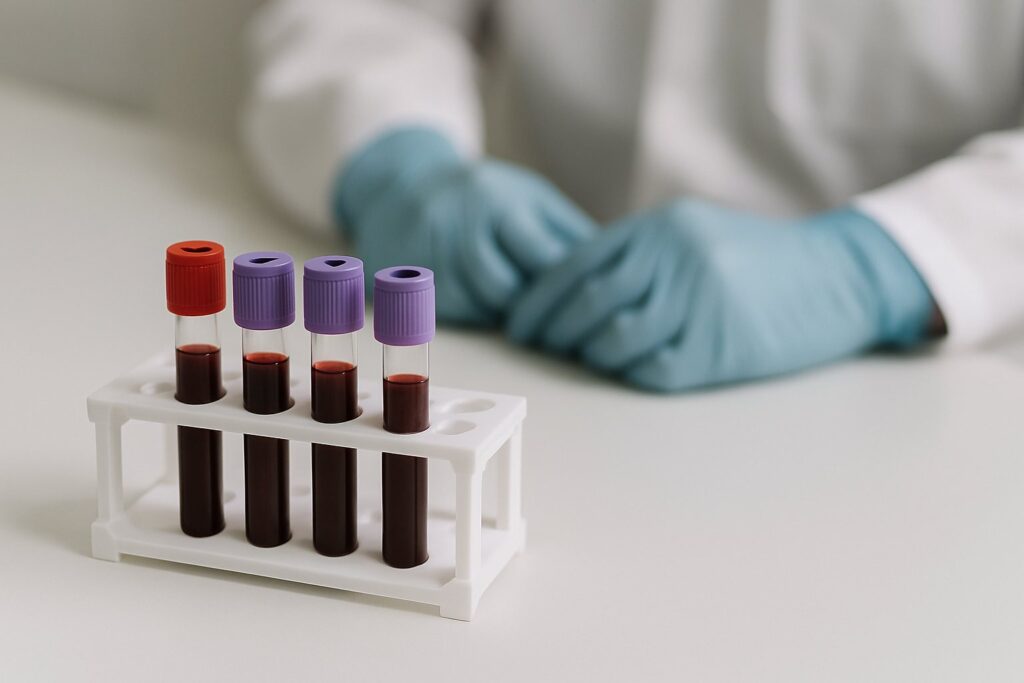
In short: ask your doctor, your child’s pediatrician or your local health department for a blood lead test. Children on Medicaid must be tested at 12 and 24 months. When we checked in October 2026, we found no US lab selling a mail-in finger-prick blood lead kit to consumers; the direct-to-consumer options we found still need a blood draw at a lab. Paint swabs, water kits and dish swabs are useful, but they find lead in your home, not in a person. Urine and hair tests are not reliable ways to measure lead exposure. For a possible poisoning, call Poison Control at 1-800-222-1222, or 911 in an emergency.
This page is general information from public health agencies. It is not medical advice and does not replace a doctor. LeadDetector does not diagnose or suggest any treatment.
The blood lead test: the only test for a person
A blood lead test measures how much lead is in a small blood sample, reported in micrograms per deciliter (µg/dL). It is usually a finger-prick first, with a draw from a vein to confirm a high result. The CDC uses a blood lead reference value of 3.5 µg/dL to flag children with more lead than most US children, and it says no safe blood lead level in children has been identified.
We cover the test itself in depth in our guide to the blood lead test: finger-stick vs venous samples, what the reference value means and the CDC’s follow-up steps. To read a number you already have, see blood lead levels. For the bigger picture, start at our lead poisoning hub.
Where to get a lead poisoning test near you
According to the CDC, healthcare providers and most local health departments can test for lead in the blood. Here are the usual routes:
- Your child’s pediatrician or your family doctor. Many offices can do a finger-prick test during the visit, or send you to a lab for a blood draw. The CDC notes that many private insurance policies cover the test.
- Your local health department. Most can test or tell you where to go, and many run lead programs that help families find the source at home. Search NACCHO’s directory of local health departments.
- WIC. Federal rules have WIC staff ask parents whether a child has had a blood lead test and, if there is no result, refer the child to a health care provider. Some local WIC offices and community health centers can help you get the test; ask yours, since services differ from place to place.
- Medicaid. Federal Medicaid rules require that every enrolled child get a blood lead test at 12 months and 24 months, and that any child from 24 to 72 months with no record of a test gets one. A CMS bulletin adds that a risk questionnaire alone does not count; the blood test must be done. If your child is on Medicaid and has not been tested, ask the doctor.
Is there an at-home lead blood test?
When we checked in October 2026, we did not find any US lab selling a consumer kit where you prick your own finger and mail the blood in for lead. What we did find:
- Lab tests you can order yourself, with a lab visit. Quest’s consumer site lists a blood “Lead Test” at $52 plus a $6 physician service fee, collected in person at a Quest patient service center (for ages 10 and up; a buyer must be 18; not billed to insurance; not available in every state). Labcorp OnDemand lists a blood “Lead Test” at $59 for adults 18 to 100, collected in person at a Labcorp location. Prices are as shown on each company’s own page when checked in October 2026.
- A blood draw at home. Quest lists optional in-home collection for an extra fee where offered, and some mobile phlebotomy services will come to you. A trained person still draws the blood.
- Finger-prick analyzers in doctors’ offices. Some clinics use small point-of-care machines. These are medical devices for clinics, not home kits, and the FDA has posted recalls for some of them, including a 2026 one over falsely high results.
Under the federal CLIA rules run by CMS, laboratory testing on human samples for health purposes is regulated, which is one reason blood lead testing goes through doctors, clinics and certified labs. For a child, the doctor or health department is the best route: often covered, and they can explain the result.
Home lead test kits test your home, not your body
Paint swabs, water kits and dish swabs are useful, but none of them can tell you whether a person has lead poisoning. A blood test shows exposure; a home test helps find the source. Each kit is made for one kind of sample:
- Paint: see how to test for lead paint.
- Drinking water: see how to test water for lead.
- Dishes, pottery and household items: see our lead test kit for dishes guide.
- All kit types side by side: our lead test kits hub.
Urine, hair and “heavy metal” tests
You may see hair or urine tests sold for lead and other metals. The Agency for Toxic Substances and Disease Registry (ATSDR), part of the CDC family, says whole blood is the most common and accurate way to assess lead exposure, and that urine and hair lead measurements are not as reliable. ATSDR’s clinical guidance adds that measuring lead in hair is an uncertain estimate of the body’s lead and is not recommended. Our heavy metal test guide explains more.
Every lead test compared
| Test | What it measures | Where | Tells you if a person is poisoned? |
|---|---|---|---|
| Finger-prick (capillary) blood test | Lead in a few drops of blood | Doctor’s office, health department, some clinics | Screens; a high result needs a venous test to confirm |
| Venous blood test | Lead in blood drawn from a vein | Doctor, lab (Quest, Labcorp), health department | Yes, the most reliable measure |
| Urine or hair test | Lead in urine or hair | Some labs and consumer kits | No; ATSDR says not as reliable |
| Paint swab or paint lab kit | Lead in paint | At home, or mailed to a lab | No, it tests the paint |
| Water test kit | Lead in tap water | At home, or mailed to a lab | No, it tests the water |
| Dish or surface swab | Lead that leaches or rubs off an item | At home | No, it tests the item |
| Dust or soil test | Lead in dust or soil | Mailed to a lab, or a certified risk assessor | No, it tests the home |
Testing children
The CDC says children under 6 are the most likely to be exposed and the most vulnerable, and advises talking to your child’s healthcare provider about testing. Our guide to lead screening for children explains who should be tested and when, and our page on lead poisoning symptoms explains why waiting for signs is not a safe plan.
Testing during pregnancy
The CDC says that if you are pregnant and think you may have been exposed to lead, you should talk to your healthcare provider about a blood lead test, which it calls the best and most readily available way to know. The American College of Obstetricians and Gynecologists (ACOG) and the CDC do not recommend testing every pregnant woman; instead, ACOG advises asking about lead exposure and testing when a risk is found. Tell your provider about old housing, renovation, lead work or hobbies, or imported spices, cosmetics or remedies.
Testing adults and workers
Adults are tested with a blood lead test too, and most adults with high levels were exposed at work. OSHA’s lead standards require employers to protect workers from lead. In general industry, workers exposed at or above the airborne action level of 30 µg/m³ for more than 30 days a year must be offered blood lead testing at least every 6 months, and more often if levels are high. Construction has a similar standard. Our guide to lead testing for adults covers this in more detail.
Testing dogs and cats
Pets are tested with a blood test ordered by a veterinarian. The Merck Veterinary Manual notes that dogs and cats can act as sentinels for human exposure, so a sick pet can be a reason to check the home. See lead poisoning in dogs and cats.
Find the source at home
Finding the source is what protects your family. Old paint and water from lead pipes are common places to start. These two kits were in stock on Amazon when checked in October 2026. Prices change; check the listing.
LeadCheck Swabs, Instant Lead Test, 8 Swabs
- EPA-recognized on wood, ferrous metal, drywall, plaster
- Tests paint, not people
- About $39, seen October 2026
Tap Score Lead and Copper Water Test Kit
- Lead and copper measured by a lab
- Prepaid return shipping, written report
- About $59, seen October 2026
EPA recognizes LeadCheck swabs for negative results on wood, ferrous metal, drywall and plaster; a positive swab still needs a lab or a professional to confirm. After a child’s high result, a certified lead risk assessor can check paint, dust, soil and water together. See how to find a lead professional.
When to call a doctor or Poison Control
- Call Poison Control at 1-800-222-1222 right away if you think someone swallowed something with lead in it, such as a paint chip, a fishing weight or a piece of jewelry. The line connects you to a poison center 24/7 at no cost. Call 911 if someone is very sick, has a seizure or is hard to wake.
- Call your doctor or pediatrician to ask about a blood lead test if your child lives in or visits a pre-1978 home, a home test found lead, your family used a product named in an FDA or CPSC lead alert, you are pregnant and may have been exposed, or someone at home works with lead.
- Call your local health department for testing and help finding the source.
Frequently asked questions
How do you test for lead poisoning?
With a blood lead test from a doctor, a lab or your local health department. It is the only test that measures lead in a person. The CDC calls it the best way to know if a child has lead poisoning.
Can I test for lead poisoning at home?
Not with a do-it-yourself kit, as far as we found in October 2026. Consumer lead blood tests from Quest and Labcorp still need a blood draw at a lab, and some services send a phlebotomist to your home. Home kits for paint, water and dishes test your home, not your body.
Where can I get a lead poisoning test near me?
Start with your doctor or your child’s pediatrician, or your local health department, which can test or tell you where to go. If your family uses WIC, staff there can refer a child who has not been tested.