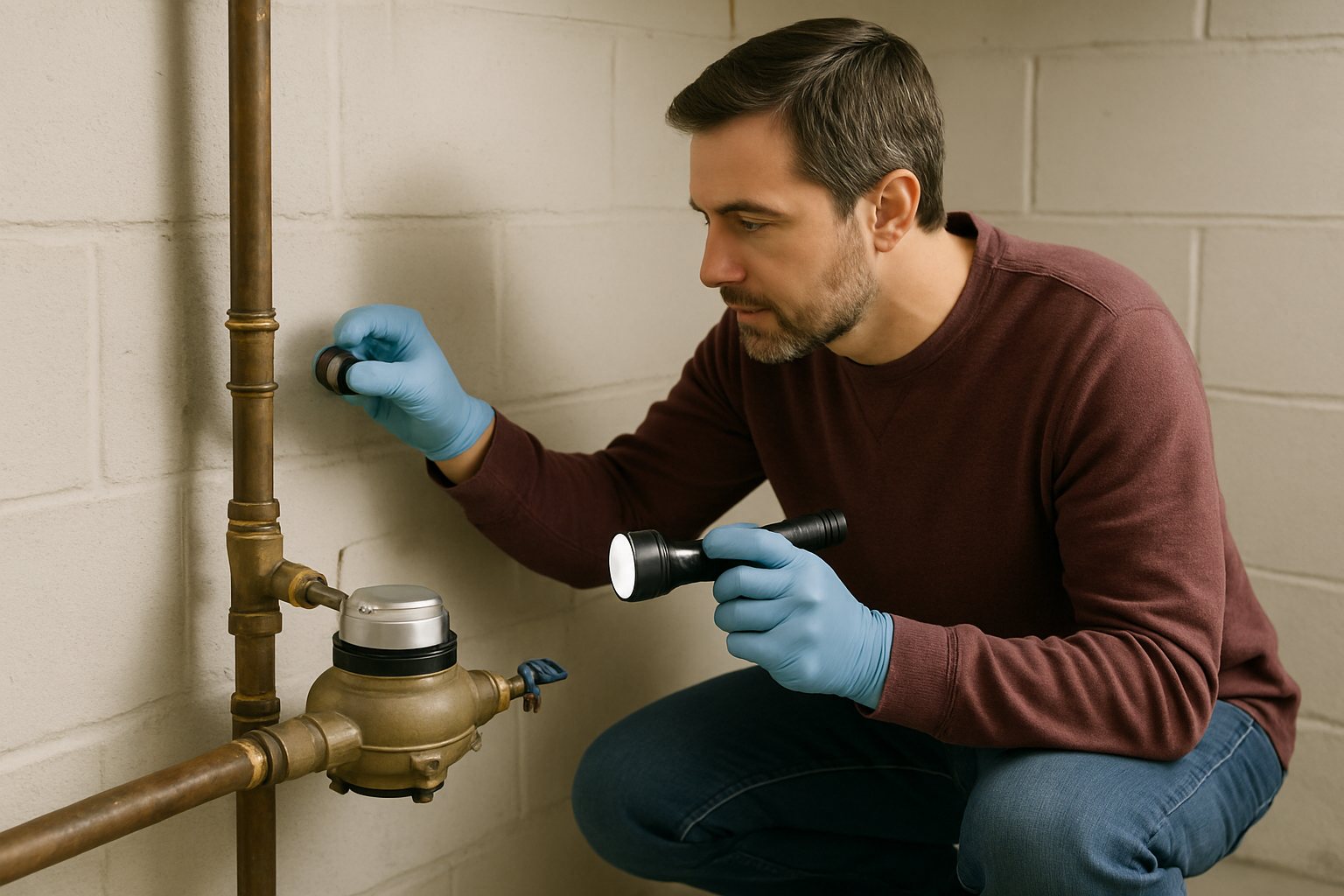
Do you have lead pipes? This guide walks you through EPA’s simple home check: find where the water line enters your home, scratch it gently, and try a magnet. Then it tells you what your answers suggest and what to do next.
In short: a soft pipe that scratches shiny silver and doesn’t attract a magnet is likely lead. Your water utility’s service line inventory is the better record, and a lab test of your tap water is the only way to know how much lead reaches your glass.
What you need
A key or a coin, a refrigerator magnet and a flashlight. Find the water meter: inside it is usually in the basement, crawl space or garage, and the service line enters on the same wall. If the meter is outside, the line usually enters on the side of the home facing the street. Scratch only a small patch, never dig into the pipe, and don’t scrape solder joints.
| Pipe material | After scratching | Magnet |
|---|---|---|
| Lead | Shiny silver; soft and easy to scratch | Does not stick |
| Copper | Penny color | Does not stick |
| Galvanized steel | Stays silver or gray; hard to scratch | Sticks |
| Plastic | Usually white or gray | Does not stick |
Why the utility’s inventory matters more
Every community water system had to inventory its service lines by October 16, 2024, listing each as lead, galvanized requiring replacement, unknown or non-lead. Large systems must post the inventory online. Under the Lead and Copper Rule Improvements, utilities must update it and replace lead and galvanized-requiring-replacement lines, in most cases within 10 years, with most requirements starting November 1, 2027. Ask yours how your line is listed and when it will be replaced. Our Drinking Water Quality Lookup finds your utility and its lead results.
Frequently asked questions
My pipe is copper. Am I in the clear?
Not necessarily. The line can change material under the yard, and in homes built before 1986 copper pipes may be joined with lead solder. Older brass or chrome-plated brass faucets can also add lead. Test your tap water to know.
Is it safe to shower if I have lead pipes?
EPA considers bathing and showering safe because skin does not absorb lead in water. The concern is water you drink or cook with; use a filter certified to NSF/ANSI 53 for lead until the line is replaced. See lead pipes and certified filters.