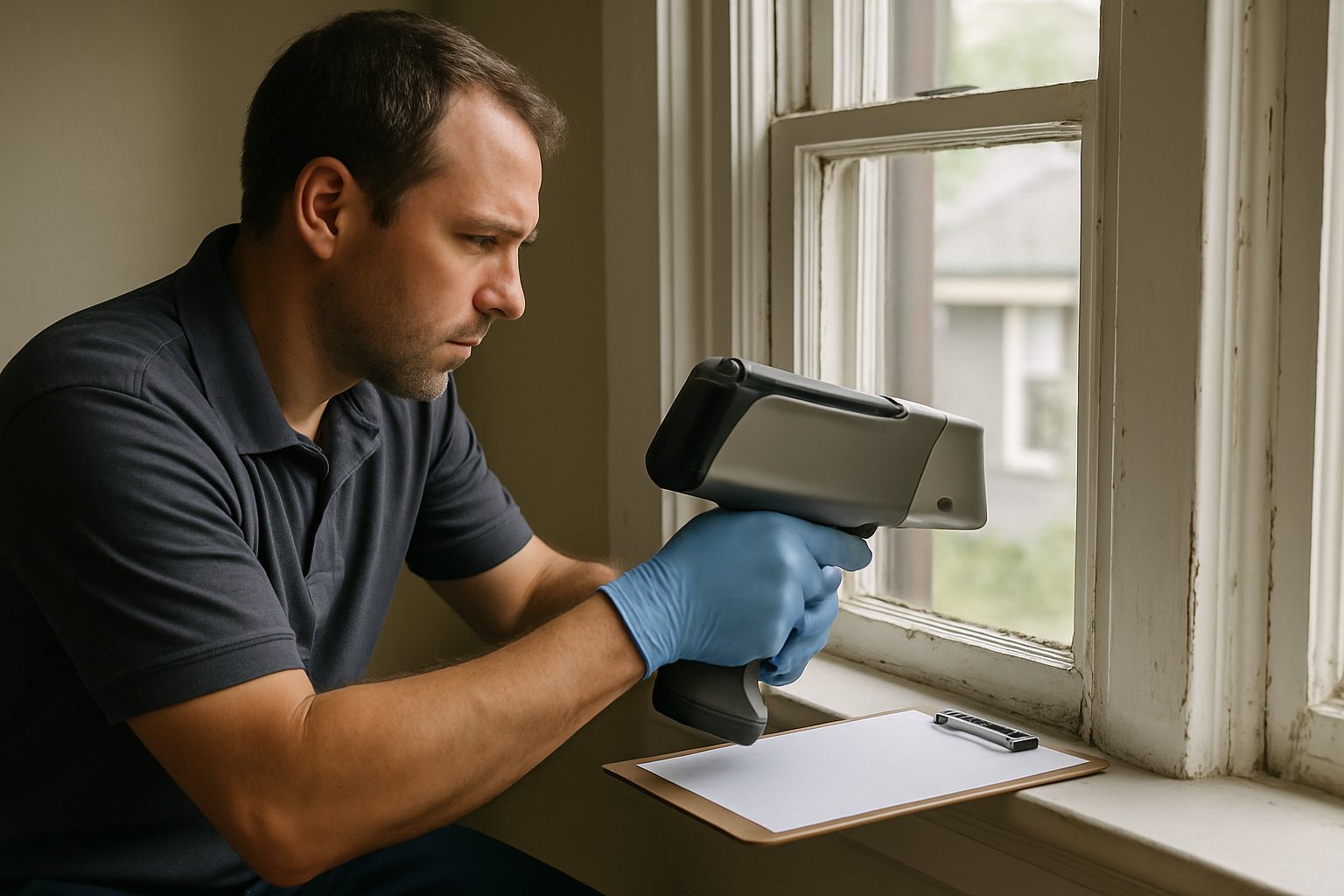
There are five ways to test paint for lead, from a five-minute swab to a certified risk assessment. Answer three questions and see which one fits your situation, side by side with the others.
In short: a swab kit is a quick screen; a paint-chip lab test gives the amount of lead; an inspection (often with an XRF analyzer) maps lead paint room by room; a risk assessment finds the hazards that matter now; and a clearance examination checks an area after lead work.
About home swab kits
EPA recognizes three kits for use by certified renovators: LeadCheck (now made by Luxfer Magtech) and D-Lead (ESCA Tech) on wood, iron or steel, drywall and plaster, and the State of Massachusetts kit on drywall and plaster only. Anyone can buy LeadCheck and D-Lead. A swab only tests the layers it reaches, can miss lead under newer paint, and never tells you how much lead is there. Our test kit comparison covers each kit.
When you need a certified professional
Only a certified lead inspector or risk assessor can perform a lead-based paint inspection or risk assessment, and their written report is what buyers, landlords, agencies and contractors rely on. A risk assessment is the usual choice when a child has a high blood lead level, and many health departments arrange it. See inspection vs risk assessment and find a certified professional.
Frequently asked questions
What is XRF?
X-ray fluorescence (XRF) analyzers read lead in paint through the layers without damaging the surface, and report it in milligrams per square centimeter. Inspectors use them to test many surfaces quickly. The federal definition of lead-based paint is 1.0 mg/cm² or 0.5% by weight.
I already have a result. What does it mean?
Enter it in the Lead Test Results Interpreter to compare it with the federal definitions.