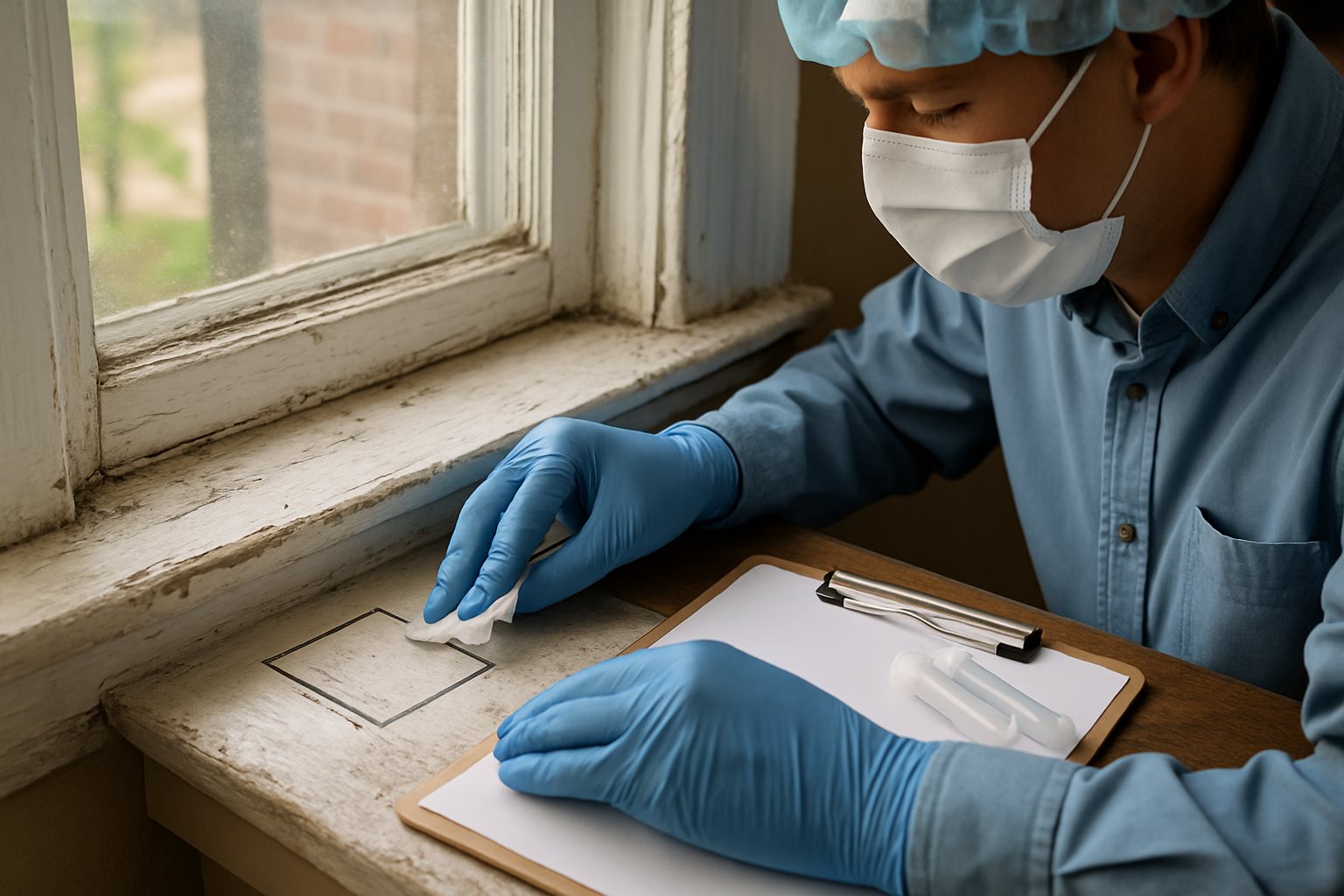
To test for lead in dust, a trained person wipes a measured patch of floor or window sill and sends the wipe to an EPA-recognized lab. To test soil, you send a soil sample to a qualified lab, often a state university extension lab. Dust matters most because, as the CDC puts it, the most common source of lead exposure in young children is lead dust. This page explains why, what EPA’s current standards say, and how dust and soil testing work.
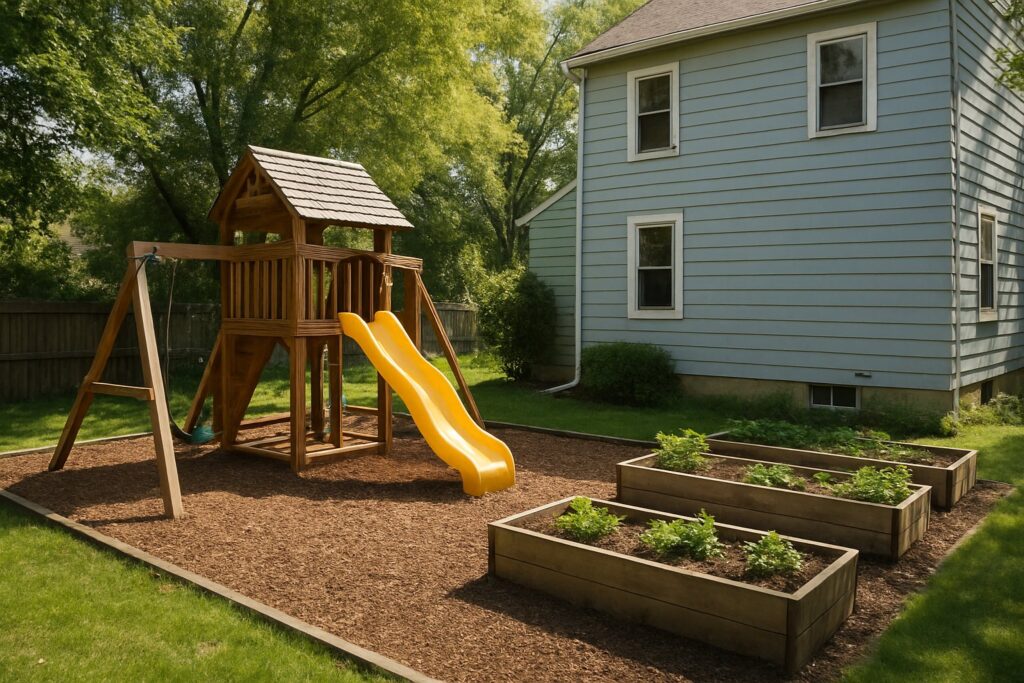
In short: since January 12, 2026, EPA treats any reportable level of lead in floor or window sill dust, as measured by an EPA-recognized lab, as a dust-lead hazard in places where it runs the program (it used to be 10 and 100 µg/ft²). After abatement, dust must be below 5 µg/ft² on floors, 40 on window sills and 100 in window troughs. For bare soil, the federal hazard standard is 400 ppm in children’s play areas and an average of 1,200 ppm in the rest of the yard. Many state extension labs test garden soil for lead at low cost.
Why dust is the main path for children
Paint chips get the attention, but dust does most of the damage. When old lead paint wears, peels or is disturbed during repairs, it breaks into fine dust that settles on floors and window sills. Soil from outside adds more, tracked in on shoes, clothes and pets. Young children crawl, play on floors and put hands and toys in their mouths. EPA’s 2024 dust rule calls this the main pathway of exposure to lead for young children, the CDC names lead dust as their most common source, and NIEHS says lead dust is the most common way people in the US are exposed.
Dust lead is also invisible. A clean-looking floor can carry enough to matter, which is why the only way to know is to sample it. For what lead does to the body, see lead poisoning.
EPA dust-lead standards, current values
EPA rewrote its dust standards in a final rule published November 12, 2024, effective January 13, 2025. The new values became the ones to comply with on January 12, 2026, in states and areas where EPA runs the lead-based paint program. States with their own EPA-authorized programs have two years from the rule’s effective date to update their rules, so check your state.
| Standard | Floors | Window sills | Window troughs |
|---|---|---|---|
| Dust-lead reportable level (hazard), from Jan 12, 2026 | Any reportable level | Any reportable level | Not set |
| Dust-lead hazard standard before Jan 12, 2026 | 10 µg/ft² | 100 µg/ft² | Not set |
| Dust-lead action level (after abatement) | 5 µg/ft² | 40 µg/ft² | 100 µg/ft² |
| Old clearance levels (from 2021) | 10 µg/ft² | 100 µg/ft² | 400 µg/ft² |
“Any reportable level” sounds vague, but it is deliberate. EPA explains that the reportable level is not a fixed number it sets: it is whatever amount a lab in its National Lead Laboratory Accreditation Program (NLLAP) can measure and report. In practice, if an accredited lab reports a number for lead in a floor or sill wipe, that counts as a dust-lead hazard. The dust-lead action level is the separate, numeric bar that dust must get under before an abatement job is finished.
One important limit: EPA notes that its lead-based paint rules do not force owners or residents to test. They set the standards that apply when an inspection, risk assessment or abatement is done.
How dust-wipe sampling works
- Pick the spots. Floors where children play and interior window sills are the standard places; risk assessors take samples from both.
- Measure the area. The sampler wipes a measured patch so the result can be given per square foot.
- Wipe. EPA’s rules point to two ASTM standards: E1728 for how to collect settled dust with a wipe, and E1792 for the wipes themselves.
- Send to an accredited lab. EPA keeps a public list of NLLAP-recognized labs, with columns showing which ones analyze dust wipes, soil and paint chips.
- Read the result in micrograms per square foot (µg/ft²) against the standards above.
Who takes the samples matters. For an official finding, the work is done by a certified lead risk assessor or inspector, and after renovations by a certified dust sampling technician. A wipe you take yourself can help you decide whether to call a professional, but it is not a risk assessment. Our guide to lead dust testing goes step by step, and find a lead professional explains who does what.
Lead in soil: where it comes from
EPA says most lead in soil comes from human activity, and higher levels are typically found near roads (from decades of leaded gasoline), along the drip line of older buildings with lead paint or lead gutters and flashing, and near smelters, battery plants and industrial sites. Because lead is an element, it stays in soil long after the source is gone. Children and adults are exposed by swallowing soil or dust, touching soil and then their mouths, and eating produce grown in or splashed with it.
Soil-lead hazard standards
| Where | Federal soil-lead hazard (40 CFR 745.65) |
|---|---|
| Bare soil in a children’s play area | 400 ppm (µg/g) or more |
| Bare soil in the rest of the yard | Average of 1,200 ppm or more |
These are the standards a certified risk assessor uses at homes built before 1978 and child-occupied facilities. They are not the only numbers you will see. EPA uses a separate screening level of 200 ppm for residential soil at Superfund and hazardous-waste cleanup sites, and its gardening advice starts urging caution as soil approaches 200 ppm.
Testing soil through extension labs
EPA says the best way to test soil is to send samples to a qualified lab, and that many state university agricultural departments and extension offices test soil for lead at a cost. A few real examples:
- UMass Soil and Plant Nutrient Testing Laboratory (Massachusetts): its routine soil test includes a lead screen of extractable lead, and a separate Total Sorbed Metals test gives a definitive lead number.
- UConn Soil Nutrient Analysis Laboratory (Connecticut): offers both a lead screen and a total lead test. UConn Extension advises the total test when you need a defensible number, such as for a home sale or to confirm a high screen.
- University of Minnesota Soil Testing Laboratory: offers a lead test for lawn and garden samples.
Your own state’s extension office can point you to its lab. Some local health departments also test soil, and ATSDR’s soilSHOP events offer free soil screening in some communities. Know which test you are getting: a screen estimates lead from an extract, while a total lead test digests the sample in strong acid. Accredited NLLAP labs also analyze soil. Our guide to lead in soil testing covers how to take samples.
Gardens and play areas
EPA’s healthy gardening guide groups soil results this way:
| Soil lead | What EPA suggests |
|---|---|
| Approaching 200 ppm | Exercise caution: gloves, wash hands, produce and clothes; plant deep-rooted crops in raised beds |
| 200 to 400 ppm | Raised beds of clean soil for root and shallow-rooted crops; cover bare soil; peel root vegetables |
| Over 400 ppm | Do not use existing soil: raised beds with at least 16 inches of clean soil over garden fabric, or containers |
EPA also suggests mulch or ground cover over bare soil, a soil pH near neutral (6.5 to 7.5), keeping children out of bare soil next to pre-1978 buildings, taking shoes off at the door and cleaning floors often.
Worried someone has been exposed to lead?
Testing your home finds the source; only a blood lead test shows whether a person has lead in their body. Here is how to get tested, and what the numbers mean.
How to test for lead poisoningBlood lead levels explainedLead screening for childrenTesting for adultsSymptoms
Frequently asked questions
What is the EPA dust-lead hazard standard now?
Since January 12, 2026, in areas where EPA runs the program, any reportable level of lead in floor or window sill dust, as analyzed by an NLLAP-recognized lab. Before that it was 10 µg/ft² for floors and 100 µg/ft² for sills.
What dust levels must be met after lead abatement?
EPA’s dust-lead action levels are 5 µg/ft² for floors, 40 µg/ft² for window sills and 100 µg/ft² for window troughs.
How much lead in soil is a hazard?
Under EPA’s rules, 400 ppm or more in bare soil where children play, or an average of 1,200 ppm in bare soil in the rest of the yard.
Can a lead paint swab test dust or soil?
No. EPA recognizes swab kits only for paint on certain surfaces. Dust needs a wipe sample and soil needs a soil sample, each analyzed by a lab.
Is it safe to grow vegetables in my yard?
Test first. EPA’s gardening advice depends on the result, and raised beds of clean soil are its key recommendation where lead is present.