Category: Lead and Health

Lead poisoning explained from CDC, NIH and EPA sources: symptoms in children and adults, the blood lead test and what results mean, how doctors manage elevated blood lead, long-term effects, causes and prevention, and lead in pets. Information only, not medical advice: talk to your doctor or call Poison Control at 1-800-222-1222.

  • Lead Poisoning in Dogs and Cats: Signs, Sources and What to Do

    Lead Poisoning in Dogs and Cats: Signs, Sources and What to Do

    Lead poisoning in dogs and cats is uncommon, but it does happen, and the signs are easy to mistake for an upset stomach or another illness. Veterinary sources describe vomiting, diarrhea, loss of appetite, belly pain, lethargy, behavior changes, wobbliness, tremors and seizures, usually after a pet swallows old paint chips or dust, a lead object such as a fishing sinker, or dust from a home renovation.

    A cat resting near a sunny window in an older home

    In short: if you think your dog or cat has swallowed something with lead or shows these signs, call your veterinarian right away, or the ASPCA Animal Poison Control Center at (888) 426-4435, which answers 24 hours a day, 365 days a year; the ASPCA says a consultation fee may apply. Do not make your pet vomit unless a professional tells you to. A vet confirms lead poisoning with a blood test and decides on treatment. Because pets and young children are often exposed to the same lead, a poisoned pet is also a reason to ask your doctor about testing the children in your home.

    This page summarizes what the ASPCA Animal Poison Control Center, the Merck Veterinary Manual and veterinary schools publish. It is not veterinary advice; only your vet can examine and treat your pet.

    How common is lead poisoning in pets?

    Not very. The ASPCA’s poison control primer for veterinarians says lead toxicity is not a common issue in dogs and cats, but that cases do happen. In 2015, as reported by the AVMA’s news service, the ASPCA center handled 65 lead cases out of about 181,000 animal poisoning cases. The Merck Veterinary Manual lists dogs, cattle and pet birds as the animals in which lead poisoning is most common, and notes that young animals absorb lead more readily, so young age, a habit of chewing or eating non-food items, and easy access to lead are the key risk factors.

    Rare does not mean unimportant. Lead poisoning can look like many other illnesses, and veterinary researchers point out that it can be missed unless someone thinks to test for it.

    Signs of lead poisoning in dogs and cats

    The ASPCA and the Merck Veterinary Manual describe two patterns. Signs mostly involve the stomach and gut and the nervous system:

    Type of exposureSigns veterinary sources list
    Sudden (acute), such as swallowing a lead object or a large amount of paintNot eating, vomiting, belly pain, behavior changes, a wobbly or unsteady walk (ataxia), tremors, overexcitement and seizures that come and go
    Long-term (chronic), such as repeated paint dust or chipsVaguer signs: belly discomfort, vomiting, diarrhea, not eating, lethargy, weight loss, anemia, behavior changes, occasional seizures, and in some dogs an enlarged, weak esophagus (megaesophagus), which is rarely reported in cats

    The Merck Veterinary Manual says lead colic, a painful belly, can occur in all species, and that lead poisoning can resemble other nervous system and digestive diseases, so a vet may need to rule those out. Cornell University’s Feline Health Center lists vomiting, seizures and an unsteady gait among poisoning signs in cats that call for prompt action.

    None of these signs is specific to lead. A dog with vomiting and diarrhea most likely has something else, but if there is old paint, renovation dust or a lead object in its life, tell your vet.

    Puppies and young animals

    Young animals are at higher risk on two counts. They chew and swallow things more, and, according to the ASPCA’s primer, a young animal may absorb as much as half of the lead it swallows, compared with roughly 5 to 15 percent in adults. If a puppy has been chewing on old windowsills, painted furniture or anything metal and heavy, mention it to your vet even if the puppy seems well.

    Signs in cats

    Cats rarely chew on objects the way puppies do. The Merck Veterinary Manual reports that cats have been poisoned by grooming dust off their fur after lead-painted woodwork was sanded, which turns dust on the coat into lead in the stomach. Cornell’s Feline Health Center names lead among the frequent causes of poisoning in cats and says they are exposed through many sources, including paint chips, linoleum and dust in older homes. The Merck manual notes there is no good information on a toxic dose for cats, one more reason to call a professional rather than guess.

    Common sources of lead for pets

    • Old paint, chips and dust. The Merck Veterinary Manual says house paint made before 1978 can contain high concentrations of lead, and that a chip the size of a thumbnail can hold 50 to 200 mg of lead. See lead paint testing.
    • Home renovation. Sanding and scraping old paint spreads fine dust that pets walk through and lick off their paws and fur. The ASPCA’s poison control director has said remodeling is the most common situation in which the center sees pets exposed to lead.
    • Lead weights. Fishing sinkers and other lead weights, and lead shot. Some older curtain and drapery hem weights are also made of lead; a curtain weight has poisoned a child, according to a case report indexed by the NIH’s National Library of Medicine.
    • Other household items. The Merck manual and the ASPCA also list linoleum, solder, toys, bullets, putty, caulk, ceramic glazes on food and water bowls, and the foil covers on some wine corks.
    • Soil. Dogs that dig near older painted buildings or busy roads can swallow lead in soil. See dust and soil testing.

    What to do if you suspect lead poisoning

    1. Call your veterinarian or an emergency vet clinic right away. If your pet is having a seizure, collapsing or struggling to breathe, go straight to an emergency clinic.
    2. Or call the ASPCA Animal Poison Control Center: (888) 426-4435. It is open around the clock, every day of the year. The ASPCA says a consultation fee may apply.
    3. Do not make your pet vomit unless a veterinarian or poison control expert tells you to, as Cornell’s Feline Health Center advises.
    4. Bring what you can. A sinker, chip or package, or a photo of it, and a note of when it happened and what signs you have seen.
    5. Keep other pets and children away from the area until the source is found.

    Do not give your pet any medicine, supplement or home remedy for lead. Only a vet can decide what is safe for your animal.

    How vets diagnose lead poisoning

    According to the Merck Veterinary Manual, the diagnosis is made by measuring lead in a blood sample, and only a small amount of blood is needed. X-rays can show lead objects in the stomach or intestines, and some blood smear findings can point toward lead but do not confirm it. Treatment, if needed, is decided by the veterinarian based on the pet’s signs and test results, and it always includes removing the lead source from the pet’s surroundings so the animal is not exposed again. Follow-up blood tests are part of that care.

    Your pet as an early warning for your family

    The Merck Veterinary Manual notes that dogs and cats can be sentinels for human exposure: the paint dust, soil or object that poisoned a pet may be reaching a toddler too. The CDC says most children with lead in their blood have no obvious symptoms, so if your pet is diagnosed, ask your child’s doctor or your local health department about a blood lead test, and read lead and children. For people, the number is Poison Control at 1-800-222-1222, and our guides to lead poisoning symptoms and lead poisoning explain what to watch for.

    How to protect your dog or cat from lead

    • Know your home. If it was built before 1978, test for lead paint before you sand, scrape or remodel, and use a certified, lead-safe contractor. See lead-safe renovation and our professional directory.
    • Keep pets out of work areas during renovation and until cleanup is finished, since cats groom dust off their coats and dogs lick their paws.
    • Wet-clean dust on floors and windowsills, and wash pet bedding, toys and bowls often.
    • Store fishing tackle, ammunition and lead weights out of reach, and check old curtains for hem weights if your pet chews fabric.
    • Use bowls made for food. Skip old or decorative glazed ceramics of unknown origin; see lead in pottery and dishes.
    • Watch the yard. Discourage digging along the walls of older painted buildings, and test soil if you are unsure.

    Frequently asked questions

    What are the first signs of lead poisoning in a dog?

    Veterinary sources most often list not eating, vomiting, belly pain and behavior changes, and with more severe exposure, a wobbly walk, tremors or seizures. These signs are not specific to lead, so call your vet.

    My dog swallowed a fishing sinker. What should I do?

    Call your veterinarian or the ASPCA Animal Poison Control Center at (888) 426-4435 right away, even if your dog seems fine. Don’t make it vomit unless told to. A vet may take an X-ray to find the sinker.

    Can cats get lead poisoning from dust?

    Yes. The Merck Veterinary Manual reports cats poisoned by grooming dust from sanded lead-painted woodwork off their fur. Keep cats out of renovation areas in older homes.

    Is the ASPCA poison hotline free?

    The ASPCA says a consultation fee may apply; it does not publish the amount on its main page. Your own vet is also a good first call.

    Can I test my pet for lead at home?

    No. Lead in an animal is measured with a blood test done by a vet. Home swab kits are made for surfaces such as paint, not for pets or people, and EPA recognizes only certain kits for certain surfaces.

  • Lead Poisoning Causes and Prevention: Sources and Steps

    Lead Poisoning Causes and Prevention: Sources and Steps

    Lead poisoning is caused by swallowing or breathing in lead, and in the US the most common source is dust from old lead-based paint. Other causes include tap water that runs through lead pipes or fixtures, contaminated soil, lead brought home from work or hobbies, and some imported spices, remedies, cosmetics and dishes.

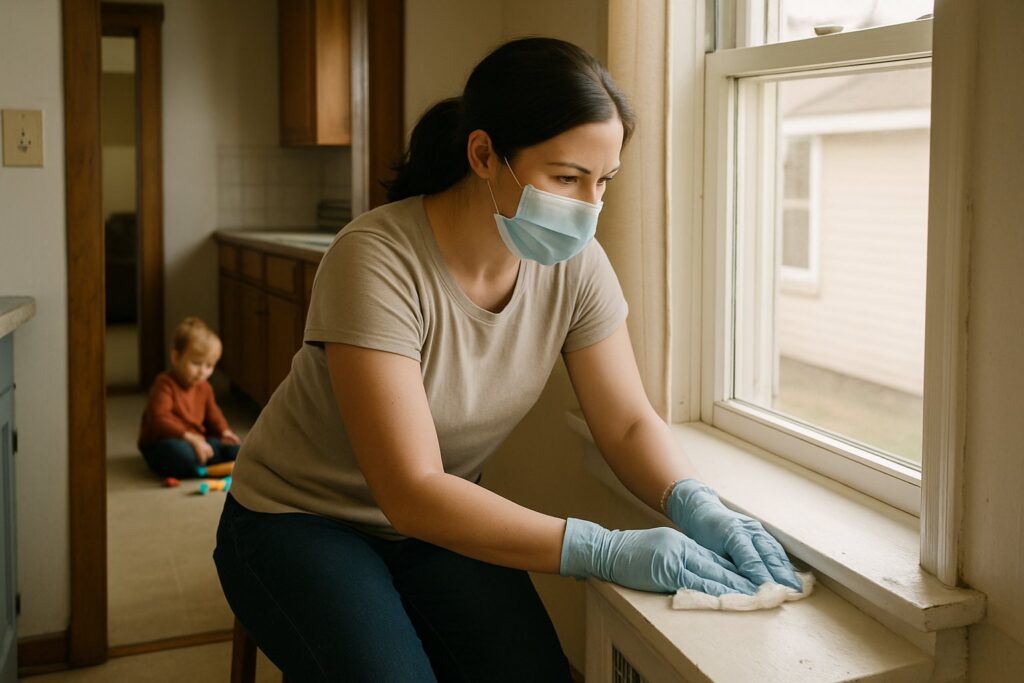
    A family wiping window sills during cleaning

    In short: lead gets into the body mainly through the mouth (dust on hands, toys and food; paint chips; water) and through the lungs (dust and fumes). Touching lead matters mostly because lead on the hands ends up being swallowed; official sources describe skin absorption of common lead compounds as a much smaller route. Prevention means finding the source before anyone is exposed: test older homes for paint, dust and soil hazards, check your water, keep dust down with wet cleaning and handwashing, leave work lead at work, and avoid products named in FDA and CPSC warnings. If you are worried about exposure, ask a doctor about a blood test or call Poison Control at 1-800-222-1222.

    This guide is based on the CDC, EPA, NIOSH, ATSDR, FDA and CPSC. It is general information, not medical advice; our lead poisoning hub has the overview. For what happens in the body, see effects of lead poisoning; for warning signs, see lead poisoning symptoms.

    How lead gets into the body

    • Swallowing (ingestion). The main route for young children. The EPA says children crawl, play on floors and put hands, toys and other objects in their mouths, so they swallow settled dust and soil. The EPA’s 2024 dust-lead rule calls hand-to-mouth contact with floor and surface dust the main pathway of exposure for young children. Adults and children also swallow lead in water, food, spices and remedies.
    • Breathing (inhalation). Fine dust or fumes from sanding, scraping, cutting or heating painted surfaces, from some jobs such as construction, mining and lead-acid battery recycling, and from hobbies that heat or melt lead. ATSDR says the effects are the same whether lead is breathed in or swallowed.
    • Skin. See the next section.
    • Before birth. The CDC says lead stored in a mother’s bones can be released during pregnancy and reach the baby.

    Can you get lead poisoning from touching lead?

    Touching lead is a risk mainly because of what happens next. Lead dust on the hands gets onto food, cigarettes, toys and fingers and is swallowed. ATSDR’s toxicological profile for lead says the common (inorganic) forms of lead can be absorbed through the skin, but much less efficiently than by breathing or swallowing, apart from hand-to-mouth transfer. NIOSH lists skin as one of the routes in the workplace and says lead’s health effects are the same whether it is breathed in, swallowed or absorbed through the skin.

    So the practical answer is: handling a fishing sinker or an old painted window is far less likely to put lead into your body through the skin than through your mouth, but it does leave lead on your hands. Wash your hands with soap and water afterward and before eating, drinking or smoking, and keep children from handling lead objects. NIOSH tells people who work with lead to wash as much skin as they can, with lead-removal soap, before going home.

    Lead poisoning from paint

    Lead-based paint was banned for homes in 1978, and the CDC says homes built before then probably contain it. The EPA estimates that about three-quarters of homes built before 1978 still have some lead paint, rising to 87% of homes built before 1940. Paint in good condition is usually not a hazard, according to the EPA. It becomes one when it peels, chips or cracks, when it rubs on friction surfaces such as windows and doors, or when it is disturbed by sanding, scraping or renovation, which can create large amounts of fine dust.

    The CDC lists lead dust as the most common source of exposure for young children. Our lead paint testing hub explains swab kits, lab tests and professional inspections, and is lead paint dangerous? covers when it is a hazard. Any paid renovation work in a pre-1978 home must follow the EPA’s lead-safe RRP rule.

    Lead poisoning from water

    Lead usually gets into drinking water from the plumbing, not from the river or well that supplies it. The EPA says lead service lines are the most significant source where they exist, and that homes built before 1986 are more likely to have lead pipes, fixtures and solder. Without a lead service line, brass or chrome-plated brass faucets and lead solder are the most common sources. You cannot see, taste or smell lead in water; a test is the only way to know.

    The EPA’s steps: use only cold water for drinking, cooking and baby formula; know that boiling does not remove lead; run the tap before drinking if water has sat for hours (showering or laundry also flushes pipes); clean faucet aerators; and if you use a filter, choose one certified to remove lead and replace the cartridge as directed. See lead in water testing, lead pipes and lead water filters.

    Lead in soil and outdoor dust

    The EPA says lead in soil comes mainly from old paint along the drip line of older buildings, past use of leaded gasoline near busy roads, and industry such as smelters and battery sites, and that it does not break down over time. Children are exposed when they play in bare soil or when it is tracked indoors. The EPA’s steps: cover bare soil with grass, mulch or other cover, keep children from playing in bare soil near older buildings, use doormats and take shoes off at the door. Gardeners should follow the EPA’s healthy gardening advice. Our dust and soil testing hub explains lab soil tests.

    Jobs and hobbies: take-home lead

    Most adults with high blood lead are exposed at work, according to NIEHS, in jobs such as construction, mining, welding and battery manufacturing. NIOSH warns that workers can carry lead dust home on their clothes, shoes and hair, putting their families, especially children and pregnant women, at risk. The CDC also names hobbies, such as stained glass work, that involve lead-based products. NIOSH’s steps for workers:

    • Change into work clothes and shoes that stay at work, and change back before going home.
    • Shower and wash your hair before leaving work if showers are provided; otherwise wash as much skin as you can with lead-removal soap.
    • Don’t take home tools, scrap or packaging that may have lead on them.
    • Store work clothes in a closed plastic bag, away from other clothes, and wash and dry them alone.

    Imported products, spices and cosmetics

    Federal agencies have found lead in a range of consumer goods, most often imported ones:

    ProductWhat the agency saysOur guide
    SpicesFDA has issued alerts on ground cinnamon from several brands with elevated lead; in 2023 cinnamon in applesauce pouches was linked to more than 500 reported cases of lead exposure.Lead in cinnamon and spices
    CosmeticsFDA warns that kohl, kajal and surma eye cosmetics can contain lead and use color additives that are not approved in the US.Lead in household items
    Traditional remedies and candiesThe CDC lists some imported candies and traditional medicines, such as azarcon and greta.Lead in household items
    Pottery and cookwareFDA warns about some traditional lead-glazed pottery and some imported aluminum and brass cookware that may leach lead.Lead in pottery and dishes
    Toys and jewelryThe CDC names some imported and older toys and toy jewelry; CPSC limits lead in children’s products.Lead in toys and jewelry

    Check the FDA and CPSC recall pages, stop using any product named in a warning, and don’t bring home spices, remedies or cosmetics of unknown origin for children. See our lead in household items hub for testing limits: home swab kits are not made for food, spices or cosmetics.

    How to prevent lead poisoning: CDC and EPA steps

    The CDC calls removing lead hazards before a child is exposed, primary prevention, the most effective approach. These steps come from the CDC and EPA:

    1. Know your home. If it was built before 1978, have it checked for lead paint and dust by a certified inspector or risk assessor. Find one in our professional directory.
    2. Keep dust down. Wet-mop floors and wipe windowsills and other flat surfaces with warm water and an all-purpose cleaner. Never mix ammonia and bleach.
    3. Wash hands and toys. Wash children’s hands before eating and sleeping and after playing outside; wash toys often.
    4. Block access to peeling paint. Keep children away from chipping paint and chewable painted surfaces such as windowsills.
    5. Renovate safely. Hire RRP-certified firms for work in pre-1978 homes and keep children and pregnant women away until cleanup is done.
    6. Test and manage your water. Use cold water for drinking, cooking and formula, and test if you may have lead pipes.
    7. Shoes off, doormats down. Reduce soil and dust tracked indoors.
    8. Leave work lead at work. Follow the NIOSH steps above.
    9. Watch recalls. Check FDA and CPSC warnings for spices, remedies, cosmetics, dishes and toys.
    10. Test children. Ask your child’s doctor about a blood lead test. Medicaid requires testing at 12 and 24 months; see lead and children.

    Frequently asked questions

    What is the most common cause of lead poisoning?

    In the US, lead dust, mostly from old lead-based paint. The CDC names lead dust as the most common source for young children, and NIEHS calls it the most common way people are exposed.

    Can you get lead poisoning from touching lead?

    Mostly through what reaches your mouth afterward. ATSDR says skin absorption of common lead compounds is much less efficient than swallowing or breathing them. Wash your hands after handling lead and before eating.

    Does boiling water remove lead?

    No. The EPA says boiling does not remove lead. Use cold water, test it, and use a filter certified for lead if needed.

    Is lead paint dangerous if it is not peeling?

    The EPA says lead paint in good condition is usually not a hazard, but paint on windows, doors and other rubbing surfaces can make dust, and any sanding or scraping releases it. Test before you renovate.

    What should I do if I think my family was exposed?

    Ask your doctor or local health department about a blood lead test. If someone may have swallowed something with lead, call Poison Control at 1-800-222-1222; for severe symptoms, call 911. Then find and fix the source.

  • Effects of Lead Poisoning on Children and Adults

    Effects of Lead Poisoning on Children and Adults

    The effects of lead poisoning depend on age, how much lead and for how long, but official health agencies agree on the main ones. In children, lead harms the developing brain and nervous system, with effects on learning, attention and behavior; in adults, it is linked to higher blood pressure, kidney damage and fertility problems, and some effects in both can be permanent.

    An adult having blood pressure checked by a nurse

    In short: the CDC says no safe blood lead level in children has been identified, and the World Health Organization says there is no known safe blood lead concentration. Even low levels in children are associated with lower IQ scores and school achievement and with attention and behavior problems, according to the CDC and NIEHS. In adults, NIEHS links levels below 10 µg/dL to higher blood pressure and reduced kidney function, and NIOSH lists anemia, nerve and brain damage and infertility at high exposure. Because damage may not be reversible, prevention and early testing matter most. If you are worried, talk to a doctor or your local health department, or call Poison Control at 1-800-222-1222.

    This page explains what the CDC, the National Institutes of Health (through NIEHS and its National Toxicology Program), NIOSH and WHO publish. It is not a diagnosis or medical advice. For an overview of the topic, start at our lead poisoning hub.

    Lead toxicity: why lead harms the body

    Lead toxicity is the medical term for the harm lead does once it is inside the body. Lead travels in the blood, reaches the brain, kidneys and other organs, and is stored in bones and teeth, the WHO explains. Stored lead can move back into the blood years later, for example during pregnancy, and reach a developing baby.

    Doctors measure exposure with a blood lead test, reported in micrograms per deciliter (µg/dL). The CDC’s blood lead reference value for children is 3.5 µg/dL. That number marks the top 2.5% of US children aged 1 to 5; it is a screening tool, not a line below which lead is harmless.

    Effects of lead on children

    Children are the main concern for three reasons the CDC and WHO describe: they put hands and objects in their mouths, so they swallow more dust and soil; their bodies absorb more of the lead they swallow than adults do; and their brains are still developing. Children under 6 are the most likely to be exposed, the CDC says.

    The CDC lists these effects of lead exposure in children:

    • Damage to the brain and nervous system
    • Slowed growth and development
    • Learning and behavior problems
    • Hearing and speech problems

    The CDC adds that these can show up as lower IQ, a shorter attention span and doing less well in school. The WHO describes reduced attention span and increased antisocial behavior, and says lead exposure in children also causes anemia, high blood pressure, kidney problems and harm to the immune and reproductive systems.

    Most of this happens quietly. The CDC says most children with lead in their blood have no obvious immediate symptoms, which is why testing matters more than watching for signs. Our lead poisoning symptoms guide lists the signs that do appear, mostly at higher levels, and our lead and children guide covers screening ages and prevention.

    Effects at low levels

    NIEHS, part of the NIH, summarizes the research by blood lead level. It says health effects in children are found at levels below 5 µg/dL and may include lower IQ scores and academic achievement, and that levels at or below 10 µg/dL are associated with more behavioral effects and delayed puberty. The National Toxicology Program’s 2012 review of low-level lead concluded there is evidence of harm in both children and adults below 10 µg/dL and, for some effects, below 5 µg/dL.

    These are associations found across many studies of groups of people. They describe risk across a population; they cannot predict what will happen to one particular child. A child’s doctor is the right person to talk to about a specific result.

    Effects at very high levels

    At very high levels, lead can cause severe illness. The NIH’s MedlinePlus lists vomiting, a staggering walk, muscle weakness, seizures and coma. The WHO says children who survive severe lead poisoning may be left with permanent intellectual disability and behavior disorders. These are medical emergencies: call 911.

    Effects of lead on adults

    Most adults with high blood lead are exposed at work, according to NIEHS, in jobs such as construction, mining, welding and battery manufacturing. Others are exposed through home renovation, hobbies or contaminated products.

    Body systemWhat official sources say
    Heart and blood pressureNIEHS: levels below 10 µg/dL are associated with increases in blood pressure; above 15 µg/dL with cardiovascular effects. WHO: increased risk of high blood pressure and cardiovascular problems. NIOSH lists heart disease.
    KidneysNIEHS: levels below 10 µg/dL are associated with decreased kidney function, and even below 5 µg/dL may decrease it. WHO and NIOSH list kidney damage.
    Brain and nervesNIOSH: high exposure may cause neurologic and brain damage; long-term exposure can bring depression, irritability, mood changes, distraction and forgetfulness, and pain or tingling in the hands or feet.
    ReproductionNIOSH: infertility in both men and women. NIEHS links levels above 15 µg/dL to fertility problems.
    BloodNIOSH and ATSDR: anemia.
    OtherNIOSH also lists hearing damage, decreased lung function, bone or tooth loss and more infections, and says lead is possibly linked to cancer.

    NIOSH notes that these effects are the same whether lead is breathed in, swallowed or absorbed through the skin, that symptoms look like those of other illnesses and may develop slowly, and that very high exposure can kill. If you work with lead, tell your doctor.

    Effects during pregnancy

    Lead crosses the placenta. The CDC says lead stored in a mother’s bones can be released into the blood during pregnancy, and that lead exposure in pregnancy can raise the risk of miscarriage, of a baby being born too early or too small, and of harm to the baby’s brain, kidneys and nervous system. NIEHS says maternal blood lead levels even below 5 µg/dL are associated with reduced fetal growth, and the WHO lists reduced fetal growth and preterm birth. If you are pregnant and think you may have been exposed, the CDC’s advice is to talk to your health care provider.

    Long-term effects of lead poisoning

    The official wording here is careful, and so are we. What the agencies say:

    • CDC: “The effects of lead poisoning can be permanent and disabling.”
    • WHO: lead can permanently affect children’s brain development, and lead causes long-term harm in adults, including increased risk of high blood pressure.
    • NIEHS: many effects are permanent, and research suggests some psychological effects of childhood exposure may not appear until adulthood. NIEHS-funded research has also linked early-life lead exposure with psychiatric disorders and substance abuse.
    • WHO, worldwide: citing estimates from the Institute for Health Metrics and Evaluation, more than 3.5 million deaths in 2023 were attributed to lead exposure, mainly through effects on the heart and blood vessels.

    A few cautions help read this research well. Many long-term findings come from studies that follow groups of people over time, and they show links, not certainty for any one person. Global death estimates are models, and they include countries with far higher exposure than the US. And lead stored in bone means that exposure in the past can still matter today, which is one reason doctors ask about old jobs, hobbies and homes.

    Can the effects be reversed?

    Blood lead levels can come down once the source is removed, and doctors can treat very high levels. But treatment does not undo damage that has already happened, and the CDC and WHO both describe some effects as permanent. That is why the CDC’s follow-up for children includes early educational services and developmental checks alongside removing the lead. Our guide to lead poisoning treatment explains what doctors and health departments do at each blood lead level.

    Why prevention matters most

    Because damage may be permanent and often has no symptoms, the CDC’s approach is to remove lead hazards before a child is exposed, which it calls primary prevention. In most US homes that means:

    • Old paint and dust. Homes built before 1978 probably contain lead-based paint, the CDC says, and peeling paint and renovation dust are the most common hazards. See lead paint testing and dust and soil testing.
    • Water. Lead pipes, solder and some brass fixtures can add lead to tap water. See lead in water testing.
    • Products. Some imported spices, candies, remedies, cosmetics, pottery, toys and jewelry. See lead in household items.
    • Work and hobbies. Lead dust carried home on clothes, shoes and hair.

    Our guide to lead poisoning causes and prevention covers each source and the CDC and EPA steps in detail. When a home needs inspection or repair, use a certified professional from our directory.

    Frequently asked questions

    What are the long-term effects of lead poisoning?

    In children, official sources describe lasting effects on learning, attention, behavior and development; in adults, higher blood pressure, heart and kidney problems and fertility effects. The CDC says effects can be permanent. How a specific person is affected depends on the level and length of exposure.

    Is lead toxicity the same as lead poisoning?

    The terms are used for the same problem: harm from lead in the body. Health agencies also talk about lead exposure, meaning any lead taken in, since no safe level has been identified in children.

    Can a small amount of lead cause harm?

    NIEHS says health effects in children are found below 5 µg/dL, and the CDC says no safe level in children has been identified. That is why doctors take any detectable level seriously and look for the source.

    Do adults recover from lead exposure?

    Blood levels fall once exposure stops, but lead stored in bone can stay for years, and some effects may last. An adult with possible exposure should talk to a doctor, who can order a blood test and advise on follow-up.

    How do I know if my child has been affected?

    Only a blood test shows exposure. Ask your child’s doctor or your local health department. If your child may have swallowed something with lead, call Poison Control at 1-800-222-1222; for severe symptoms such as a seizure, call 911.

  • Lead Poisoning Treatment: How Doctors Manage High Blood Lead

    Lead Poisoning Treatment: How Doctors Manage High Blood Lead

    Lead poisoning treatment starts with finding the lead and getting the person away from it. For most children and adults with lead in their blood, the CDC’s guidance for health care providers centers on removing the source, repeat blood tests, a healthy diet and close follow-up, with medicine to pull lead from the body (chelation) kept for very high levels and given only by medical professionals.

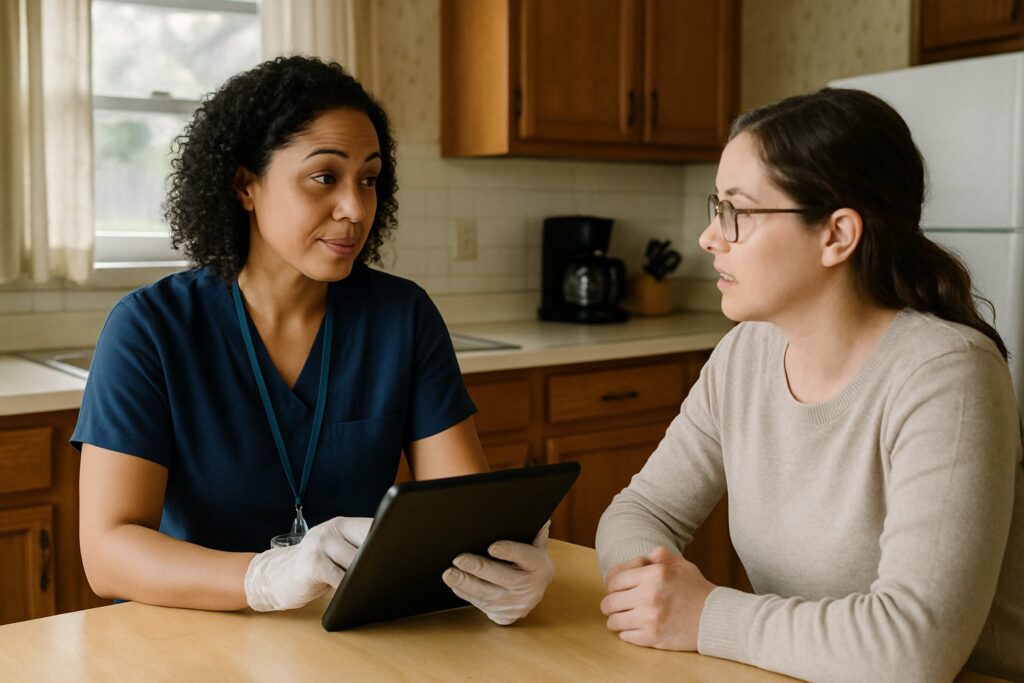
    A health department nurse visiting a family at home

    In short: there is no home treatment for lead poisoning. If a blood test shows lead, a doctor and often the local health department will look for where it came from, schedule follow-up tests, check diet and development, and in some cases send an inspector to the home. At very high levels, the CDC tells providers to consider hospital care and to consult a medical toxicologist about treatments such as chelation. If you are worried about lead exposure, call your doctor, your local health department or Poison Control at 1-800-222-1222. Call 911 for severe symptoms such as a seizure.

    This page explains what the CDC and its toxic-substances agency ATSDR publish for health care providers. It is not medical advice, and it is not a plan you can follow at home. Only a health care provider who knows the patient can decide on care.

    Step one: find the lead and remove it

    Lead does not leave the body while new lead keeps coming in. That is why every level of the CDC’s recommended actions includes looking for the source. The CDC tells parents that when a child’s blood lead level is above its reference value, follow-up services can include finding and removing lead from the child’s environment, a diet high in iron and calcium, early educational services and follow-up blood testing. The CDC also describes primary prevention, removing lead hazards from the environment before a child is exposed, as the most effective way to protect children. Our lead poisoning hub sums up what the CDC, NIEHS and WHO say about why.

    ATSDR, the CDC’s sister agency for toxic substances, says medical and environmental steps should happen at the same time to best protect a child, and that providers should start a prompt investigation for the source of exposure. In practice, the source is often in the home: deteriorating paint and the dust it makes, water from lead pipes, bare soil, a parent’s work clothes, or an imported spice, remedy or cosmetic. Our guides to lead paint testing, lead in water testing, dust and soil testing and lead in household items explain how each one is checked.

    Do not try to strip or sand old paint yourself to “get rid of” the lead. The EPA warns that renovation can create large amounts of lead dust, and that lead abatement should be done by certified professionals. Find one through our lead professional directory.

    What the CDC recommends at each blood lead level

    The CDC publishes a table of recommended actions for children’s blood lead levels, measured in micrograms per deciliter (µg/dL). Its blood lead reference value is 3.5 µg/dL, the level that marks the top 2.5% of US children aged 1 to 5. The reference value is a screening tool, not a safe line: the CDC says no safe blood lead level in children has been identified. Each row below includes all the actions in the rows above it. We summarize the CDC’s provider guidance as published on its “Recommended Actions Based on Blood Lead Level” page (dated August 21, 2025).

    Blood lead level (µg/dL)What the CDC tells providers to do
    Below 3.5Teach families about lead sources and prevention; check development, diet and nutrition at well-child visits; repeat testing at intervals based on age and risk.
    3.5 to 19All of the above, plus: report to the state or local health department; take an environmental exposure history; arrange an environmental investigation as required where you live; test for and treat iron deficiency; review diet with a focus on calcium and iron; check development and refer for services as needed; schedule follow-up blood tests.
    20 to 44All of the above, plus: a full history and physical exam looking for signs of lead exposure; arrange or refer for an environmental investigation and lead hazard reduction; consider an abdominal X-ray to look for swallowed lead chips or objects; consult a Pediatric Environmental Health Specialty Unit (PEHSU) or Poison Control.
    45 or higherAll of the above, plus: a detailed neurological exam; abdominal X-ray and, if needed, bowel decontamination; hospital admission if the child has symptoms, or if the home is not lead-safe or the source is unknown; consultation with a medical toxicologist or a pediatrician experienced in lead poisoning about decontamination or chelation.

    A finger-prick (capillary) result at or above the reference value is confirmed with a blood draw from a vein, because lead on the skin can make a finger-prick read high. The higher the first result, the sooner the CDC wants that confirmation: within 3 months for 3.5 to 9 µg/dL, within 1 month for 10 to 19, within 2 weeks for 20 to 44, and within 48 hours for 45 or more. Our blood lead test guide explains the two kinds of test and what a result means.

    Case management and the health department

    Once a child’s blood lead level is at or above the reference value, the CDC tells providers to report it to the state or local health department. Many health departments then run what is called case management: a nurse or case worker follows the child, helps the family find and fix the source, and makes sure repeat tests happen. What the health department does, and at what level, is set by each state or city. The CDC’s guidance says environmental investigations should be arranged “as required,” because the rules differ from place to place. It also notes that in housing covered by HUD’s Lead Safe Housing Rule, an investigation may not be triggered below 5 µg/dL.

    An environmental investigation usually means a trained inspector or risk assessor visits the home to look for paint, dust, soil and water hazards, and asks about jobs, hobbies, foods, spices, remedies and cosmetics. If you rent, tell your health department and your landlord; if you own, the investigator’s report tells you which hazards need professional work. For the difference between an inspection and a risk assessment, see lead paint inspection.

    Nutrition: what the CDC says

    The CDC’s advice on food is short and specific: for a child with a blood lead level above the reference value, it lists “a diet high in iron and calcium” among the follow-up services a doctor may recommend. For providers, it adds testing for and treating iron deficiency, reviewing the child’s diet with a focus on calcium and iron, and referring families to nutrition programs such as WIC.

    A good diet supports a child’s health while the source is removed. It is not a treatment that removes lead, and it does not make lead exposure safe. Do not give a child iron, calcium or any other supplement for lead unless the child’s own doctor tells you to; the CDC’s guidance has the provider test for iron deficiency first.

    Chelation: only for high levels, only by medical professionals

    Chelation therapy uses prescription medicine that binds to lead so the body can get rid of it. The CDC says that if a child does have high levels of lead in the blood, they may receive chelation therapy, and its provider guidance places it at 45 µg/dL and above, decided together with a medical toxicologist or a pediatrician experienced in lead poisoning. ATSDR adds that 45 µg/dL is a guideline rather than a fixed threshold, that professional judgment should guide the decision for a child or an adult, and that chelation is not risk free.

    We describe chelation only so you know what a doctor may talk about. It is a hospital or specialist treatment. Products sold online as “detox” or “chelation” for lead are not the same thing, and no official source we use recommends them. If anyone suggests a home lead detox, talk to your doctor or call Poison Control at 1-800-222-1222 first.

    Follow-up blood tests

    Treatment is measured with repeat blood tests. The CDC’s schedule for children after a confirmed venous result is:

    Venous blood lead level (µg/dL)Early follow-upLater follow-up, once levels are falling
    3.5 to 93 months6 to 9 months
    10 to 191 to 3 months3 to 6 months
    20 to 442 weeks to 1 month1 to 3 months
    45 or higherAs soon as possibleAs soon as possible

    The CDC notes that blood lead levels can change with the seasons, and that more time outdoors in summer may call for more frequent checks. ATSDR lists reasons a level may rise again: a source nobody has found yet, incomplete repairs, a hazard that was not controlled, or lead stored in the body moving back into the blood. A level that will not come down is a signal to look again, not a reason to give up.

    Adults and pregnancy

    For adults, most elevated blood lead comes from work, according to NIEHS, in jobs such as construction, mining, welding and battery manufacturing. NIOSH, the CDC’s worker-safety institute, asks people who work with lead to tell their doctor, and describes steps at work, such as changing clothes and showering before going home, that protect both the worker and the family. ATSDR says professional judgment should guide any decision to chelate an adult.

    Lead stored in the bones can move into the blood during pregnancy and reach the baby, the CDC says. If you are pregnant or breastfeeding and think you may have been exposed, talk to your health care provider. Do not start or stop anything on your own.

    Why there is no home treatment

    The CDC says the effects of lead poisoning can be permanent and disabling, and most children with lead in their blood have no obvious symptoms (see lead poisoning symptoms). Treatment cannot undo damage that has already happened, which is why the official focus is on stopping exposure early, supporting the child’s development and checking that levels fall. All of that runs through a doctor and the health department. What you can do at home is the prevention side: wet-clean dust, wash hands and toys, keep children away from peeling paint, use cold tap water for drinking and cooking, and test your home. Our guide to lead and children has the full CDC and EPA list.

    Who to call

    • 911 for severe symptoms such as a seizure, collapse or trouble breathing.
    • Poison Control, 1-800-222-1222, if you think someone swallowed something with lead or you have urgent questions. It is free and answers around the clock.
    • Your doctor or your child’s pediatrician for a blood lead test and follow-up.
    • Your local health department for testing, case management and home investigations.

    Frequently asked questions

    Can lead poisoning be cured?

    Blood lead levels can come down once the source is removed, and doctors can treat very high levels. But the CDC says some effects of lead can be permanent, so the goal is to stop exposure as early as possible. Ask your doctor what to expect for your situation.

    How do you treat lead poisoning at home?

    You don’t. There is no home treatment. At home, you can help by following the health department’s advice to remove lead sources, keeping dust down and making sure follow-up blood tests happen. Any medical treatment comes from a doctor.

    At what level is chelation used?

    The CDC’s guidance for children places it at 45 µg/dL and above, decided with a medical toxicologist or experienced pediatrician. ATSDR calls 45 a guideline, not a fixed rule. The decision belongs to the medical team.

    How long does it take for blood lead levels to go down?

    Official sources do not give one timeline; it depends on the level, how long the exposure lasted and whether the source is gone. That is why the CDC sets follow-up tests from 2 weeks to 9 months apart depending on the result.

    Does eating well lower lead levels?

    The CDC recommends a diet high in iron and calcium for children with elevated blood lead, alongside removing the source. Diet supports the child; it does not remove lead or replace medical follow-up. Don’t give supplements unless your doctor says so.

    Who pays for testing and follow-up?

    The CDC says many private insurance policies cover blood lead testing, and Medicaid covers it for enrolled children. Ask your health department about home investigations and local programs, which vary by state.

  • Lead and Children: Risks, Sources, Prevention and Testing

    Lead and Children: Risks, Sources, Prevention and Testing

    Young children are the people most at risk from lead, because they put their hands and toys in their mouths and because their brains and bodies are still developing. The CDC says no safe blood lead level in children has been identified, and that the most effective protection is to remove lead from a child’s surroundings before exposure happens.

    A family eating a healthy meal together

    In short: the main sources are dust from old paint in homes built before 1978, drinking water from lead pipes and fixtures, soil, and some imported foods, spices, candies, remedies, toys and jewelry. The CDC, EPA and American Academy of Pediatrics (AAP) recommend keeping dust down with wet cleaning, washing hands and toys often, using cold tap water for drinking and baby formula, hiring lead-safe certified contractors for work on older homes, and checking recalls. Most children with lead in their blood look healthy, so a blood lead test is the only way to know. Ask your child’s doctor about testing.

    This page summarizes official guidance. It is not medical advice. If you think your child swallowed something containing lead, call Poison Control at 1-800-222-1222, and call 911 for severe symptoms.

    Why children are most at risk

    The CDC says children younger than 6 are more likely to be exposed because of their hand-to-mouth behavior. They crawl, play on floors and put toys, fingers and other objects in their mouths, picking up lead dust and soil along the way. The EPA calls young children “the most vulnerable” for the same reason.

    The harm is also greater in children. The CDC lists damage to the brain and nervous system, slowed growth and development, learning and behavior problems, and hearing and speech problems, and links these to lower IQ, a shorter attention span and doing less well at school; see effects of lead poisoning. Exposure can begin before birth: the CDC says lead can pass from a pregnant person to the baby, including lead stored in the parent’s bones from earlier exposure.

    The CDC estimates that about 500,000 US children have blood lead levels at or above its reference value of 3.5 µg/dL.

    Where children’s lead comes from

    SourceWhy it matters for childrenOur guide
    Paint and dust in homes built before 1978The CDC says homes built before 1978 probably contain lead-based paint; peeling or cracking paint makes dust that children swallow or breathe inIs lead paint dangerous?
    Drinking waterLead can enter water from lead service lines, solder and fixturesLead pipes
    SoilThe CDC lists soil near airports, highways and factories; the EPA adds soil near building wallsLead in soil testing
    Foods, spices, candies, remedies, cosmeticsThe CDC names some imported candies and traditional remedies; the FDA has issued alerts on ground cinnamon and recalled cinnamon applesauce pouchesLead in cinnamon and spices
    Toys and jewelryThe CDC names some imported toys, antique toys and toy jewelryLead in toys and jewelry
    Dishes and potteryThe FDA warns about some traditional and antique glazed potteryLead in pottery and dishes
    A parent’s job or hobbyLead dust can come home on clothes, shoes and tools (CDC, NIOSH)Lead poisoning

    Prevention steps from the CDC, EPA and AAP

    The CDC calls removing lead hazards from a child’s environment before exposure (“primary prevention”) the most effective way to avoid long-term harm. The AAP’s 2016 policy statement on preventing childhood lead toxicity makes the same point, stressing that there is no identified safe blood lead level and that reducing lead in housing, soil, water and consumer products pays off. These are the everyday steps official sources list; lead poisoning causes and prevention covers the same ground for the whole family.

    At home: dust and paint

    • In homes built before 1978, regularly wet-mop floors and wipe windowsills and other flat surfaces; household dust can be a major source of lead (CDC). Use warm water and an all-purpose cleaner, and never mix ammonia and bleach products.
    • Take shoes off at the door so dust and soil stay outside (CDC).
    • Do not sand, scrape or dry-sweep old paint yourself. For repairs, renovation or painting in pre-1978 homes, hire a firm certified under the EPA’s Renovation, Repair and Painting (RRP) Rule, and keep children and pregnant people away from the work area. See lead-safe renovation (RRP).
    • If your home was built before 1978, the CDC recommends having it checked by a licensed lead inspector. See lead paint inspection and find a lead professional.

    Hands, toys and play

    • Wash children’s hands often, especially before eating and sleeping, and after playing outside or with pets (CDC).
    • Wash toys regularly; they can pick up lead from dust and soil (CDC).
    • Cover bare soil, keep children from playing in it, and use doormats so soil is not tracked indoors (EPA). See dust and soil testing.

    Water and baby formula

    • Use only cold tap water for drinking, cooking and making baby formula; hot water can draw more lead from pipes, and boiling does not remove lead (EPA).
    • If water has been sitting in the pipes, run the tap, take a shower or do laundry first to flush it (EPA). How long depends on whether you have a lead service line.
    • Clean faucet aerators regularly, and if you use a filter, choose one certified to reduce lead and replace cartridges on schedule (EPA). See best water filters for lead and how to test water for lead.

    Food, products and work

    • Check FDA alerts and recalls for foods and spices, and CPSC recalls for toys and children’s products. The CDC also advises not letting children play with toys made before 2009, when tighter federal limits for children’s products began to take effect.
    • Be cautious with imported candies and traditional remedies such as azarcon and greta, which the CDC warns may contain lead.
    • If someone in the home works with lead, they should change clothes and shoes before coming home and wash work clothes separately (CDC).

    Diet

    The CDC says a diet rich in iron and calcium is part of follow-up for children with lead in their blood. Diet does not make lead safe or remove it from the home, and supplements should only be used on a doctor’s advice.

    Screening and testing

    Most children with lead in their blood have no obvious symptoms, so testing is how lead is found. Our blood lead test guide covers it in depth; the key rules are:

    • Medicaid: children enrolled in Medicaid must be tested at 12 and 24 months, and between 24 and 72 months if never tested. A risk questionnaire alone does not meet the requirement (CMS).
    • Other children: the CDC recommends testing children at higher risk, including those who live in or visit pre-1978 homes, children from low-income households, children who are immigrants, refugees or recently adopted from other countries, and children exposed through a household member’s job or hobby. The AAP calls for a lead risk assessment at well-child visits at 6, 9, 12, 18 and 24 months.
    • Results: the CDC’s blood lead reference value is 3.5 µg/dL. It is not a safe level; it flags children with more lead than 97.5% of US children aged 1 to 5.

    States set their own rules too, and some require testing of all young children. Ask your pediatrician or state health department.

    Lead in school and child care drinking water

    Children spend many hours a day at school or child care, and both may have older plumbing.

    • EPA 3Ts program. The EPA’s voluntary 3Ts program (Training, Testing and Taking action) gives schools and child care facilities a toolkit for sampling their taps, reading the results and fixing problems.
    • Lead and Copper Rule Improvements (LCRI). Under the EPA’s final rule from October 2024, community water systems must, starting November 1, 2027, compile a list of the schools and licensed child care facilities they serve. In the first five years, they must sample at least 20% of the elementary schools and child care facilities each year, sample secondary schools on request, and share the results with the facility and health officials. States may waive this where an equally strict state or local program exists. Rules can change, so check the EPA and your water system for the current schedule.
    • AAP recommendation. In its 2016 policy statement, the AAP urged state and local governments to make sure water fountains in schools do not exceed 1 part per billion (ppb) of lead. That is a recommendation, not a federal law.

    Ask your school or child care center whether its taps have been tested, when, and where the results are posted. Some states require testing on their own schedule.

    When to call a doctor or Poison Control

    SituationWho to contact
    Severe symptoms such as seizures, repeated vomiting or loss of consciousness911
    Your child swallowed paint chips, a piece of jewelry or a product that may contain leadPoison Control, 1-800-222-1222
    Your home has old paint, lead pipes or recent renovation, or your child used a recalled productYour child’s doctor or local health department, to ask about a blood lead test
    You want your home checkedA certified lead inspector or risk assessor; see find a lead professional

    More on symptoms is on our lead poisoning symptoms page and the lead poisoning hub.

    Frequently asked questions

    What age is lead most dangerous for children?

    The CDC says children younger than 6 are more likely to be exposed because of hand-to-mouth behavior, and Medicaid requires testing at 12 and 24 months because those are ages of high risk. Exposure before birth also matters.

    How can I protect my baby from lead?

    Official steps include wet-cleaning dust in older homes, washing hands and toys, using cold tap water for drinking and formula, hiring RRP-certified contractors for work on pre-1978 homes, and checking recalls. Ask your pediatrician about a blood lead test.

    Do children with lead poisoning look sick?

    Usually not. The CDC says most children with lead in their blood have no obvious immediate symptoms, which is why testing matters.

    Is there lead in school drinking water?

    It can happen when plumbing or fixtures contain lead. Under the EPA’s 2024 rule, water systems must begin sampling elementary schools and child care facilities from November 1, 2027. Ask your school whether it has tested.

    Should I buy a home test to check my child for lead?

    No home kit tests a child. Blood lead tests are done through a doctor, health department or lab. Home kits test surfaces or water, and each has limits; see our lead test kits guide.

  • Blood Lead Test: How It Works and What Your Results Mean

    Blood Lead Test: How It Works and What Your Results Mean

    A blood lead test measures how much lead is in a person’s blood, and it is the only reliable lead poisoning test: the one way to know whether someone has been exposed. The CDC calls it the best way to find out whether a child has lead poisoning, because most children with lead in their blood look and act healthy.

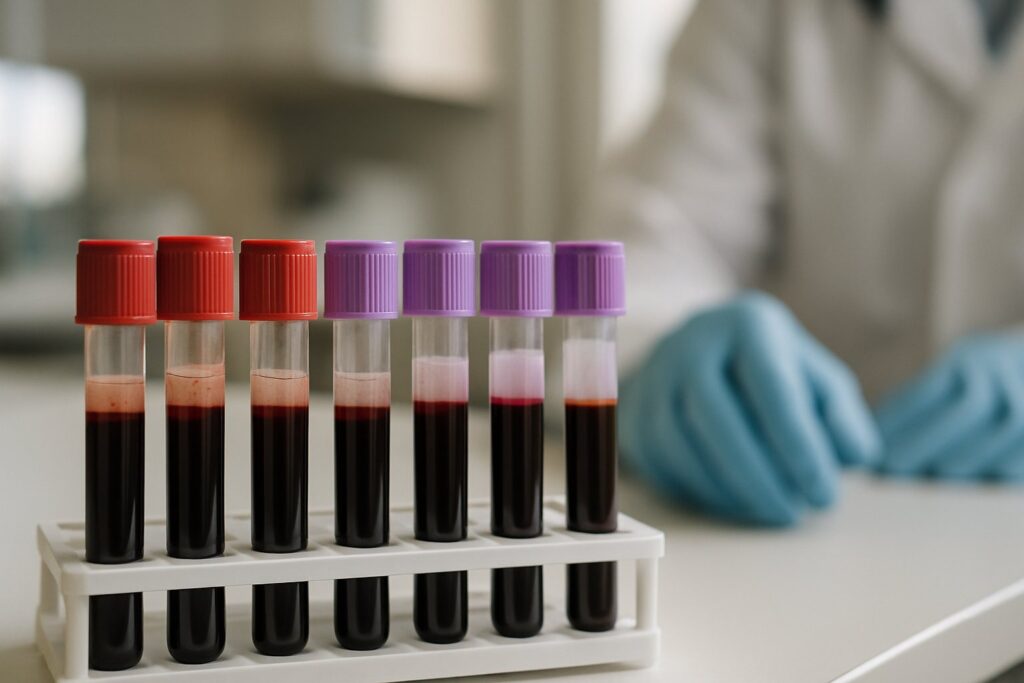
    Blood sample tubes in a laboratory rack

    In short: the test is a small blood sample, taken either from a finger or heel (capillary) or from a vein (venous). Results come in micrograms of lead per deciliter of blood (µg/dL). The CDC’s blood lead reference value is 3.5 µg/dL, in use since October 2021: a child at or above it has more lead than 97.5% of US children aged 1 to 5. A high finger-stick result should be confirmed with a venous test. Children on Medicaid must be tested at 12 and 24 months, and between 24 and 72 months if never tested. Ask your child’s doctor or your local health department about testing.

    This guide explains what official sources say about the test and the numbers. It is not medical advice, and only a health care provider can interpret a result for you or your child. For urgent questions about a possible poisoning, call Poison Control at 1-800-222-1222.

    What a blood lead test measures

    Lead that is swallowed or breathed in enters the bloodstream. A blood lead test reports the concentration in µg/dL. The CDC says any detectable lead means a child has been exposed, and may still be exposed, and it states that no safe level of lead in children has been identified.

    A blood test shows mainly recent and ongoing exposure. It does not show where the lead came from, so a high result is usually the start of a search for the source, not the end of the story. For that search, see our guides on lead paint testing, lead water testing and dust and soil testing.

    Finger-stick vs venous: the two kinds of sample

    Capillary (finger-stick or heel-stick)Venous (blood draw from a vein)
    How it is takenA prick on the finger or heel; a few drops of bloodA standard blood draw from a vein in the arm
    SpeedOften the first step; can give fast results, including point-of-care tests in the officeResults usually take a few days from a lab
    ReliabilityCan read falsely high if lead on the skin gets into the sampleThe CDC says venous samples are more reliable at identifying lower blood lead levels
    Typical useScreeningConfirming a capillary result at or above the reference value; follow-up

    The CDC advises that when a capillary result is at or above the reference value, a venous sample should be collected to confirm it. If the first test was already venous, no second draw is needed for confirmation. That risk of lead on the skin getting into the sample is the main reason a high finger-stick result is not treated as final.

    The CDC blood lead reference value: 3.5 µg/dL

    The blood lead reference value (BLRV) is how the CDC identifies children with more lead in their blood than most US children. It is 3.5 µg/dL. The CDC lowered it from 5 µg/dL to 3.5 µg/dL in October 2021, based on the National Health and Nutrition Examination Survey (NHANES) cycles from 2015 to 2018. It marks the 97.5th percentile of blood lead levels among US children aged 1 to 5, so a child at or above it is in the top 2.5%.

    Two points are easy to miss:

    • The BLRV is not a safe level and not a health-based standard. The CDC’s 2021 report says plainly that no safe blood lead level in children exists. A result below 3.5 µg/dL does not mean lead can be ignored.
    • The value can change. The CDC says it reviews the latest two NHANES cycles every four years to decide whether to update it. The CDC estimates that about 500,000 US children have blood lead levels at or above the current value.

    Who should be tested, and when

    Children on Medicaid

    Federal Medicaid rules require that all children enrolled in Medicaid receive blood lead screening tests at 12 months and 24 months of age. Any child between 24 and 72 months with no record of a previous blood lead test must also be tested. This applies whether coverage comes through Medicaid (title XIX) or CHIP-funded Medicaid (title XXI). A CMS bulletin from 2016 adds that a risk questionnaire alone does not meet the requirement; the blood test must actually be done. Medicaid covers point-of-care tests drawn in the doctor’s office.

    Other children

    For children not on Medicaid, the CDC recommends testing children at higher risk. It names children who live in or often visit homes or buildings built before 1978, children in low-income households, children who are immigrants, refugees or recently adopted from other countries, and children exposed through a household member’s job or hobby. The American Academy of Pediatrics’ Bright Futures schedule calls for a lead risk assessment at the 6, 9, 12, 18 and 24 month well-child visits, followed by a blood test when the assessment shows risk. Many states set their own rules, sometimes universal testing at certain ages, so ask your pediatrician or state health department what applies where you live.

    Adults and pregnancy

    Adults can be tested too, usually when a doctor suspects exposure from work, a hobby, a home renovation or a contaminated product. NIOSH advises anyone who works with lead to tell their doctor. During pregnancy, the CDC says lead can pass to the baby, and its guidance asks providers to look for the source of exposure when a pregnant or breastfeeding person’s level is 5 µg/dL or higher. If you are pregnant and think you may have been exposed, ask your provider about a test.

    Where to get a lead poisoning test and what it costs

    The CDC says health care providers and most local health departments can test for lead. Many private insurance plans cover it, and Medicaid covers it for enrolled children. We do not list prices because they vary by lab, insurer and state; ask your provider or health department before the test.

    Home swab kits and water kits do not test people. They are for surfaces or water, and our lead test kits hub explains what each kind can and cannot do.

    What your child’s results mean: the CDC follow-up table

    The CDC publishes recommended actions for health care providers based on a child’s confirmed venous blood lead level. This summary is for understanding the conversation with your doctor, not a substitute for it.

    Venous blood lead levelConfirm a capillary result withinFollow-up testing (CDC)Other actions the CDC lists for providers
    Below 3.5 µg/dLNot neededPer the usual age-based schedule (Medicaid: 12 and 24 months)Education about lead sources, developmental checks, diet review
    3.5 to 9 µg/dL3 monthsEarly follow-up at 3 months, later every 6 to 9 monthsReport to the health department, exposure history, environmental investigation as required, check for iron deficiency, review diet and development
    10 to 19 µg/dL1 month1 to 3 months, later every 3 to 6 monthsSame as above
    20 to 44 µg/dL2 weeks2 weeks to 1 month, later every 1 to 3 monthsAbove, plus full history and exam, environmental investigation and hazard reduction; providers may consult a Pediatric Environmental Health Specialty Unit or Poison Control
    45 µg/dL or higher48 hoursAs soon as possibleUrgent medical evaluation; the doctor decides on treatment, which may include hospital care

    For children above the reference value, the CDC says a doctor may recommend finding and removing lead from the home, a diet rich in iron and calcium, early educational services and repeat testing. Treatment decisions are for the child’s doctor; our lead poisoning treatment page explains what official guidance describes. Do not try home remedies or supplements sold to “remove lead.”

    After a high result: finding the source

    In many states, a child’s elevated result is reported to the health department, which may offer a home visit or an environmental investigation. Medicaid also pays for lead investigations in the homes of enrolled children with elevated levels. You can also hire a certified risk assessor; see find a lead professional and lead paint inspection vs risk assessment.

    Common places to look, depending on your home and habits (our lead poisoning causes and prevention page covers each in more depth):

    More on symptoms and health is on our lead poisoning symptoms page and the lead poisoning hub.

    Frequently asked questions

    What is a normal blood lead level?

    There is no “normal” or safe level. The CDC uses 3.5 µg/dL as a reference value to identify children with more lead than 97.5% of US children aged 1 to 5, and it says no safe blood lead level in children has been identified.

    Is a finger-prick lead test accurate?

    It is a good screening test, but it can read high if lead on the skin gets into the sample. The CDC recommends confirming a capillary result at or above 3.5 µg/dL with a venous blood draw.

    At what age should my child get a blood lead test?

    Medicaid requires tests at 12 and 24 months, and between 24 and 72 months if never tested. For other children, the CDC recommends testing those at higher risk, and the AAP calls for a risk assessment at well-child visits from 6 to 24 months. Ask your pediatrician what applies to your child.

    How long do blood lead test results take?

    Finger-stick tests done in the office can give results quickly. Venous samples sent to a lab usually take a few days, according to the CDC.

    Can I test my own blood for lead at home?

    Lead in people is measured with a blood test through a health care provider, a health department or a lab. Home swab kits are for surfaces such as paint, not for people.

    My child’s level is above 3.5 µg/dL. What happens next?

    The CDC recommends confirming the result with a venous test, then follow-up testing, a search for the source and a review of diet and development. Your doctor and local health department will guide the next steps. If your child has severe symptoms, call 911.

  • Lead Poisoning Symptoms in Children and Adults

    Lead Poisoning Symptoms in Children and Adults

    Lead poisoning symptoms are often vague or missing altogether, which is why so many cases are found only through a blood test. The CDC says most children with lead in their blood have no obvious immediate symptoms, and in adults the signs, such as stomach pain, headaches, tiredness or irritability, look like many other everyday illnesses.

    A doctor talking with an adult patient in a clinic

    In short: when symptoms do appear, official sources list stomach pain and cramping, constipation, nausea, headaches, tiredness, irritability, trouble sleeping, poor appetite and, in young children, learning, behavior and development problems. Very high levels can cause vomiting, a staggering walk, seizures or coma. A blood lead test is the only way to know. If someone has severe symptoms such as seizures or repeated vomiting, call 911. For other worries about exposure, call Poison Control at 1-800-222-1222 or talk to a doctor or your local health department.

    This page explains what the CDC, its worker-safety institute NIOSH and the National Institutes of Health (through MedlinePlus) say about symptoms. It is not a diagnosis and not medical advice. Only a health care provider can tell you what a symptom means for you or your child.

    Why lead poisoning is easy to miss

    Lead builds up quietly. It is swallowed or breathed in as dust, chips, soil or contaminated food and water, and much of the harm happens before anyone notices anything. The CDC states plainly that most children with any lead in their blood have no obvious immediate symptoms, and that no safe blood lead level in children has been identified.

    NIOSH makes the same point about adults: lead symptoms are similar to those of other illnesses and may develop slowly, so lead poisoning can be overlooked. A parent may put a toddler’s crankiness down to teething, and an adult may blame stress or poor sleep for headaches and fatigue. That is why doctors rely on a blood lead test, not on symptoms, to find exposure.

    Signs of lead poisoning in children

    The CDC describes the effects of lead in children mainly in terms of how it affects growing bodies and brains, rather than a short checklist of signs. According to the CDC, lead exposure in children can cause:

    • Damage to the brain and nervous system
    • Slowed growth and development
    • Learning and behavior problems
    • Hearing and speech problems

    The CDC links these effects to lower IQ, a shorter attention span and doing less well in school, and notes evidence that childhood exposure can cause harm that lasts. Our page on the effects of lead poisoning explains the longer-term picture.

    MedlinePlus, the National Library of Medicine’s consumer health site, adds symptoms that families sometimes notice day to day. For young children it lists the loss of developmental skills they had already learned, alongside irritability, aggressive behavior, low appetite and energy, trouble sleeping, constipation, and stomach pain and cramping. It also lists anemia (a low red blood cell count), which a doctor can find with a blood test.

    None of these signs, alone or together, proves lead poisoning. They are common in children for many reasons. What they do mean is that if your child has them and also lives in or visits an older home, or may have been around one of the sources on our lead and children page, it is worth asking the pediatrician about a blood lead test.

    Symptoms in adults

    NIOSH, the CDC’s worker-safety institute, splits adult symptoms into two patterns.

    PatternSymptoms NIOSH lists
    High exposure over a short timeMetallic taste; stomach pain, nausea, vomiting; diarrhea or constipation; dehydration, headache, exhaustion, irritability, weakness; loss of appetite; memory loss; pain or tingling in the hands or feet
    Exposure over a long timeStomach pain, nausea and constipation; depression, irritability and mood or behavior changes; distraction and forgetfulness; higher blood pressure
    Other effects NIOSH listsDecreased lung function; bone or tooth loss; more infections in general; fertility problems in men and women

    MedlinePlus also lists headaches, hearing loss, reduced sensations, difficulty getting pregnant and anemia among the symptoms of lead poisoning, and notes that stomach pain and cramping are usually the first sign of a high, toxic dose.

    Adults most often meet lead at work or through hobbies: construction and renovation of older buildings, battery recycling, metal work, firing ranges, stained glass and similar crafts. NIOSH notes that workers can carry lead dust home on clothes, shoes and tools, exposing their families. If you work with lead, NIOSH advises telling your doctor and your family’s doctors.

    Lead in pregnancy

    The CDC says lead stored in a person’s bones from earlier exposure can be released into the blood during pregnancy, and that lead can pass to the baby. It links lead in the blood during pregnancy to a higher risk of miscarriage, of a baby being born too early or too small, and of harm to the baby’s brain, kidneys and nervous system. If you are pregnant or breastfeeding and think you may have been exposed, talk to your health care provider about testing.

    Signs of very high exposure: when it is an emergency

    MedlinePlus lists the signs of very high lead levels as vomiting, a staggering walk, muscle weakness, seizures and coma. These are rare, but they are emergencies.

    SituationWhat official sources say to do
    Severe symptoms, such as seizures, repeated vomiting or loss of consciousnessCall 911 right away (MedlinePlus)
    Other symptoms that might be from lead, or a child swallowed something that may contain leadCall Poison Control at 1-800-222-1222, free and confidential, any time
    You suspect ongoing low-level exposure (old paint, work dust, a recalled product)Contact your health care provider or local health department; an emergency room visit is usually not needed unless the exposure was a high dose (MedlinePlus)

    Poison Control is staffed by specialists who can tell you whether a situation needs urgent care. Keep the number in your phone.

    The only way to know: a blood lead test

    Because symptoms are unreliable, the CDC calls a blood lead test the best way to find out whether a child has lead poisoning, and the best way to assess a person’s exposure in general. Results are given in micrograms of lead per deciliter of blood (µg/dL). The CDC uses a blood lead reference value of 3.5 µg/dL to flag children whose levels are higher than most US children’s, and says any detectable lead means a child has been exposed.

    The CDC says health care providers and most local health departments can do the test, many private insurance plans cover it, and Medicaid covers it for enrolled children. Children on Medicaid are required to be tested at 12 and 24 months, and between 24 and 72 months if they have never been tested. Our blood lead test guide explains finger-stick and venous tests, what results mean and what follow-up the CDC recommends.

    Do not try to treat suspected lead poisoning at home or with supplements or products sold online. Decisions about care belong to a doctor, who can look at the test results, the source of exposure and the whole picture. Our lead poisoning treatment page explains what official guidance says doctors do.

    When to ask a doctor about testing

    The signs of lead poisoning are easy to miss, so risk matters more than symptoms. The CDC recommends that children at higher risk be tested. It names children who live in or regularly visit homes or buildings built before 1978, children in low-income households, children who are immigrants, refugees or recently adopted from other countries, and children who may be exposed through a household member’s job or hobby. Talk to a doctor if:

    • Your home was built before 1978 and has chipping or peeling paint, or has been renovated recently. See is lead paint dangerous?
    • Your home has a lead service line or you are not sure. See lead pipes.
    • Someone in the household works with lead or has a lead-related hobby.
    • Your child used a recalled product, such as the 2023 cinnamon applesauce pouches. See lead in cinnamon and spices.
    • You use imported spices, candies, traditional remedies, cosmetics or glazed pottery that could contain lead. See lead in pottery and dishes.
    • Your child has any of the symptoms above and you want to rule lead out.

    Finding and removing the source

    A blood test tells you whether someone has been exposed; it does not tell you where the lead came from. When a child’s level is at or above the reference value, the CDC says health departments may help find the source, and doctors may recommend removing lead hazards from the home, a diet rich in iron and calcium, early educational services and repeat testing.

    For the home itself, the first steps are usually checking paint, dust, water and soil. Our guides on lead paint testing, lead water testing and dust and soil testing explain the options, and you can find a certified lead inspector or risk assessor for a full investigation. Where lead comes from and how to keep it out of your home is covered in lead poisoning causes and prevention, and more on health is on our lead poisoning hub.

    Frequently asked questions

    What are the first signs of lead poisoning?

    Often there are none. The CDC says most children with lead in their blood have no obvious immediate symptoms. MedlinePlus notes that stomach pain and cramping are usually the first sign of a high, toxic dose. Only a blood lead test can tell.

    What are the symptoms of lead exposure in adults?

    NIOSH lists stomach pain, nausea, constipation, headaches, tiredness, irritability, mood changes, forgetfulness, higher blood pressure, tingling in the hands or feet and fertility problems, among others. Because they resemble other illnesses, tell your doctor if you may have been exposed.

    Can lead poisoning symptoms go away?

    Symptoms can come and go, which is one reason they are unreliable. The CDC says even low levels can affect children and that some effects can last. Ask a doctor about testing and follow-up rather than waiting to see whether symptoms fade.

    How fast do symptoms appear?

    It depends on how much lead and over how long. NIOSH separates short, high exposures, which can cause symptoms such as stomach pain and vomiting, from long, low exposures, which build up slowly. Many children with lead in their blood show nothing at all.

    Who should I call if I think my child swallowed something with lead?

    Call Poison Control at 1-800-222-1222. If your child has severe symptoms such as a seizure, trouble breathing or repeated vomiting, call 911.

    Is there a home test for lead poisoning?

    Lead in a person is measured with a blood test ordered by a health care provider or local health department. Home swab kits are made for surfaces like paint, not for people. Ask your doctor or health department about blood testing.