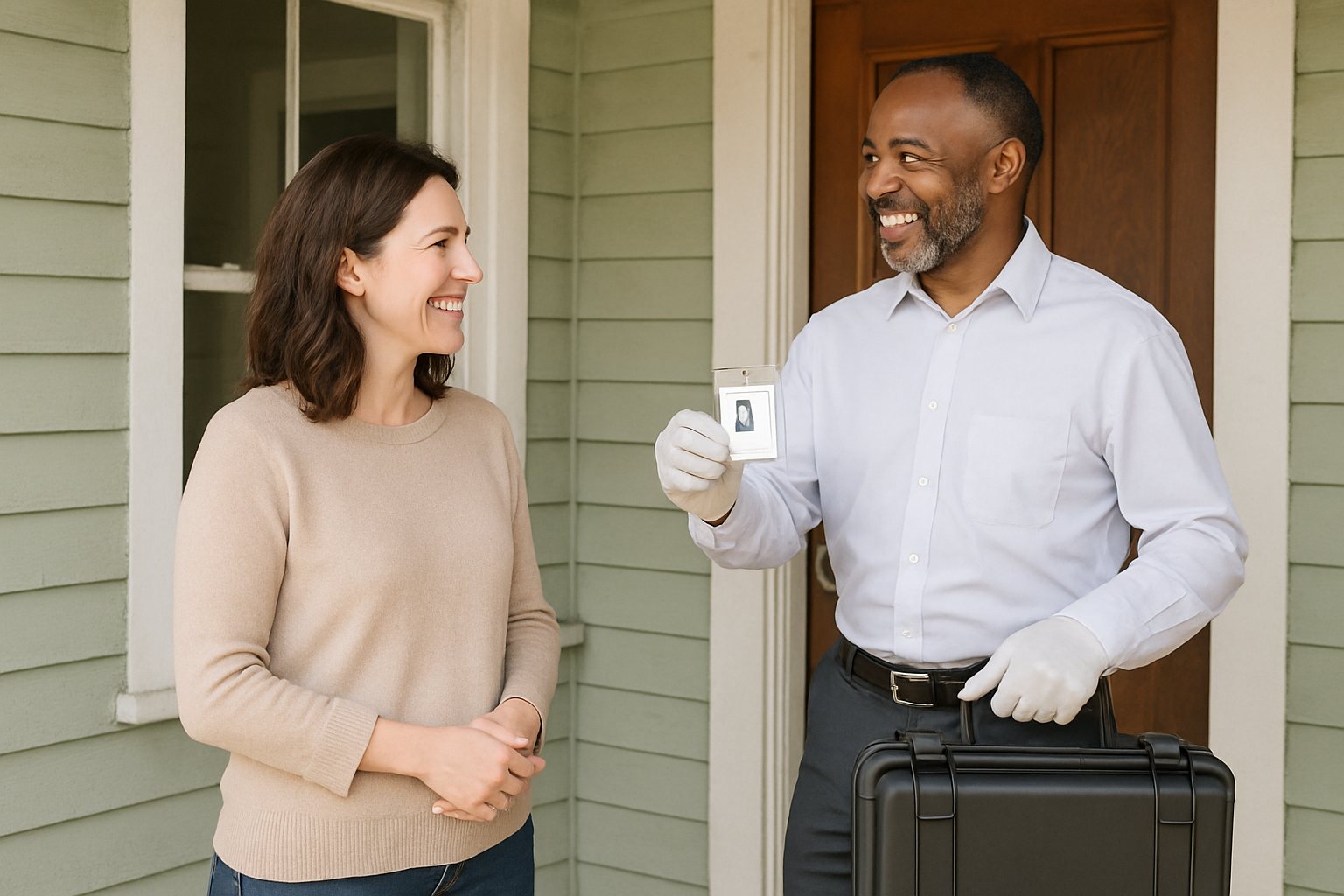
Category: Lead Professionals

Working with lead professionals: how to choose a certified lead inspector or risk assessor, what lead abatement involves and costs, grant programs that help pay for it, and how to check certification with EPA and your state before you hire anyone.

  • How to Choose a Lead Inspector: Certification, Questions, Red Flags

    How to Choose a Lead Inspector: Certification, Questions, Red Flags

    To choose a lead inspector, first decide whether you need an inspection (where is the lead paint?) or a risk assessment (is there a hazard right now, from paint, dust or soil?), then hire someone whose certification for that job you have checked yourself on EPA’s locator or your state’s list. Everything else, from price to schedule, comes after that check.
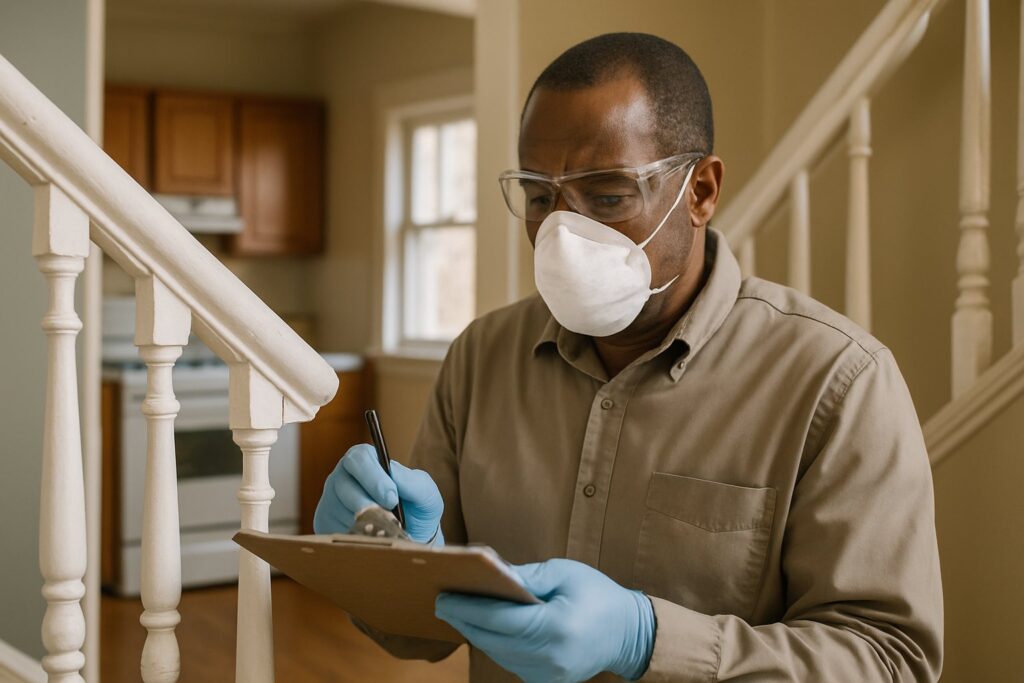
    An inspector writing notes during a home inspection

    In short: only a certified lead inspector or risk assessor can legally do a lead-based paint inspection in pre-1978 housing, and only a certified risk assessor can do a risk assessment. In Alaska, Arizona, Florida, Idaho, Montana, Nevada, New Mexico, New York, South Carolina, South Dakota and Wyoming, EPA certifies them; everywhere else, your state program does. Ask for the certificate, the firm’s certification, the lab they use, and a sample report. Be wary of anyone who offers a quick swab “inspection” or has no written report.

    Inspector or risk assessor: who do you need?

    People search for a “lead inspector near me” for very different reasons. The right professional depends on the question you need answered:

    ProfessionalWhat they doBest for
    Certified lead inspectorSurface-by-surface lead-based paint inspection, with a written report of where lead paint isBuying, selling or renting a home; planning renovation
    Certified risk assessorRisk assessment: finds paint, dust and soil hazards, how severe they are, and options to fix them. Can also do inspectionsYoung children in the home, a child with a high blood lead level, deciding what to fix first
    Risk assessor, lead hazard screenA limited risk assessment with fewer samples, such as two composite dust samplesA quick check of a well-kept home
    Inspector or risk assessor, clearanceVisual check and dust wipes after abatementConfirming an abatement job is finished
    Lead dust sampling technicianDust clearance after renovation work and some HUD-assisted housing workAfter renovation; never post-abatement clearance

    EPA says you can also have a combined inspection and risk assessment, and that either way you get a written report. If you are not sure, a risk assessor can usually do both. Our guide to lead paint inspection vs risk assessment walks through each visit in detail.

    Common situations

    • Buying a pre-1978 home. Federal rules give buyers a 10-day opportunity to have a lead paint inspection or risk assessment, which buyer and seller can lengthen, shorten or waive in writing. Book early so the inspector fits that window. See lead paint disclosure.
    • A child with an elevated blood lead level. CDC guidance tells clinicians to arrange an environmental investigation of the home, as required locally. Your health department may send its own risk assessor, so call them before hiring privately. Read more on lead poisoning.
    • Planning a renovation. An inspection tells your contractor which surfaces contain lead, so lead-safe work practices can focus on them. See lead-safe renovation (RRP).
    • After abatement. You need clearance by a certified inspector or risk assessor. Read lead abatement.

    How to verify a lead inspector’s certification

    EPA requires individuals and firms doing lead-based paint inspections, risk assessments and abatement in pre-1978 housing and child-occupied facilities to be certified and to follow specific work practices. Checking takes about five minutes:

    1. Find out who certifies in your state. EPA runs the program in the 11 states listed above, plus American Samoa, Guam, the Northern Mariana Islands, the US Virgin Islands and most Tribal lands. All other states, and a few Tribes, run EPA-authorized programs. EPA links to each state program from its Lead-Based Paint Abatement and Evaluation Program overview.
    2. Search the official list. In EPA states, use EPA’s Certified Inspection, Risk Assessment, and Abatement Firms Locator. In other states, use the state’s licensed lead professionals list.
    3. Match the details. Ask for the individual’s certificate and the firm’s certification. Check the person’s name, the discipline (inspector or risk assessor), the certificate number and the expiration date against the list.
    4. Don’t confuse it with RRP. An EPA lead-safe certified renovation firm is trained to work safely around lead paint. That is a different certificate, and it does not allow someone to perform a lead-based paint inspection or risk assessment.

    EPA’s own advice to homeowners is short: a competent lead-based paint professional will know how to work safely and will have proof of certification. If you cannot find someone, the National Lead Information Center at 1-800-424-LEAD (5323) can help, or start from our find a lead professional page.

    Questions to ask before you hire

    • Are you certified as an inspector, a risk assessor, or both, and in this state? Is your firm certified?
    • Will this be an inspection, a risk assessment, a lead hazard screen, or a combination? What question will the report answer?
    • How will you test paint: a portable XRF analyzer, paint-chip samples sent to a lab, or both?
    • Will you take dust wipe and soil samples? Which rooms and surfaces?
    • Which laboratory analyzes samples, and is it on EPA’s NLLAP list for that sample type?
    • Which dust-lead values will you report against? From January 12, 2026, federal risk assessments in EPA states treat any reportable lead on floors and sills as a hazard. Authorized states may still use older values while they update.
    • Can I see a sample report with personal details removed?
    • When will I get the written report, and will you go over it with me?
    • What is the total price, and what does it include (lab fees, travel, multiple units, a re-visit)?
    • Do you or your firm also sell abatement or renovation work? If so, how do you keep testing separate?

    What the report should include

    Federal rules spell out what each report must contain, so you can check it line by line:

    Inspection reportRisk assessment report
    Date of the inspection; address and date of construction; owner; inspector’s name, signature and certification number; firmDate; address, apartment number and date of construction; owner; risk assessor’s name, signature and certification number; firm
    Each testing method and device used, with quality control data and XRF serial numbersName and address of each recognized laboratory; paint testing methods; all on-site and lab results with quality control data
    The specific locations of each painted component testedVisual inspection results and locations of tested components
    The results of each testResults for paint, dust, soil and other samples, and earlier relevant results
    The location, type and severity of each hazard, and interim control and abatement options in order of priority
    A maintenance and monitoring schedule if encapsulation or enclosure is recommended

    If your report is missing whole sections, such as no lab name for dust results or no list of tested components, ask the inspector to complete it. Keep the report: under the federal disclosure rule, sellers and landlords of pre-1978 housing must share available records and reports about lead-based paint with buyers and renters.

    Red flags

    • No certificate, or one you cannot find on the official list.
    • A swab-only “inspection”. EPA recognizes the LeadCheck, D-Lead and Massachusetts swab kits only to show that regulated lead paint is not present, when used by trained professionals, and only on specific surfaces. No kit has yet met both of EPA’s performance criteria. A real inspection uses documented methods such as XRF or lab-analyzed paint chips.
    • Dust results without a lab name, or from a lab that is not NLLAP-recognized for dust wipes.
    • No written report, or a one-page “pass” with no locations or numbers.
    • A renovation contractor calling an RRP course an inspection license.
    • Pressure to buy abatement on the spot. The point of a risk assessment is to give you options, including interim controls and ongoing maintenance, and you can get a second opinion.

    What a lead inspection costs

    Prices depend on home size, number of units, the type of evaluation and lab work, and few official sources publish them. What we found when checked in October 2026:

    • A private firm’s published price: Massachusetts Lead Paint Inspections lists inspections starting at $450 for a single-family home, with custom pricing for multi-unit properties.
    • Lab fees, if billed separately: the Wisconsin Occupational Health Laboratory charges homeowners $40 per paint, soil or dust wipe sample at normal turnaround.
    • Free through local programs: Hennepin County, Minnesota offers eligible families a free home test, and the City of Boston offers free lead paint inspections to eligible homeowners in its Lead Safe Boston program. Ask your health department what is available where you live.

    Get at least two written quotes that describe the same scope, so you are comparing an inspection with an inspection, not with a quick screen.

    While you wait for the inspector

    Some owners use a swab or a mail-in lab kit to get an early hint. These do not replace a certified inspection, but they can help you decide how urgently to book one. Checked on Amazon October 9, 2026, In Stock that day:

    Paint pre-check

    LeadCheck Swabs, Instant Lead Test, 8 Swab Pack

    • 8 swabs
    • Listing: EPA recognized, detects down to 600 ppm
    • EPA: negatives on wood, metal, drywall, plaster
    Check price on Amazon
    Lab result

    Schneider Labs Lead Test Kit: Paint, Dust or Soil (1 sample)

    • 1 paint, dust or soil sample
    • NLLAP-listed lab
    • Results 5 business days after arrival
    Check price on Amazon

    For how these compare with professional testing, see home lead test vs lab testing and how to test for lead paint. When you are ready, request an inspection or browse certified pros on find a lead professional.

    Lead inspector FAQ

    Can a home inspector test for lead paint?

    Only if they also hold lead inspector or risk assessor certification. A general home inspection license does not cover lead-based paint inspections in pre-1978 housing.

    How long does a lead inspection take?

    It depends on the size of the home and the number of surfaces tested. Lab results for dust and soil add days. Ask the inspector for both the visit time and the report date.

    What is the difference between a lead inspector and a risk assessor?

    An inspector finds where lead-based paint is. A risk assessor finds which paint, dust and soil hazards exist and how to control them. Risk assessors can do inspections too.

    Where do I check a lead inspector’s license?

    On EPA’s firm locator if you live in an EPA-administered state, or on your state lead program’s list everywhere else. EPA’s program overview page links to every state program.

    Do landlords have to hire a lead inspector?

    The federal disclosure rule does not require landlords to get an inspection, only to disclose what they know and share available records. Some states, cities and HUD programs do require inspections or risk assessments, so check your local rules.
  • Lead Abatement: Process, Contractors, Costs and Grants

    Lead Abatement: Process, Contractors, Costs and Grants

    Lead abatement is work designed to permanently eliminate lead-based paint hazards in a home, by removing, enclosing or encapsulating lead paint, replacing painted parts, or removing or covering contaminated soil. It must be done by a certified abatement firm, and it is not finished until an independent dust test shows the area is clean.

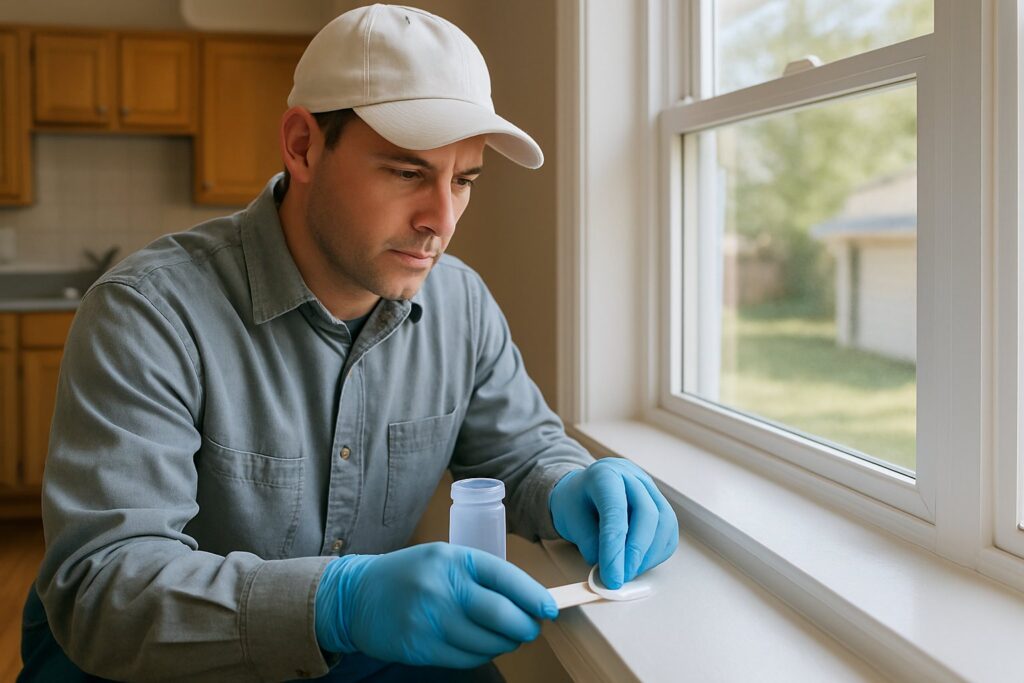
    An inspector doing a clearance check after abatement

    In short: abatement is permanent; interim controls such as repairs, specialized cleaning and repainting are temporary and need ongoing checks. In pre-1978 homes and child-occupied facilities, abatement firms and workers must be certified by EPA or by an EPA-authorized state, occupants move out during the work, and the job passes only when a certified inspector or risk assessor finds lead dust below 5 µg/ft² on floors, 40 µg/ft² on window sills and 100 µg/ft² in window troughs. Costs vary widely.

    Abatement vs interim controls vs renovation

    Three kinds of work can look alike from the sidewalk. They are regulated differently, and the difference matters when you hire someone.

    AbatementInterim controlsRenovation, repair and painting (RRP)
    GoalPermanently eliminate lead-based paint hazardsTemporarily reduce exposureRemodeling or repairs that happen to disturb paint
    Typical workPaint removal, enclosure, encapsulation, replacing windows or doors, soil removal or coveringSpecialized cleaning, repairs, maintenance, painting, temporary containment, monitoringWindow replacement, demolition, sanding, painting prep
    Who does itCertified abatement firm and certified workers and supervisorVaries by program and stateEPA lead-safe certified renovation firm
    OccupantsFirm must make sure occupants are outVaries by programNot required to leave, but kept out of the work area
    Ends withClearance testing against EPA action levelsOngoing monitoringCleaning verification, or clearance where a program requires it

    EPA is blunt about one point: painting over lead paint with regular paint does not permanently address the hazard. If your contractor offers to “seal it with primer”, that is not abatement. For renovation rules, see lead-safe renovation (RRP).

    Abatement methods

    • Removal. Stripping the paint by permitted methods. Federal rules ban open-flame burning or torching, ban machine sanding, grinding or abrasive blasting unless HEPA exhaust control is used, limit dry scraping, and require heat guns to run below 1,100°F. More in lead paint removal.
    • Enclosure. Covering the painted surface with rigid, durable materials mechanically fastened in place, such as drywall or paneling.
    • Encapsulation. Coating the paint with an encapsulant, a product that forms a barrier between the paint and the environment. It needs a sound surface and periodic monitoring. See lead paint encapsulation.
    • Component replacement. Taking out lead-painted windows, doors or trim and installing new ones. Old windows are frequent targets because friction makes dust.
    • Soil abatement. Removing contaminated soil and replacing it with soil at or below 400 ppm lead, or permanently covering it. Read lead in soil testing first.

    Most projects mix methods. A certified risk assessor or project designer helps choose them; when encapsulation or enclosure is recommended, the risk assessment report must include a maintenance and monitoring schedule.

    Who can do lead abatement: certification

    EPA requires individuals and firms that do lead-based paint inspections, risk assessments and abatement in pre-1978 housing and child-occupied facilities to be trained, certified and to follow specific work practices. Individual roles include abatement worker, supervisor, inspector, risk assessor and project designer. The firm itself must be certified too.

    Who issues the certificate depends on where you live. EPA runs the program itself in Alaska, Arizona, Florida, Idaho, Montana, Nevada, New Mexico, New York, South Carolina, South Dakota and Wyoming, plus American Samoa, Guam, the Northern Mariana Islands, the US Virgin Islands and most Tribal lands. In those places, check firms with EPA’s Certified Inspection, Risk Assessment, and Abatement Firms Locator. Every other state runs its own EPA-authorized program, with its own license list; EPA links to each one from its program overview page.

    Note that an EPA lead-safe certified renovator (RRP) is not an abatement contractor. If the goal is to get rid of lead hazards, hire an abatement firm. Our find a lead professional page explains how to search, and how to choose a lead inspector covers the testing side.

    The abatement process, step by step

    1. Find the hazards. A lead inspection shows where lead paint is; a risk assessment shows which paint, dust and soil hazards exist and the options to fix them. See lead paint inspection vs risk assessment.
    2. Plan the work. Before work starts, a certified supervisor or project designer writes an occupant protection plan specific to the building, describing how residents will be protected.
    3. Notify. In EPA-administered areas, the firm must notify EPA at least 5 business days before abatement starts (shorter windows apply to emergency or elevated-blood-lead orders). States have their own notice rules.
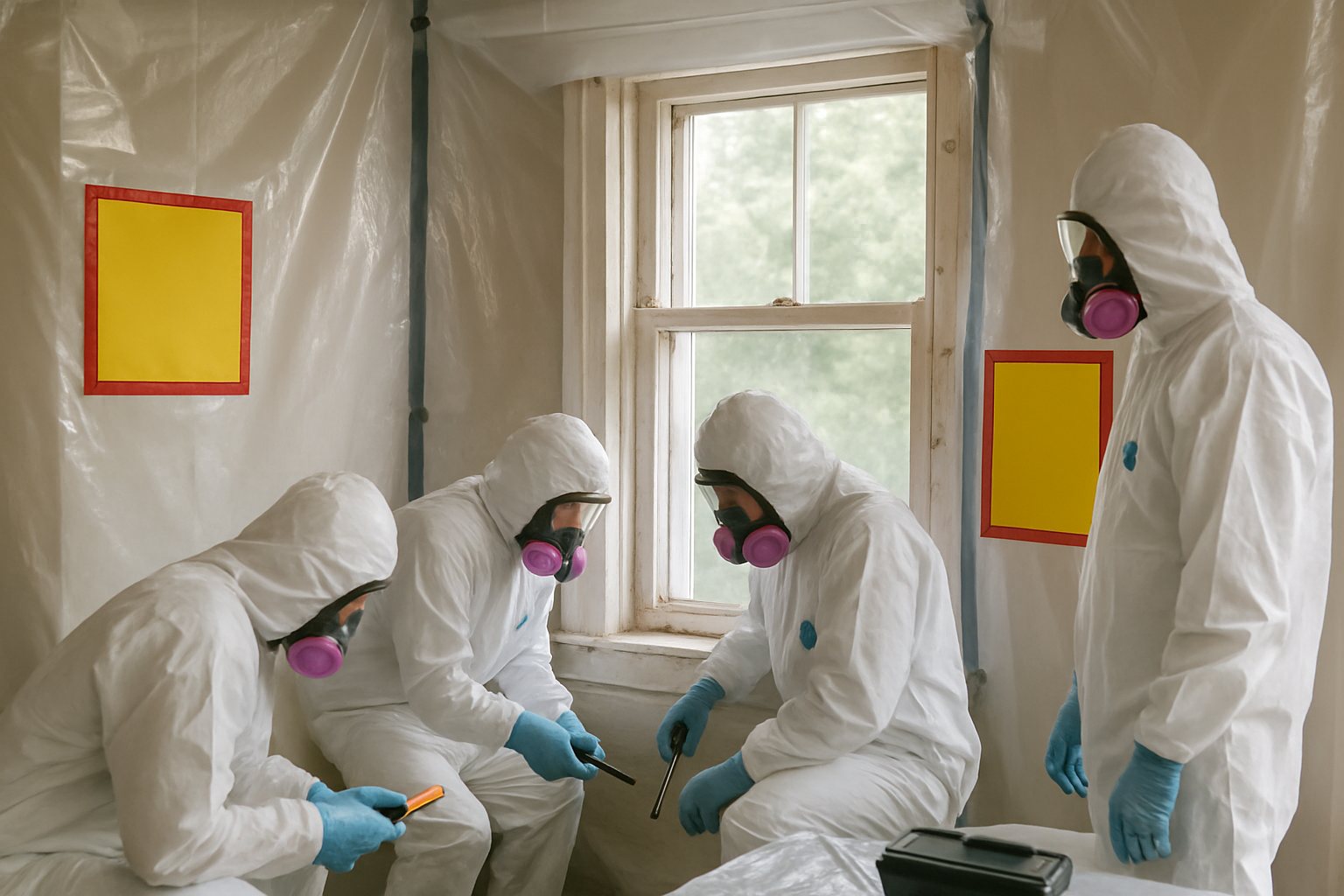
    4. Prepare and contain. Occupants and belongings move out of the work area; the crew seals it with plastic sheeting and controls dust. A certified supervisor must be on site during preparation and final cleanup, and reachable within 2 hours at other times.
    5. Do the work using permitted methods, then clean up the work area.
    6. Clearance. A certified inspector or risk assessor does a visual check for deteriorated paint, dust and debris, then takes dust wipe samples at least one hour after final cleanup. From January 12, 2026, in EPA-administered areas, results must be below 5 µg/ft² on floors, 40 µg/ft² on interior window sills and 100 µg/ft² in window troughs. If not, the area is cleaned again and retested.
    7. Abatement report. The supervisor or project designer prepares a report with the dates, firms, the occupant protection plan, a description of the work and the clearance results. Keep it: you may need it when you sell or rent the home.

    States that run their own programs may still use older clearance values until they adopt EPA’s 2024 rule (they have two years from January 13, 2025). Our lead dust testing guide explains the wipe test and the numbers.

    Relocation during the work

    EPA’s comparison of abatement and renovation says abatement firms are required to make sure occupants are out of the home, child care facility or preschool. Program documents say the same in practice. The City of Warren, Michigan’s HUD-funded program guidelines state that federal regulations prohibit occupancy of areas where lead abatement or interim control work is happening until the whole house passes clearance. Hennepin County, Minnesota tells applicants that no one can live in the home during repairs, and its grant covers lodging up to $175 per day or $875 per week.

    Ask early how long you will be out, who pays for lodging, and what happens to pets and belongings. Children and anyone pregnant should not be in the home during work or before clearance.

    Lead abatement cost: what published sources show

    There is no official national price list for abatement, and the cost depends on how many surfaces, windows and doors are involved, the method, the size and age of the home, soil work, and relocation. These are the published figures we found when checked in October 2026:

    SourceFigureWhat it means
    City of Warren, Michigan, HUD-funded program (June 2026)Maximum grant $75,000 per home; more for high-cost units with HUD permissionA program cap, not a typical cost
    Hennepin County, MinnesotaGrant of up to $15,000 in lead removal work; landlords pay at least 10% of repairsProgram cap
    City of Boston, Lead Safe BostonForgivable loans of up to $12,000 per unit, plus free lead paint inspectionsProgram cap
    MassHousing Get the Lead OutLow- and no-interest loans of $30,000 to $45,000 depending on property typeLoan cap

    Treat these as context, not a quote. The only reliable price for your home is a written estimate from a certified abatement firm, based on an inspection or risk assessment report. Get more than one, and make sure each covers the same scope, the clearance test and the cleanup.

    Grants, loans and tax credits for abatement

    HUD’s Office of Lead Hazard Control and Healthy Homes funds lead hazard reduction grants to state and local governments, which then run programs that homeowners and landlords apply to. In October 2024, HUD announced more than $420 million in awards to remove lead hazards from homes, according to EPA. You do not apply to HUD directly: you apply to your city, county or state program.

    Programs differ, but these real examples show the usual pattern:

    • Warren, Michigan. HUD-funded grants for low- and moderate-income households. Owner-occupants must be at or below 80% of area median income; rental owners pay a 10% copay and agree to prioritize income-eligible families with young children. Homes need an inspection and risk assessment.
    • Hennepin County, Minnesota. A free home test and up to $15,000 in grant funding for homes built before 1978 where a child under six lives or regularly visits, for households that meet income limits. Landlords qualify with occupant consent.
    • Boston, Massachusetts. Forgivable loans of up to $12,000 per unit, technical advice from city lead specialists and free lead paint inspections.
    • Massachusetts tax credit. Owners who fully delead a unit can claim a state income tax credit of up to $3,000 per unit, or up to $1,000 for partial work (interim control), with a seven-year carryover.

    To find a program near you, search your city or county name with “lead hazard control program”, ask your local health department, or call the National Lead Information Center at 1-800-424-LEAD (5323). Priority usually goes to homes with a child who has an elevated blood lead level. If you are worried about a child’s exposure, talk to your doctor about a blood lead test and read our lead poisoning guide.

    How to hire a lead abatement contractor

    • Check both certificates: the firm’s certification and the supervisor’s individual certificate, on EPA’s locator or your state’s list. EPA notes a competent lead professional will have proof of certification.
    • Ask for the plan in writing: methods by surface, containment, the occupant protection plan, waste handling and who notifies EPA or the state.
    • Ask who does clearance. It must be a certified inspector or risk assessor. You can hire your own.
    • Get the report. The price should include the abatement report and clearance results.

    Ready to start? Use find a lead professional or request an inspection.

    Keeping dust down before and after

    Until work is done, EPA advises wet cleaning surfaces and HEPA vacuums where there is visible paint debris. Months after clearance, some owners recheck floors and sills with a lab wipe kit. Checked on Amazon October 9, 2026, In Stock that day:

    For cleaning

    D-Lead Surface Wipes for Lead Dust Cleanup, 48 ct

    • 48 wipes, 9 x 12 in
    • Listed as meeting EPA wet cleaning cloth definition
    • Cleanup, not a test
    Check price on Amazon
    Follow-up check

    Schneider Labs Lead Test Kit: Paint, Dust or Soil (1 sample)

    • 1 dust, paint or soil sample
    • NLLAP-listed lab
    • Not an official clearance
    Check price on Amazon

    A do-it-yourself wipe is only for your information; official clearance must be done by a certified professional.

    Lead abatement FAQ

    Is encapsulation considered abatement?

    Yes. EPA’s definition of abatement includes permanent enclosure or encapsulation of lead-based paint, when done by certified people following the rules. It needs monitoring over time.

    Can I abate lead paint myself?

    The federal rules exempt owners working in a home they own, unless someone other than the owner’s immediate family lives there during the work, or a child living there has been identified with an elevated blood lead level. States can have stricter rules, and do-it-yourself paint removal can create serious dust hazards. Check your state lead program before touching old paint.

    How long does lead abatement take?

    It depends on the scope. In EPA-administered areas, add at least 5 business days for the required notice before work starts, plus time for clearance testing and lab results.

    Does abatement have to remove all lead paint?

    No. Abatement permanently eliminates the identified hazards. Intact lead paint can stay if it is enclosed, encapsulated or not a hazard, which is why the inspection or risk assessment report comes first.

    Who pays for abatement in a rental?

    EPA says that if you rent housing not funded by HUD, local laws may require your landlord to pay, and HUD or state and local governments may require landlords or housing authorities to pay in some cases. Ask your local health department.