Category: Test Kits

Lead test kits compared on published facts: paint swabs and which ones EPA recognizes, water test kits and mail-in lab kits, and water filters certified to NSF/ANSI 53 or 58 for lead reduction. We say what each kit can and cannot tell you, and when you need a lab or a certified professional instead.

  • Lead Test Kits at Home Depot, Lowe’s, Walmart and Amazon: What Each Store Sells

    Lead Test Kits at Home Depot, Lowe’s, Walmart and Amazon: What Each Store Sells

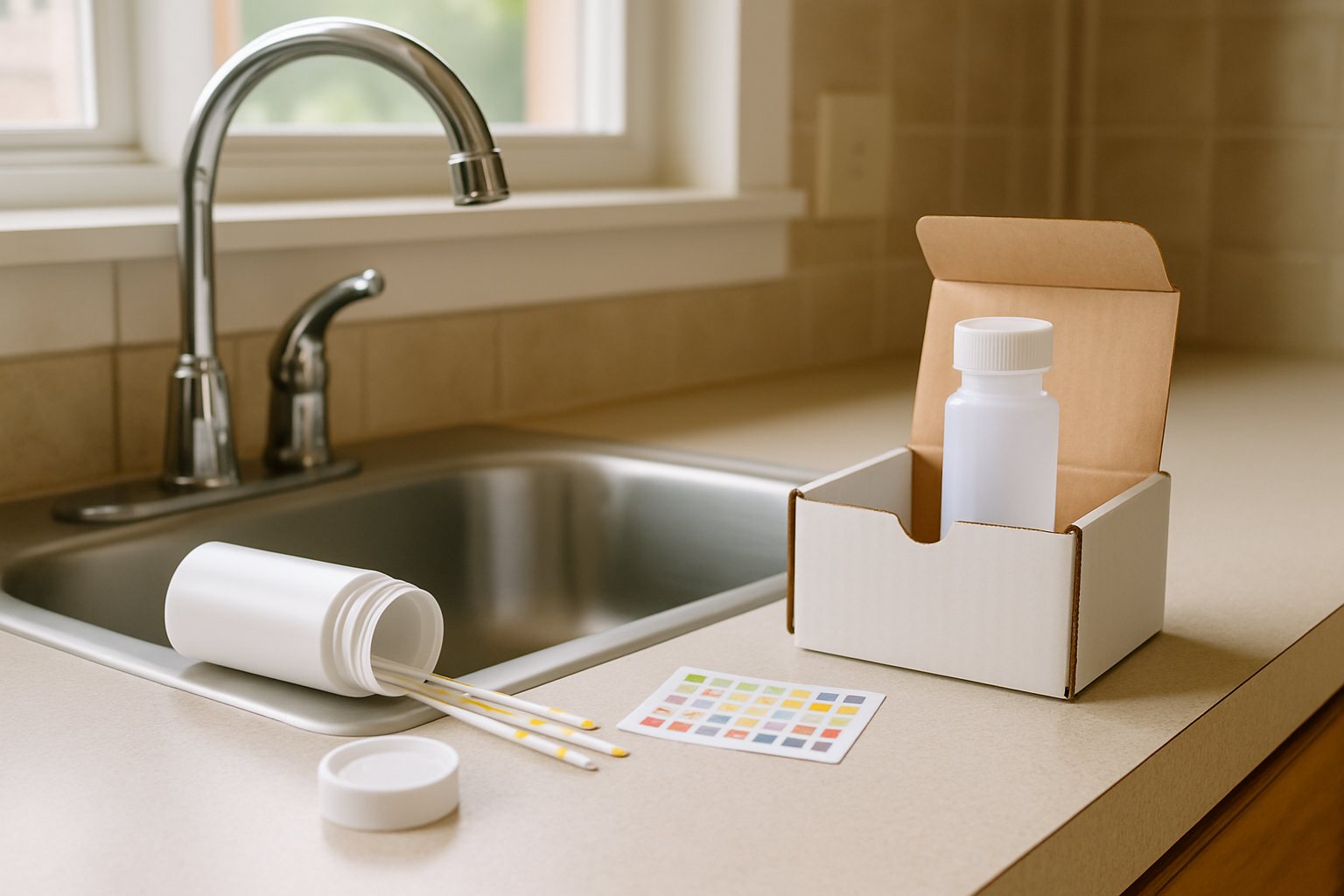
    Home Depot’s website lists four lead test kits: two from PRO-LAB (a surface swab kit and a lead-in-water kit) and two from Safe Home (a swab-plus-lab kit for paint and other solids, and a lead-in-water kit), priced from about $9 to $20 when we checked in October 2026. None of them is one of the three paint kits EPA recognizes. For an EPA-recognized kit, LeadCheck, the easiest place we found it was Amazon; its maker also lists Lowe’s and Walmart as sellers.
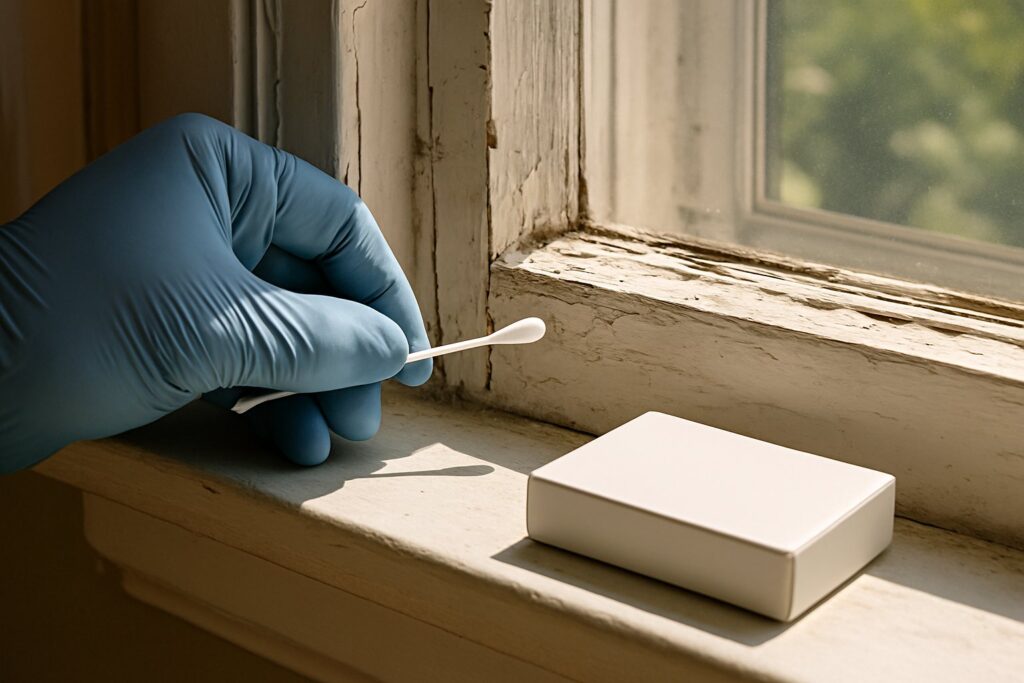
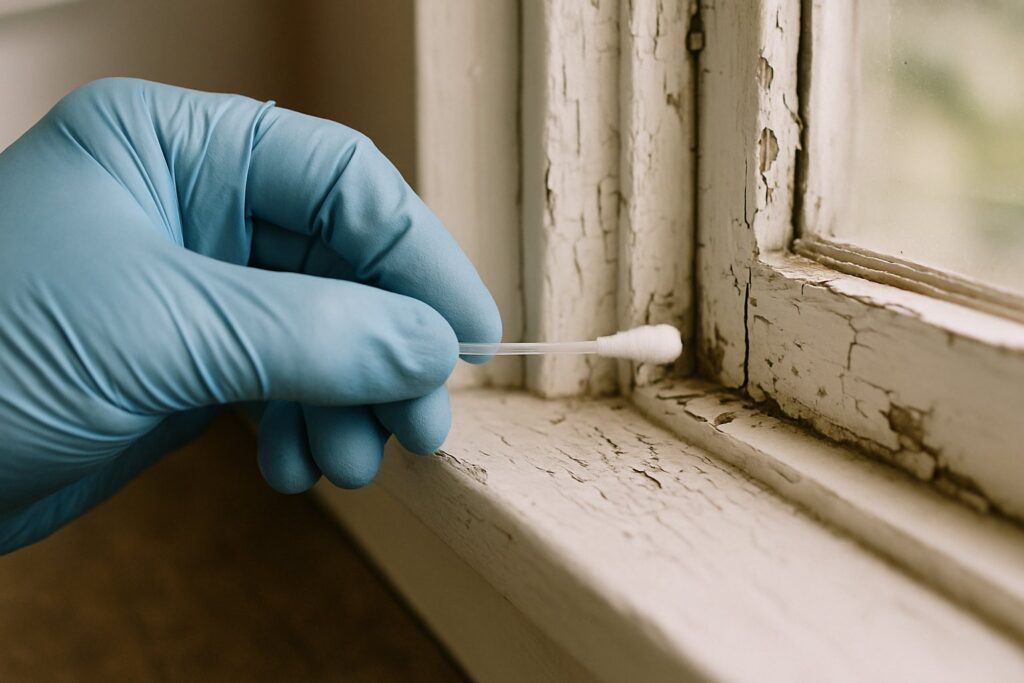
    Gloved hand checking a swab against old painted window trim at home

    In short: the kits on store shelves are cheap and quick, but most are screening tools with no EPA recognition. EPA recognizes only LeadCheck (made by Luxfer Magtech, formerly 3M), D-Lead (ESCA Tech) and the State of Massachusetts kit, only for lead-based paint, only on certain surfaces, and only when used by trained or certified professionals. “EPA approved” is not a term EPA uses for any kit. Water kits are a different category entirely: no home water kit is EPA-recognized, and the meaningful credential there is a state-certified drinking water lab. Pick the store by the kit you need, not the other way around.

    How we checked the stores

    On October 9, 2026, we searched each retailer’s own website for lead test kits and recorded what came back. Where a site blocked automated access, we say so and use the makers’ own “where to buy” pages instead of guessing. Prices are what each site showed online that day; they change often, and store stock varies. We did not buy or lab-test any kit.

    Lead test kits by store, at a glance

    StoreLead kits listedPrice seen (Oct 2026)EPA-recognized?
    Home Depot (homedepot.com)PRO-LAB Lead Surface Test Kit (LS104); PRO-LAB Lead-In Water Test Kit (LW107); Safe Home Lead in Solids Combo, 10 swabs; Safe Home Do-It-Yourself Lead in Water Test Kit$8.59; $8.72; $19.99; $19.99No. LeadCheck and D-Lead did not appear in Home Depot’s results, even when we searched “leadcheck.”
    Lowe’s (lowes.com)Could not check: the site blocked our requests. LeadCheck’s maker lists Lowe’s as a seller; PRO-LAB names Lowe’s among stores carrying its kitsNot seenLeadCheck is, if your store carries it; PRO-LAB is not
    Walmart (walmart.com)PRO-LAB surface, water and paint-and-dust kits; D-LEAD Lead Paint Test Kit, 24 tests; Schneider Labs mail-in kits; many generic swab packs. Mostly third-party sellersPRO-LAB surface about $14; D-LEAD $89.99; Schneider 1-sample (1-day) $65D-LEAD is (paint, certain surfaces). LeadCheck’s maker links to a Walmart listing we could not open
    Ace Hardware (acehardware.com)Could not check: the site blocked our requests. PRO-LAB names Ace among its storesNot seenPRO-LAB is not
    Amazon (amazon.com)LeadCheck 2-swab and 8-swab packs; PRO-LAB Lead Surface; Safe Home solids and water kits; Schneider Labs mail-in kit$15 and $39; $13.96; $19.99 each; $35LeadCheck is. We found no D-Lead listing

    Home Depot: four lead kits, none EPA-recognized

    Five different searches on homedepot.com, including “leadcheck,” returned the same four lead kits, all marked in stock online. The PRO-LAB kits appeared as store-and-online items and the Safe Home kits as online-only, so check the product page with your local store selected.

    • PRO-LAB Lead Surface Test Kit (LS104), $8.59. An instant swab test you wet with water. PRO-LAB says its swabs detect lead “to as little as 5 parts per million”, a maker’s claim; the kit is not on EPA’s recognized list. PRO-LAB’s page describes twelve swabs, while a one-pack listing on Amazon lists two test pads, so check the count on the package.
    • PRO-LAB Lead-In Water Test Kit (LW107), $8.72. A mail-in lab test, not an instant strip. PRO-LAB says you collect a water sample, ship it to its lab, and get a report “accurate to just 1 ppb” within seven business days. The page we read did not say whether a separate lab fee applies, so check the box before you buy.
    • Safe Home Lead in Solids Combo (10 swabs), $19.99. Ten swabs plus a sample you can mail to Safe Home’s lab (fee extra). Not EPA-recognized. More in our best lead paint test kits comparison.
    • Safe Home Do-It-Yourself Lead in Water Test Kit, $19.99. This looks like the DIY kit Safe Home sells on its own site for the same price (the model numbers differ slightly). Safe Home says the at-home test reads lead in three ranges (0-4, 5-15 and above 15 parts per billion) in about five minutes, with an optional mail-in sample for its lab at extra cost.

    The search also returned general water-quality kits (LABTECH, PurTest); check the box for lead before counting one as a lead test.

    Lowe’s: blocked, so here is what the makers say

    Lowe’s website refused our requests (an “access denied” response) on every page we tried, so we cannot tell you which lead kits lowes.com lists today or what they cost. Two makers do name Lowe’s. LeadCheck’s distributor page lists Lowe’s under “Marketplaces,” and its link goes to a Lowe’s search for “leadcheck.” PRO-LAB says its kits are sold at more than 40,000 outlets and names Lowe’s, Home Depot, Menards, Ace Hardware, True Value, Do It Best, Kroger, Fred Meyer, Giant Eagle and CVS. A marketplace listing may ship from a third-party seller rather than your local store.

    Walmart and Ace Hardware

    Walmart’s site showed us one search for “lead paint test kit” before switching to a robot check. Nearly every lead kit in that search was sold by a third-party seller with home delivery, not by Walmart itself. It included the PRO-LAB surface kit (about $14), PRO-LAB Lead in Water ($8.72) and PRO-LAB Lead Paint and Dust (about $13), Schneider Labs mail-in paint, dust or soil kits sold by the lab itself ($65 for one sample with one-day turnaround), and the D-LEAD Lead Paint Test Kit, 24 tests, at $89.99. That was the only place we saw D-Lead offered to consumers. Most of the rest were generic swab packs with no published detection limit.

    LeadCheck’s maker links to a Walmart listing for a 48-test LeadCheck box, but the robot check stopped us before we could open it. Ace Hardware’s site blocked us too; PRO-LAB lists Ace among its stores.

    Amazon: the easiest place to find LeadCheck

    Amazon had the widest range when we checked: LeadCheck in a 2-swab pack ($15) and an 8-swab pack ($39), both in stock; the same PRO-LAB surface kit sold at Home Depot ($13.96); Safe Home’s solids and water kits ($19.99 each); and Schneider Labs’ single-sample mail-in kit ($35). The LeadCheck listings name the brand as “Lead Check” and are sold by third-party sellers, and they do not say whether a box was made by Luxfer Magtech or is older 3M stock. EPA says older 3M kits may still be used; check the expiration date. We found no D-Lead listing on Amazon.

    Which lead test kits does EPA recognize?

    EPA’s lead test kit page says it “recognizes three lead test kits” for use under its Renovation, Repair and Painting (RRP) rule:

    • LeadCheck (Luxfer Magtech; 3M sold the formula and trademarks to Luxfer Magtech in 2024): wood, ferrous metal (iron and steel), drywall and plaster, when used by a certified renovator.
    • D-Lead (ESCA Tech): the same four surfaces, certified renovators. EPA says it is sold through certain distributors and retailers, or by calling ESCA Tech at 414-962-3006.
    • State of Massachusetts kit: drywall and plaster only, trained professionals. It is not something you will find in a store.

    Recognition has a narrow meaning. All three kits meet EPA’s criterion for reliable negative results: on paint at or above the federal lead-based paint level (1.0 mg/cm² or 0.5% by weight), they should rarely miss it. EPA says no kit has met its second criterion for reliable positive results. So a negative result on a recognized surface is the useful one; a positive may be a false alarm and should be confirmed. EPA also states that recognition applies when the kit is used by a trained professional. You can buy LeadCheck as a homeowner, but your own result is not an official determination for a sale, a rental or a child with an elevated blood lead level.

    “EPA approved” and “EPA-certified lab”: what the labels mean

    People search for “lead paint test kits EPA approved,” and some makers use the phrase. LeadCheck’s own consumer site calls it “EPA-approved,” and PRO-LAB calls its water kit “an EPA approved laboratory test.” EPA’s test kit page does not use the word “approved” at all. Its term is “recognized,” and it applies only to the three paint kits above. If a box says “EPA approved” and the kit is not LeadCheck, D-Lead or the Massachusetts kit, treat that as marketing.

    “EPA-certified lab,” printed on many mail-in and combo kits, needs a closer look too, and it depends on what you are testing:

    • Paint chips, dust wipes and soil: the federal credential is accreditation under EPA’s National Lead Laboratory Accreditation Program (NLLAP). EPA publishes the list. Schneider Laboratories appears on it; we did not find Safe Home’s named lab on it as of September 2026.
    • Drinking water: labs are certified by EPA or, in most cases, by state programs. EPA tells consumers to use a state-certified drinking water lab and lists each state’s program. Ask the kit maker which state certifies its lab for lead in drinking water.

    No home water test kit, strip or mail-in, is “EPA-recognized” the way the paint kits are. Our best lead water test kits guide explains what to look for instead.

    Kits we found in stock on Amazon

    These three were in stock on Amazon when checked in October 2026, one for each common question. Prices change; check the listing.

    EPA-recognized swab

    LeadCheck Swabs, Instant Lead Test, 2 Swab Blister Pack

    • Recognized on wood, ferrous metal, drywall, plaster
    • Red means lead; results in about 30 seconds
    • About $15, seen October 2026
    Check price on Amazon
    Water screen + lab option

    Safe Home DIY Lead in Drinking Water Combo Test Kit

    • Maker: 3 ranges, 0-4, 5-15, 15+ ppb in 5 minutes
    • Optional mail-in lab sample, fee extra
    • About $20, seen October 2026
    Check price on Amazon
    Measured lab result

    Schneider Labs Lead Test Kit, Paint, Dust or Soil (1 sample)

    • Lab on EPA's NLLAP list
    • Flame AA, EPA Method 7000B; prepaid return label
    • About $35, seen October 2026
    Check price on Amazon

    Which kit to buy, by the question you are asking

    1. “Is there lead paint where I’m about to sand or scrape?” An EPA-recognized swab (LeadCheck, or D-Lead) on wood, ferrous metal, drywall or plaster. Expose every paint layer, and read how to test for lead paint first.
    2. “How much lead is in this paint, dust or soil?” A mail-in kit from an NLLAP-accredited lab, or send a sample to any lab on EPA’s list.
    3. “Is there lead in my tap water?” A water kit, never a paint swab. A strip gives a range; a state-certified lab gives a number. EPA also suggests contacting your water utility.
    4. “Are these toys or dishes safe?” Home swabs are unreliable here; CPSC advises against using them on consumer products. A lab is the dependable route.
    5. Buying, selling or renting, or a child has an elevated blood lead level: skip the store and hire a certified lead inspector or risk assessor. See find a lead professional.

    Our home lead test vs lab testing guide goes deeper on when a store kit is enough, and the lead test kits hub compares every type. A test of your house is not a test of your family: if you are worried about exposure, ask a doctor about a blood lead test and see lead poisoning.

    Frequently asked questions

    Does Home Depot sell 3M LeadCheck?

    Not on homedepot.com when we checked in October 2026: searches for “leadcheck” and “3m leadcheck” returned only PRO-LAB and Safe Home kits. LeadCheck was in stock on Amazon, and its maker lists Lowe’s and Walmart among its sellers.

    Which lead paint test kits are EPA approved?

    EPA’s word is “recognized,” not “approved.” It recognizes LeadCheck and D-Lead for wood, ferrous metal, drywall and plaster, used by certified renovators, and the State of Massachusetts kit for drywall and plaster only, used by trained professionals.

    Is the PRO-LAB lead test kit at Home Depot any good?

    It is a low-cost screening swab. PRO-LAB says it detects lead down to 5 ppm, but it is not EPA-recognized and we found no independent evaluation of that claim. A negative result on old house paint is less dependable than one from LeadCheck or D-Lead; confirm anything important with a lab.

    Does Home Depot sell a lead water test kit?

    Yes. It listed the PRO-LAB Lead-In Water Test Kit ($8.72), a mail-in lab test, and the Safe Home Do-It-Yourself Lead in Water Test Kit ($19.99), an at-home test with an optional lab sample. Neither is EPA-recognized; no home water kit is.
  • Lead Test Kit for Dishes: What a Swab Can and Can’t Tell You

    Lead Test Kit for Dishes: What a Swab Can and Can’t Tell You

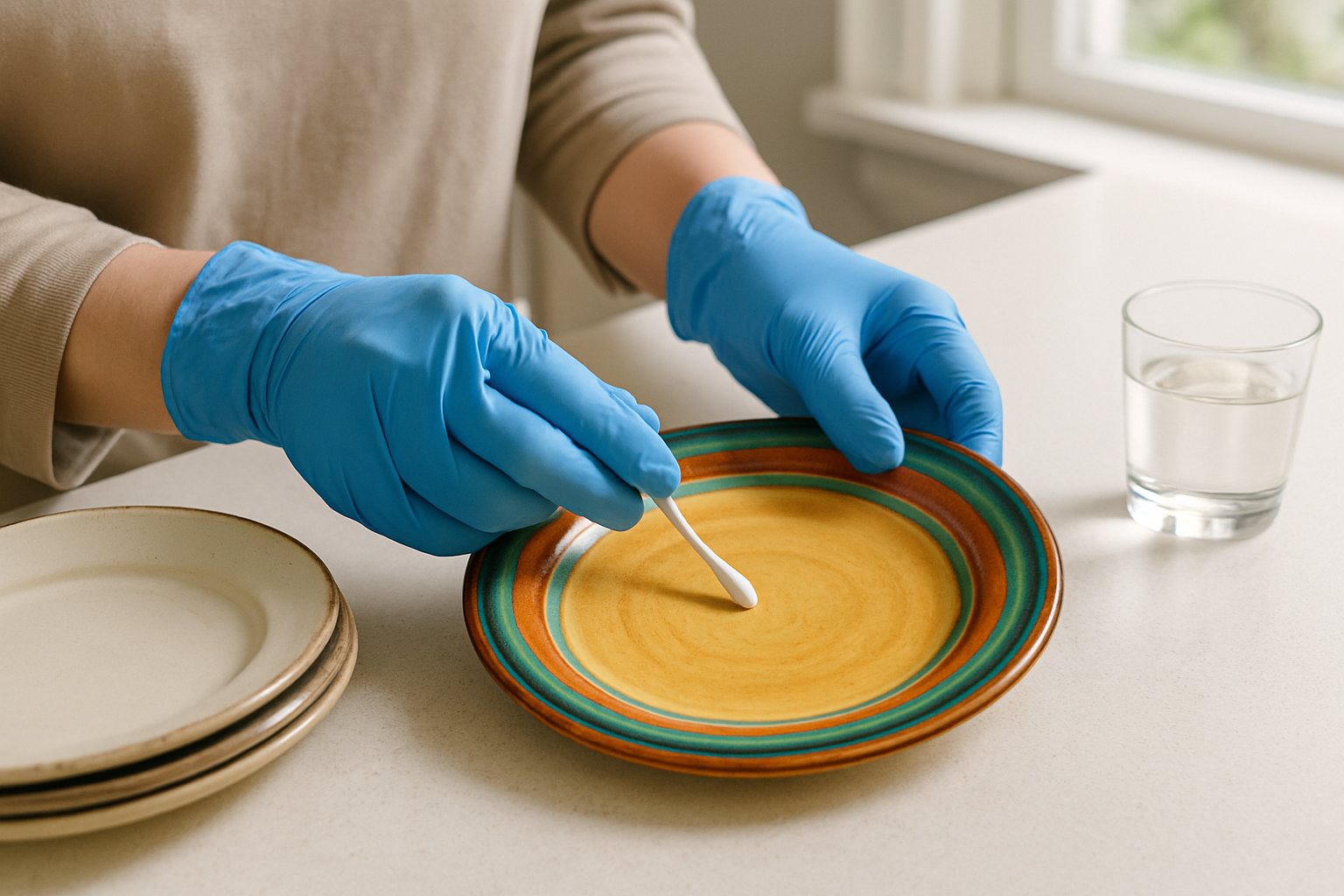
    A lead test kit for dishes can warn you that a plate, mug or glass gives off lead at its surface, but it cannot prove a dish is safe. The FDA says swab kits sold in hardware stores and online can be used on pottery and that you should stop using a piece for food if a swab shows leachable lead, while the CPSC found that home kits often miss lead in consumer products.

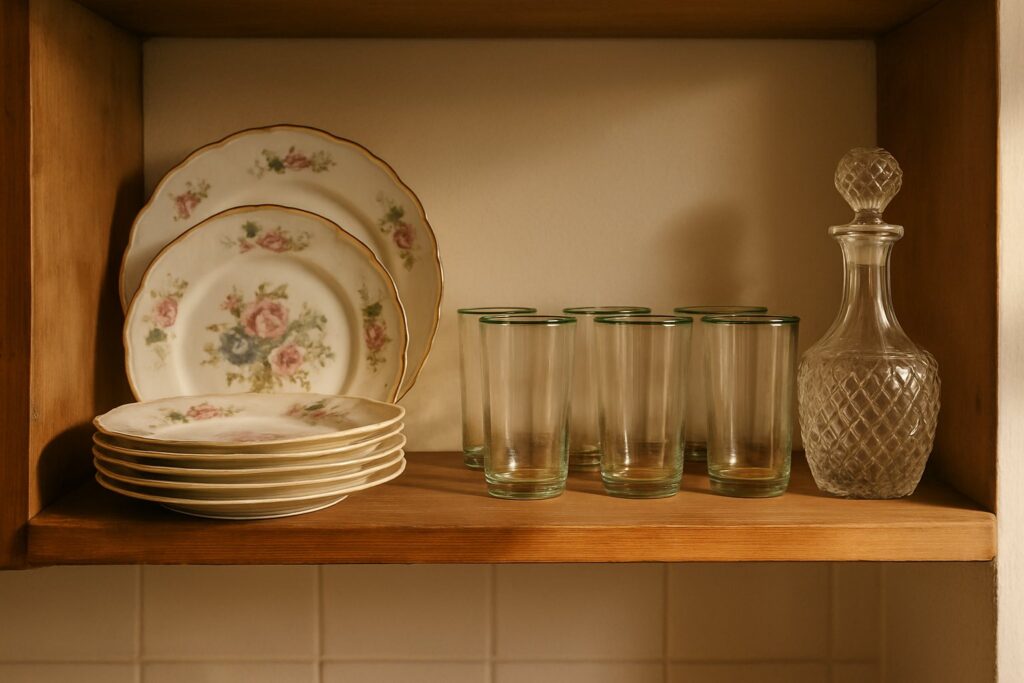
    Vintage china, decorated glasses and a crystal decanter on an open kitchen shelf

    In short: use a swab kit as a quick screen on the food-contact surface and the rim, especially on old, handmade, worn or brightly decorated pieces. Treat a color change as a reason to stop using the piece for food and drink. A negative proves little: no swab kit is EPA-recognized for ceramics or glass, a fired glaze can hide lead, and the FDA’s limits are measured with a lab leach test. If a dish matters to you, or children use it, the reliable answer is a lab leach test or simply keeping the piece for display.

    For why some dishes contain lead in the first place, see lead in pottery and dishes.

    How swab kits react to lead

    Most home lead swabs use one of two chemical reactions. A study of lead test kits by the National Institute of Standards and Technology (NIST) for HUD describes kits based on sulfide, which turns gray or black with lead, and kits based on rhodizonate, which turns pink or red. You rub the wet swab on the surface; if lead dissolves onto the tip, the color changes.

    So a swab only reacts to lead it can reach and dissolve in seconds at the exact spot you rub. The FDA describes it the same way for pottery: in most kits the swab changes color if lead leaches onto it.

    • Glazed surfaces. A swab can pick up lead from a glaze that is poorly fired, worn, corroded or chalky. A sound, fired glaze can hold lead underneath where the swab never touches it. The CPSC found that none of the kits it tested consistently detected lead covered by a non-leaded coating.
    • Decorations and decals. The California Department of Public Health (CDPH) warns about bright colors or decorations on surfaces that touch food or drink, including the upper rim of a cup or bowl, and about decorations that sit on top of the glaze. If you can feel the design with your finger, it is probably on top. Swab those spots.
    • Rims. Your lips touch it, so test it separately.

    What official sources say about home kits

    • EPA recognizes kits only for paint. The EPA recognizes three kits (LeadCheck, D-Lead and a Massachusetts kit) and only for telling a certified professional that regulated lead-based paint is not present on wood, ferrous metal, drywall or plaster (the Massachusetts kit only on drywall and plaster). Ceramics, china and glass are not on the list.
    • CPSC says kits are unreliable on consumer products. In its October 2007 staff study, the CPSC got 56 false negatives out of 104 results, plus two false positives, and concluded that consumers should not use lead test kits to evaluate consumer products. It said qualified lab testing is the only reliable way to assess a product.
    • FDA accepts kits as a warning sign for pottery. The FDA says consumers can buy lead-testing kits in hardware stores or online, and if a test finds leachable lead, it strongly advises against using that pottery for cooking, serving or storing food or drinks.

    A positive swab is meaningful; a negative is weak evidence. Our lead test kits hub explains which kit is designed for which material.

    What the FDA actually measures

    The FDA does not judge dishes by a swab. Its Compliance Policy Guide Sec. 545.450 sets action levels for lead that leaches out of ceramic ware into an acid solution in a standard laboratory test (ASTM C738). The limits get stricter for pieces that hold liquid for longer, such as cups and pitchers:

    Ceramic wareFDA action level (lead in leach solution)
    Flatware (plates, saucers), average of 6 units3.0 µg/mL
    Small hollowware (bowls, other than cups and mugs)2.0 µg/mL
    Large hollowware (other than pitchers)1.0 µg/mL
    Cups and mugs0.5 µg/mL
    Pitchers0.5 µg/mL

    A swab result has no unit that compares to these numbers. A dish can pass a swab and still release more lead than the cup limit, and the swab will not tell you. Decorative ceramics that contain lead must carry a warning such as “Not for Food Use—May Poison Food” under 21 CFR 109.16; never use those for food, whatever a swab says.

    Glassware with painted rims and decals

    Glasses, mugs and tumblers with colored designs near the top are a common worry. There is a dedicated laboratory method for them: ASTM C927 measures lead and cadmium extracted from the lip and rim area of glass tumblers decorated on the outside with ceramic glass enamels. ASTM calls it a severe test, not a measure of real use.

    We found no federal consumer guide specifically for decorated drinking glasses. CDPH’s tableware guidance is the practical rule: decorations where food, drink or lips touch, including the rim, deserve the most caution, especially when worn. If a glass has a painted band or decal that reaches the area where your mouth goes, swab that band, and if it reacts, retire the glass to display or use it only for things like pens. A negative swab on a glossy enamel does not clear it, for the same coating reason as glazes.

    Vintage china and lead crystal

    Vintage china. CDPH lists antique tableware handed down in families or found in antique stores, flea markets and garage sales among the pieces most likely to contain lead, because they were made before lead in tableware was regulated. It also flags corroded glaze or a dusty, chalky gray residue after washing as a possible serious hazard. CDPH notes that plain white dishes rarely contain lead. A swab is a fair first check on old china, but heirlooms you want to use daily are worth a lab test.

    Lead crystal. Lead crystal contains lead by design, so a swab tells you little. We found no current FDA consumer page on it. The EPA advises avoiding storing or serving food and liquids in lead crystal. CDPH says occasional use is unlikely to expose you to large amounts unless liquids have been stored in it, that children should never eat or drink from leaded crystal, and that food or alcohol should not be stored in crystal decanters because leaching increases with time. A 1992 study in the American Journal of Public Health measured 100 to 1,800 µg/L of lead in drinks stored in decanters from 14 makers.

    How to swab a dish correctly

    1. Read the kit’s own instructions. Activation differs: some swabs have crushable vials, some need water or white vinegar. Note what the maker says the kit is for.
    2. Clean and dry the surface. Remove food residue and grease so the swab touches the glaze.
    3. Test the food-contact areas. Swab the inside of cups and bowls, the eating surface of plates, and the rim. Use a fresh swab for each spot and each color in the decoration.
    4. Focus on the risky spots. Worn, chipped, crazed or chalky areas, raised decorations and bright reds, oranges and yellows, which the FDA lists among higher-risk signs.
    5. Rub firmly for the time stated and read the color in good light within the time window the kit gives. Use the kit’s confirmation card if it has one.

    Do not scrape or chip a glaze to “get under it.” It damages the dish and still won’t show how much lead leaches into food. The FDA also notes that no amount of washing or boiling removes lead from pottery.

    What a negative result does not prove

    • It does not prove the dish is lead-free. Lead under an intact glaze or enamel may not reach the swab. One kit maker below states this on its own listing.
    • It does not show the dish meets FDA limits, which are measured by a leach test.
    • It does not account for use. CDPH says heating, storing food and acidic foods and drinks (citrus, tomatoes, soy sauce, juice, cola, coffee, tea, alcohol) all increase leaching, and the dishwasher can damage a leaded glaze over time.

    Home kits compared with lab testing

    MethodWhat it tells youLimitsCost (published)
    Rhodizonate swab (pink/red)Lead dissolved from the surface at one spotNot EPA-recognized for ceramics or glass; misses lead under intact glaze or coating; no amountEasy@Home 30 swabs about $8; LeadCheck 8 swabs about $39 (Amazon, Oct 2026)
    Sulfide swab (gray/black)Same idea, different reagentSame limits; dark colors are hard to read on dark glazesNot compared here
    Fluorescent spray and UV lightMaker says lead on the surface glows under UVMaker’s claims only; no EPA or CPSC evaluation foundFluoro-SPEC about $63 (Amazon, Oct 2026)
    Lab leach test (ASTM C738; C927 for glass rims)How much lead leaches into acid, comparable to FDA action levelsFew labs take single household pieces; may need several units; may be destructiveNo consumer price published by labs we checked
    Ask the seller or makerWhether current tableware meets Prop 65 or FDA limitsOnly works for dishes still on saleFree

    For a wider look at home screens versus lab numbers, see home lead test vs lab testing.

    The best lead test kit for dishes: screening only

    There is no “best” kit in the sense of one that can clear a dish, because no home kit is recognized for ceramics or glass. If you want a quick screen, these were in stock on Amazon when checked in October 2026. For paint, see our best lead paint test kits.

    Many spots, low cost

    Easy@Home Lead Test Kit, 30 Rapid Testing Swabs

    • 30 swabs, pink or red in 30 seconds; white vinegar needed, not included
    • Maker: cannot detect lead under intact baked ceramic glazes
    • About $8, seen October 2026
    Check price on Amazon
    Known swab brand

    LeadCheck Swabs, Instant Lead Test, 8 Swabs

    • Rhodizonate swab, turns red; confirmation card
    • EPA-recognized for paint only, not ceramics
    • About $39, seen October 2026
    Check price on Amazon
    Different method

    Fluoro-SPEC Instant Lead Test Kit with UV Light

    • Spray reagent, UV flashlight, maker: up to 3,600 uses
    • Maker's sensitivity claims not independently evaluated
    • About $63, seen October 2026
    Check price on Amazon

    Getting a laboratory leach test

    Ceramic leach testing to ASTM C738 is mostly sold to manufacturers and importers. When we checked in October 2026, we could not confirm a US lab that publishes a consumer price for testing a single household dish, so we do not name one. To find one:

    • Ask testing labs whether they run ASTM C738 (ceramics) or ASTM C927 (decorated glass rims) for individuals, and whether they are accredited (ISO/IEC 17025) for that method.
    • Ask how many pieces they need, whether the test damages them, the turnaround and the price per piece.
    • Make sure you get a leach result in µg/mL, not just a total-lead or XRF reading, so you can compare it with the FDA table above.
    • For dishes still on sale, CDPH suggests asking the store or the manufacturer whether they meet Proposition 65 standards.

    For lead testing in your home itself, see find a lead professional.

    If a dish tests positive

    1. Stop using it for food and drink. The FDA strongly advises against using pottery with leachable lead for cooking, serving or storing food or drinks.
    2. Keep it as decoration or retire it. Label it so no one uses it by mistake, and keep it out of the dishwasher with other dishes.
    3. Report new products. If you bought it new in the US, you can report it to the FDA; CDPH lists the FDA as the agency for import and retail violations.
    4. Think about who used it. If a child ate or drank from it regularly, the FDA suggests asking a health care provider about a blood lead test. If you are pregnant and used it, mention it to your provider too. For urgent questions, call Poison Control at 1-800-222-1222. See lead poisoning for what official sources say about health effects.

    Other everyday sources are on our lead in household items hub.

    Frequently asked questions

    Do lead test kits work on dishes?

    Partly. The FDA says swab kits can be used on pottery and a color change means you should stop using the piece for food. But no kit is EPA-recognized for ceramics, and the CPSC found home kits often miss lead in consumer products, so a negative result does not prove a dish is safe.

    Can I use a lead test kit on glassware?

    You can swab painted bands and decals on the outside rim of a glass as a screen. Undecorated glass is not where official guidance points the concern, and lead crystal contains lead by design, so a swab is not useful there. The lab method for decorated glass rims is ASTM C927.

    Is a lead test kit for china different from one for ceramics?

    No. Kits sold for dishes, china and ceramics use the same swab chemistry as paint kits. What changes is where you test: the glaze, the decorations and the rim.

    My dish tested negative. Can I use it?

    If it is a modern, commercially made dish in good condition, the FDA says it is much less likely to be a problem. If it is old, handmade, worn or of unknown origin, a negative swab is not enough: use it for display, or get a lab leach test before using it for food, especially for children.

  • Best Water Filters for Lead (2026): NSF/ANSI 53 and 58 Certified Pitchers, Faucet, Under-Sink and RO

    Best Water Filters for Lead (2026): NSF/ANSI 53 and 58 Certified Pitchers, Faucet, Under-Sink and RO

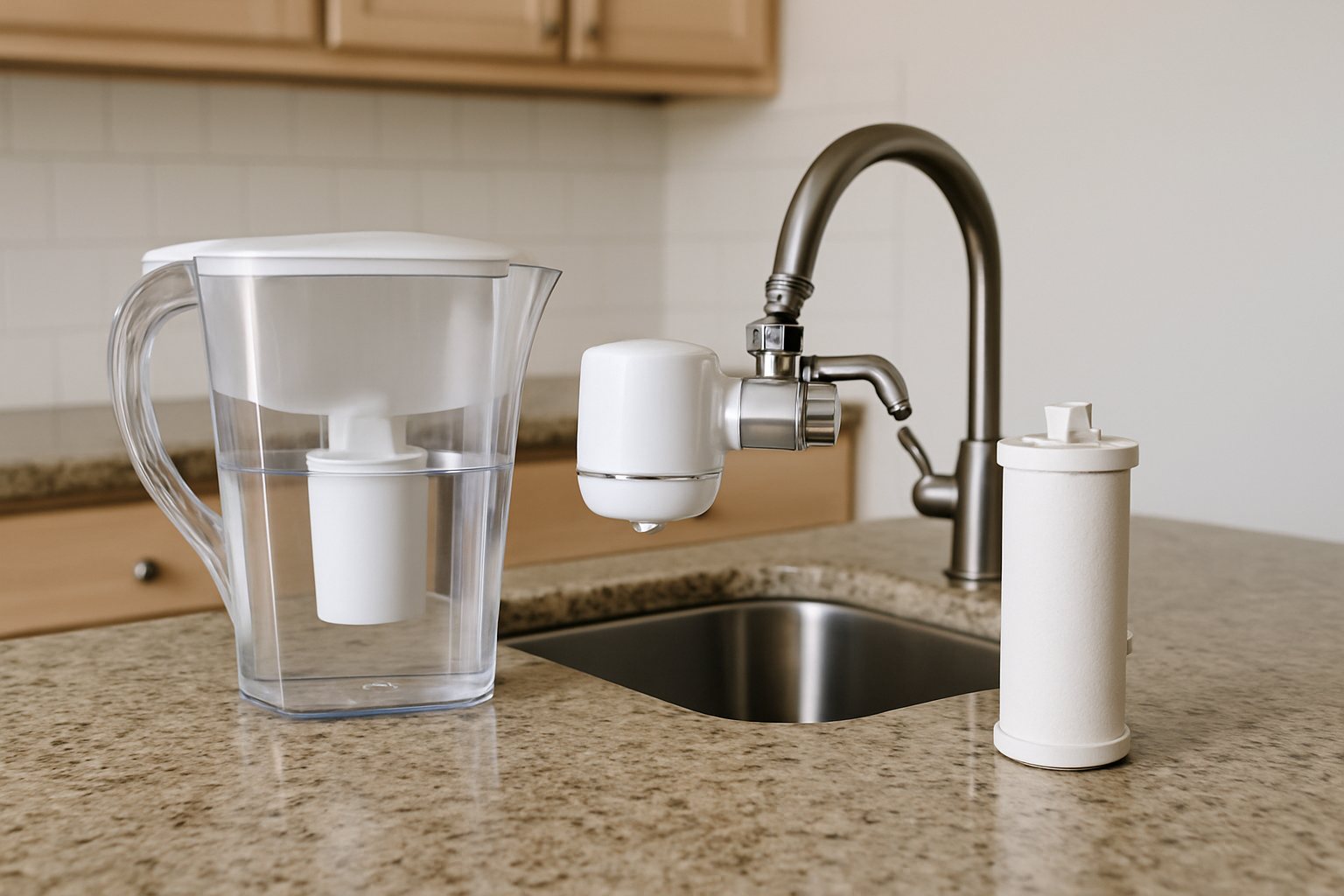
    A water filter that removes lead is one certified to NSF/ANSI Standard 53 for lead reduction (or, for a reverse osmosis system, NSF/ANSI Standard 58 with a lead claim). The certification, not the brand or the price, is what tells you a filter was independently tested to bring lead down to 5 parts per billion or less. Below we compare four filters, one of each main type, that we verified on NSF’s official listings in October 2026, with the exact certification and the cartridge life for each.

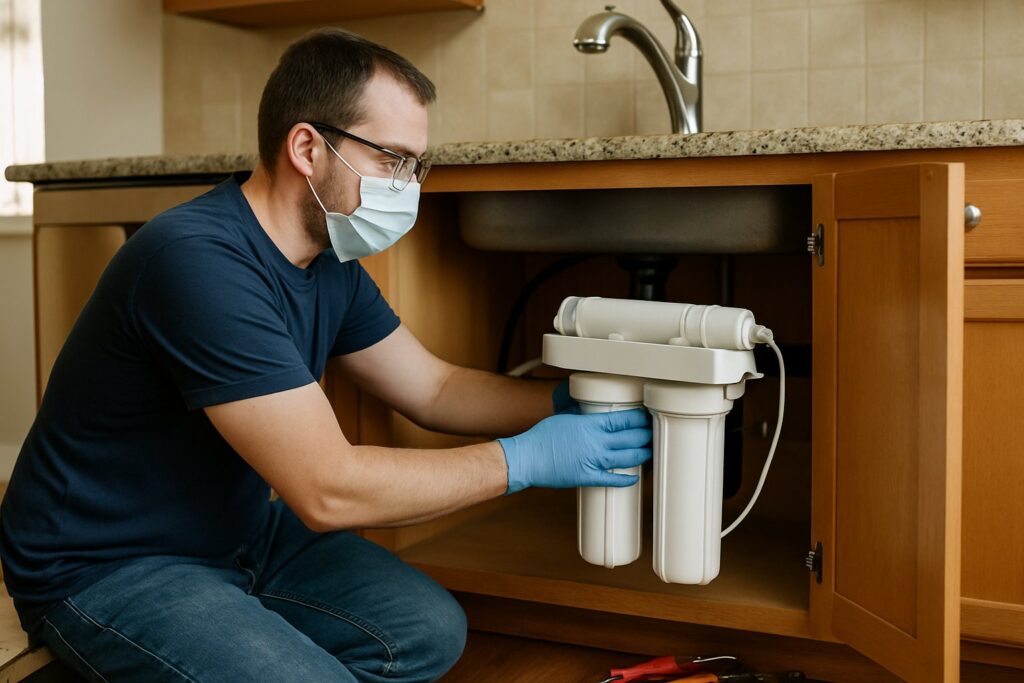
    An under-sink filter being installed

    In short: for most people a certified pitcher (Brita Elite filter, 120 gallons per cartridge) or faucet-mount filter (PUR PLUS, 100 gallons) is enough while you sort out the source of the lead. For a whole family drinking and cooking with filtered water, an under-sink system (3M Aqua-Pure 3MDW301-F, 1,000 gallons per cartridge) is less work. Reverse osmosis (iSpring RCC7AK-BLK, NSF/ANSI 58) also reduces lead and many other contaminants, at more cost and with a drain line. Whatever you choose, check the lead claim in the certifier’s listing, use cold water only, and change cartridges on schedule.

    What to look for: the certification, exactly

    EPA’s consumer tool for choosing a lead filter covers point-of-use and pitcher filters that an accredited third-party certifier has tested for lead reduction to 5 ppb or less, and for Class I particulate reduction, against NSF/ANSI Standards 53 and 42. The particulate rating matters because some lead comes out of pipes as tiny particles. Three points trip people up:

    • The standard must list lead. NSF/ANSI 53 covers many health contaminants, and a filter can be certified to it without a lead claim. A good example: on NSF’s listing (checked October 9, 2026), PUR’s standard pitcher filter (PPF951K) is certified to NSF/ANSI 53 for cadmium, copper, mercury and several chemicals, but lead is not among its listed claims. PUR’s faucet filters, by contrast, are listed for lead.
    • NSF/ANSI 42 alone is not enough. It covers taste, odor and chlorine, plus particulate classes. On its own it says nothing about dissolved lead.
    • NSF is not the only certifier. WQA, IAPMO, UL and CSA also certify to these standards. Brita and PUR, for example, advertise WQA certification for lead. Check whichever certifier the box names, in that certifier’s own online listing.

    The bar was raised in December 2019, when NSF/ANSI 53 and 58 were updated to require lead in treated water to be reduced to 5 ppb, down from 10 ppb, for any new product claiming lead reduction. EPA notes there is no federal requirement for point-of-use filters to be certified at all, which is exactly why the certification is the thing to check.

    Lead water filters compared

    FilterTypeLead certification we verifiedCartridge lifePrice seen (Oct 2026)
    Brita Elite filter (OB06)Pitcher / dispenserNSF/ANSI 53, Lead Reduction (NSF listing, in Brita Tidal and Pacifica pitchers); Brita also states WQA certification120 gallons, about 6 monthsAbout $30 for 2 filters
    PUR PLUS Faucet Mount PFM350V (RF-9999 filter)Faucet mountNSF/ANSI 53, Lead Reduction (NSF listing); meets Michigan’s Filter First criteria100 gallons, about 3 monthsAbout $33
    3M Aqua-Pure 3MDW301-F (3MDW311 cartridge)Under-sink, separate faucetNSF/ANSI 53, Lead Reduction (NSF listing)1,000 gallonsAbout $294
    iSpring RCC7AK-BLKReverse osmosis, under-sinkNSF/ANSI 58, Lead Reduction (NSF listing)Pre-filters 6–12 months; membrane 2–3 years (iSpring)About $250

    Prices are what we saw on Amazon when checked in October 2026 and change often. Cartridge life is the rated capacity in gallons from the certification listing; the months figure is the maker’s estimate for typical use, so a busy household will hit the gallon limit sooner.

    Pitcher filters for lead

    Pitchers are the cheapest way in and need no installation. The Brita Elite filter (model OB06) is the one we can verify: NSF’s listing shows the OB06 element certified to NSF/ANSI 53 for Lead Reduction, with a 120-gallon service cycle, in Brita’s Tidal and Pacifica pitchers. Brita describes the filter as WQA certified to NSF/ANSI standards, rated for 120 gallons or about six months, and compatible with every Brita pitcher and dispenser except the Stream line. Brita’s basic white “Standard” filter is a different product; check its own listing before assuming it reduces lead.

    The trade-offs: pitchers filter slowly, hold only a few quarts, and are easy to forget to refill, which tempts people back to the tap. They suit a renter, a temporary fix while a lead service line is replaced, or a small household. Remember that 120 gallons is a little under 5 gallons a week over six months.

    Faucet-mount filters for lead

    A faucet-mount filter clips onto a standard faucet and gives filtered water on demand with a lever. NSF lists a range of PUR PLUS faucet systems, including the horizontal PFM350V and the vertical FM2500V, with the RF-9999 filter, certified to NSF/ANSI 53 for Lead Reduction, with a rated 100 gallons and a flow of about half a gallon per minute. NSF’s listing also notes these systems meet the requirements of Michigan’s EGLE “Filter First” program, which calls for certification to NSF/ANSI 42 for Class I particulate and NSF/ANSI 53 for lead.

    PUR says the filter lasts up to 3 months or 100 gallons, with a light that tells you when to change it. Faucet mounts don’t fit pull-out or handheld faucets or faucets with internal aerators. PUR also warns that look-alike replacement filters are not tested or certified the way genuine PUR filters are, so a cheap third-party cartridge can quietly cost you the lead certification.

    Under-sink filters for lead

    An under-sink filter connects to the cold-water line and usually feeds its own small faucet. It costs more up front but has far larger cartridges and a faster flow, which makes it practical for cooking as well as drinking. The 3M Aqua-Pure 3MDW301-F is listed by NSF as certified to NSF/ANSI 53 for Lead Reduction, along with cysts, VOCs and other claims, with the 3MDW311 replacement cartridge rated for 1,000 gallons at 0.75 gallons per minute. 3M’s listing says it is certified to NSF/ANSI 42, 53 and 401, and uses a quick-change cartridge with a built-in shut-off valve. Brita’s Total360 under-sink line also has NSF/ANSI 53 lead listings if you prefer that brand.

    Reverse osmosis systems for lead

    Reverse osmosis (RO) pushes water through a very fine membrane and sends the rejected water down the drain. RO systems are certified under NSF/ANSI 58, and as with Standard 53, the listing must include lead. NSF lists the iSpring RCC7AK-BLK (and related RCC7 models made at iSpring’s Nanjing facility) under NSF/ANSI 58 with Lead Reduction among its claims, along with TDS, fluoride, asbestos, barium, cadmium, chromium (trivalent), copper and selenium. iSpring’s Amazon listing states 98.9% lead reduction in that certification testing. Note that some other RCC7 variants on NSF’s list, from a different facility, are listed for TDS reduction only; match the model on the box to the listing.

    iSpring advertises 75 gallons per day; NSF’s listing shows a tested daily production rate of 25.41 gallons, a reminder that real output depends on water pressure and temperature. iSpring recommends replacing the three pre-filters and the alkaline filter every 6 to 12 months and the membrane every 2 to 3 years, sooner if flow drops or dissolved solids rise. RO is the most thorough option here but needs under-sink space, a storage tank, a drain connection and more maintenance than a carbon filter. Brita’s Total360 RO system is also NSF/ANSI 58 listed for lead.

    Which type should you choose?

    1. Renting, or waiting for a lead line to be replaced: a certified pitcher or faucet mount. Low cost, no plumbing changes, easy to take with you.
    2. A family that drinks and cooks with a lot of water: an under-sink filter. Larger cartridges mean fewer changes and less temptation to skip the filter.
    3. You also want to reduce other contaminants, such as fluoride or dissolved solids: reverse osmosis certified to NSF/ANSI 58 with a lead claim, if you have the space and a drain.

    CDC’s advice is the same for every type: look for NSF/ANSI 53 for lead and NSF/ANSI 42 for particulate reduction, and use only cold water for drinking, cooking and preparing baby formula.

    The lead filters we would buy

    All four were in stock on Amazon when checked in October 2026, and each model matches an NSF listing with a lead claim.

    Pitcher

    Brita Elite Replacement Water Filter, 2 Pack

    • NSF/ANSI 53 lead reduction (OB06)
    • 120 gallons, about 6 months each
    • About $30, seen October 2026
    Check price on Amazon
    Faucet mount

    PUR PLUS Horizontal Faucet Mount Filtration System PFM350V

    • NSF/ANSI 53 lead reduction with RF-9999
    • 100 gallons, about 3 months
    • About $33, seen October 2026
    Check price on Amazon
    Under-sink

    3M Aqua-Pure Under Sink Filtration System 3MDW301-F

    • NSF/ANSI 53 lead reduction
    • 3MDW311 cartridge, 1,000 gallons
    • About $294, seen October 2026
    Check price on Amazon
    Reverse osmosis

    iSpring RCC7AK-BLK Reverse Osmosis System

    • NSF/ANSI 58 lead reduction
    • Pre-filters 6-12 months, membrane 2-3 years
    • About $250, seen October 2026
    Check price on Amazon

    We left out filters whose lead claim we could not match to a certifier’s listing on the day, including some pitchers advertised as “NSF certified” without saying for what. That doesn’t mean they don’t work; it means we couldn’t confirm it. More options are on our lead water filters hub.

    Using a lead filter so it keeps working

    • Cold water only. EPA advises never running hot water through a lead filter.
    • Change cartridges on time. The certification only covers the rated gallons. Follow the maker’s replacement directions; a spent cartridge can still make water taste fine.
    • Use genuine replacement cartridges, or ones with their own lead certification.
    • Filter water for drinking, cooking and baby formula. Those are the uses the filter is for.
    • Don’t stop at the filter. Find out whether you have a lead service line and what your utility is doing about it: see lead pipes and lead service line replacement.

    Certified does not mean perfect. An EPA study of certified point-of-use and pitcher filters found they removed only part of the lead when it was in the form of very small lead phosphate nanoparticles. A filter lowers your risk; it is not a substitute for fixing the source.

    Test first, then test the filter

    Testing tells you whether you need a filter and whether it is working. Start with a lab test of your unfiltered tap water, then test filtered water the same way. See best lead water test kits, how to test water for lead and the lead water testing hub. If someone in your home may have been exposed, especially a young child or someone pregnant, talk to your doctor or local health department about a blood lead test; see lead poisoning.

    Frequently asked questions

    Do Brita filters remove lead?

    The Brita Elite filter (OB06) is certified to NSF/ANSI 53 for lead reduction on NSF’s listing, and Brita states WQA certification too. Check the specific Brita filter you buy; not every Brita filter carries a lead claim.

    Does reverse osmosis remove lead?

    RO systems certified to NSF/ANSI 58 with a lead claim are tested for lead reduction. Check that the exact model is listed with lead, since some RO listings cover only total dissolved solids.

    Does boiling water remove lead?

    No. CDC says boiling water will not reduce the amount of lead in it. Use cold water for drinking, cooking and baby formula, and a filter certified to remove lead.

    Is a whole-house filter better for lead?

    Not necessarily. EPA’s lead filter guidance focuses on point-of-use and pitcher filters, which treat the water you drink and cook with. If you consider a whole-house system, ask for its lead certification, and remember lead can also come from faucets and pipes after the filter.

    How do I check a filter’s certification?

    Find the model number and the certifier’s mark on the box, then look up that model in the certifier’s online listing (NSF, WQA, IAPMO, UL or CSA) and confirm “Lead Reduction” appears among its claims.

  • Home Lead Test vs Lab Testing vs a Professional: Which Do You Need?

    Home Lead Test vs Lab Testing vs a Professional: Which Do You Need?

    A home lead test is a screen: it can tell you that lead is probably there, quickly and cheaply, but not how much, and a negative result is only as good as the kit and the spot you tested. A laboratory test measures the amount of lead in a sample you collect. A certified professional (a lead inspector or risk assessor) decides where to sample, tests the whole home, and gives you a result that counts for disclosure, rentals and health department follow-up. Which one you need depends on what you are testing and what you will do with the answer.

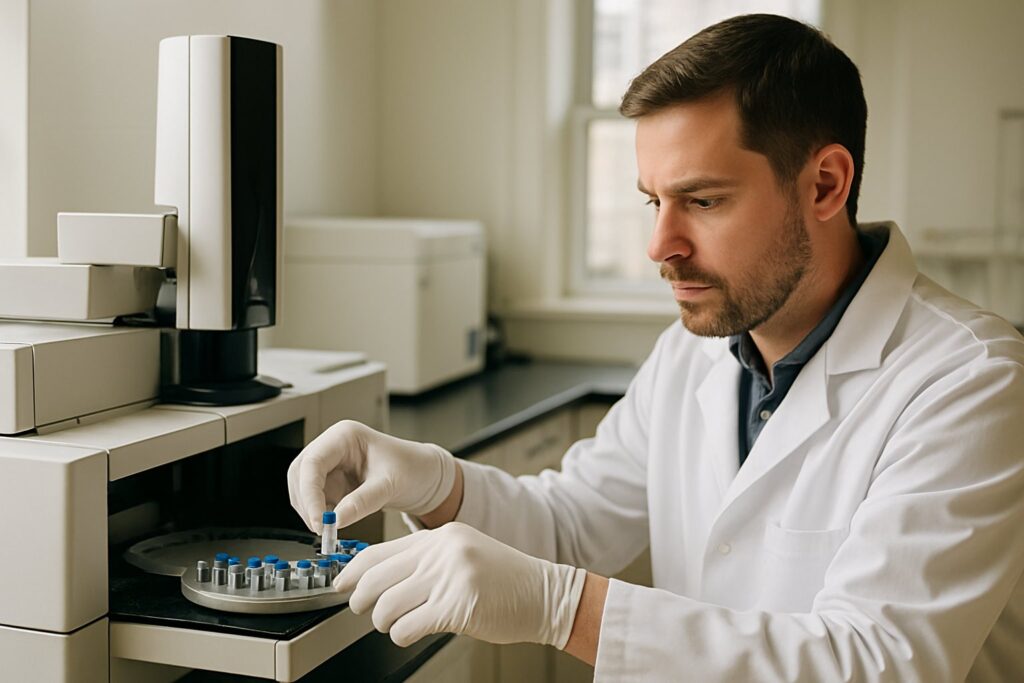
    A lab technician analyzing samples

    In short: use a home kit when you want a fast first look and are ready to treat a positive as real. Use an accredited or state-certified lab when you need a number: for drinking water, for dust and soil around children, or to confirm a positive swab. Call a certified inspector or risk assessor for a pre-1978 home where children live or visit, before buying or renting out, before major renovation, and whenever a child has an elevated blood lead level. For consumer products like toys and dishes, the CPSC advises against relying on home test kits at all.

    Three levels of lead testing

    • Home screening. Color-change swabs for surfaces, strips or cassettes for water. Minutes, a few dollars a test, read by eye. Answers “is lead probably present at or above this kit’s threshold?”
    • Laboratory analysis. You collect a paint chip, dust wipe, soil sample or water bottle and mail it in. Days; the mail-in kits we checked cost about $35 to $70 a sample in October 2026, and EPA puts water tests at about $20 to $100. Answers “how much lead is in this sample?”
    • Professional evaluation. An EPA- or state-certified lead inspector or risk assessor. Quote-based. Answers “where is the lead in this home, and is it a hazard right now?”

    The levels are not rivals; they build on each other. Many people start with a kit, confirm with a lab, and bring in a professional when the stakes are high. The mistake is stopping at a negative home test when the situation calls for more.

    Home test vs lab vs professional, by what you are testing

    WhatHome screeningLaboratoryProfessionalReference point
    PaintEPA-recognized swabs (LeadCheck, D-Lead) are reliable for negatives on wood, ferrous metal, drywall and plasterPaint-chip analysis by an NLLAP-recognized labLead inspection (XRF and/or chips) or risk assessmentLead-based paint: 1.0 mg/cm² or 0.5% by weight
    Drinking waterStrips with published thresholds around 4–5 ppbState-certified drinking water labYour utility; a risk assessor for a full home checkEPA goal: zero; action level: 15 ppb
    DustSwabs can react to lead on a surface, but give no loadingDust wipe analyzed by an NLLAP-recognized labRisk assessment; clearance testing after lead workHazard: any reportable level on floors or sills (from Jan 12, 2026)
    SoilNot a home-swab jobNLLAP lab, university extension or some health departmentsRisk assessor for pre-1978 homes and child-occupied facilitiesHazard: 400 ppm in play areas, 1,200 ppm average elsewhere
    Toys, jewelry, dishesCPSC advises against relying on home kitsSpecialist labsHealth department, if a child is affectedCPSC: 90 ppm in paint, 100 ppm total lead in children’s products

    Paint: when a swab is enough

    Paint is where home kits are best documented. EPA recognizes three kits, LeadCheck, D-Lead and a State of Massachusetts kit, and all three meet EPA’s test for reliable negative results: on paint at the federal lead-based paint level, a recognized kit should give a negative no more than 5% of the time. EPA says no kit has met its test for reliable positive results, and recognition covers only certain surfaces and certified users.

    A swab is enough when you are about to disturb one small area, you use a recognized kit on a recognized surface, and you are prepared to work lead-safe if it turns red. Go to a lab when you want to know how much lead is there, or the swab is positive and you’d rather not assume. Hire a professional for a whole-home answer: EPA describes a lead-based paint inspection as telling you whether a building has lead-based paint and where, and a risk assessment as telling you whether there are lead hazards from paint, dust or soil and what to do. Compare kits in best lead paint test kits and read lead paint inspection.

    Water: when a strip is enough

    EPA says lead can’t be seen, tasted or smelled, and that testing is the only sure way to know. The better home kits publish thresholds around 4 to 5 parts per billion. Safe Home’s home test, for example, reports 0–4, 5–15 or 15+ ppb. That is useful as a screen, but the accuracy claims are the makers’ own, and no strip gives you a concentration.

    A strip is enough for a first look, or to recheck a tap you have already tested with a lab. Use a lab for any decision: whether to filter, whether to press your landlord or utility, or whether to worry about a baby’s formula water. EPA encourages people to use a state-certified drinking water laboratory, and says tests cost about $20 to $100. Call your utility too: it may test for free and can tell you whether you have a lead service line. See best lead water test kits and how to test water for lead.

    Dust: a lab number is the point

    Lead dust is measured as a loading, micrograms of lead per square foot of surface, and that requires a wipe sample and a lab. Federal hazard standards now set the dust-lead hazard on floors and window sills at any reportable level found by a lab recognized under EPA’s National Lead Laboratory Accreditation Program (NLLAP), effective January 12, 2026. EPA’s action levels after lead abatement are 5 µg/ft² for floors, 40 µg/ft² for window sills and 100 µg/ft² for window troughs.

    A home swab can turn red on a dusty sill, but it can’t tell you whether the loading is 3 or 300. Use a lab for dust wipes; several mail-in kits accept dust samples. Hire a risk assessor when children under 6 live in or regularly visit a pre-1978 home After lead abatement, professional clearance dust testing confirms the work area is clean. See lead dust testing.

    Soil: send it to a lab

    Federal rules define a soil-lead hazard as bare soil with 400 parts per million or more in a children’s play area, or an average of 1,200 ppm in the rest of the yard. Those numbers come from lab analysis of soil samples. EPA lists the options: an NLLAP-accredited lab (the best option), a state university or extension office that tests soil for a fee, some local health departments, and certified risk assessors for pre-1978 homes and child-occupied facilities. Home swabs are not designed for soil. See lead in soil testing and the lead dust and soil testing hub.

    Toys, jewelry and dishes: be most careful here

    This is where home kits are weakest. In the CPSC’s 2007 evaluation of home kits on paints and products, more than half of 104 results were false negatives. CPSC staff found kits often missed lead covered by a non-leaded coating, and gave the example of a bracelet clasp over 80% lead that read negative because of its plating. CPSC concluded that consumers should not use lead test kits to evaluate consumer products. The legal limits are also low: 90 ppm for paint on children’s products and furniture, and 100 ppm total lead in accessible parts of children’s products, far below what most swabs are designed to detect.

    For pottery, FDA’s advice is one-directional: if a swab shows lead on a dish, don’t use it for food or drink. A negative swab doesn’t prove a dish is safe. See lead in pottery and dishes and lead in toys and jewelry.

    When home testing is enough, and when it isn’t

    SituationHome kit enough?What to use
    Small repair on one painted surface, adults onlyOften, with a recognized kitLeadCheck or D-Lead; work lead-safe if positive
    Curious about your tap waterAs a first lookStrip, then a state-certified lab
    Baby formula or a pregnancy in the homeNoLab water test; ask your utility
    Pre-1978 home with a child under 6NoRisk assessment (paint, dust, soil)
    Buying, selling or renting out pre-1978 housingNoCertified inspector or risk assessor
    Garden or play areaNoSoil sample to a lab or extension office
    After lead abatementNoProfessional clearance dust testing
    Toy, jewelry or dishNoStop using it if in doubt; check CPSC recalls
    A child’s blood lead test came back highNoHealth department and a risk assessor

    Kits that bridge home and lab

    If you want to start at home and move to a lab number, these two kits were in stock on Amazon when checked in October 2026: an EPA-recognized swab for paint, and a mail-in kit from a lab on EPA’s NLLAP list that accepts paint, dust or soil. For more options, see the lead test kits hub.

    Home screen for paint

    LeadCheck Swabs, Instant Lead Test, 8 Swabs

    • EPA-recognized on wood, ferrous metal, drywall, plaster
    • Reliable for negatives, not positives
    • About $39, seen October 2026
    Check price on Amazon
    Lab number

    Schneider Labs Lead Test Kit, Paint, Dust or Soil (1 sample)

    • Lab on EPA's NLLAP list
    • Paint, dust or soil; prepaid return label
    • About $35, seen October 2026
    Check price on Amazon

    Testing your home is not testing your family

    Every test on this page looks at the environment. None tells you whether anyone has been exposed. CDC says a blood lead test is the best way to find out if a child has lead poisoning, and that children with lead poisoning often show no visible signs. Health care providers and most local health departments can do the test. If you are worried, talk to your doctor or local health department, or call Poison Control at 1-800-222-1222. See blood lead test and lead poisoning.

    To find certified inspectors, risk assessors and accredited labs, use find a lead professional, read how to choose a lead inspector, or call EPA’s National Lead Information Center at 1-800-424-5323.

    Frequently asked questions

    Are home lead tests accurate?

    It depends on the kit and the material. EPA-recognized paint kits are reliable for negative results on specific surfaces. Water strips publish thresholds, but their accuracy claims are the makers’ own. For consumer products, CPSC found home kits unreliable. A lab result is the accurate option in every case.

    What is the difference between a lead inspection and a risk assessment?

    EPA says an inspection tells you whether a building has lead-based paint and where it is. A risk assessment tells you whether there are lead hazards from paint, dust or soil and what actions to take. You can have one or both.

    Can I send my own samples to a lab?

    Yes. For paint, dust and soil, use a lab on EPA’s NLLAP list. For drinking water, use a lab on your state’s certified list. Ask the lab how to collect the sample before you start.

    Does a negative home test mean there is no lead?

    No. It means the kit didn’t detect lead at the spot you tested, at its threshold. Buried paint layers, low levels and the wrong surface can all hide lead. For anything involving children, confirm with a lab or a professional.

  • Best Lead Water Test Kits (2026): Home Strips vs Certified Lab Kits

    Best Lead Water Test Kits (2026): Home Strips vs Certified Lab Kits

    The most reliable lead water test kit is one where a state-certified laboratory analyzes your sample, because lead in drinking water matters at levels of a few parts per billion and only a lab reports an actual number at that level. A home strip or cassette test is a quick, cheap first look: it can tell you roughly whether lead is above or below a threshold, but not how much, and not why. This guide compares both kinds, using the detection limits each maker publishes, and explains what a strip can and cannot tell you.

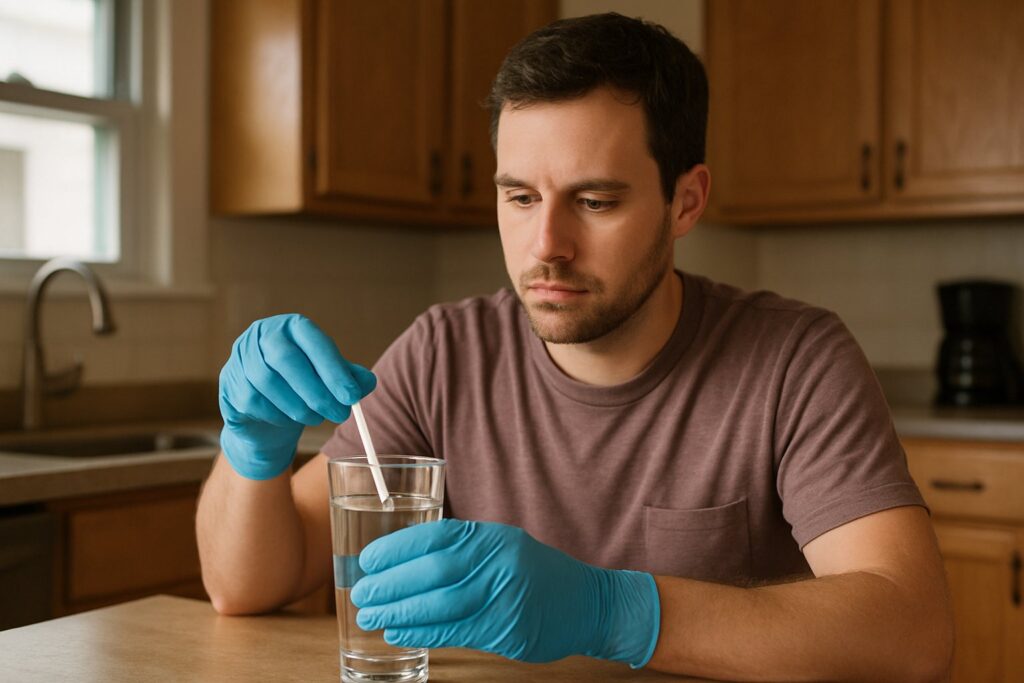
    A man dipping a test strip into a glass of tap water

    In short: lead cannot be seen, tasted or smelled, and EPA says testing is the only sure way to know whether there is lead in your water. Home kits such as Safe Home’s DIY test (ranges 0–4, 5–15 and 15+ ppb) and Watersafe (detects “below 5 ppb”) give a screening answer in minutes for about $19–$20. Mail-in kits such as Tap Score (about $55–$59) or Safe Home’s lab option send your water to a lab. Before you buy anything, call your water utility: many test for lead, and EPA says tests cost about $20 to $100.

    Why a few parts per billion matter

    EPA has set the health-based goal for lead in drinking water (the MCLG) at zero, because lead is toxic even at low exposure, and EPA and CDC agree there is no known safe level of lead in a child’s blood. The number you often hear, 15 parts per billion (ppb), is the action level under the Lead and Copper Rule. It is a trigger for water systems, not a safe limit: if more than 10% of a utility’s tap samples exceed it, the system must take extra steps such as improving corrosion control, informing the public and replacing lead service lines. EPA revised the rule again in 2024.

    Lead usually gets into tap water on its way to you, from corroding lead service lines, lead solder, and faucets and fixtures. EPA says lead pipes are more likely in older cities and in homes built before 1986. That means two homes on the same street can get different results, and your utility’s average does not describe your tap. Our lead pipes guide shows how to check what your service line is made of.

    Home strip tests vs certified lab kits

    Home strip or cassette testMail-in lab kit
    What you getA color or line read against a threshold or rangeA measured concentration, usually in ppb or mg/L
    Time5–15 minutesDays: shipping plus lab turnaround
    Typical price seen (Oct 2026)About $19–$23 per testAbout $55–$70 for lead (and often copper)
    Who analyzesYou, by eyeA laboratory, ideally certified by your state for drinking water
    Good forA first screen; checking a tap after a changeA number you can act on, compare over time and show to a landlord or utility
    Main limitsReading is subjective; a single threshold; makers’ accuracy claims are their ownSlower; the result depends on collecting the sample exactly as instructed

    The lead water test kits, compared

    KitTypeDetection as published by the makerLab claims (maker’s wording)Price seen (Oct 2026)
    Safe Home DIY Lead in Drinking Water ComboHome test plus optional lab sampleRanges 0–4, 5–15, 15+ ppb; results in 5 minutes“EPA-certified” lab; certified in Indiana and Kentucky; lab fee extra$19.99
    Watersafe Lead in Drinking Water (Silver Lake Research)Home test stripDetects lead “below 5 ppb”; 8 minutesSays accuracy was verified by a third-party lab using EPA Method 200.8$18.99
    Tap Score Lead and Copper Water Test (SimpleLab)Mail-in lab kitLead and copper measured by a lab; detection limit not stated on the product pageLab network with “accreditations ranging from ISO to NELAC/ELAP” and state certifications$55 on Tap Score’s site; $59 on Amazon
    Safe Home Lead in Drinking Water, in-lab single testMail-in lab kit“Down to 1 ppb”; results in about 3–5 business days“EPA-Certified Laboratory”$69.95 on Safe Home’s site
    Your utility or a state-certified lab directlyLab analysisSet by the lab’s approved methodListed on your state’s certified-lab listOften free from utilities; EPA says about $20–$100

    Safe Home DIY Lead in Drinking Water Combo

    Safe Home’s combo kit contains one home test for dissolved lead and, in the same box, a second kit for mailing a water sample to the company’s lab. The home test reports one of three ranges, 0–4 ppb, 5–15 ppb or 15+ ppb, in about five minutes. That is more useful than a single pass/fail line, because it separates “nothing detected at this sensitivity” from “detected but below the action level.” The lab analysis costs extra. Safe Home describes its lab as EPA-certified and, on its own site, says the lab is certified in Indiana and Kentucky, adding that some states require a state-certified lab. If you live elsewhere and need a result for a landlord, a sale or a child care program, ask whether your state accepts it.

    Watersafe Lead in Drinking Water Test

    Watersafe, made by Silver Lake Research, is a single-use strip test: add the water, insert the strip, and read it after eight minutes. The maker says it detects lead below 5 ppb, that it is made in the U.S. in an FDA-registered facility, and that its accuracy was checked by a third-party lab using EPA Method 200.8, the standard lab method for metals in drinking water. We could not find that third-party data published, so treat the accuracy claim as the maker’s. Like any strip, it tells you whether lead is present above its threshold, not the concentration.

    Tap Score Lead and Copper Water Test

    Tap Score, from SimpleLab, sends you sampling materials and a prepaid return label; a lab in its network measures lead and copper, and you get a written report, plus a pH strip to use at home. Tap Score lists results in about five business days after the lab receives the sample. On its lab claims, Tap Score says every lab in its network is certified, “with accreditations ranging from ISO to NELAC/ELAP, Direct State, DoD, DoE, DoH and beyond.” The product page does not name which lab will test your sample or publish its reporting limit for lead, so if you need that (for example, to compare with a later test), ask before you sample. Copper is a useful extra: it is covered by the same Lead and Copper Rule.

    What “certified lab” should mean for drinking water

    Drinking water labs in the U.S. are certified mainly by the states. Under the Safe Drinking Water Act, a state that runs its own drinking water program must certify laboratories or have its own certified lab; EPA’s regional offices certify each state’s principal lab and the labs in states without that authority. To stay certified, a lab must use EPA-approved methods, pass proficiency tests each year for each method, and pass on-site audits. EPA does not test home water on request; it encourages people to contact a state-certified drinking water laboratory, and it publishes each state’s list of certified labs.

    So “EPA-certified” on a test kit box is shorthand at best. What you want to know is: which lab, certified by which state for lead in drinking water, using which method. A good lab or kit company will tell you. If the answer is vague, choose a lab from your own state’s list. Our how to test water for lead guide walks through finding one.

    Lead water test kits we would buy

    These were in stock on Amazon when checked in October 2026. Prices change; check the listing.

    Three result ranges

    Safe Home DIY Lead in Drinking Water Combo Test Kit

    • Home test: 0-4, 5-15, 15+ ppb in 5 minutes
    • Optional mail-in lab sample, fee extra
    • About $20, seen October 2026
    Check price on Amazon
    Low-threshold strip

    Watersafe Lead in Drinking Water Test Kit

    • Maker: detects lead below 5 ppb
    • Result in 8 minutes, single test
    • About $19, seen October 2026
    Check price on Amazon
    Lab-measured result

    Tap Score Lead and Copper Water Test Kit

    • Lead and copper measured by a lab
    • Prepaid return shipping, written report
    • About $59, seen October 2026
    Check price on Amazon

    We skipped the many 15- to 23-in-1 strip packs that include a lead pad among chlorine, hardness and pH. Some list a lead range, but few publish a detection limit or validation, and a pad designed to cover many chemicals is not a substitute for a dedicated lead test. Compare every option on our lead test kits hub.

    What a strip can’t tell you

    • How much lead. A strip reads against a threshold or a range. “15+ ppb” could mean 16 or 160, and the right next step can differ.
    • Lead it is not designed to see. Safe Home describes its home test as a test for dissolved lead. Lead can also come out of pipes as tiny particles; EPA’s guidance on lead filters asks for particulate reduction certification for that reason. A dissolved-lead test is not designed to measure them.
    • Where the lead comes from. A single sample can’t separate a lead service line from a brass faucet. Utilities and labs use sampling sequences for that.
    • Whether the water is “safe.” No home kit can certify water as safe to drink. EPA’s goal for lead is zero.
    • Tomorrow’s result. One test is one sample at one moment. Repeat tests, and a lab test, give a fuller picture.

    Strips are also read by eye, so lighting, timing and color perception affect the answer. Follow the kit’s timing exactly, and read the result in daylight.

    Getting an accurate sample

    Whatever kit you use, the sample matters as much as the test. Follow the kit’s or lab’s instructions to the letter, especially on how long the water must sit unused beforehand and whether to collect the very first water out of the tap. Use the cold-water tap you drink from, don’t remove the aerator unless told to, and label the sample with the date and time. If you have a filter, test unfiltered water to learn what is in your plumbing, and filtered water separately to check the filter. Your utility can tell you how it samples for the Lead and Copper Rule, which helps you compare.

    If lead shows up

    1. Confirm with a lab if your first result came from a strip, so you know the number.
    2. Call your water utility. Ask about your service line and its testing or replacement program. See lead service line replacement.
    3. Use a filter certified for lead for drinking and cooking water in the meantime. EPA advises using a filter certified to remove lead, following its replacement directions, and not running hot water through it. See best water filters for lead and the lead water filters hub.
    4. Ask about blood testing if young children or someone pregnant has been drinking the water. Talk to your doctor or local health department, and see lead poisoning and blood lead test.

    For the bigger picture on water, including how utilities test and what the rules require, start at our lead water testing hub. For when a home kit is enough and when it isn’t, see home lead test vs lab testing.

    Frequently asked questions

    Are home lead water test strips accurate?

    They can flag lead above their published threshold, which for the better kits is around 4–5 ppb. Their accuracy figures come from the makers, they don’t give a concentration, and they can’t certify water as safe. Use them as a screen and confirm with a state-certified lab.

    What level of lead in water is safe?

    EPA’s health-based goal for lead in drinking water is zero. The 15 ppb action level is a trigger for utilities to act, not a safe level.

    Can my water company test for lead for free?

    Many utilities offer lead testing or can point you to a lab. EPA’s advice is to contact your water utility and to get a list of certified labs from your state or local drinking water authority.

    Should I test well water differently?

    The same kits work on well water. Private wells aren’t tested by a utility, though, so plan regular lab tests through a state-certified lab, and ask your local health department what else to test for.

    Can I use a water test kit on dishes or paint?

    No. Water kits are made and checked for water. For paint, see best lead paint test kits; for dishes, see lead in pottery and dishes.

  • Best Lead Paint Test Kits (2026): Swabs, EPA-Recognized Kits and Mail-In Labs Compared

    Best Lead Paint Test Kits (2026): Swabs, EPA-Recognized Kits and Mail-In Labs Compared

    The best lead paint test kit depends on the question you are asking. If you want a quick yes or no on a painted window frame before you sand it, an EPA-recognized swab kit such as LeadCheck is the most practical choice; if you want to know how much lead is in the paint, or you need a result you can rely on, send a paint chip to an accredited laboratory. This guide compares the kits you can actually buy, what each one is documented to detect, what EPA does and does not recognize, and where every home test runs out of road.

    A swab turning color against old painted trim

    In short: EPA recognizes only three lead paint test kits, LeadCheck, D-Lead and the State of Massachusetts kit, and only for specific surfaces and specific users (certified renovators or trained professionals). All three meet EPA’s criterion for reliable negative results; none has met EPA’s criterion for reliable positive results. A mail-in kit from a lab on EPA’s National Lead Laboratory Accreditation Program (NLLAP) list gives you a measured number instead of a color. For a whole-house answer, a certified lead inspector is the only option that covers every painted surface.

    How we compared lead paint test kits

    We did not run our own lab tests. We checked each kit against what is published: EPA’s list of recognized test kits and its recognition criteria, the U.S. Consumer Product Safety Commission’s (CPSC) evaluations of home test kits, EPA’s list of accredited lead labs, and each maker’s own product pages and Amazon listings. Prices are what we saw when checked in October 2026; they change often.

    One thing to settle first: federal rules define lead-based paint as paint with lead at or above 1.0 milligram per square centimeter or 0.5% by weight (5,000 parts per million). That is the level EPA’s test-kit rules are built around. It is far higher than the 90 ppm limit CPSC sets for paint on toys, children’s products and household paint sold today, so a kit designed for old house paint is not automatically a good test for a painted toy.

    Lead paint test kits compared

    KitTypeWhat it is documented to detectEPA recognitionPrice seen (Oct 2026)
    LeadCheck swabs (now made by Luxfer Magtech; formerly 3M)Instant chemical swab, red = leadLead on painted surfaces; listing says “detects lead down to 600 ppm”; results in about 30 secondsYes, for wood, ferrous metal, drywall and plaster, used by certified renovatorsAbout $39 for 8 swabs; about $15 for 2
    D-Lead Paint Test Kit (ESCA Tech)Paint-chip spot test with color comparisonPresence or absence of lead around 1.0 mg/cm², per EPA’s verification statementYes, same four surfaces, certified renovators; recognized August 31, 2010Sold through distributors; we found no Amazon listing
    State of Massachusetts kitProfessional kitLead-based paint on drywall and plasterYes, drywall and plaster only, trained professionalsNot sold to consumers
    Safe Home Lead in Solids Combo10 swabs plus a mail-in sample kitMaker states swab detection “to 5 ppm” and lab detection to 0.006 ppm (lab fee extra)Not on EPA’s recognized listAbout $20
    Schneider Labs mail-in kit (SLGi)Collect a sample, mail it, lab measures itLead in one paint, dust or soil sample by flame atomic absorption (EPA Method 7000B)Lab is on EPA’s NLLAP list (Sept 2026)About $35 per sample, return label included
    Certified lead inspectorOn-site XRF readings and/or paint-chip samplesWhere lead-based paint is in the whole homeEPA- or state-certified professionalQuote-based; varies by home and region

    What EPA recognition actually means

    EPA’s Renovation, Repair and Painting (RRP) rule lets a certified renovator use a recognized test kit to decide whether lead-safe work practices are needed. To be recognized, a kit has to pass one or both of two performance tests, set out in 40 CFR 745.88:

    • The negative-response criterion. On paint at or above the regulated level, the kit must give a negative result no more than 5% of the time (with 95% confidence). In plain terms: it should rarely miss lead-based paint.
    • The positive-response criterion. On paint below the regulated level, the kit must give a positive result no more than 10% of the time. In plain terms: it should rarely raise a false alarm.

    EPA states that all three recognized kits meet only the negative-response criterion, and that no lead test kit has met both. So a negative result from a recognized kit, used correctly on a recognized surface, is the meaningful one: it tells a renovator that regulated lead-based paint is not present there. A positive result may be a true positive or a false alarm, and EPA’s rules simply have the renovator treat that surface as if it contains lead, or bring in a certified inspector or risk assessor to test it properly.

    EPA also notes that it only recognizes tests conducted by certified inspectors, risk assessors and RRP-certified renovators. Nothing stops a homeowner from buying the same swabs, but your own result is not an official determination. For a sale, a rental disclosure or a child’s elevated blood lead level, you will need a professional. Our lead paint inspection guide explains the difference between an inspection and a risk assessment.

    The kits, one by one

    LeadCheck swabs: the EPA-recognized swab most people can buy

    LeadCheck is the swab most renovators know as “3M LeadCheck.” According to EPA, 3M sold the LeadCheck formula and trademarks to Luxfer Magtech in September 2024, and EPA now recognizes the Luxfer-made kit; it adds that 3M LeadCheck kits you already own can still be used, but check the expiration date. Luxfer says results come in under 30 seconds in the vast majority of cases, and that a positive swab should be verified with the confirmation card in the pack.

    EPA recognition covers wood, ferrous metal (iron and steel), and drywall and plaster. Retail listings describe a sensitivity of 600 ppm. That is well below the 5,000 ppm federal lead-based paint definition, which is part of why the negative results are dependable on house paint. It is far above the 90 ppm CPSC limit, so a negative swab does not tell you a toy or piece of furniture meets today’s standard. LeadCheck tests what the swab can reach: lead under a newer, lead-free top coat can be missed unless the older layers are exposed (CPSC found exactly this problem with coated products).

    D-Lead: the paint-chip kit renovators use

    D-Lead, from ESCA Tech, works differently. You take a small paint sample, dissolve the lead out of it with a solvent, and compare the color reaction against a standard. EPA’s Environmental Technology Verification program tested it in 2010, and EPA recognized it as a negative-response kit on August 31, 2010, for the same four surfaces as LeadCheck. EPA’s verification statement describes it as detecting the presence or absence of lead at about 1.0 mg/cm². It takes longer than a swab and the color reading is a judgment call. We did not find D-Lead on Amazon; EPA lists ESCA Tech’s phone number (414-962-3006) and says it is sold through certain distributors and retailers.

    The State of Massachusetts kit

    The third recognized kit is for trained professionals and is recognized only on drywall and plaster. EPA says it is not recognized for wood or ferrous metal.

    Safe Home Lead in Solids: swabs plus an optional lab sample

    Safe Home combines 10 do-it-yourself swabs with a sample-submission kit, so you can screen several spots and then mail one sample to the company’s lab for a measured result. The maker says the swabs give results in 30 seconds with detection “to 5 ppm,” and that the lab test reaches 0.006 ppm, with lab fees charged separately. It describes the kit as usable on paint, dust, soil, wood, toys, furniture, metal and plastic. Two cautions: this kit is not on EPA’s recognized list, so it cannot be used for RRP decisions, and Safe Home’s swab detection figure is the maker’s own claim, which we could not check against any independent evaluation. Safe Home calls its lab “EPA-certified” and says testing meets NLLAP guidelines; we did not find the lab named in Safe Home’s instructions (Environmental Laboratories, Inc., Madison, Indiana) on EPA’s NLLAP list as of September 2026, so ask the company which accreditation applies to paint before you rely on the lab result for anything official.

    Mail-in paint-chip kits: a number, not a color

    A mail-in kit swaps speed for certainty. Schneider Laboratories Global (SLGi) in Richmond, Virginia, sells a kit with sampling tools, instructions and a prepaid return label; the lab analyzes one paint, dust or soil sample by flame atomic absorption (EPA Method 7000B) and reports within five business days of receiving it. Schneider Laboratories appears on EPA’s NLLAP list (September 2026), which is the federal program that recognizes labs for paint chips, soil and dust wipes. A measured result in mg/cm² or percent by weight tells you not just whether there is lead but how much, which is what you need to compare against the 1.0 mg/cm² / 0.5% definition.

    Any NLLAP lab will do; you do not need to buy a branded kit. Many accept samples directly, and EPA’s list is searchable by state. Our how to test for lead paint guide covers how to take a paint-chip sample safely: all layers down to the substrate, a wet method, and a clean-up afterward.

    Lead paint test kits we would buy

    These are the kits we found in stock on Amazon when checked in October 2026, matched to the job they suit. Prices change; check the listing.

    EPA-recognized swab

    LeadCheck Swabs, Instant Lead Test, 8 Swabs

    • Recognized on wood, ferrous metal, drywall, plaster
    • Listing: detects down to 600 ppm, about 30 seconds
    • About $39, seen October 2026
    Check price on Amazon
    Measured lab result

    Schneider Labs Lead Test Kit, Paint, Dust or Soil (1 sample)

    • Lab on EPA's NLLAP list
    • Flame AA, EPA Method 7000B; prepaid return label
    • About $35, seen October 2026
    Check price on Amazon
    Screen many spots

    Safe Home Lead in Solids Combo Test Kit

    • 10 swabs plus optional mail-in sample
    • Not EPA-recognized; lab fee extra
    • About $20, seen October 2026
    Check price on Amazon

    We left out the many 30- to 300-swab kits that publish no detection limit and are not on EPA’s list: without performance data there is no way to know how often they miss lead. Compare all the options on our lead test kits hub.

    False negatives and false positives: the limits of every swab

    CPSC has evaluated home lead test kits four times (1992, 1994, 2003 and 2007). In its 2007 study of kits on paints and products, more than half of the 104 results were false negatives, and two were false positives. CPSC concluded that consumers should not use lead test kits to judge consumer products, and that laboratory analysis is the most accurate and reliable way to find out whether paint contains lead and how much. Those studies are older, but the reasons still apply to any color test:

    • Buried layers. A swab only reacts with lead it touches. Lead paint under a newer lead-free coat can read negative unless every layer is exposed.
    • Low concentrations. Most kits were built for old house paint, where lead levels are high. CPSC found they may not be useful for low lead levels or for materials like metal jewelry and vinyl.
    • Interference. CPSC notes that chromate can interfere with rhodizonate-based kits and iron can react with sulfide kits, giving misleading colors.
    • Surfaces outside the recognition. EPA recognition covers specific surfaces. On brick, concrete or non-ferrous metal, a recognized kit’s result carries no EPA backing.

    Which lead paint test should you choose?

    1. Planning a small repair in a pre-1978 home: a recognized swab kit (LeadCheck) on the exact spot you will disturb. If it is negative on wood, ferrous metal, drywall or plaster, that is useful information. If it is positive, work lead-safe or get it tested properly. See lead-safe renovation and the RRP rule.
    2. Wanting to know how much lead is there: a paint-chip sample to an NLLAP lab.
    3. Buying, selling or renting a home, or a child has an elevated blood lead level: a certified inspector or risk assessor. Start at find a lead professional or read how to choose a lead inspector.
    4. Checking toys, jewelry or dishes: paint swabs are the wrong tool. Read lead in toys and jewelry and lead in pottery and dishes.

    A test kit only tells you about the spot you tested. Lead paint that is chipping, or that is disturbed by work, turns into dust, and EPA treats lead dust on floors and window sills as a hazard in its own right. If you find lead paint, read our lead dust testing guide and the lead paint testing hub. If you are worried about someone’s health, a blood lead test is the only way to know about exposure; talk to a doctor or your local health department, and see lead poisoning.

    Using a swab kit safely and correctly

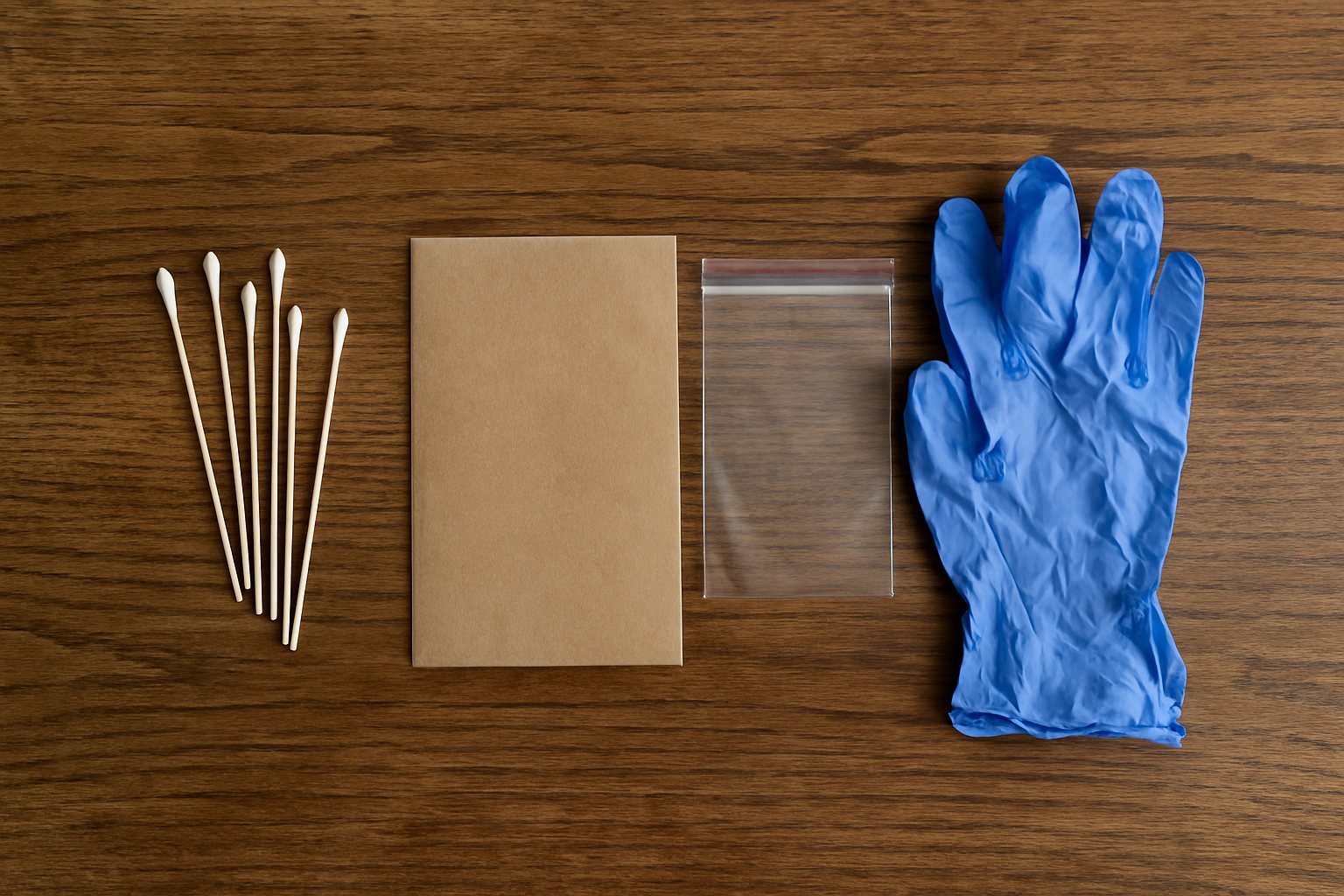
    Read the instructions first, expose every paint layer the way the kit describes rather than scraping or sanding, and test each painted component separately, since a window sash and its trim may have different histories. Use the confirmation card if there is one. Wipe up with a damp paper towel, wash your hands, keep children and pets away, and note where you tested. EPA’s National Lead Information Center (1-800-424-5323) can point you to certified professionals and accredited labs.

    Frequently asked questions

    Is 3M LeadCheck still sold?

    The formula is. According to EPA, 3M sold LeadCheck to Luxfer Magtech in September 2024, and EPA now recognizes the Luxfer-made kit. Older 3M kits can still be used if they have not expired.

    Are lead paint test kits accurate?

    The three EPA-recognized kits are reliable for negative results on the surfaces they are recognized for. EPA says no kit has met its criterion for reliable positive results, and CPSC studies found high false-negative rates for home kits on consumer products. A lab analysis is the accurate option.

    Which lead test kits are EPA approved?

    EPA uses the word “recognized.” The recognized kits are LeadCheck and D-Lead (wood, ferrous metal, drywall and plaster, for certified renovators) and the State of Massachusetts kit (drywall and plaster only, for trained professionals).

    What does a red swab mean?

    That lead is probably present on that surface. It does not tell you how much, and it may occasionally be a false alarm. Treat the surface as containing lead, avoid dry sanding or scraping, and confirm with a lab sample or a certified inspector.

    Can I use a lead paint swab on dishes or toys?

    Not reliably. CPSC advises consumers not to use home test kits to evaluate consumer products, because kits miss lead under coatings and at low levels. FDA says that if pottery tests positive with a swab, do not use it for food or drinks; a negative swab does not prove a dish is safe.