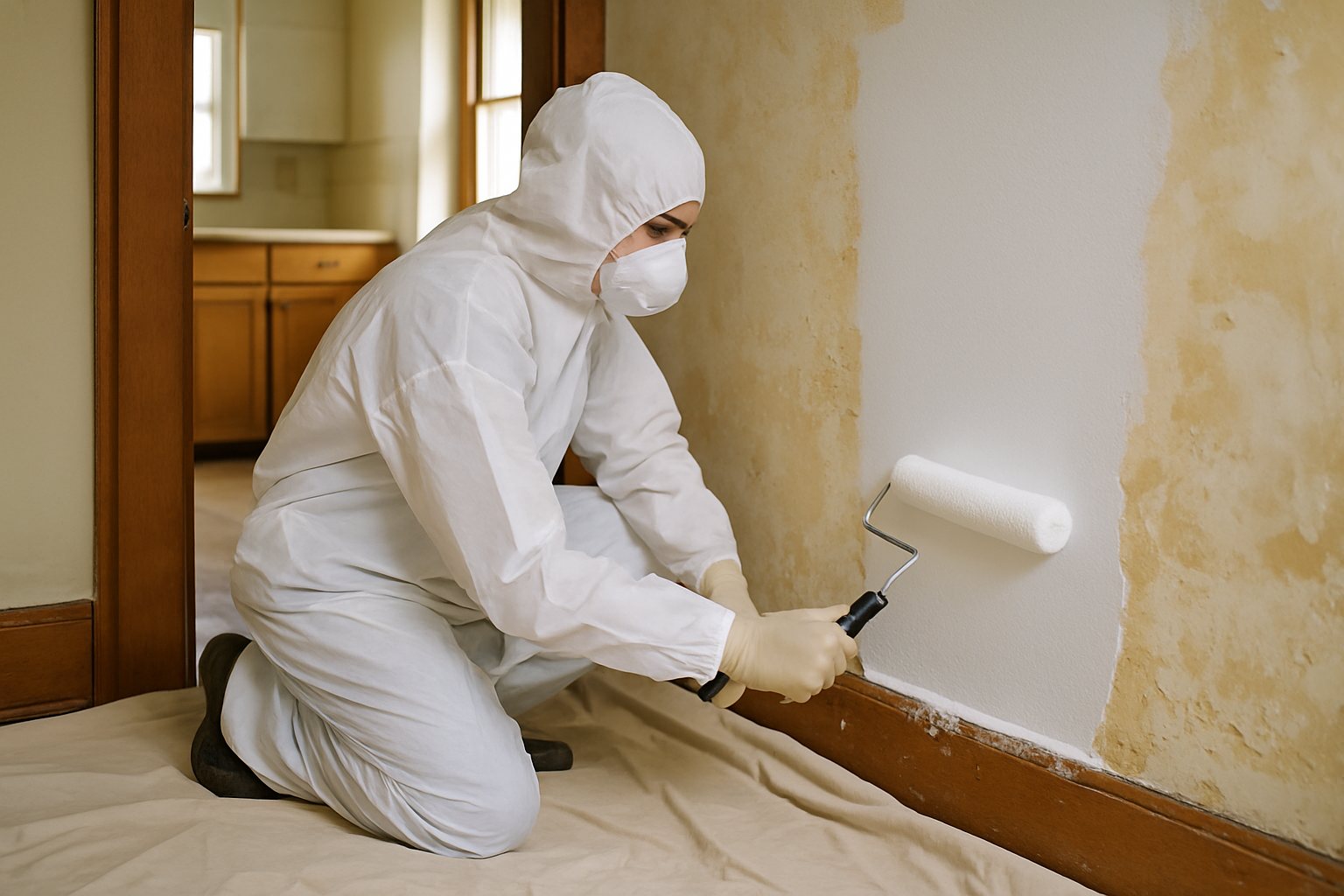
Lead paint encapsulation means sealing lead-based paint under a special coating, called an encapsulant, that forms a lasting barrier so the paint cannot turn into dust or chips. Done correctly on the right surfaces, it is a recognized form of lead abatement. Done on the wrong surfaces, or with ordinary paint, it fails and the lead is still there.
In short: EPA defines an encapsulant as a substance that forms a barrier between lead-based paint and the environment, either a liquid-applied coating (with or without reinforcement) or an adhesively bonded covering. Ordinary paint is not an encapsulant. Encapsulation suits sound, stable surfaces such as walls, ceilings, baseboards and casings. It is not suitable for friction or impact surfaces like window sashes, door edges, stair treads and floors, or over moisture damage. Products are tested against ASTM E1795 (non-reinforced) and ASTM E1797 (reinforced), and ASTM E1796 guides selection and use. The lead stays in place, so encapsulated surfaces must be checked regularly for life.
What an encapsulant is, and what it is not
Under federal rules (40 CFR 745.223), encapsulation is the application of an encapsulant, and permanent encapsulation of lead-based paint counts as abatement, alongside removal, replacement and enclosure. Enclosure is different: it uses rigid, durable construction materials mechanically fastened over the surface.
The key word is barrier. EPA says painting over hazards with regular paint is not abatement. Connecticut’s Department of Public Health puts it plainly in its encapsulant guide: conventional paints are not encapsulants. Encapsulants are built to stick hard to the old paint, resist impact and abrasion, and stay intact for years.
| Method | How it works | Lead removed? | Main limits |
|---|---|---|---|
| Encapsulation | A liquid or adhesively bonded coating seals the paint | No | Not for friction, impact or moisture-damaged surfaces; needs monitoring |
| Enclosure | Rigid materials such as panels mechanically fastened over the surface | No | The lead stays behind the barrier; needs monitoring |
| Removal or replacement | Paint is stripped, or the painted part is replaced | Yes | Strict work-practice rules apply to stripping |
| Interim controls | Paint stabilization, repairs, cleaning | No | Temporary; ongoing maintenance |
For removal and the rules that apply to it, see lead paint removal.
Types of encapsulants and the ASTM standards
ASTM International publishes the standards the industry uses for liquid lead encapsulants:
- ASTM E1795, Standard Specification for Non-Reinforced Liquid Coating Encapsulation Products for Leaded Paint in Buildings. It sets minimum performance requirements and lab tests for products applied in one or more coats, for interior use, exterior use or both, covering properties such as impact resistance, adhesion, water vapor transmission and VOC content. ASTM lists E1795-25 as the current version. It does not cover industrial steel structures or residential coated metal surfaces, because it has no corrosion-control requirements.
- ASTM E1797, Standard Specification for Reinforced Liquid Coating Encapsulation Products for Leaded Paint in Buildings. It covers systems with a reinforcement, typically a continuous fabric or mesh applied in the field between a base coat and top coat, and complements E1795.
- ASTM E1796, Standard Guide for Selection and Use of Liquid Coating Encapsulation Products for Leaded Paint in Buildings (E1796-24, active). It helps owners, contractors and regulators choose a product, decide whether a surface is suitable, and apply, evaluate and maintain the coating. ASTM notes it does not set minimum performance requirements.
Beyond liquids, EPA’s definition also includes adhesively bonded coverings, and Connecticut’s guide mentions cementitious encapsulants. Some states keep their own approved lists: in Connecticut, only products on the state’s Registry of Authorized Encapsulant Products may be used for lead abatement, and local health directors must approve abatement plans. Check your state’s lead program before choosing a product.
Where encapsulation is allowed, and where it is not
HUD’s Guidelines for the Evaluation and Control of Lead-Based Paint Hazards in Housing devote a full chapter (Chapter 13) to encapsulation, including which surfaces are unsuitable and how to run field patch tests. Connecticut’s Department of Public Health guide spells out the same logic in plain lists, and we use it here as a worked example.
Encapsulation prohibited on:
- Friction surfaces and surfaces subject to repeated impact, such as floors, stair treads, thresholds, window sashes, window stops, parting beads, window wells, window jambs, and the friction and impact edges of doors, door jambs, cabinets and drawers
- Surfaces with uncorrected moisture damage or other uncorrected underlying problems
- Surfaces coated with calcimine paint
- Surfaces that fail the X-cut tape test or the patch test
- Surfaces the product maker does not recommend
Allowed after preparation, such as stripping the friction or impact areas first or adding a permanent barrier against the impact: doors, door jambs, door headers, window sashes, window headers, shelves, stair treads, and cabinets and drawers.
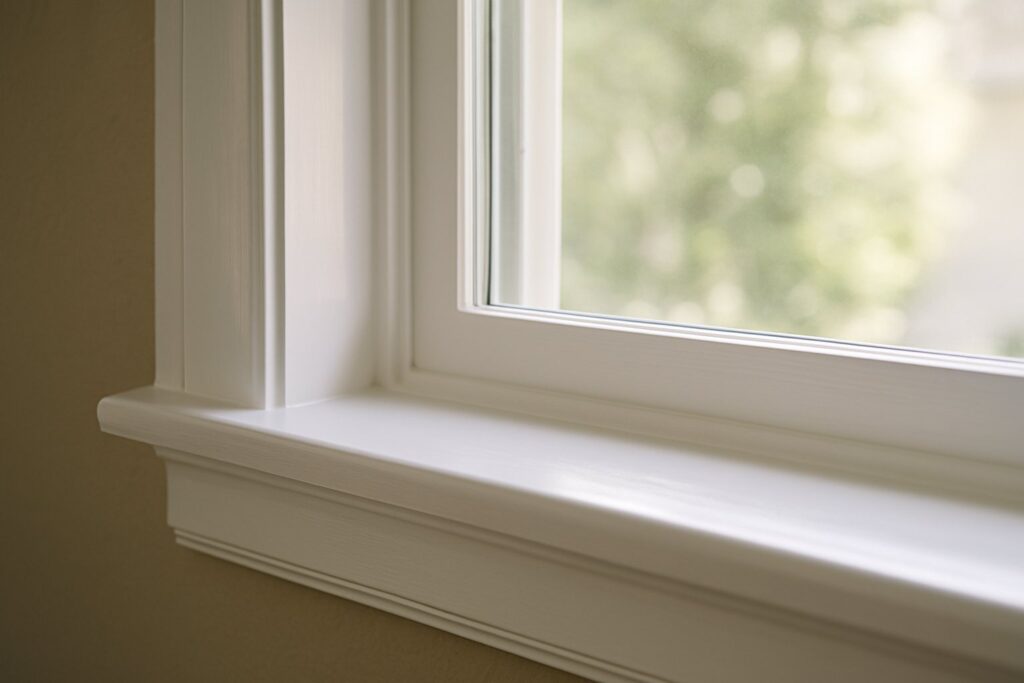
Generally allowed on non-impact, non-friction surfaces: walls, ceilings, baseboards, chair rails, window sills, aprons, casings, mullions and muntins, door casings, handrails, railing caps, newel posts, balusters and stringers.
Why the rules? Connecticut’s guide explains that friction and impact surfaces get damaged, which can re-expose the lead paint and release chips and dust. Any condition that could cause moisture damage must be corrected first. And an encapsulant is only as good as the paint layers it sits on: failure of an underlying paint layer is one of the main reasons patch tests fail.
Testing the surface first: X-cut and patch tests
Because the encapsulant relies on the old paint staying stuck, the surface is tested before the job. Connecticut’s guide describes two tests:
- X-cut tape test on the old paint: two 2-inch cuts in an X through the paint to the substrate, firm tape over the cross, pulled off after 90 seconds. If paint lifts more than 1/16 inch from the cuts, or more than 1/8 inch away from them, the surface fails and cannot be encapsulated.
- Patch test with the chosen encapsulant: a test patch (6 x 6 inches recommended on large surfaces) in each room on each type of building component, allowed to cure, then checked. More than 10% visible defects such as bubbling or cracking is a fail; then an X-cut tape test on the patch, where more than 1/2 inch of coating removed from the cuts is a fail.
Any preparation that disturbs lead paint during testing must follow lead-safe work practices. In Connecticut, it must be done by a licensed lead contractor or the property owner.
Durability, monitoring and upkeep
Encapsulation leaves the lead in place, so it only works as long as the barrier holds. EPA’s rules require that when a risk assessor recommends an encapsulant or enclosure, the report also recommends a maintenance and monitoring schedule. Connecticut’s guide gives a concrete one:
- Check encapsulated surfaces each month for the first six months after application
- After that, check at least once a year
- Record dirt, thin spots, holes, cracks, dents, water damage, stains, blistering, peeling, sagging, bubbling or chemical damage
- Clean dirty surfaces with a suitable cleaner or soap and water
- Small damage can be repaired with new encapsulant, caulk or spackle as the maker suggests; for large damage, contact the local health department and the original contractor
We could not find a service life in years that any official source states for encapsulants in general; ASTM E1796 frames encapsulation as suited to buildings likely to stand for a long time. Ask the product maker for its warranty and the contractor for a written maintenance plan. Keep the records: encapsulated lead paint is still lead paint you know about, and federal disclosure rules require sellers and landlords of pre-1978 housing to disclose known lead-based paint. See lead paint disclosure.
Who can do lead paint encapsulation?
When encapsulation is used as abatement, the federal abatement rules apply: certified workers under a certified supervisor, from a certified firm, with clearance testing by a certified inspector or risk assessor afterward. Since January 12, 2026, clearance requires dust below 5 micrograms per square foot on floors, 40 on window sills and 100 on window troughs. If you hire someone to coat surfaces as part of a renovation instead, EPA’s RRP rule applies to paid work in pre-1978 homes; see lead-safe renovation and the RRP rule.
The surface assessment, preparation and testing are where much of the skill lies. Connecticut strongly recommends that owners using encapsulants outside an ordered abatement consult the local health department and document the surface tests, product, preparation and application. To find certified help, see find a lead professional and lead abatement.
How much does lead paint encapsulation cost?
We could not find an official published price for lead paint encapsulation, from EPA, HUD or state programs, when we checked in October 2026, so we will not quote a per-square-foot number. What the sources do say:
- ASTM E1796 states that encapsulation may be more cost-effective than abatement by removal, and that it suits buildings expected to stand a long time or whose structure must stay intact for historical or economic reasons.
- The real cost includes more than the coating: surface tests, preparation, containment and clean-up, clearance testing, and years of monitoring and touch-ups.
- Clearance dust samples are billed per sample by labs; one NLLAP-listed lab, the Wisconsin Occupational Health Laboratory, charges $40 per sample at normal turnaround.
Get written quotes that name the product and which ASTM specification it meets, list every surface to be encapsulated and every surface excluded, and include patch testing, clearance and a maintenance plan. Some cities run HUD-funded lead hazard control programs that pay for this work for eligible households; ask your local health or housing department.
Confirm the lead first
Encapsulation costs money and commits you to upkeep, so it makes sense to know which surfaces actually have lead. A certified lead paint inspection is the full answer; for a first look, these were in stock on amazon.com in October 2026:
Schneider Labs Lead Test Kit, Paint, Dust or Soil (1 sample)
- Mail-in lab analysis, EPA Method 7000B
- Prepaid return label included
- About $35, seen October 2026
LeadCheck Swabs, 8-Swab Pack
- Instant color-change swabs
- Recognized for certified users on wood, metal, drywall
- About $39, seen October 2026
See how to test for lead paint and our lead paint testing hub for what each test can and cannot tell you.
Frequently asked questions
Is lead paint encapsulation safe?
On suitable, sound surfaces with a product that meets the ASTM specifications, applied after passing surface tests and followed by clearance and regular checks, it is a recognized form of abatement. It is not safe on friction or impact surfaces or over moisture damage, where the coating wears or peels and re-exposes the lead. If you are worried about exposure, see lead and health.
Can I just paint over lead paint?
Not as a fix. EPA says painting over hazards with regular paint is not abatement, and ordinary paint is not an encapsulant. Fresh paint over sound lead paint can be part of maintenance, but it does not seal the lead permanently.
How long does lead paint encapsulation last?
No official source we found gives a standard lifespan. It lasts as long as the coating and the paint beneath stay intact, which is why monthly checks for six months and at least yearly checks after that are recommended in Connecticut’s guide.
Can you encapsulate lead paint on windows?
Window sills, aprons and casings are generally suitable. Window sashes, stops, parting beads, wells and jambs are friction or impact surfaces where encapsulation is prohibited unless they are prepared first, for example by stripping the rubbing areas. Window replacement is another option; see lead paint removal.
Is encapsulation cheaper than removal?
ASTM E1796 says it may be more cost-effective than removal. Remember to count monitoring and touch-ups over the years, and compare written quotes.