Tag: Lead Abatement

  • Lead Abatement: Process, Contractors, Costs and Grants

    Lead Abatement: Process, Contractors, Costs and Grants

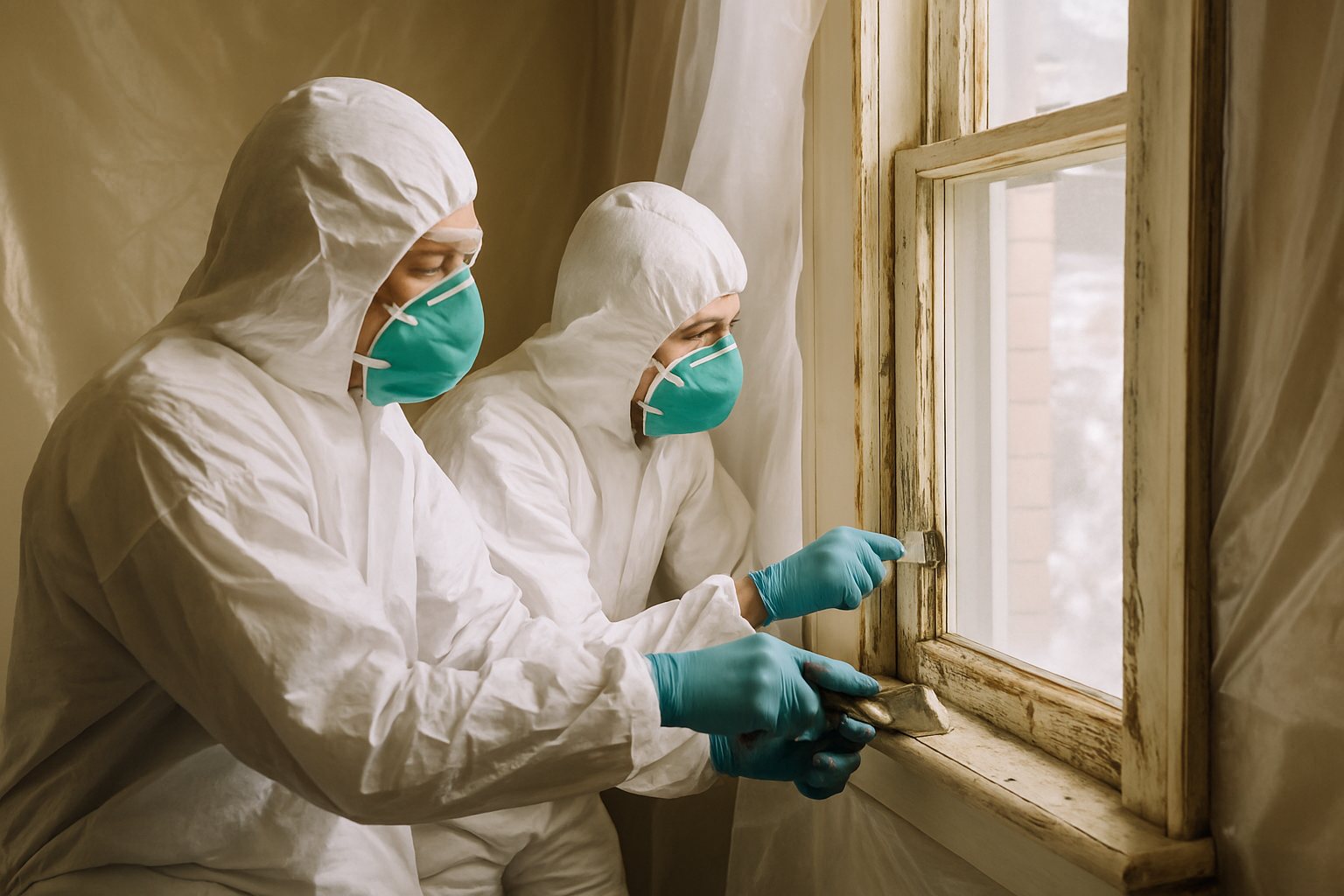
    Lead abatement is work designed to permanently eliminate lead-based paint hazards in a home, by removing, enclosing or encapsulating lead paint, replacing painted parts, or removing or covering contaminated soil. It must be done by a certified abatement firm, and it is not finished until an independent dust test shows the area is clean.
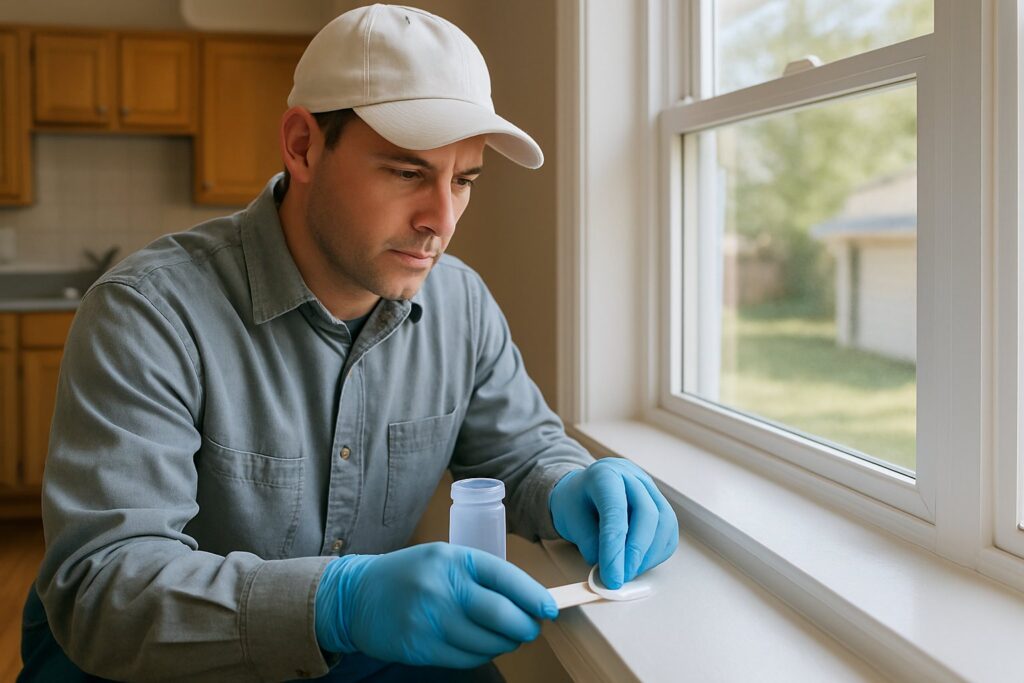
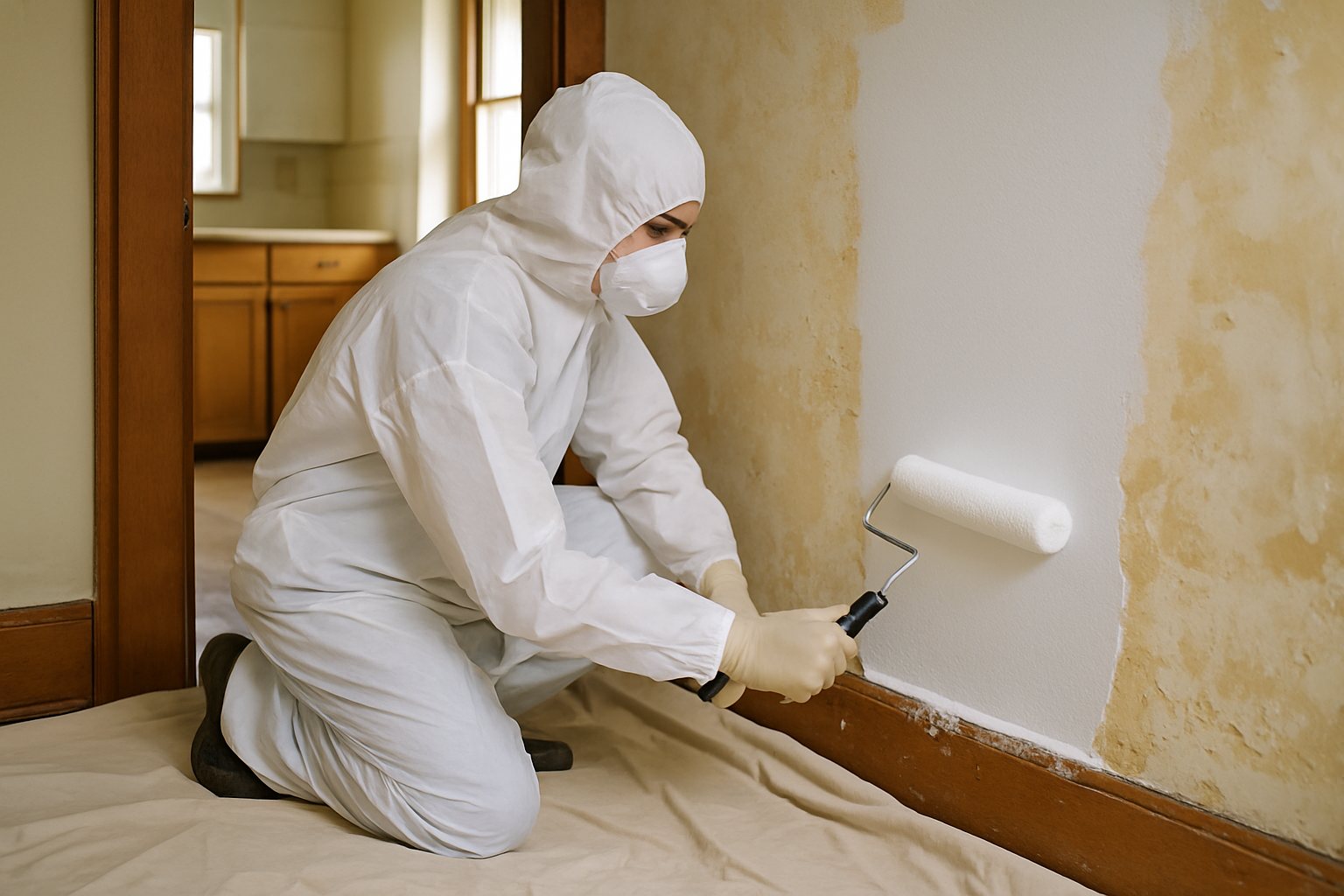
    An inspector doing a clearance check after abatement

    In short: abatement is permanent; interim controls such as repairs, specialized cleaning and repainting are temporary and need ongoing checks. In pre-1978 homes and child-occupied facilities, abatement firms and workers must be certified by EPA or by an EPA-authorized state, occupants move out during the work, and the job passes only when a certified inspector or risk assessor finds lead dust below 5 µg/ft² on floors, 40 µg/ft² on window sills and 100 µg/ft² in window troughs. Costs vary widely.

    Abatement vs interim controls vs renovation

    Three kinds of work can look alike from the sidewalk. They are regulated differently, and the difference matters when you hire someone.

    AbatementInterim controlsRenovation, repair and painting (RRP)
    GoalPermanently eliminate lead-based paint hazardsTemporarily reduce exposureRemodeling or repairs that happen to disturb paint
    Typical workPaint removal, enclosure, encapsulation, replacing windows or doors, soil removal or coveringSpecialized cleaning, repairs, maintenance, painting, temporary containment, monitoringWindow replacement, demolition, sanding, painting prep
    Who does itCertified abatement firm and certified workers and supervisorVaries by program and stateEPA lead-safe certified renovation firm
    OccupantsFirm must make sure occupants are outVaries by programNot required to leave, but kept out of the work area
    Ends withClearance testing against EPA action levelsOngoing monitoringCleaning verification, or clearance where a program requires it

    EPA is blunt about one point: painting over lead paint with regular paint does not permanently address the hazard. If your contractor offers to “seal it with primer”, that is not abatement. For renovation rules, see lead-safe renovation (RRP).

    Abatement methods

    • Removal. Stripping the paint by permitted methods. Federal rules ban open-flame burning or torching, ban machine sanding, grinding or abrasive blasting unless HEPA exhaust control is used, limit dry scraping, and require heat guns to run below 1,100°F. More in lead paint removal.
    • Enclosure. Covering the painted surface with rigid, durable materials mechanically fastened in place, such as drywall or paneling.
    • Encapsulation. Coating the paint with an encapsulant, a product that forms a barrier between the paint and the environment. It needs a sound surface and periodic monitoring. See lead paint encapsulation.
    • Component replacement. Taking out lead-painted windows, doors or trim and installing new ones. Old windows are frequent targets because friction makes dust.
    • Soil abatement. Removing contaminated soil and replacing it with soil at or below 400 ppm lead, or permanently covering it. Read lead in soil testing first.

    Most projects mix methods. A certified risk assessor or project designer helps choose them; when encapsulation or enclosure is recommended, the risk assessment report must include a maintenance and monitoring schedule.

    Who can do lead abatement: certification

    EPA requires individuals and firms that do lead-based paint inspections, risk assessments and abatement in pre-1978 housing and child-occupied facilities to be trained, certified and to follow specific work practices. Individual roles include abatement worker, supervisor, inspector, risk assessor and project designer. The firm itself must be certified too.

    Who issues the certificate depends on where you live. EPA runs the program itself in Alaska, Arizona, Florida, Idaho, Montana, Nevada, New Mexico, New York, South Carolina, South Dakota and Wyoming, plus American Samoa, Guam, the Northern Mariana Islands, the US Virgin Islands and most Tribal lands. In those places, check firms with EPA’s Certified Inspection, Risk Assessment, and Abatement Firms Locator. Every other state runs its own EPA-authorized program, with its own license list; EPA links to each one from its program overview page.

    Note that an EPA lead-safe certified renovator (RRP) is not an abatement contractor. If the goal is to get rid of lead hazards, hire an abatement firm. Our find a lead professional page explains how to search, and how to choose a lead inspector covers the testing side.

    The abatement process, step by step

    1. Find the hazards. A lead inspection shows where lead paint is; a risk assessment shows which paint, dust and soil hazards exist and the options to fix them. See lead paint inspection vs risk assessment.
    2. Plan the work. Before work starts, a certified supervisor or project designer writes an occupant protection plan specific to the building, describing how residents will be protected.
    3. Notify. In EPA-administered areas, the firm must notify EPA at least 5 business days before abatement starts (shorter windows apply to emergency or elevated-blood-lead orders). States have their own notice rules.
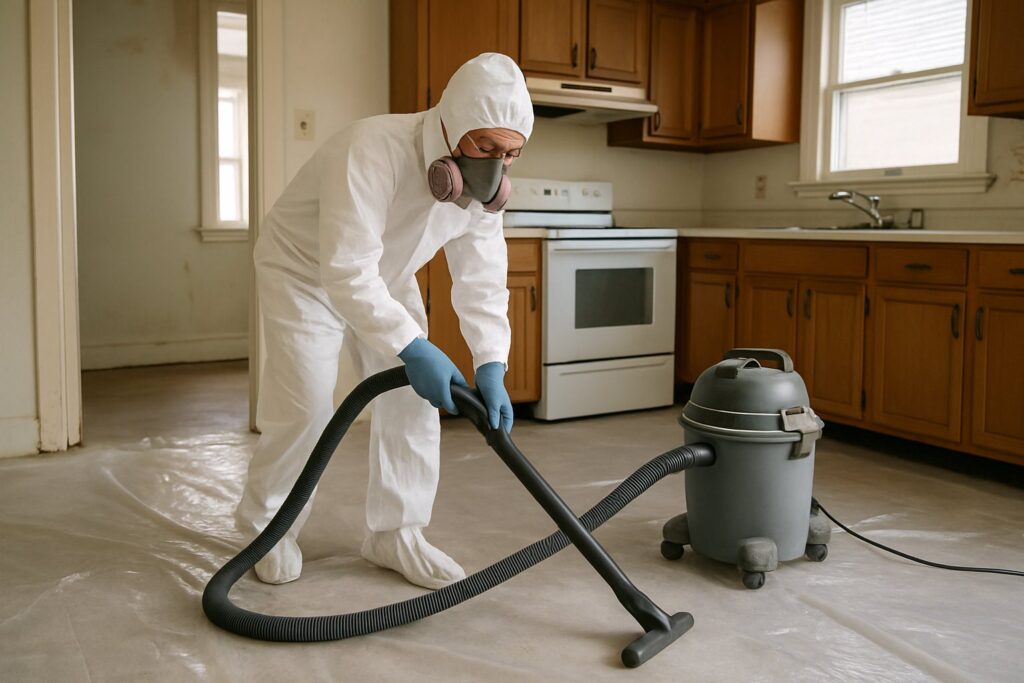
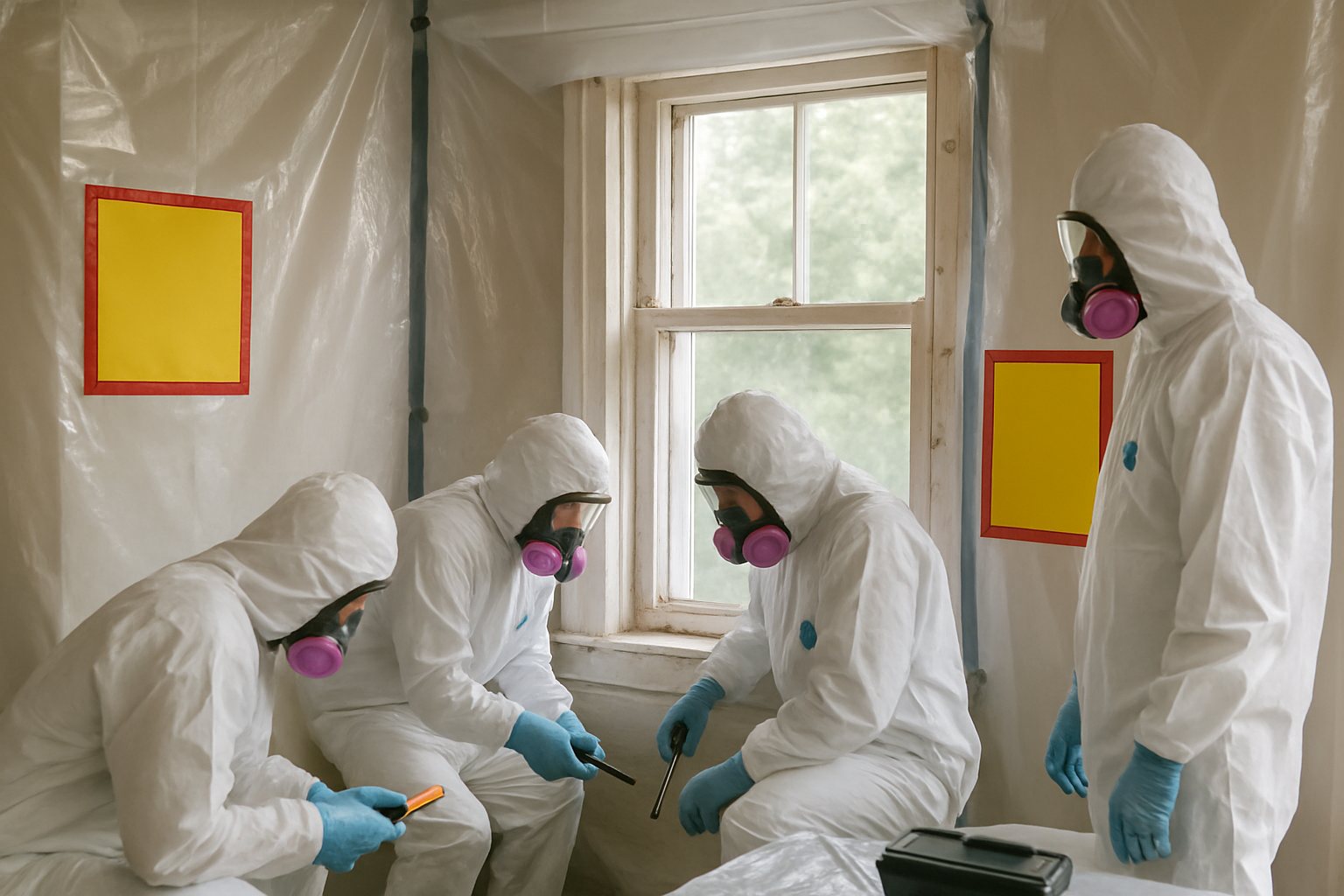
    4. Prepare and contain. Occupants and belongings move out of the work area; the crew seals it with plastic sheeting and controls dust. A certified supervisor must be on site during preparation and final cleanup, and reachable within 2 hours at other times.
    5. Do the work using permitted methods, then clean up the work area.
    6. Clearance. A certified inspector or risk assessor does a visual check for deteriorated paint, dust and debris, then takes dust wipe samples at least one hour after final cleanup. From January 12, 2026, in EPA-administered areas, results must be below 5 µg/ft² on floors, 40 µg/ft² on interior window sills and 100 µg/ft² in window troughs. If not, the area is cleaned again and retested.
    7. Abatement report. The supervisor or project designer prepares a report with the dates, firms, the occupant protection plan, a description of the work and the clearance results. Keep it: you may need it when you sell or rent the home.

    States that run their own programs may still use older clearance values until they adopt EPA’s 2024 rule (they have two years from January 13, 2025). Our lead dust testing guide explains the wipe test and the numbers.

    Relocation during the work

    EPA’s comparison of abatement and renovation says abatement firms are required to make sure occupants are out of the home, child care facility or preschool. Program documents say the same in practice. The City of Warren, Michigan’s HUD-funded program guidelines state that federal regulations prohibit occupancy of areas where lead abatement or interim control work is happening until the whole house passes clearance. Hennepin County, Minnesota tells applicants that no one can live in the home during repairs, and its grant covers lodging up to $175 per day or $875 per week.

    Ask early how long you will be out, who pays for lodging, and what happens to pets and belongings. Children and anyone pregnant should not be in the home during work or before clearance.

    Lead abatement cost: what published sources show

    There is no official national price list for abatement, and the cost depends on how many surfaces, windows and doors are involved, the method, the size and age of the home, soil work, and relocation. These are the published figures we found when checked in October 2026:

    SourceFigureWhat it means
    City of Warren, Michigan, HUD-funded program (June 2026)Maximum grant $75,000 per home; more for high-cost units with HUD permissionA program cap, not a typical cost
    Hennepin County, MinnesotaGrant of up to $15,000 in lead removal work; landlords pay at least 10% of repairsProgram cap
    City of Boston, Lead Safe BostonForgivable loans of up to $12,000 per unit, plus free lead paint inspectionsProgram cap
    MassHousing Get the Lead OutLow- and no-interest loans of $30,000 to $45,000 depending on property typeLoan cap

    Treat these as context, not a quote. The only reliable price for your home is a written estimate from a certified abatement firm, based on an inspection or risk assessment report. Get more than one, and make sure each covers the same scope, the clearance test and the cleanup.

    Grants, loans and tax credits for abatement

    HUD’s Office of Lead Hazard Control and Healthy Homes funds lead hazard reduction grants to state and local governments, which then run programs that homeowners and landlords apply to. In October 2024, HUD announced more than $420 million in awards to remove lead hazards from homes, according to EPA. You do not apply to HUD directly: you apply to your city, county or state program.

    Programs differ, but these real examples show the usual pattern:

    • Warren, Michigan. HUD-funded grants for low- and moderate-income households. Owner-occupants must be at or below 80% of area median income; rental owners pay a 10% copay and agree to prioritize income-eligible families with young children. Homes need an inspection and risk assessment.
    • Hennepin County, Minnesota. A free home test and up to $15,000 in grant funding for homes built before 1978 where a child under six lives or regularly visits, for households that meet income limits. Landlords qualify with occupant consent.
    • Boston, Massachusetts. Forgivable loans of up to $12,000 per unit, technical advice from city lead specialists and free lead paint inspections.
    • Massachusetts tax credit. Owners who fully delead a unit can claim a state income tax credit of up to $3,000 per unit, or up to $1,000 for partial work (interim control), with a seven-year carryover.

    To find a program near you, search your city or county name with “lead hazard control program”, ask your local health department, or call the National Lead Information Center at 1-800-424-LEAD (5323). Priority usually goes to homes with a child who has an elevated blood lead level. If you are worried about a child’s exposure, talk to your doctor about a blood lead test and read our lead poisoning guide.

    How to hire a lead abatement contractor

    • Check both certificates: the firm’s certification and the supervisor’s individual certificate, on EPA’s locator or your state’s list. EPA notes a competent lead professional will have proof of certification.
    • Ask for the plan in writing: methods by surface, containment, the occupant protection plan, waste handling and who notifies EPA or the state.
    • Ask who does clearance. It must be a certified inspector or risk assessor. You can hire your own.
    • Get the report. The price should include the abatement report and clearance results.

    Ready to start? Use find a lead professional or request an inspection.

    Keeping dust down before and after

    Until work is done, EPA advises wet cleaning surfaces and HEPA vacuums where there is visible paint debris. Months after clearance, some owners recheck floors and sills with a lab wipe kit. Checked on Amazon October 9, 2026, In Stock that day:

    For cleaning

    D-Lead Surface Wipes for Lead Dust Cleanup, 48 ct

    • 48 wipes, 9 x 12 in
    • Listed as meeting EPA wet cleaning cloth definition
    • Cleanup, not a test
    Check price on Amazon
    Follow-up check

    Schneider Labs Lead Test Kit: Paint, Dust or Soil (1 sample)

    • 1 dust, paint or soil sample
    • NLLAP-listed lab
    • Not an official clearance
    Check price on Amazon

    A do-it-yourself wipe is only for your information; official clearance must be done by a certified professional.

    Lead abatement FAQ

    Is encapsulation considered abatement?

    Yes. EPA’s definition of abatement includes permanent enclosure or encapsulation of lead-based paint, when done by certified people following the rules. It needs monitoring over time.

    Can I abate lead paint myself?

    The federal rules exempt owners working in a home they own, unless someone other than the owner’s immediate family lives there during the work, or a child living there has been identified with an elevated blood lead level. States can have stricter rules, and do-it-yourself paint removal can create serious dust hazards. Check your state lead program before touching old paint.

    How long does lead abatement take?

    It depends on the scope. In EPA-administered areas, add at least 5 business days for the required notice before work starts, plus time for clearance testing and lab results.

    Does abatement have to remove all lead paint?

    No. Abatement permanently eliminates the identified hazards. Intact lead paint can stay if it is enclosed, encapsulated or not a hazard, which is why the inspection or risk assessment report comes first.

    Who pays for abatement in a rental?

    EPA says that if you rent housing not funded by HUD, local laws may require your landlord to pay, and HUD or state and local governments may require landlords or housing authorities to pay in some cases. Ask your local health department.
  • Lead Paint Encapsulation: When It Works and When It Doesn’t

    Lead Paint Encapsulation: When It Works and When It Doesn’t

    Lead paint encapsulation means sealing lead-based paint under a special coating, called an encapsulant, that forms a lasting barrier so the paint cannot turn into dust or chips. Done correctly on the right surfaces, it is a recognized form of lead abatement. Done on the wrong surfaces, or with ordinary paint, it fails and the lead is still there.

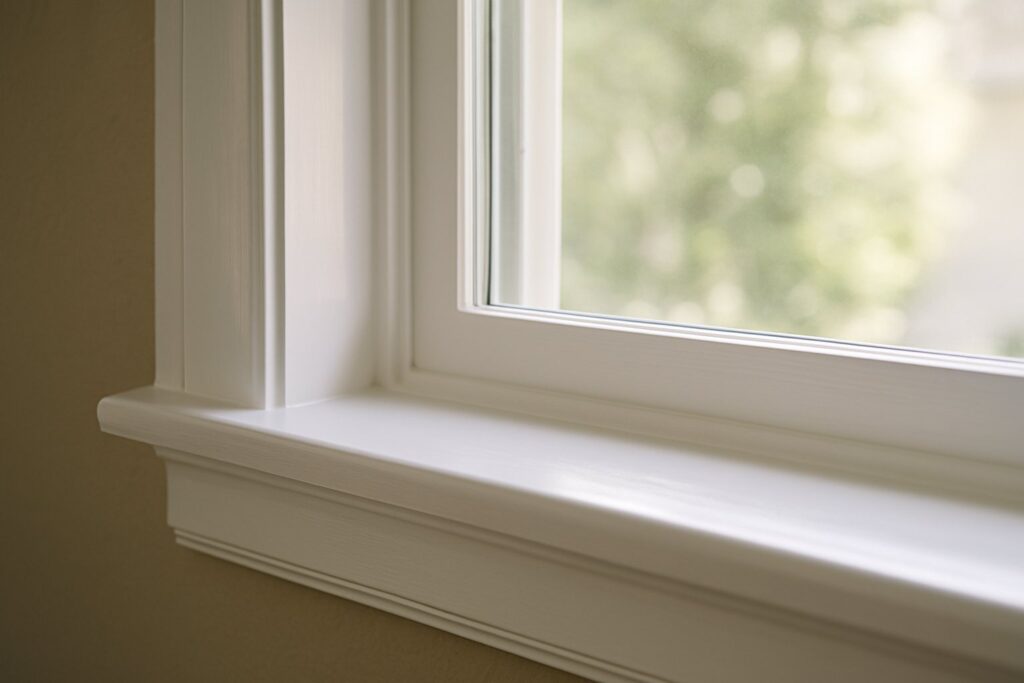
    Freshly coated smooth painted trim in an older home

    In short: EPA defines an encapsulant as a substance that forms a barrier between lead-based paint and the environment, either a liquid-applied coating (with or without reinforcement) or an adhesively bonded covering. Ordinary paint is not an encapsulant. Encapsulation suits sound, stable surfaces such as walls, ceilings, baseboards and casings. It is not suitable for friction or impact surfaces like window sashes, door edges, stair treads and floors, or over moisture damage. Products are tested against ASTM E1795 (non-reinforced) and ASTM E1797 (reinforced), and ASTM E1796 guides selection and use. The lead stays in place, so encapsulated surfaces must be checked regularly for life.

    What an encapsulant is, and what it is not

    Under federal rules (40 CFR 745.223), encapsulation is the application of an encapsulant, and permanent encapsulation of lead-based paint counts as abatement, alongside removal, replacement and enclosure. Enclosure is different: it uses rigid, durable construction materials mechanically fastened over the surface.

    The key word is barrier. EPA says painting over hazards with regular paint is not abatement. Connecticut’s Department of Public Health puts it plainly in its encapsulant guide: conventional paints are not encapsulants. Encapsulants are built to stick hard to the old paint, resist impact and abrasion, and stay intact for years.

    MethodHow it worksLead removed?Main limits
    EncapsulationA liquid or adhesively bonded coating seals the paintNoNot for friction, impact or moisture-damaged surfaces; needs monitoring
    EnclosureRigid materials such as panels mechanically fastened over the surfaceNoThe lead stays behind the barrier; needs monitoring
    Removal or replacementPaint is stripped, or the painted part is replacedYesStrict work-practice rules apply to stripping
    Interim controlsPaint stabilization, repairs, cleaningNoTemporary; ongoing maintenance

    For removal and the rules that apply to it, see lead paint removal.

    Types of encapsulants and the ASTM standards

    ASTM International publishes the standards the industry uses for liquid lead encapsulants:

    • ASTM E1795, Standard Specification for Non-Reinforced Liquid Coating Encapsulation Products for Leaded Paint in Buildings. It sets minimum performance requirements and lab tests for products applied in one or more coats, for interior use, exterior use or both, covering properties such as impact resistance, adhesion, water vapor transmission and VOC content. ASTM lists E1795-25 as the current version. It does not cover industrial steel structures or residential coated metal surfaces, because it has no corrosion-control requirements.
    • ASTM E1797, Standard Specification for Reinforced Liquid Coating Encapsulation Products for Leaded Paint in Buildings. It covers systems with a reinforcement, typically a continuous fabric or mesh applied in the field between a base coat and top coat, and complements E1795.
    • ASTM E1796, Standard Guide for Selection and Use of Liquid Coating Encapsulation Products for Leaded Paint in Buildings (E1796-24, active). It helps owners, contractors and regulators choose a product, decide whether a surface is suitable, and apply, evaluate and maintain the coating. ASTM notes it does not set minimum performance requirements.

    Beyond liquids, EPA’s definition also includes adhesively bonded coverings, and Connecticut’s guide mentions cementitious encapsulants. Some states keep their own approved lists: in Connecticut, only products on the state’s Registry of Authorized Encapsulant Products may be used for lead abatement, and local health directors must approve abatement plans. Check your state’s lead program before choosing a product.

    Where encapsulation is allowed, and where it is not

    HUD’s Guidelines for the Evaluation and Control of Lead-Based Paint Hazards in Housing devote a full chapter (Chapter 13) to encapsulation, including which surfaces are unsuitable and how to run field patch tests. Connecticut’s Department of Public Health guide spells out the same logic in plain lists, and we use it here as a worked example.

    Encapsulation prohibited on:

    • Friction surfaces and surfaces subject to repeated impact, such as floors, stair treads, thresholds, window sashes, window stops, parting beads, window wells, window jambs, and the friction and impact edges of doors, door jambs, cabinets and drawers
    • Surfaces with uncorrected moisture damage or other uncorrected underlying problems
    • Surfaces coated with calcimine paint
    • Surfaces that fail the X-cut tape test or the patch test
    • Surfaces the product maker does not recommend

    Allowed after preparation, such as stripping the friction or impact areas first or adding a permanent barrier against the impact: doors, door jambs, door headers, window sashes, window headers, shelves, stair treads, and cabinets and drawers.

    Generally allowed on non-impact, non-friction surfaces: walls, ceilings, baseboards, chair rails, window sills, aprons, casings, mullions and muntins, door casings, handrails, railing caps, newel posts, balusters and stringers.

    Why the rules? Connecticut’s guide explains that friction and impact surfaces get damaged, which can re-expose the lead paint and release chips and dust. Any condition that could cause moisture damage must be corrected first. And an encapsulant is only as good as the paint layers it sits on: failure of an underlying paint layer is one of the main reasons patch tests fail.

    Testing the surface first: X-cut and patch tests

    Because the encapsulant relies on the old paint staying stuck, the surface is tested before the job. Connecticut’s guide describes two tests:

    • X-cut tape test on the old paint: two 2-inch cuts in an X through the paint to the substrate, firm tape over the cross, pulled off after 90 seconds. If paint lifts more than 1/16 inch from the cuts, or more than 1/8 inch away from them, the surface fails and cannot be encapsulated.
    • Patch test with the chosen encapsulant: a test patch (6 x 6 inches recommended on large surfaces) in each room on each type of building component, allowed to cure, then checked. More than 10% visible defects such as bubbling or cracking is a fail; then an X-cut tape test on the patch, where more than 1/2 inch of coating removed from the cuts is a fail.

    Any preparation that disturbs lead paint during testing must follow lead-safe work practices. In Connecticut, it must be done by a licensed lead contractor or the property owner.

    Durability, monitoring and upkeep

    Encapsulation leaves the lead in place, so it only works as long as the barrier holds. EPA’s rules require that when a risk assessor recommends an encapsulant or enclosure, the report also recommends a maintenance and monitoring schedule. Connecticut’s guide gives a concrete one:

    • Check encapsulated surfaces each month for the first six months after application
    • After that, check at least once a year
    • Record dirt, thin spots, holes, cracks, dents, water damage, stains, blistering, peeling, sagging, bubbling or chemical damage
    • Clean dirty surfaces with a suitable cleaner or soap and water
    • Small damage can be repaired with new encapsulant, caulk or spackle as the maker suggests; for large damage, contact the local health department and the original contractor

    We could not find a service life in years that any official source states for encapsulants in general; ASTM E1796 frames encapsulation as suited to buildings likely to stand for a long time. Ask the product maker for its warranty and the contractor for a written maintenance plan. Keep the records: encapsulated lead paint is still lead paint you know about, and federal disclosure rules require sellers and landlords of pre-1978 housing to disclose known lead-based paint. See lead paint disclosure.

    Who can do lead paint encapsulation?

    When encapsulation is used as abatement, the federal abatement rules apply: certified workers under a certified supervisor, from a certified firm, with clearance testing by a certified inspector or risk assessor afterward. Since January 12, 2026, clearance requires dust below 5 micrograms per square foot on floors, 40 on window sills and 100 on window troughs. If you hire someone to coat surfaces as part of a renovation instead, EPA’s RRP rule applies to paid work in pre-1978 homes; see lead-safe renovation and the RRP rule.

    The surface assessment, preparation and testing are where much of the skill lies. Connecticut strongly recommends that owners using encapsulants outside an ordered abatement consult the local health department and document the surface tests, product, preparation and application. To find certified help, see find a lead professional and lead abatement.

    How much does lead paint encapsulation cost?

    We could not find an official published price for lead paint encapsulation, from EPA, HUD or state programs, when we checked in October 2026, so we will not quote a per-square-foot number. What the sources do say:

    • ASTM E1796 states that encapsulation may be more cost-effective than abatement by removal, and that it suits buildings expected to stand a long time or whose structure must stay intact for historical or economic reasons.
    • The real cost includes more than the coating: surface tests, preparation, containment and clean-up, clearance testing, and years of monitoring and touch-ups.
    • Clearance dust samples are billed per sample by labs; one NLLAP-listed lab, the Wisconsin Occupational Health Laboratory, charges $40 per sample at normal turnaround.

    Get written quotes that name the product and which ASTM specification it meets, list every surface to be encapsulated and every surface excluded, and include patch testing, clearance and a maintenance plan. Some cities run HUD-funded lead hazard control programs that pay for this work for eligible households; ask your local health or housing department.

    Confirm the lead first

    Encapsulation costs money and commits you to upkeep, so it makes sense to know which surfaces actually have lead. A certified lead paint inspection is the full answer; for a first look, these were in stock on amazon.com in October 2026:

    NLLAP-listed lab

    Schneider Labs Lead Test Kit, Paint, Dust or Soil (1 sample)

    • Mail-in lab analysis, EPA Method 7000B
    • Prepaid return label included
    • About $35, seen October 2026
    Check price on Amazon
    EPA-recognized formula

    LeadCheck Swabs, 8-Swab Pack

    • Instant color-change swabs
    • Recognized for certified users on wood, metal, drywall
    • About $39, seen October 2026
    Check price on Amazon

    See how to test for lead paint and our lead paint testing hub for what each test can and cannot tell you.

    Frequently asked questions

    Is lead paint encapsulation safe?

    On suitable, sound surfaces with a product that meets the ASTM specifications, applied after passing surface tests and followed by clearance and regular checks, it is a recognized form of abatement. It is not safe on friction or impact surfaces or over moisture damage, where the coating wears or peels and re-exposes the lead. If you are worried about exposure, see lead and health.

    Can I just paint over lead paint?

    Not as a fix. EPA says painting over hazards with regular paint is not abatement, and ordinary paint is not an encapsulant. Fresh paint over sound lead paint can be part of maintenance, but it does not seal the lead permanently.

    How long does lead paint encapsulation last?

    No official source we found gives a standard lifespan. It lasts as long as the coating and the paint beneath stay intact, which is why monthly checks for six months and at least yearly checks after that are recommended in Connecticut’s guide.

    Can you encapsulate lead paint on windows?

    Window sills, aprons and casings are generally suitable. Window sashes, stops, parting beads, wells and jambs are friction or impact surfaces where encapsulation is prohibited unless they are prepared first, for example by stripping the rubbing areas. Window replacement is another option; see lead paint removal.

    Is encapsulation cheaper than removal?

    ASTM E1796 says it may be more cost-effective than removal. Remember to count monitoring and touch-ups over the years, and compare written quotes.

  • Lead Paint Removal: Safe Options, Rules and Real Costs

    Lead Paint Removal: Safe Options, Rules and Real Costs

    Lead paint removal means getting rid of the hazard for good, either by stripping the paint, replacing the painted parts, or covering it permanently. It is not a weekend sanding job: careless removal can spread lead dust and fumes through a home, which is why federal rules ban the riskiest methods outright. In most cases the right answer is a certified professional, a clear plan and a clearance test at the end.

    A worker vacuuming a plastic-covered floor after paint removal

    In short: federal rules split lead paint work into abatement (permanent: removal, replacement, enclosure or encapsulation) and interim controls (temporary: repairs, paint stabilization, specialized cleaning and monitoring). Open-flame burning, torching, and power sanding or blasting without HEPA dust collection are prohibited for professionals, and heat guns must stay below 1,100°F. Contractors paid to disturb paint in pre-1978 homes must be RRP-certified; abatement must be done by certified abatement workers and supervisors. Every abatement ends with a dust clearance test by a certified inspector or risk assessor. Painting over lead paint with ordinary paint is not abatement.

    First, do you need to remove it at all?

    Not all lead paint has to come off. Under EPA’s definition, lead paint is a hazard when it is deteriorated (cracking, chipping, peeling), when it is on friction or impact surfaces like window sashes and door edges, or when it is on surfaces a child can chew, and when it contaminates dust or soil. Before you spend money, confirm what you have: see how to test for lead paint, and ideally get a risk assessment, whose report lists each hazard with interim control and abatement options in order of priority.

    Abatement vs interim controls

    EPA defines abatement as any measure designed to permanently eliminate lead-based paint hazards. It includes removing paint and dust, permanently enclosing or encapsulating lead paint, replacing painted surfaces or fixtures, and removing or permanently covering contaminated soil, plus the preparation, clean-up, disposal and post-abatement testing that go with it.

    Interim controls are measures designed to temporarily reduce exposure: specialized cleaning, repairs, maintenance, painting, temporary containment, ongoing monitoring, and resident education. They cost less up front but need upkeep.

    ApproachWhat it meansPermanent?Good to know
    Paint removal (stripping)Taking the paint off, on site or by removing the part for off-site strippingYes (abatement)Generates the most dust; banned methods apply
    Component replacementReplacing old windows, doors or trim with new onesYes (abatement)Removes the lead along with the part
    EnclosureCovering with rigid, durable construction materials mechanically fastened in placeYes, if maintainedThe lead stays behind the barrier
    EncapsulationCoating with a barrier product made for lead paintYes, if maintainedNot for friction or impact surfaces; see lead paint encapsulation
    Interim controlsPaint stabilization, fixing rubbing doors and windows, wet cleaning, monitoringNoNeeds regular checks and repeat work

    EPA is explicit that painting over hazards with regular paint is not abatement.

    Why DIY sanding, scraping and burning are dangerous

    Removing paint the usual way turns lead into fine dust and fumes. That is why federal rules for professionals restrict these methods.

    For abatement (40 CFR 745.227(e)):

    • Open-flame burning or torching of lead-based paint is prohibited.
    • Machine sanding, grinding, abrasive blasting or sandblasting is prohibited unless used with HEPA exhaust control that removes particles of 0.3 microns or larger at 99.97% efficiency or better.
    • Dry scraping is allowed only with heat guns, around electrical outlets, or for small spots (no more than 2 square feet per room inside or 20 square feet outside).
    • Heat guns are allowed only below 1,100°F.

    For renovation by paid contractors (40 CFR 745.85), open-flame burning or torching of painted surfaces is prohibited; high-speed machines such as sanders, grinders, power planers, needle guns and blasters are prohibited unless they have shrouds or containment with a HEPA vacuum attachment collecting dust at the source; and heat guns must stay below 1,100°F.

    These rules bind professionals, not homeowners working on their own home. But the hazard is the same for everyone. If you do work yourself, EPA’s lead-safe guidance for do-it-yourselfers says to:

    • Move furniture and rugs out, seal what stays, cover floors with plastic sheeting, seal doors, and turn off forced-air heating and cooling
    • Mist surfaces with water before sanding, scraping, drilling or cutting, to keep the dust down
    • Vacuum often with a HEPA vacuum, and clean the work area at the end of every day
    • At the end, mop floors, wipe walls, HEPA-vacuum every surface, then wipe with wet disposable cloths until they come out clean
    • Seal debris in heavy plastic bags, and check state and local disposal rules
    • Keep everyone else out of the work area, wash hands and face when you stop, and wash work clothes separately

    EPA still recommends hiring a lead-safe certified contractor for this kind of work in pre-1978 homes. If young children or a pregnant family member live in the home, talk to your doctor and see lead and health; only a blood test shows exposure.

    The EPA RRP rule: what contractors must do

    EPA’s Renovation, Repair and Painting (RRP) rule covers anyone paid to do work that disturbs paint in housing and child-occupied facilities built before 1978, including property management companies that do or offer such work. The firm must be EPA lead-safe certified (sole proprietors included), and the work must be done or directed by a certified renovator using lead-safe practices.

    In general, the RRP rule does not apply to homeowners working on their own home. It does apply if you rent out all or part of the home, run a child care center in it, or buy, renovate and sell homes for profit. Small jobs are partly exempt as minor repair and maintenance: 6 square feet or less of painted surface per room inside, or 20 square feet or less outside, as long as no prohibited practices are used and the job is not window replacement or demolition.

    RRP work is renovation, not abatement. A renovator works lead-safe so the job does not create a hazard; an abatement contractor is hired specifically to eliminate lead hazards permanently. Read more in lead-safe renovation and the RRP rule.

    Professional lead abatement: how it works

    Abatement must be done by individuals certified by EPA or an authorized state or tribal program. Under 40 CFR 745.227(e):

    • Every project has a certified supervisor, on site during work site preparation and post-abatement clean-up, and reachable within 2 hours at other times.
    • Where EPA runs the program, the certified firm must notify EPA at least 5 business days before starting, with a shorter path for work ordered after a child’s elevated blood lead level or an emergency order. States with their own programs may set their own rules.
    • A written occupant protection plan describes how residents are kept safe during the work.
    • The prohibited practices above apply.
    • Removed soil must be replaced with soil at or below 400 ppm lead, as close to local background as practicable.
    • An abatement report is prepared by the certified supervisor or project designer.

    Families usually stay out of work areas until they pass clearance. HUD-funded programs are strict about this: the City of Warren, Michigan’s lead program guidelines state that federal regulations prohibit occupancy of areas under abatement or interim control work until the entire house passes a clearance examination, and households arrange temporary relocation. Ask your contractor what applies to your job. To compare companies, see lead abatement and find a lead professional.

    Clean-up and clearance testing

    Clearance is how you know the job is done. After abatement, a certified inspector or risk assessor:

    • Does a visual inspection; any remaining deteriorated paint or visible dust, debris or residue must be fixed first
    • Waits at least 1 hour after final clean-up, then takes dust samples from floors, interior window sills and window troughs, in at least four rooms, hallways or stairwells (or all of them if there are fewer)
    • For exterior work, checks the area below for paint chips on the drip line and next to the foundation
    • Compares lab results with EPA’s dust-lead action levels

    On or after January 12, 2026, those action levels are 5 micrograms per square foot for floors, 40 for interior window sills and 100 for window troughs, down from 10, 100 and 400. Any area that fails is cleaned again and retested. Keep the clearance report with your inspection records; you will need it if you sell or rent.

    How much does lead paint removal cost?

    EPA and HUD do not publish a consumer price list for lead paint removal, and costs vary widely with the method, the number of surfaces, access, containment and clearance testing. We could not find a published average we trust, so here is what is documented, checked in October 2026:

    • Program caps show the scale of full projects. The City of Warren, Michigan, which runs a HUD-funded lead hazard control program, caps its grant at $75,000 per home, with HUD permission needed to go higher for high-cost units. In its landlord example, $15,000 of abatement work means a $1,500 (10%) owner co-pay. These are program limits and examples, not typical prices.
    • Testing is a separate line. Clearance and risk assessment dust samples are billed per sample by labs; an NLLAP-listed lab, the Wisconsin Occupational Health Laboratory, charges $40 per sample at normal turnaround.

    Get at least two written quotes from certified abatement firms that name the method for each surface, the containment, who does clearance testing, and what happens if clearance fails. Ask your local health or housing department about HUD-funded lead hazard control grants. Some cities run them for income-eligible households; Warren, for example, gives priority to households with a child who has an elevated blood lead level.

    Clean-up tools we checked

    A HEPA vacuum is central to EPA’s lead-safe clean-up advice. These two were in stock on amazon.com when checked in October 2026 (limited stock on both); claims about RRP and OSHA compliance are the seller’s, not EPA’s:

    Lead clean-up

    Dustless Technologies D1606 HEPA Wet/Dry Vacuum

    • Individually tested, serialized HEPA filter
    • Listing: certified for lead paint pickup
    • About $574, seen October 2026
    Check price on Amazon
    Lower price

    Dustless Technologies D1618 HEPA Wet+Dry Pro Vacuum, 8 Gallon

    • Certified HEPA system per listing
    • Wet and dry pickup
    • About $313, seen October 2026
    Check price on Amazon

    EPA’s do-it-yourself guidance names a HEPA vacuum specifically, not an ordinary shop vacuum. For testing before and after work, see lead dust testing.

    Frequently asked questions

    Can I remove lead paint myself?

    On your own home, federal RRP rules generally do not apply to you, but the health risk does. If you do it, follow EPA’s DIY lead-safe steps: contain the area, mist before scraping, never use an open flame or an unshrouded power sander, HEPA-vacuum and wet-clean daily, and keep others out. EPA recommends a lead-safe certified contractor.

    Is it illegal to sand lead paint?

    For professionals, power sanding lead paint without HEPA dust collection is prohibited in both abatement and RRP work. For homeowners, check state and local rules, and remember that dry sanding spreads lead dust through a home.

    What is the safest way to remove lead paint?

    There is no single answer; a risk assessor or certified abatement firm chooses per surface. Replacing a part, or enclosing or encapsulating a surface, avoids stripping paint on site. When stripping is needed, the rules limit it to methods such as HEPA-controlled tools and heat guns below 1,100°F, inside containment, followed by clearance testing.

    Does painting over lead paint count as removal?

    No. EPA says painting over hazards with regular paint is not abatement. Special encapsulant coatings can be part of abatement when used correctly; see lead paint encapsulation.

    How do I know the job was done right?

    A passing clearance examination by a certified inspector or risk assessor, with dust results below EPA’s action levels. Ask for the clearance report and the abatement report and keep them. Our lead paint testing hub has more on testing after work.