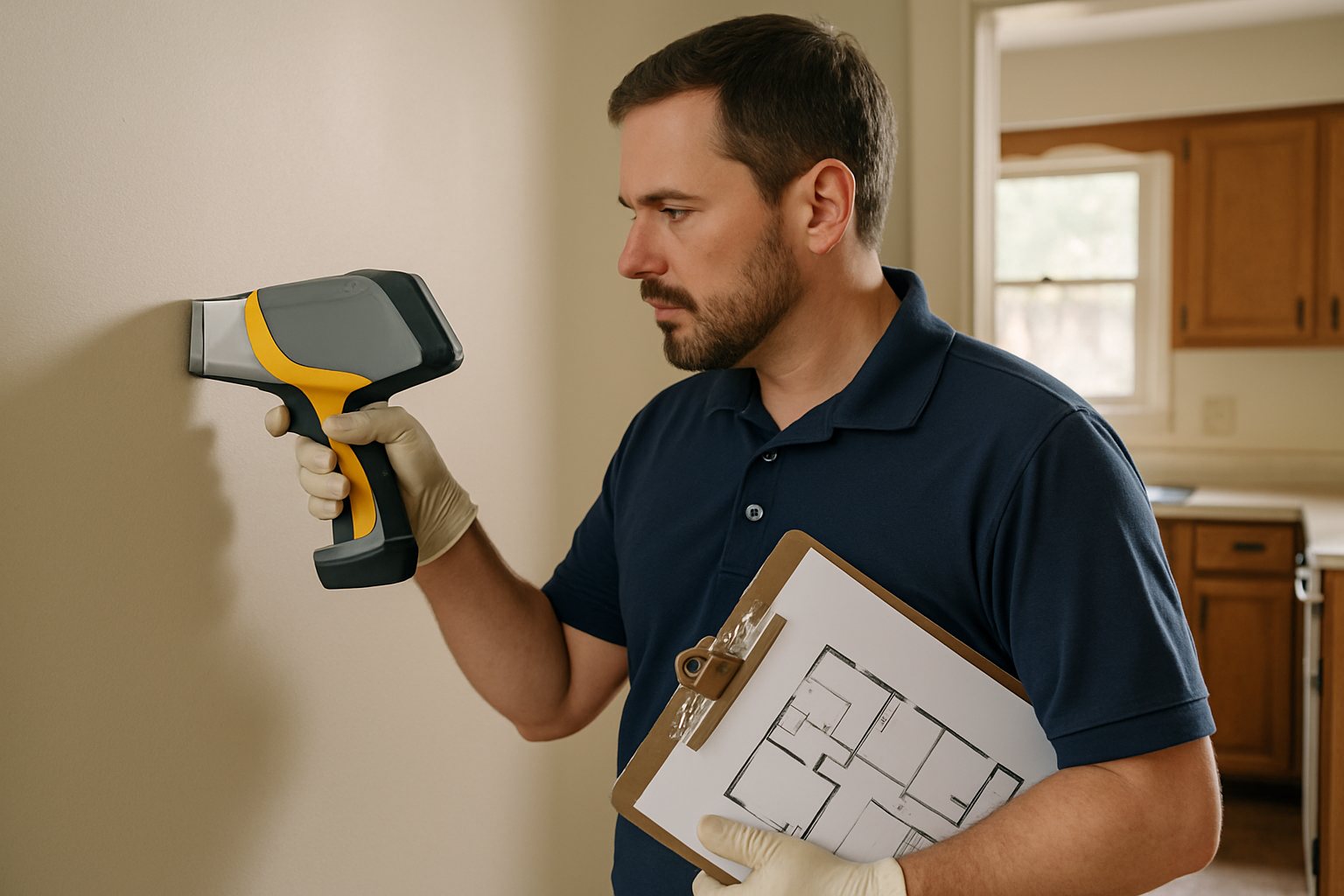
A lead paint inspection tells you whether a home has lead-based paint and exactly where it is, surface by surface. A risk assessment tells you something different: whether lead from paint, dust or soil is a hazard right now, and what to do about it. Both must be done by a certified professional, and many families need the second more than the first.
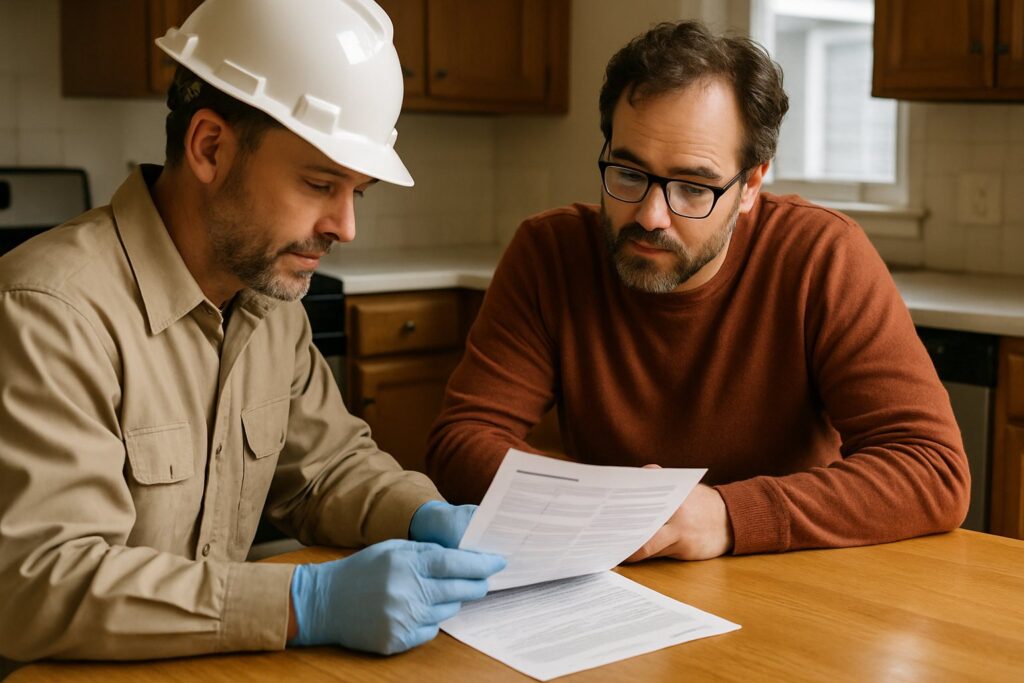
In short: under EPA rules, an inspection is a surface-by-surface check for lead-based paint, done only by a certified inspector or risk assessor, usually with an XRF analyzer. A risk assessment looks for hazards, samples dust and soil as well as damaged paint, and recommends fixes; only a certified risk assessor may do it. A lead hazard screen is a cheaper, limited risk assessment for homes in good condition. You will want one of these when you buy or rent a pre-1978 home, before renovating, or when a child has an elevated blood lead level.
Inspection, risk assessment and lead hazard screen compared
These three services are defined in federal rules (40 CFR 745.223 and 745.227). States and tribes with their own EPA-authorized programs use the same basic structure, sometimes with extra requirements.
| Service | The question it answers | Who may do it | What gets sampled |
|---|---|---|---|
| Lead-based paint inspection | Is there lead-based paint, and where? | Certified inspector or risk assessor | Every painted component with a distinct painting history, inside and outside |
| Risk assessment | Are there lead hazards now, and how do we fix them? | Certified risk assessor only | Deteriorated paint, dust on floors and window sills, bare soil |
| Lead hazard screen | Is a full risk assessment likely needed? | Certified risk assessor only | Paint in poor condition, two composite dust samples (floors and windows) |
| Clearance examination | Is the area clean after lead work? | Certified inspector or risk assessor | Visual check plus dust samples after cleanup |
EPA puts the difference simply: an inspection tells you if a building has lead-based paint and where, but not whether there are hazards or how to handle them. A risk assessment tells you if there are lead hazards from paint, dust or soil, and what actions to take.
What happens during a lead-based paint inspection
An inspection is thorough by design. Under 40 CFR 745.227(b), the inspector selects locations using documented methods and tests each component with a distinct painting history, such as each door, window, wall and trim type in every room, plus exterior parts. They can skip components they determine were replaced after 1978 or do not contain lead-based paint. In apartment buildings, common areas are tested too.
Most inspectors use a portable X-ray fluorescence (XRF) analyzer, which reads lead through the paint layers. Where needed, they cut paint-chip samples, which must go to a lab recognized under EPA’s National Lead Laboratory Accreditation Program (NLLAP). Paint counts as lead-based paint at 1.0 mg/cm² or more, or at 0.5% by weight or more.
What the inspection report must include
Federal rules list the contents. Expect:
- Date of the inspection, address, date of construction and apartment numbers if any
- Owner’s name, address and phone number
- Name, signature and certification number of each inspector or risk assessor, and their certified firm
- Each testing method, device and sampling procedure, with quality control data and the serial number of any XRF used
- The specific location of each painted component tested
- The results, in units suited to the method
Keep this report. If you sell or rent the home later, federal disclosure rules require you to share the lead information you know, including available records and reports. See lead paint disclosure.
What happens during a risk assessment
A risk assessment, under 40 CFR 745.227(d), is about exposure. The certified risk assessor:
- Does a visual inspection to find deteriorated paint, how much there is and why it is failing
- Collects background on the home and how it is used, with a focus on children under 6
- Tests painted surfaces that are visibly deteriorated, starting with friction surfaces (such as window sashes) and impact surfaces (such as door edges)
- Takes dust samples from interior window sills and floors in living areas where young children are likely to spend time
- Samples bare soil in play areas, the rest of the yard and along the foundation drip line
- Sends paint, dust and soil samples to an NLLAP-recognized lab
The risk assessment report includes everything an inspection report does for the surfaces tested, plus the lab’s name, the visual inspection results, the location, type and severity of each lead hazard, and a description of interim controls or abatement options with a suggested order for tackling them. If the assessor recommends an encapsulant or enclosure, the report must also recommend a maintenance and monitoring schedule.
New dust standards since January 2026
In a 2024 final rule, EPA tightened its dust-lead standards. It now treats any reportable level of lead in dust, as measured by an NLLAP-recognized lab, as a dust-lead hazard, and it lowered the post-abatement dust-lead action levels to 5 micrograms per square foot on floors, 40 on window sills and 100 on window troughs, effective January 12, 2026. EPA explains the change by noting that no level of lead in blood has been found to be safe for children. This makes dust sampling, part of every risk assessment, more important than before.
The lead hazard screen: a limited risk assessment
A lead hazard screen is for homes that look to be in good condition. Only a certified risk assessor can do one. They collect background information, look for deteriorated paint and test any in poor condition, and take two composite dust samples, one from floors and one from windows, where young children are most likely to come into contact with dust. The report includes the same core information as a risk assessment and recommends a full risk assessment if the screen finds a possible problem.
When you need a lead paint inspection or risk assessment
| Situation | What federal rules say | What usually helps most |
|---|---|---|
| Buying a pre-1978 home | Sellers must give you 10 days to have a paint inspection or risk assessment, unless you agree otherwise or waive it in writing. Sellers are not required to test. | Inspection plus risk assessment, booked within the 10 days |
| Renting a pre-1978 home | Landlords must disclose known lead paint and give the EPA pamphlet, but the disclosure rule does not require them to test. | Ask for existing reports; a risk assessment answers the hazard question |
| Planning a renovation | Paid contractors must follow EPA’s RRP rule. Firms may test with a recognized method or simply assume lead is present and work lead-safe. | Inspection of the parts you will disturb |
| A child with an elevated blood lead level | CDC advises clinicians to arrange an environmental investigation of the home for a blood lead level of 3.5 µg/dL or more, as required locally. | Contact your local health department first; it may investigate |
| After lead removal or encapsulation | Abatement must end with clearance testing by a certified inspector or risk assessor. | Clearance examination |
If a child’s blood test came back high, the health side comes first: follow your doctor’s advice, and see our blood lead test and lead and health pages. For poisoning emergencies, call Poison Control at 1-800-222-1222.
How a typical visit works
- Book a certified professional. Ask for their EPA or state certification number and their firm’s certification. Our directory of lead professionals and the guide how to choose a lead inspector can help.
- Agree on the scope. Inspection, risk assessment, both, or a lead hazard screen; interior only or exterior too; whether soil is included.
- The site visit. Expect the professional to walk every room, take XRF readings or paint chips, wipe floors and sills for dust, and sample bare soil outside.
- Lab results. Dust, soil and any paint chips go to an NLLAP-recognized lab.
- The report. Read the hazard list and the recommended options in order of priority.
You can also send a request through our request an inspection page.
How much does a lead paint inspection cost?
There is no federal fee schedule, and EPA and HUD do not publish typical consumer prices. Prices depend on the size of the home, the number of painted components, how many dust and soil samples are taken, and how fast you need lab results. Published prices we could confirm, when checked in October 2026:
- MA Lead Inspections, a Massachusetts company serving Greater Boston and Central Massachusetts, says its inspections for single-family homes start at $450, with custom pricing for multi-unit buildings.
- Lab fees are part of the bill for risk assessments and paint-chip testing. The Wisconsin Occupational Health Laboratory, an NLLAP-listed lab, charges $40 per paint, dust-wipe or soil sample at normal turnaround, $60 priority and $80 rush.
Ask for a written quote that lists the service (inspection, risk assessment or both), how many samples are included, the lab used and the turnaround. Some cities run HUD-funded lead hazard control programs that pay for an inspection and risk assessment as the first step for eligible households; the City of Warren, Michigan, for example, requires both for every pre-1978 home in its program. Ask your local health or housing department.
Can you skip the professional and test yourself?
For your own peace of mind, yes. Swab kits and mail-in lab kits are covered in how to test for lead paint. But EPA only recognizes test kit results from certified inspectors, risk assessors and renovators, and federal rules require samples for official inspections and risk assessments to be collected by certified professionals. A home test cannot tell you about dust and soil hazards the way a risk assessment does.
If you just want a first look before booking, these were in stock on amazon.com in October 2026:
Schneider Labs Lead Test Kit, Paint, Dust or Soil (1 sample)
- Mail-in lab analysis, EPA Method 7000B
- Results within 5 business days of arrival
- About $35, seen October 2026
LeadCheck Swabs, 8-Swab Pack
- Instant color-change swabs
- Recognized for certified users on wood, metal, drywall
- About $39, seen October 2026
More options are compared in best lead paint test kits and on our lead paint testing hub.
Frequently asked questions
What is the difference between a lead inspection and a risk assessment?
An inspection finds where lead-based paint is, on every surface. A risk assessment finds lead hazards now, from damaged paint, dust and soil, and recommends how to fix them. A combined inspection and risk assessment gives you both answers.
Who can do a lead paint inspection?
Only a person certified by EPA, or by an EPA-authorized state or tribal program, as a lead inspector or risk assessor. Risk assessments and lead hazard screens require a certified risk assessor.
How long does a lead inspection take?
Federal rules do not set a time. It depends on the number of rooms and painted components, and lab results for dust and soil take extra days; one NLLAP-listed lab quotes 7 working days at normal speed. Ask the professional for an estimate when you book.
Does a seller have to do a lead paint inspection?
No. Sellers of pre-1978 homes must disclose known lead paint and hazards, give you the EPA pamphlet, and give you a 10-day opportunity to inspect, but they are not required to test.
What happens after a lead inspection finds lead paint?
The paint is not automatically a hazard. A risk assessment tells you which surfaces need action. Options range from interim controls to permanent abatement; see lead paint removal and lead paint encapsulation.