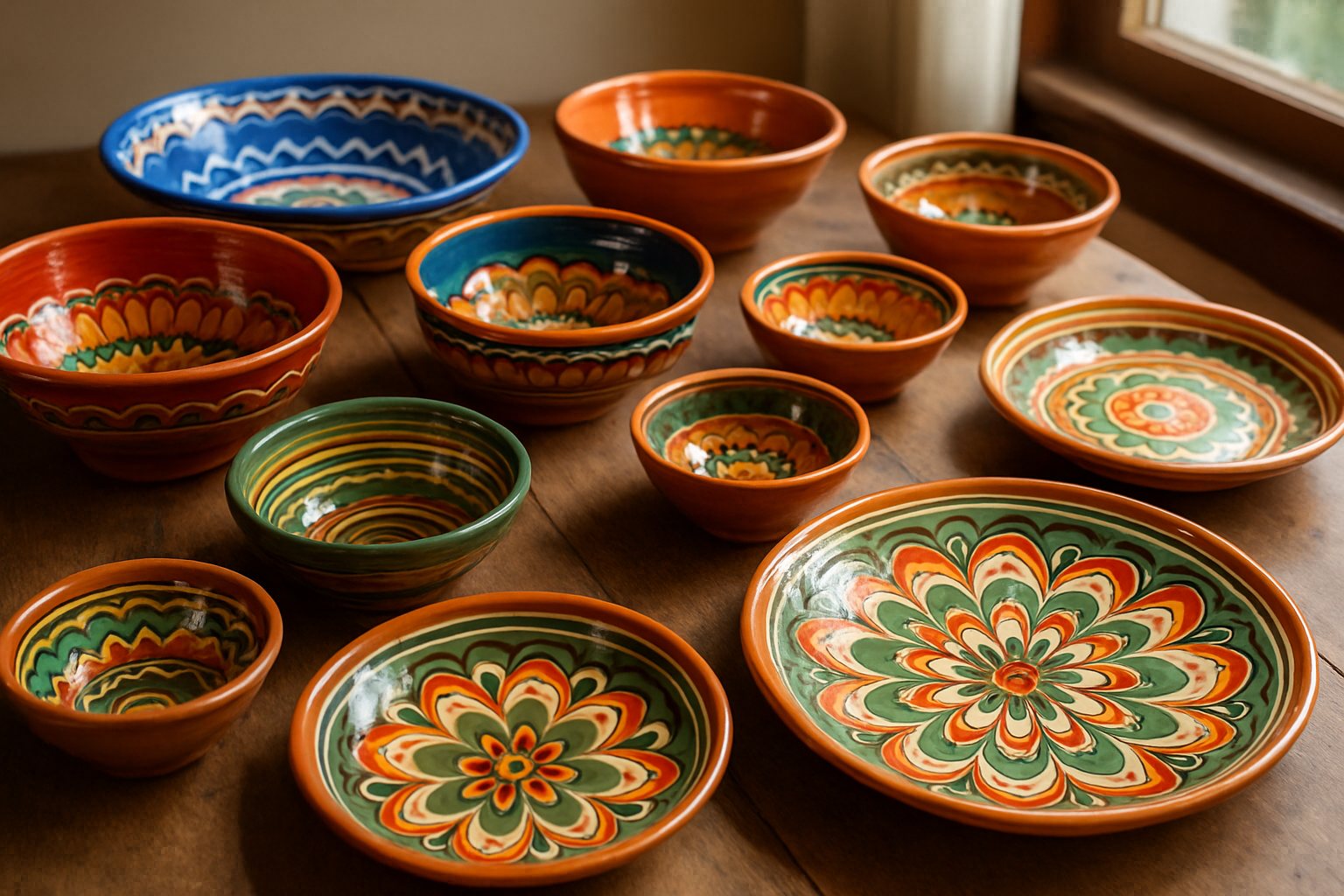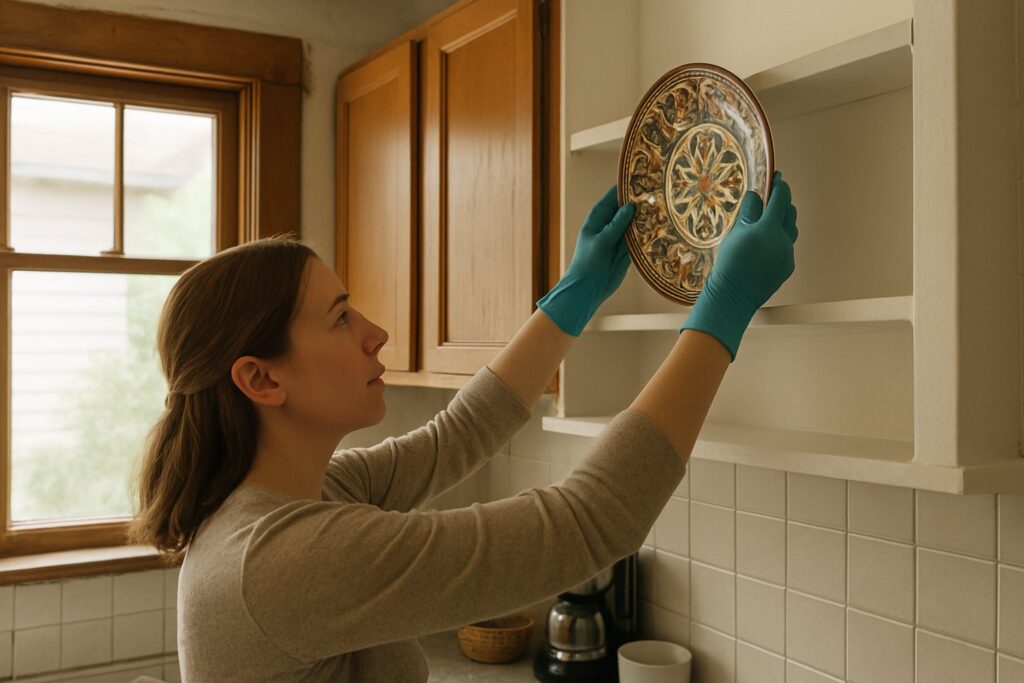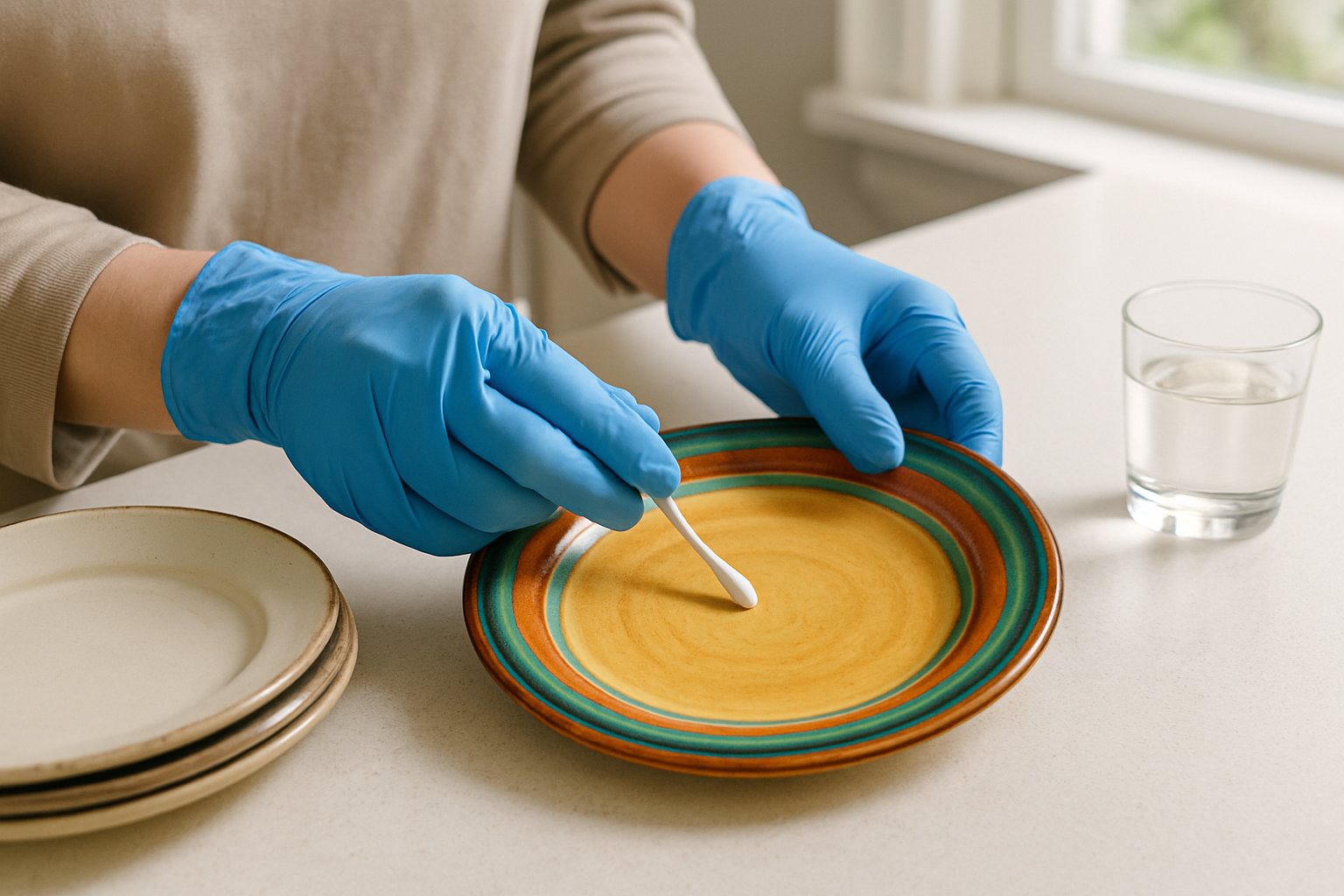
A lead test kit for dishes can warn you that a plate, mug or glass gives off lead at its surface, but it cannot prove a dish is safe. The FDA says swab kits sold in hardware stores and online can be used on pottery and that you should stop using a piece for food if a swab shows leachable lead, while the CPSC found that home kits often miss lead in consumer products.
In short: use a swab kit as a quick screen on the food-contact surface and the rim, especially on old, handmade, worn or brightly decorated pieces. Treat a color change as a reason to stop using the piece for food and drink. A negative proves little: no swab kit is EPA-recognized for ceramics or glass, a fired glaze can hide lead, and the FDA’s limits are measured with a lab leach test. If a dish matters to you, or children use it, the reliable answer is a lab leach test or simply keeping the piece for display.
For why some dishes contain lead in the first place, see lead in pottery and dishes.
How swab kits react to lead
Most home lead swabs use one of two chemical reactions. A study of lead test kits by the National Institute of Standards and Technology (NIST) for HUD describes kits based on sulfide, which turns gray or black with lead, and kits based on rhodizonate, which turns pink or red. You rub the wet swab on the surface; if lead dissolves onto the tip, the color changes.
So a swab only reacts to lead it can reach and dissolve in seconds at the exact spot you rub. The FDA describes it the same way for pottery: in most kits the swab changes color if lead leaches onto it.
- Glazed surfaces. A swab can pick up lead from a glaze that is poorly fired, worn, corroded or chalky. A sound, fired glaze can hold lead underneath where the swab never touches it. The CPSC found that none of the kits it tested consistently detected lead covered by a non-leaded coating.
- Decorations and decals. The California Department of Public Health (CDPH) warns about bright colors or decorations on surfaces that touch food or drink, including the upper rim of a cup or bowl, and about decorations that sit on top of the glaze. If you can feel the design with your finger, it is probably on top. Swab those spots.
- Rims. Your lips touch it, so test it separately.
What official sources say about home kits
- EPA recognizes kits only for paint. The EPA recognizes three kits (LeadCheck, D-Lead and a Massachusetts kit) and only for telling a certified professional that regulated lead-based paint is not present on wood, ferrous metal, drywall or plaster (the Massachusetts kit only on drywall and plaster). Ceramics, china and glass are not on the list.
- CPSC says kits are unreliable on consumer products. In its October 2007 staff study, the CPSC got 56 false negatives out of 104 results, plus two false positives, and concluded that consumers should not use lead test kits to evaluate consumer products. It said qualified lab testing is the only reliable way to assess a product.
- FDA accepts kits as a warning sign for pottery. The FDA says consumers can buy lead-testing kits in hardware stores or online, and if a test finds leachable lead, it strongly advises against using that pottery for cooking, serving or storing food or drinks.
A positive swab is meaningful; a negative is weak evidence. Our lead test kits hub explains which kit is designed for which material.
What the FDA actually measures
The FDA does not judge dishes by a swab. Its Compliance Policy Guide Sec. 545.450 sets action levels for lead that leaches out of ceramic ware into an acid solution in a standard laboratory test (ASTM C738). The limits get stricter for pieces that hold liquid for longer, such as cups and pitchers:
| Ceramic ware | FDA action level (lead in leach solution) |
|---|---|
| Flatware (plates, saucers), average of 6 units | 3.0 µg/mL |
| Small hollowware (bowls, other than cups and mugs) | 2.0 µg/mL |
| Large hollowware (other than pitchers) | 1.0 µg/mL |
| Cups and mugs | 0.5 µg/mL |
| Pitchers | 0.5 µg/mL |
A swab result has no unit that compares to these numbers. A dish can pass a swab and still release more lead than the cup limit, and the swab will not tell you. Decorative ceramics that contain lead must carry a warning such as “Not for Food Use—May Poison Food” under 21 CFR 109.16; never use those for food, whatever a swab says.
Glassware with painted rims and decals
Glasses, mugs and tumblers with colored designs near the top are a common worry. There is a dedicated laboratory method for them: ASTM C927 measures lead and cadmium extracted from the lip and rim area of glass tumblers decorated on the outside with ceramic glass enamels. ASTM calls it a severe test, not a measure of real use.
We found no federal consumer guide specifically for decorated drinking glasses. CDPH’s tableware guidance is the practical rule: decorations where food, drink or lips touch, including the rim, deserve the most caution, especially when worn. If a glass has a painted band or decal that reaches the area where your mouth goes, swab that band, and if it reacts, retire the glass to display or use it only for things like pens. A negative swab on a glossy enamel does not clear it, for the same coating reason as glazes.
Vintage china and lead crystal
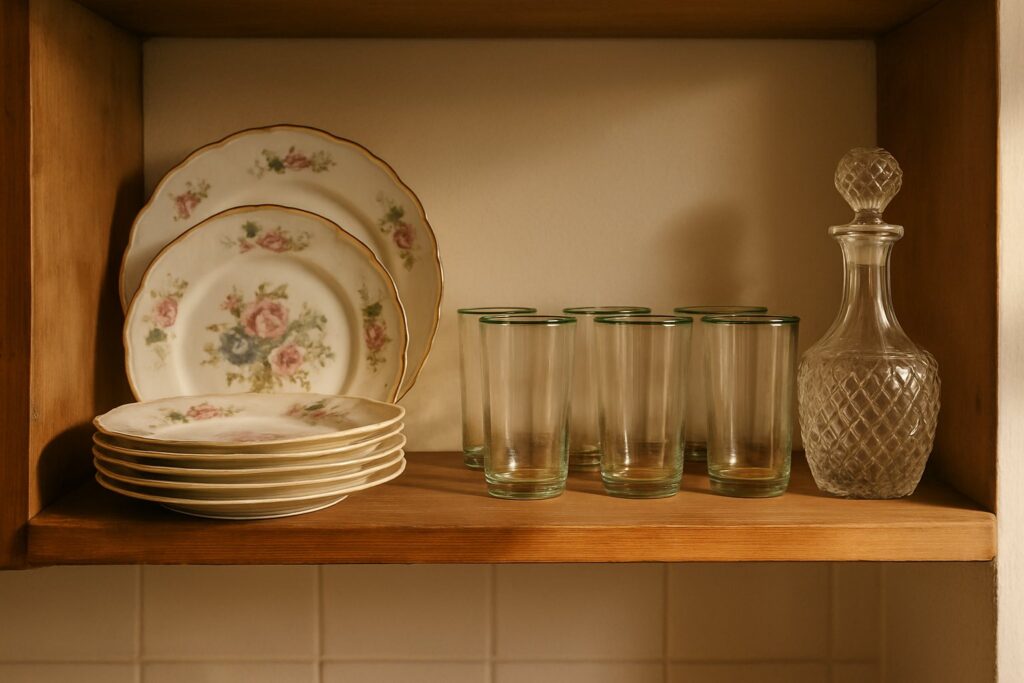
Vintage china. CDPH lists antique tableware handed down in families or found in antique stores, flea markets and garage sales among the pieces most likely to contain lead, because they were made before lead in tableware was regulated. It also flags corroded glaze or a dusty, chalky gray residue after washing as a possible serious hazard. CDPH notes that plain white dishes rarely contain lead. A swab is a fair first check on old china, but heirlooms you want to use daily are worth a lab test.
Lead crystal. Lead crystal contains lead by design, so a swab tells you little. We found no current FDA consumer page on it. The EPA advises avoiding storing or serving food and liquids in lead crystal. CDPH says occasional use is unlikely to expose you to large amounts unless liquids have been stored in it, that children should never eat or drink from leaded crystal, and that food or alcohol should not be stored in crystal decanters because leaching increases with time. A 1992 study in the American Journal of Public Health measured 100 to 1,800 µg/L of lead in drinks stored in decanters from 14 makers.
How to swab a dish correctly
- Read the kit’s own instructions. Activation differs: some swabs have crushable vials, some need water or white vinegar. Note what the maker says the kit is for.
- Clean and dry the surface. Remove food residue and grease so the swab touches the glaze.
- Test the food-contact areas. Swab the inside of cups and bowls, the eating surface of plates, and the rim. Use a fresh swab for each spot and each color in the decoration.
- Focus on the risky spots. Worn, chipped, crazed or chalky areas, raised decorations and bright reds, oranges and yellows, which the FDA lists among higher-risk signs.
- Rub firmly for the time stated and read the color in good light within the time window the kit gives. Use the kit’s confirmation card if it has one.
Do not scrape or chip a glaze to “get under it.” It damages the dish and still won’t show how much lead leaches into food. The FDA also notes that no amount of washing or boiling removes lead from pottery.
What a negative result does not prove
- It does not prove the dish is lead-free. Lead under an intact glaze or enamel may not reach the swab. One kit maker below states this on its own listing.
- It does not show the dish meets FDA limits, which are measured by a leach test.
- It does not account for use. CDPH says heating, storing food and acidic foods and drinks (citrus, tomatoes, soy sauce, juice, cola, coffee, tea, alcohol) all increase leaching, and the dishwasher can damage a leaded glaze over time.
Home kits compared with lab testing
| Method | What it tells you | Limits | Cost (published) |
|---|---|---|---|
| Rhodizonate swab (pink/red) | Lead dissolved from the surface at one spot | Not EPA-recognized for ceramics or glass; misses lead under intact glaze or coating; no amount | Easy@Home 30 swabs about $8; LeadCheck 8 swabs about $39 (Amazon, Oct 2026) |
| Sulfide swab (gray/black) | Same idea, different reagent | Same limits; dark colors are hard to read on dark glazes | Not compared here |
| Fluorescent spray and UV light | Maker says lead on the surface glows under UV | Maker’s claims only; no EPA or CPSC evaluation found | Fluoro-SPEC about $63 (Amazon, Oct 2026) |
| Lab leach test (ASTM C738; C927 for glass rims) | How much lead leaches into acid, comparable to FDA action levels | Few labs take single household pieces; may need several units; may be destructive | No consumer price published by labs we checked |
| Ask the seller or maker | Whether current tableware meets Prop 65 or FDA limits | Only works for dishes still on sale | Free |
For a wider look at home screens versus lab numbers, see home lead test vs lab testing.
The best lead test kit for dishes: screening only
There is no “best” kit in the sense of one that can clear a dish, because no home kit is recognized for ceramics or glass. If you want a quick screen, these were in stock on Amazon when checked in October 2026. For paint, see our best lead paint test kits.
Easy@Home Lead Test Kit, 30 Rapid Testing Swabs
- 30 swabs, pink or red in 30 seconds; white vinegar needed, not included
- Maker: cannot detect lead under intact baked ceramic glazes
- About $8, seen October 2026
LeadCheck Swabs, Instant Lead Test, 8 Swabs
- Rhodizonate swab, turns red; confirmation card
- EPA-recognized for paint only, not ceramics
- About $39, seen October 2026
Fluoro-SPEC Instant Lead Test Kit with UV Light
- Spray reagent, UV flashlight, maker: up to 3,600 uses
- Maker's sensitivity claims not independently evaluated
- About $63, seen October 2026
Getting a laboratory leach test
Ceramic leach testing to ASTM C738 is mostly sold to manufacturers and importers. When we checked in October 2026, we could not confirm a US lab that publishes a consumer price for testing a single household dish, so we do not name one. To find one:
- Ask testing labs whether they run ASTM C738 (ceramics) or ASTM C927 (decorated glass rims) for individuals, and whether they are accredited (ISO/IEC 17025) for that method.
- Ask how many pieces they need, whether the test damages them, the turnaround and the price per piece.
- Make sure you get a leach result in µg/mL, not just a total-lead or XRF reading, so you can compare it with the FDA table above.
- For dishes still on sale, CDPH suggests asking the store or the manufacturer whether they meet Proposition 65 standards.
For lead testing in your home itself, see find a lead professional.
If a dish tests positive
- Stop using it for food and drink. The FDA strongly advises against using pottery with leachable lead for cooking, serving or storing food or drinks.
- Keep it as decoration or retire it. Label it so no one uses it by mistake, and keep it out of the dishwasher with other dishes.
- Report new products. If you bought it new in the US, you can report it to the FDA; CDPH lists the FDA as the agency for import and retail violations.
- Think about who used it. If a child ate or drank from it regularly, the FDA suggests asking a health care provider about a blood lead test. If you are pregnant and used it, mention it to your provider too. For urgent questions, call Poison Control at 1-800-222-1222. See lead poisoning for what official sources say about health effects.
Other everyday sources are on our lead in household items hub.
Frequently asked questions
Do lead test kits work on dishes?
Partly. The FDA says swab kits can be used on pottery and a color change means you should stop using the piece for food. But no kit is EPA-recognized for ceramics, and the CPSC found home kits often miss lead in consumer products, so a negative result does not prove a dish is safe.
Can I use a lead test kit on glassware?
You can swab painted bands and decals on the outside rim of a glass as a screen. Undecorated glass is not where official guidance points the concern, and lead crystal contains lead by design, so a swab is not useful there. The lab method for decorated glass rims is ASTM C927.
Is a lead test kit for china different from one for ceramics?
No. Kits sold for dishes, china and ceramics use the same swab chemistry as paint kits. What changes is where you test: the glaze, the decorations and the rim.
My dish tested negative. Can I use it?
If it is a modern, commercially made dish in good condition, the FDA says it is much less likely to be a problem. If it is old, handmade, worn or of unknown origin, a negative swab is not enough: use it for display, or get a lab leach test before using it for food, especially for children.