Tag: Lead In Water

  • Lead Poisoning Causes and Prevention: Sources and Steps

    Lead Poisoning Causes and Prevention: Sources and Steps

    Lead poisoning is caused by swallowing or breathing in lead, and in the US the most common source is dust from old lead-based paint. Other causes include tap water that runs through lead pipes or fixtures, contaminated soil, lead brought home from work or hobbies, and some imported spices, remedies, cosmetics and dishes.
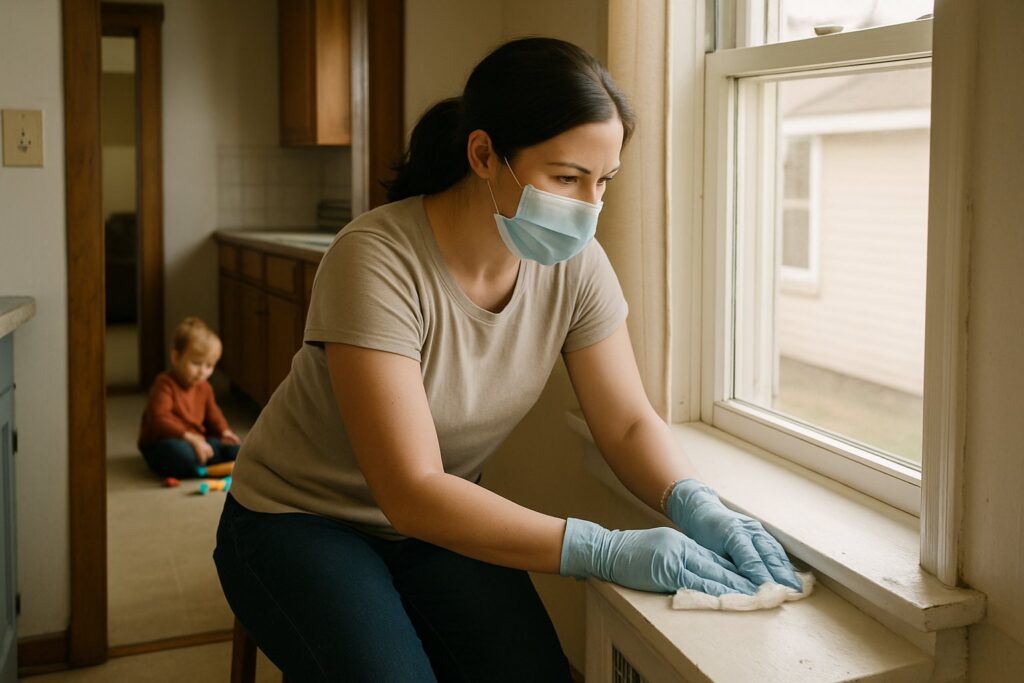
    A family wiping window sills during cleaning

    In short: lead gets into the body mainly through the mouth (dust on hands, toys and food; paint chips; water) and through the lungs (dust and fumes). Touching lead matters mostly because lead on the hands ends up being swallowed; official sources describe skin absorption of common lead compounds as a much smaller route. Prevention means finding the source before anyone is exposed: test older homes for paint, dust and soil hazards, check your water, keep dust down with wet cleaning and handwashing, leave work lead at work, and avoid products named in FDA and CPSC warnings. If you are worried about exposure, ask a doctor about a blood test or call Poison Control at 1-800-222-1222.

    This guide is based on the CDC, EPA, NIOSH, ATSDR, FDA and CPSC. It is general information, not medical advice; our lead poisoning hub has the overview. For what happens in the body, see effects of lead poisoning; for warning signs, see lead poisoning symptoms.

    How lead gets into the body

    • Swallowing (ingestion). The main route for young children. The EPA says children crawl, play on floors and put hands, toys and other objects in their mouths, so they swallow settled dust and soil. The EPA’s 2024 dust-lead rule calls hand-to-mouth contact with floor and surface dust the main pathway of exposure for young children. Adults and children also swallow lead in water, food, spices and remedies.
    • Breathing (inhalation). Fine dust or fumes from sanding, scraping, cutting or heating painted surfaces, from some jobs such as construction, mining and lead-acid battery recycling, and from hobbies that heat or melt lead. ATSDR says the effects are the same whether lead is breathed in or swallowed.
    • Skin. See the next section.
    • Before birth. The CDC says lead stored in a mother’s bones can be released during pregnancy and reach the baby.

    Can you get lead poisoning from touching lead?

    Touching lead is a risk mainly because of what happens next. Lead dust on the hands gets onto food, cigarettes, toys and fingers and is swallowed. ATSDR’s toxicological profile for lead says the common (inorganic) forms of lead can be absorbed through the skin, but much less efficiently than by breathing or swallowing, apart from hand-to-mouth transfer. NIOSH lists skin as one of the routes in the workplace and says lead’s health effects are the same whether it is breathed in, swallowed or absorbed through the skin.

    So the practical answer is: handling a fishing sinker or an old painted window is far less likely to put lead into your body through the skin than through your mouth, but it does leave lead on your hands. Wash your hands with soap and water afterward and before eating, drinking or smoking, and keep children from handling lead objects. NIOSH tells people who work with lead to wash as much skin as they can, with lead-removal soap, before going home.

    Lead poisoning from paint

    Lead-based paint was banned for homes in 1978, and the CDC says homes built before then probably contain it. The EPA estimates that about three-quarters of homes built before 1978 still have some lead paint, rising to 87% of homes built before 1940. Paint in good condition is usually not a hazard, according to the EPA. It becomes one when it peels, chips or cracks, when it rubs on friction surfaces such as windows and doors, or when it is disturbed by sanding, scraping or renovation, which can create large amounts of fine dust.

    The CDC lists lead dust as the most common source of exposure for young children. Our lead paint testing hub explains swab kits, lab tests and professional inspections, and is lead paint dangerous? covers when it is a hazard. Any paid renovation work in a pre-1978 home must follow the EPA’s lead-safe RRP rule.

    Lead poisoning from water

    Lead usually gets into drinking water from the plumbing, not from the river or well that supplies it. The EPA says lead service lines are the most significant source where they exist, and that homes built before 1986 are more likely to have lead pipes, fixtures and solder. Without a lead service line, brass or chrome-plated brass faucets and lead solder are the most common sources. You cannot see, taste or smell lead in water; a test is the only way to know.

    The EPA’s steps: use only cold water for drinking, cooking and baby formula; know that boiling does not remove lead; run the tap before drinking if water has sat for hours (showering or laundry also flushes pipes); clean faucet aerators; and if you use a filter, choose one certified to remove lead and replace the cartridge as directed. See lead in water testing, lead pipes and lead water filters.

    Lead in soil and outdoor dust

    The EPA says lead in soil comes mainly from old paint along the drip line of older buildings, past use of leaded gasoline near busy roads, and industry such as smelters and battery sites, and that it does not break down over time. Children are exposed when they play in bare soil or when it is tracked indoors. The EPA’s steps: cover bare soil with grass, mulch or other cover, keep children from playing in bare soil near older buildings, use doormats and take shoes off at the door. Gardeners should follow the EPA’s healthy gardening advice. Our dust and soil testing hub explains lab soil tests.

    Jobs and hobbies: take-home lead

    Most adults with high blood lead are exposed at work, according to NIEHS, in jobs such as construction, mining, welding and battery manufacturing. NIOSH warns that workers can carry lead dust home on their clothes, shoes and hair, putting their families, especially children and pregnant women, at risk. The CDC also names hobbies, such as stained glass work, that involve lead-based products. NIOSH’s steps for workers:

    • Change into work clothes and shoes that stay at work, and change back before going home.
    • Shower and wash your hair before leaving work if showers are provided; otherwise wash as much skin as you can with lead-removal soap.
    • Don’t take home tools, scrap or packaging that may have lead on them.
    • Store work clothes in a closed plastic bag, away from other clothes, and wash and dry them alone.

    Imported products, spices and cosmetics

    Federal agencies have found lead in a range of consumer goods, most often imported ones:

    ProductWhat the agency saysOur guide
    SpicesFDA has issued alerts on ground cinnamon from several brands with elevated lead; in 2023 cinnamon in applesauce pouches was linked to more than 500 reported cases of lead exposure.Lead in cinnamon and spices
    CosmeticsFDA warns that kohl, kajal and surma eye cosmetics can contain lead and use color additives that are not approved in the US.Lead in household items
    Traditional remedies and candiesThe CDC lists some imported candies and traditional medicines, such as azarcon and greta.Lead in household items
    Pottery and cookwareFDA warns about some traditional lead-glazed pottery and some imported aluminum and brass cookware that may leach lead.Lead in pottery and dishes
    Toys and jewelryThe CDC names some imported and older toys and toy jewelry; CPSC limits lead in children’s products.Lead in toys and jewelry

    Check the FDA and CPSC recall pages, stop using any product named in a warning, and don’t bring home spices, remedies or cosmetics of unknown origin for children. See our lead in household items hub for testing limits: home swab kits are not made for food, spices or cosmetics.

    How to prevent lead poisoning: CDC and EPA steps

    The CDC calls removing lead hazards before a child is exposed, primary prevention, the most effective approach. These steps come from the CDC and EPA:

    1. Know your home. If it was built before 1978, have it checked for lead paint and dust by a certified inspector or risk assessor. Find one in our professional directory.
    2. Keep dust down. Wet-mop floors and wipe windowsills and other flat surfaces with warm water and an all-purpose cleaner. Never mix ammonia and bleach.
    3. Wash hands and toys. Wash children’s hands before eating and sleeping and after playing outside; wash toys often.
    4. Block access to peeling paint. Keep children away from chipping paint and chewable painted surfaces such as windowsills.
    5. Renovate safely. Hire RRP-certified firms for work in pre-1978 homes and keep children and pregnant women away until cleanup is done.
    6. Test and manage your water. Use cold water for drinking, cooking and formula, and test if you may have lead pipes.
    7. Shoes off, doormats down. Reduce soil and dust tracked indoors.
    8. Leave work lead at work. Follow the NIOSH steps above.
    9. Watch recalls. Check FDA and CPSC warnings for spices, remedies, cosmetics, dishes and toys.
    10. Test children. Ask your child’s doctor about a blood lead test. Medicaid requires testing at 12 and 24 months; see lead and children.

    Frequently asked questions

    What is the most common cause of lead poisoning?

    In the US, lead dust, mostly from old lead-based paint. The CDC names lead dust as the most common source for young children, and NIEHS calls it the most common way people are exposed.

    Can you get lead poisoning from touching lead?

    Mostly through what reaches your mouth afterward. ATSDR says skin absorption of common lead compounds is much less efficient than swallowing or breathing them. Wash your hands after handling lead and before eating.

    Does boiling water remove lead?

    No. The EPA says boiling does not remove lead. Use cold water, test it, and use a filter certified for lead if needed.

    Is lead paint dangerous if it is not peeling?

    The EPA says lead paint in good condition is usually not a hazard, but paint on windows, doors and other rubbing surfaces can make dust, and any sanding or scraping releases it. Test before you renovate.

    What should I do if I think my family was exposed?

    Ask your doctor or local health department about a blood lead test. If someone may have swallowed something with lead, call Poison Control at 1-800-222-1222; for severe symptoms, call 911. Then find and fix the source.
  • Best Lead Water Test Kits (2026): Home Strips vs Certified Lab Kits

    Best Lead Water Test Kits (2026): Home Strips vs Certified Lab Kits

    The most reliable lead water test kit is one where a state-certified laboratory analyzes your sample, because lead in drinking water matters at levels of a few parts per billion and only a lab reports an actual number at that level. A home strip or cassette test is a quick, cheap first look: it can tell you roughly whether lead is above or below a threshold, but not how much, and not why. This guide compares both kinds, using the detection limits each maker publishes, and explains what a strip can and cannot tell you.

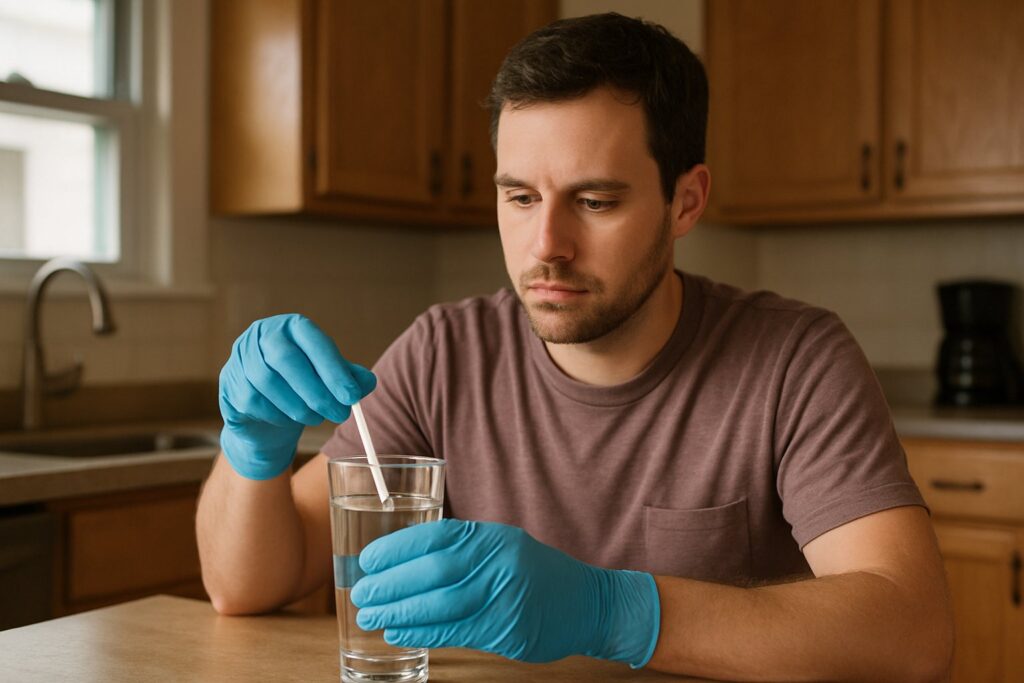
    A man dipping a test strip into a glass of tap water

    In short: lead cannot be seen, tasted or smelled, and EPA says testing is the only sure way to know whether there is lead in your water. Home kits such as Safe Home’s DIY test (ranges 0–4, 5–15 and 15+ ppb) and Watersafe (detects “below 5 ppb”) give a screening answer in minutes for about $19–$20. Mail-in kits such as Tap Score (about $55–$59) or Safe Home’s lab option send your water to a lab. Before you buy anything, call your water utility: many test for lead, and EPA says tests cost about $20 to $100.

    Why a few parts per billion matter

    EPA has set the health-based goal for lead in drinking water (the MCLG) at zero, because lead is toxic even at low exposure, and EPA and CDC agree there is no known safe level of lead in a child’s blood. The number you often hear, 15 parts per billion (ppb), is the action level under the Lead and Copper Rule. It is a trigger for water systems, not a safe limit: if more than 10% of a utility’s tap samples exceed it, the system must take extra steps such as improving corrosion control, informing the public and replacing lead service lines. EPA revised the rule again in 2024.

    Lead usually gets into tap water on its way to you, from corroding lead service lines, lead solder, and faucets and fixtures. EPA says lead pipes are more likely in older cities and in homes built before 1986. That means two homes on the same street can get different results, and your utility’s average does not describe your tap. Our lead pipes guide shows how to check what your service line is made of.

    Home strip tests vs certified lab kits

    Home strip or cassette testMail-in lab kit
    What you getA color or line read against a threshold or rangeA measured concentration, usually in ppb or mg/L
    Time5–15 minutesDays: shipping plus lab turnaround
    Typical price seen (Oct 2026)About $19–$23 per testAbout $55–$70 for lead (and often copper)
    Who analyzesYou, by eyeA laboratory, ideally certified by your state for drinking water
    Good forA first screen; checking a tap after a changeA number you can act on, compare over time and show to a landlord or utility
    Main limitsReading is subjective; a single threshold; makers’ accuracy claims are their ownSlower; the result depends on collecting the sample exactly as instructed

    The lead water test kits, compared

    KitTypeDetection as published by the makerLab claims (maker’s wording)Price seen (Oct 2026)
    Safe Home DIY Lead in Drinking Water ComboHome test plus optional lab sampleRanges 0–4, 5–15, 15+ ppb; results in 5 minutes“EPA-certified” lab; certified in Indiana and Kentucky; lab fee extra$19.99
    Watersafe Lead in Drinking Water (Silver Lake Research)Home test stripDetects lead “below 5 ppb”; 8 minutesSays accuracy was verified by a third-party lab using EPA Method 200.8$18.99
    Tap Score Lead and Copper Water Test (SimpleLab)Mail-in lab kitLead and copper measured by a lab; detection limit not stated on the product pageLab network with “accreditations ranging from ISO to NELAC/ELAP” and state certifications$55 on Tap Score’s site; $59 on Amazon
    Safe Home Lead in Drinking Water, in-lab single testMail-in lab kit“Down to 1 ppb”; results in about 3–5 business days“EPA-Certified Laboratory”$69.95 on Safe Home’s site
    Your utility or a state-certified lab directlyLab analysisSet by the lab’s approved methodListed on your state’s certified-lab listOften free from utilities; EPA says about $20–$100

    Safe Home DIY Lead in Drinking Water Combo

    Safe Home’s combo kit contains one home test for dissolved lead and, in the same box, a second kit for mailing a water sample to the company’s lab. The home test reports one of three ranges, 0–4 ppb, 5–15 ppb or 15+ ppb, in about five minutes. That is more useful than a single pass/fail line, because it separates “nothing detected at this sensitivity” from “detected but below the action level.” The lab analysis costs extra. Safe Home describes its lab as EPA-certified and, on its own site, says the lab is certified in Indiana and Kentucky, adding that some states require a state-certified lab. If you live elsewhere and need a result for a landlord, a sale or a child care program, ask whether your state accepts it.

    Watersafe Lead in Drinking Water Test

    Watersafe, made by Silver Lake Research, is a single-use strip test: add the water, insert the strip, and read it after eight minutes. The maker says it detects lead below 5 ppb, that it is made in the U.S. in an FDA-registered facility, and that its accuracy was checked by a third-party lab using EPA Method 200.8, the standard lab method for metals in drinking water. We could not find that third-party data published, so treat the accuracy claim as the maker’s. Like any strip, it tells you whether lead is present above its threshold, not the concentration.

    Tap Score Lead and Copper Water Test

    Tap Score, from SimpleLab, sends you sampling materials and a prepaid return label; a lab in its network measures lead and copper, and you get a written report, plus a pH strip to use at home. Tap Score lists results in about five business days after the lab receives the sample. On its lab claims, Tap Score says every lab in its network is certified, “with accreditations ranging from ISO to NELAC/ELAP, Direct State, DoD, DoE, DoH and beyond.” The product page does not name which lab will test your sample or publish its reporting limit for lead, so if you need that (for example, to compare with a later test), ask before you sample. Copper is a useful extra: it is covered by the same Lead and Copper Rule.

    What “certified lab” should mean for drinking water

    Drinking water labs in the U.S. are certified mainly by the states. Under the Safe Drinking Water Act, a state that runs its own drinking water program must certify laboratories or have its own certified lab; EPA’s regional offices certify each state’s principal lab and the labs in states without that authority. To stay certified, a lab must use EPA-approved methods, pass proficiency tests each year for each method, and pass on-site audits. EPA does not test home water on request; it encourages people to contact a state-certified drinking water laboratory, and it publishes each state’s list of certified labs.

    So “EPA-certified” on a test kit box is shorthand at best. What you want to know is: which lab, certified by which state for lead in drinking water, using which method. A good lab or kit company will tell you. If the answer is vague, choose a lab from your own state’s list. Our how to test water for lead guide walks through finding one.

    Lead water test kits we would buy

    These were in stock on Amazon when checked in October 2026. Prices change; check the listing.

    Three result ranges

    Safe Home DIY Lead in Drinking Water Combo Test Kit

    • Home test: 0-4, 5-15, 15+ ppb in 5 minutes
    • Optional mail-in lab sample, fee extra
    • About $20, seen October 2026
    Check price on Amazon
    Low-threshold strip

    Watersafe Lead in Drinking Water Test Kit

    • Maker: detects lead below 5 ppb
    • Result in 8 minutes, single test
    • About $19, seen October 2026
    Check price on Amazon
    Lab-measured result

    Tap Score Lead and Copper Water Test Kit

    • Lead and copper measured by a lab
    • Prepaid return shipping, written report
    • About $59, seen October 2026
    Check price on Amazon

    We skipped the many 15- to 23-in-1 strip packs that include a lead pad among chlorine, hardness and pH. Some list a lead range, but few publish a detection limit or validation, and a pad designed to cover many chemicals is not a substitute for a dedicated lead test. Compare every option on our lead test kits hub.

    What a strip can’t tell you

    • How much lead. A strip reads against a threshold or a range. “15+ ppb” could mean 16 or 160, and the right next step can differ.
    • Lead it is not designed to see. Safe Home describes its home test as a test for dissolved lead. Lead can also come out of pipes as tiny particles; EPA’s guidance on lead filters asks for particulate reduction certification for that reason. A dissolved-lead test is not designed to measure them.
    • Where the lead comes from. A single sample can’t separate a lead service line from a brass faucet. Utilities and labs use sampling sequences for that.
    • Whether the water is “safe.” No home kit can certify water as safe to drink. EPA’s goal for lead is zero.
    • Tomorrow’s result. One test is one sample at one moment. Repeat tests, and a lab test, give a fuller picture.

    Strips are also read by eye, so lighting, timing and color perception affect the answer. Follow the kit’s timing exactly, and read the result in daylight.

    Getting an accurate sample

    Whatever kit you use, the sample matters as much as the test. Follow the kit’s or lab’s instructions to the letter, especially on how long the water must sit unused beforehand and whether to collect the very first water out of the tap. Use the cold-water tap you drink from, don’t remove the aerator unless told to, and label the sample with the date and time. If you have a filter, test unfiltered water to learn what is in your plumbing, and filtered water separately to check the filter. Your utility can tell you how it samples for the Lead and Copper Rule, which helps you compare.

    If lead shows up

    1. Confirm with a lab if your first result came from a strip, so you know the number.
    2. Call your water utility. Ask about your service line and its testing or replacement program. See lead service line replacement.
    3. Use a filter certified for lead for drinking and cooking water in the meantime. EPA advises using a filter certified to remove lead, following its replacement directions, and not running hot water through it. See best water filters for lead and the lead water filters hub.
    4. Ask about blood testing if young children or someone pregnant has been drinking the water. Talk to your doctor or local health department, and see lead poisoning and blood lead test.

    For the bigger picture on water, including how utilities test and what the rules require, start at our lead water testing hub. For when a home kit is enough and when it isn’t, see home lead test vs lab testing.

    Frequently asked questions

    Are home lead water test strips accurate?

    They can flag lead above their published threshold, which for the better kits is around 4–5 ppb. Their accuracy figures come from the makers, they don’t give a concentration, and they can’t certify water as safe. Use them as a screen and confirm with a state-certified lab.

    What level of lead in water is safe?

    EPA’s health-based goal for lead in drinking water is zero. The 15 ppb action level is a trigger for utilities to act, not a safe level.

    Can my water company test for lead for free?

    Many utilities offer lead testing or can point you to a lab. EPA’s advice is to contact your water utility and to get a list of certified labs from your state or local drinking water authority.

    Should I test well water differently?

    The same kits work on well water. Private wells aren’t tested by a utility, though, so plan regular lab tests through a state-certified lab, and ask your local health department what else to test for.

    Can I use a water test kit on dishes or paint?

    No. Water kits are made and checked for water. For paint, see best lead paint test kits; for dishes, see lead in pottery and dishes.

  • Lead Pipes: How to Tell If Your Pipes Are Lead and What to Do

    Lead Pipes: How to Tell If Your Pipes Are Lead and What to Do

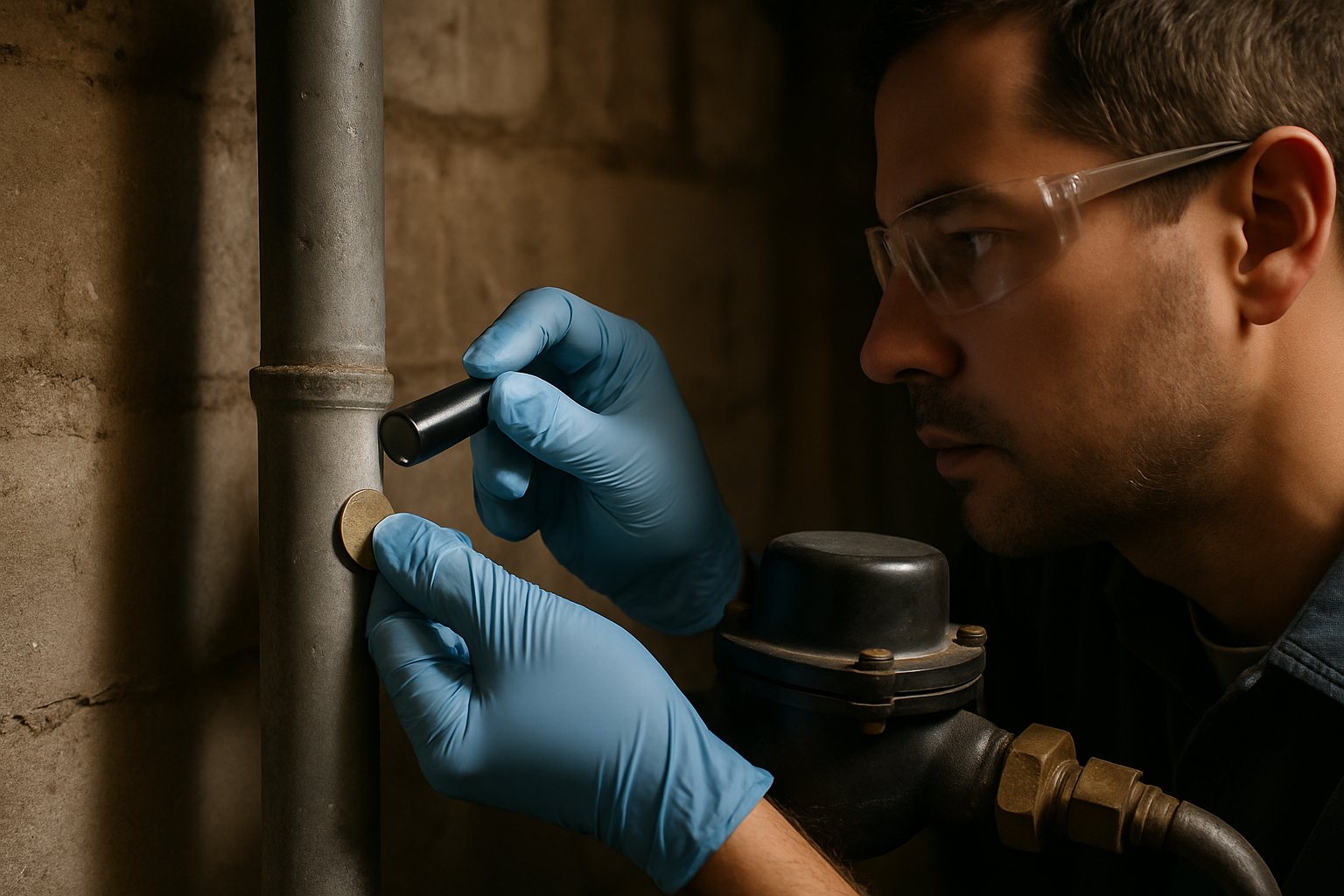
    You can usually tell whether you have lead pipes in about five minutes with a coin or key and a fridge magnet: a lead pipe is dull gray, scratches easily to a shiny silver, and a magnet will not stick to it. Check the pipe where your water line enters the house, look up your address in your utility’s service line inventory, and if either points to lead, test your water and use a certified filter until the line is replaced.

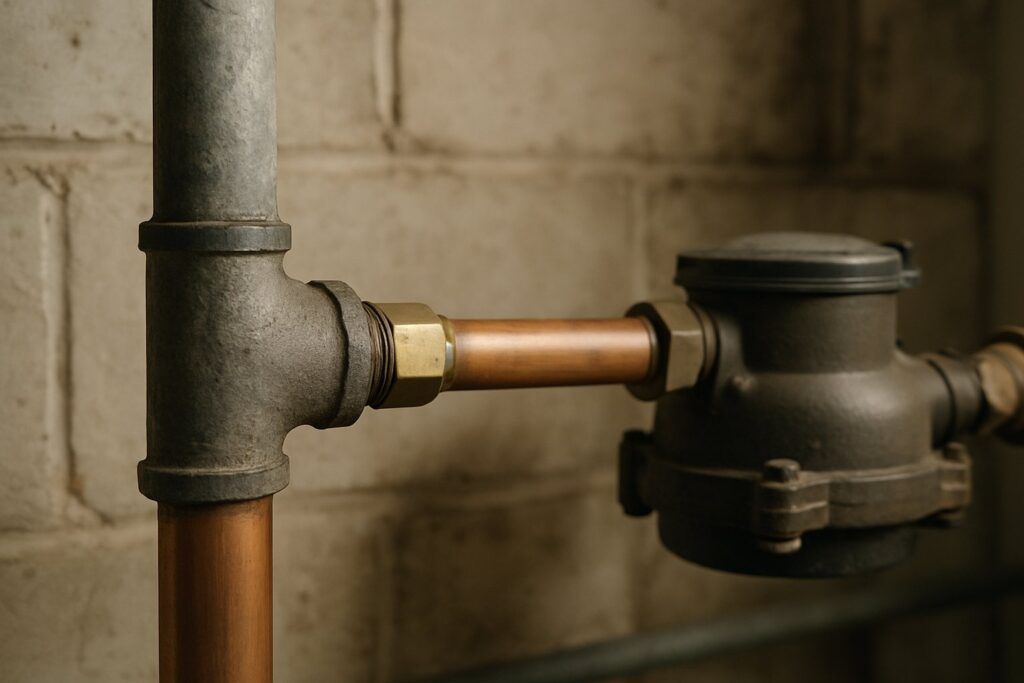
    Old grey lead and newer copper pipes side by side

    In short: the lead pipe that matters most is the service line, the pipe that brings water from the main in the street to your home. EPA’s latest estimate is about 4 million lead service lines in the US. Homes built before 1986 are the most likely to have lead pipes or lead solder, and older brass faucets can add lead too. Utilities had to publish inventories of their service lines by October 2024 and, under EPA’s 2024 rule, must replace lead lines under their control within 10 years in most cases. Your scratch test is a strong hint, not proof; confirm with your utility, a licensed plumber or a lab water test.

    Where lead hides in a home’s plumbing

    EPA says lead enters drinking water when plumbing that contains lead corrodes, and that lead service lines are typically the most significant source where they exist. Lead can sit in several places between the street and your glass:

    WhereWhat to look forWhy it matters
    Service lineThe pipe entering through the basement wall or floor, near the meterUsually the largest source where present (EPA)
    Lead connectorA short piece of pipe that can join the service line to the main, usually out of sightUtilities must now list connectors in their inventories
    Galvanized steel lineGray, hard-to-scratch pipe a magnet sticks toCan hold lead on its inner surface if it ever sat downstream of a lead line
    Lead solderDull gray joints on copper pipes in older homesAllowed until 1986; a common source in homes without lead lines
    Brass faucets and fittingsOlder brass or chrome-plated brass fixtures and valvesEPA names them a common source in homes without lead lines

    How to tell if pipes are lead: the scratch and magnet test

    EPA’s customer guide for identifying service lines, which utilities can hand out to customers, lays out a simple check. You need a key or a coin and a magnet.

    1. Find your water meter. Inside, it is usually in the basement, crawl space or garage. Outside, it sits between the street and the house, on the sidewalk or in the yard.
    2. Find the service line. If the meter is inside, the line enters on the same wall near the meter. If the meter is outside, the line most likely enters at the point closest to it. If you can’t see the pipe, call your utility.
    3. Scratch gently with the coin or key, close to where the pipe comes through the wall or floor.
    4. Try the magnet. See whether it sticks.
    5. Take a photo. EPA’s template suggests utilities let customers send in a picture of the pipe, whatever they find, so the utility can verify it.
    Pipe materialAfter scratchingMagnet
    LeadShiny silver; soft and easy to scratchDoes not stick
    CopperPenny color; may have a green to dark brown filmDoes not stick
    Galvanized iron or steelStays silver or gray; hard to scratchSticks
    PlasticUsually white or gray (other colors exist)Does not stick

    Notice that a magnet does not stick to copper either, so the color of the scratch is what separates lead from copper. Be gentle: you only need to expose a small patch, and you should never dig into a pipe hard enough to damage it. EPA also offers an interactive version of this check called Protect Your Tap, at epa.gov/pyt, in English, Spanish and Portuguese.

    Limits of a home check

    The scratch test only shows the few inches of pipe you can see. A service line can be copper where it enters the house and lead under the yard, or lead on the utility’s side of the curb and copper on yours. Plastic pipe tells you nothing about your faucets and solder, which can still contain lead. So treat a home check as one clue, and combine it with your utility’s records and a water test.

    Check your utility’s service line inventory

    Under EPA’s Lead and Copper Rule Revisions, every community water system had to build an initial inventory of all service lines, whoever owns them, by October 16, 2024. Each line is listed as lead, non-lead, galvanized requiring replacement (GRR) or unknown. Systems serving more than 50,000 people must post the inventory online, and the public version must include a location identifier for each lead and GRR line. Many large utilities offer an address lookup map; Chicago’s, for example, is linked from its Lead Safe Chicago site.

    The 2024 Lead and Copper Rule Improvements (LCRI) go further. Utilities must produce an updated “baseline” inventory, including lead connectors, by November 1, 2027, update it every year, and resolve every “unknown” line by their replacement deadline. Customers served by a lead, GRR or unknown line must be notified every year, and the notice has to explain how to tell the utility if you think your line is listed wrong. Under the improved rule, utilities must respond to those inquiries within 60 days.

    If your line is listed as “unknown,” your scratch test and photo can help the utility classify it. If it is listed as lead or GRR, ask when it is scheduled for replacement and whether there is any cost to you.

    Which homes are most likely to have lead pipes?

    Age and location are the best predictors. EPA says lead pipes are more likely in older cities and homes built before 1986. That was the year Congress amended the Safe Drinking Water Act to limit “lead free” pipes to no more than 8% lead and solder and flux to no more than 0.2%. In 2011, the Reduction of Lead in Drinking Water Act lowered the limit for pipes, fittings and fixtures to a weighted average of 0.25% lead on surfaces that touch water. EPA’s 2020 rule required makers and importers to certify their products meet that standard, with certification required since September 1, 2023.

    Lead service lines are not spread evenly. EPA’s November 2025 update, based on utilities’ own inventories, counts about 3 million reported lead service lines plus about 1 million “unknown” lines predicted to be lead, for an estimated 4 million nationwide. That replaced an earlier estimate of about 9 million, which some groups, including NRDC, have questioned. Chicago’s lead program site notes that service lines there were mostly made of lead until 1986.

    Lead solder and brass fixtures

    Even with a copper or plastic service line, an older home can have lead inside. EPA says that in homes without lead service lines, the most common problems are brass or chrome-plated brass faucets and plumbing with lead solder. Solder joints are hard to judge by eye, and you should not scrape them. If your copper plumbing predates 1986 or your faucets are old brass, a lab water test is the practical way to find out whether they are adding lead. Replacing an old kitchen faucet with a certified lead-free model is one of the simpler fixes a plumber can make.

    I think I have lead pipes. What now?

    1. Call your utility. Report what you found, ask how your line is listed and when it will be replaced, and ask about free testing and filters. Some utilities, such as Denver Water, provide free filter pitchers to customers with a known or suspected lead line.
    2. Test your water with a certified lab. Our guide on how to test water for lead explains first-draw sampling, and best lead water test kits compares the options.
    3. Filter drinking and cooking water with a filter certified to NSF/ANSI 53 for lead (EPA’s consumer tool also looks for NSF/ANSI 42 Class I particulate reduction). See lead water filters and best water filters for lead.
    4. Use cold water only for drinking, cooking and baby formula, and run the tap before use when water has been sitting. EPA says boiling does not remove lead.
    5. Clean faucet aerators regularly, since lead particles can collect there.
    6. Plan for replacement. Read lead service line replacement for who pays, how it works and what to do afterward.
    7. Ask about health. If children or anyone pregnant live in the home, talk to your doctor about a blood lead test. More in lead and health.
    Pitcher pick

    Brita Elite Replacement Filter, 1 Pack

    • OB06 on NSF's lead listing with Tidal and Pacifica pitchers
    • 120 gallons or about 6 months
    • About $20, seen October 2026
    Check price on Amazon
    Mail-in lab test

    Tap Score Lead & Copper in Water Test Kit

    • Sample goes to a lab for analysis
    • Prepaid return shipping
    • About $59, seen October 2026
    Check price on Amazon

    Brita says its Elite filter’s NSF/ANSI 53 lead certification applies in the pitcher models listed on its performance data sheet, so check your pitcher. A mail-in kit is a convenient way to reach a lab; your utility or state-certified lab may test for less.

    Replacing lead pipes

    Filters and flushing reduce exposure, but removing the lead is the lasting fix. Under the LCRI, utilities must fully replace lead and GRR service lines under their control within 10 years in most cases, with most requirements starting November 1, 2027. EPA’s rule generally bans partial replacements, where only one side of the line is changed, except during emergency repairs or planned infrastructure work, because cutting a lead line can release lead for a period afterward.

    Federal money is available: the Bipartisan Infrastructure Law put $15 billion into the Drinking Water State Revolving Fund for lead service line replacement, with 49% to be passed on as grants or forgivable loans, and EPA says the funding can cover the entire line from the main to the home’s plumbing regardless of who owns the property. Some cities replace lines at no direct cost; others share the cost with owners. Interior plumbing such as solder and faucets is the owner’s job; for that, hire a licensed plumber and, for a full home assessment, see find a lead professional.

    For everything about water and lead in one place, start at our lead water testing hub.

    Frequently asked questions

    How can I tell if my pipes are lead?

    Gently scratch the pipe where it enters your home with a coin or key and hold a magnet to it. If the scratch turns shiny silver and the magnet doesn’t stick, EPA’s guide says it is likely lead. Confirm with your utility’s inventory or a plumber.

    Are lead pipes in a house still common?

    EPA estimates about 4 million lead service lines remain in the US, based on 2025 inventory data. They are most likely in older cities and in homes built before 1986.

    Is it safe to shower if I have lead pipes?

    EPA considers bathing and showering safe because skin does not absorb lead in water. The concern is water you drink or cook with.

    Do galvanized pipes contain lead?

    Galvanized steel is not lead, but EPA notes that lead can attach to its inner surface if the pipe is or ever was downstream of a lead service line, and be released over time. That is why such lines are classed as “galvanized requiring replacement.”

    Does a water filter make lead pipes safe?

    A filter certified to NSF/ANSI 53 for lead, used and replaced as directed, reduces lead in the water that passes through it. It does not remove the pipe, so keep using it until the line is replaced and a test confirms the fix.

    Who pays to replace a lead service line?

    It depends on your utility and local rules. Some programs, such as Denver Water’s, replace lines at no direct cost to the customer; others share costs. Ask your utility, and see our replacement guide.

  • Lead Service Line Replacement: Rules, Costs and What to Expect

    Lead Service Line Replacement: Rules, Costs and What to Expect

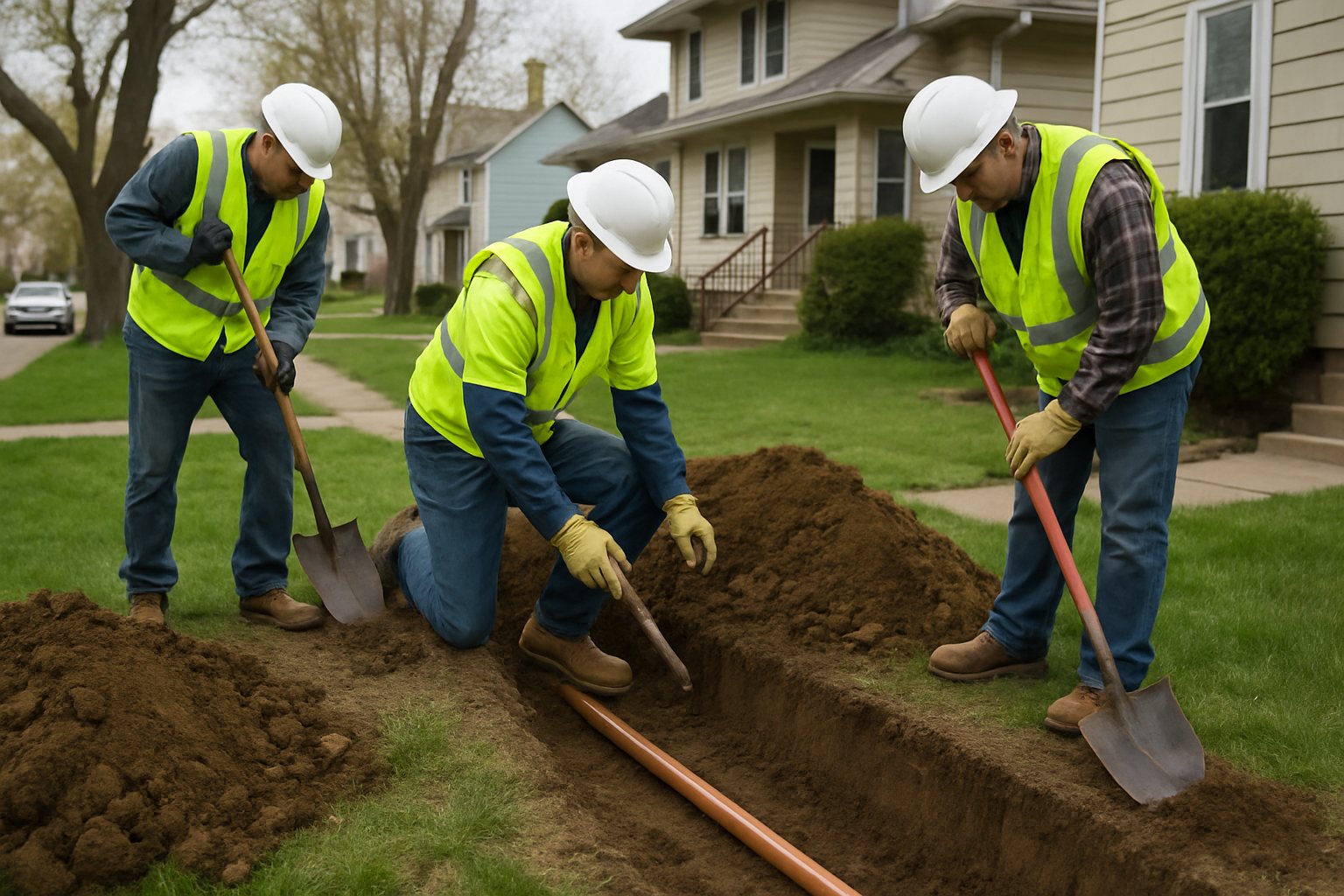
    Lead service line replacement means removing the whole lead pipe that carries water from the main in the street to your home and putting in a new one, usually copper. Under EPA’s 2024 Lead and Copper Rule Improvements, most water utilities must replace every lead and galvanized-requiring-replacement line under their control within 10 years, and federal money is helping many cities do it at little or no cost to the owner.

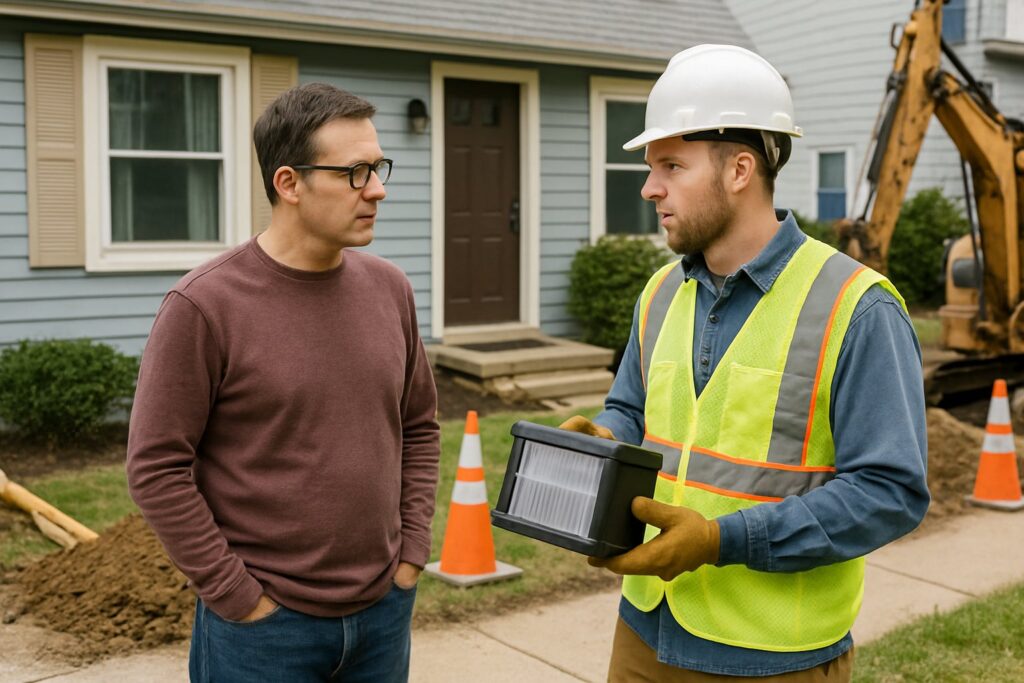
    A homeowner talking with a utility worker on the sidewalk

    In short: ask your utility how your line is listed in its service line inventory, whether it is on the replacement schedule, and what, if anything, you will pay. Aim for a full replacement, from the main to your house, because EPA’s science advisers found that partial replacements are often followed by short-term spikes in lead. After the work, follow your utility’s flushing instructions, use the certified filter it must provide for six months, and retest your water.

    Who owns which part of the line

    A service line runs from the water main to the point where it meets your home’s plumbing. In many places, ownership is split between the utility and the property owner, and where the dividing point falls depends on your utility and local law. Your utility can tell you where its part ends. Some utilities, like Denver Water, refer to “customer-owned” lead service lines, while Chicago talks about the “public and private sides” of the line.

    EPA’s rule sidesteps the ownership question by focusing on control: a line is under the utility’s control wherever it has legal and physical access to do a full replacement. Utilities must replace lines under their control whoever owns them, and where they need an owner’s consent, they must make a reasonable effort to get it, at least four attempts. If you are a renter, the property owner usually has to agree.

    The EPA 10-year replacement requirement

    EPA finalized the Lead and Copper Rule Improvements (LCRI) in October 2024. Most of its requirements apply from November 1, 2027, and as of this writing EPA’s rule page still lists the 10-year replacement requirement. Here is what it asks of community water systems and other covered systems with lead, galvanized requiring replacement (GRR) or unknown lines:

    RequirementWhat the rule says
    DeadlineReplace lead and GRR lines under the system’s control within 10 years, regardless of its lead test results
    PaceA cumulative average of 10% of those lines per year
    Faster or slowerStates must set shorter deadlines where feasible; systems that would need more than 39 replacements per 1,000 connections a year can get deferred deadlines
    PlanA public replacement plan by November 1, 2027, online for systems over 50,000 people, updated yearly
    InventoryAn updated “baseline” inventory, including connectors, by November 1, 2027; all unknown lines identified by the replacement deadline
    Partial replacementProhibited except during emergency repairs or planned infrastructure work that affects service lines
    After replacementA pitcher filter or point-of-use device certified to reduce lead, with six months of cartridges, and an offer to test your tap 3 to 6 months later

    Utilities must also notify everyone served by a lead, GRR or unknown line every year, and must keep the inventory public. If you are not sure how your line is listed, read lead pipes: how to tell for the scratch and magnet test and how to check your utility’s inventory.

    Why galvanized lines are included

    A galvanized steel line that is, or ever was, downstream of a lead line, or is currently downstream of a line of unknown material, counts as “galvanized requiring replacement.” EPA explains that lead can attach to the inner surface of galvanized pipe and be released into the water over time. EPA’s November 2025 estimate of about 4 million lead service lines nationwide counts GRR lines as lead lines.

    Why partial replacement is risky

    For years, some utilities replaced only their own section and left the owner’s side in place. In 2011, EPA’s Science Advisory Board reviewed the evidence and concluded that partial replacements had not been shown to reliably reduce lead in drinking water in the short term, from days to months and possibly longer. It added that partial replacement is frequently associated with short-term elevated lead after the work, suggesting potential for harm rather than benefit during that period. Full replacement, by contrast, appeared generally effective at long-term reductions, though both kinds can raise lead for a while right after the work.

    That is why the 2024 rule generally prohibits partial replacement and requires extra protections when one does happen during an emergency repair, including public education, filters and an offer to replace the remaining portion. If you are offered a replacement of only part of your line, ask why, and ask what it would take to do the whole thing at the same time.

    Who pays: funding and real programs

    Replacement is expensive. Chicago’s lead program, for example, puts the value of a full replacement at $16,000 to $30,000. Costs vary widely with line length, depth, pavement and local labor, so get your own quote or ask your utility before assuming a figure.

    Federal money: the Bipartisan Infrastructure Law

    The Bipartisan Infrastructure Law (formally the Infrastructure Investment and Jobs Act) invests $15 billion in lead service line replacement through the Drinking Water State Revolving Fund. EPA says 49% of those funds must go to communities as grants or principal forgiveness loans, with no state match required. Importantly for homeowners, EPA says the fund can pay for the entire service line, from the main to where it connects with the home’s plumbing, regardless of who owns the property. Since 2025, EPA allots this money to states using the utilities’ own inventory data. Other sources EPA lists include WIIN Act grants for small and disadvantaged communities, Community Development Block Grants and American Rescue Plan recovery funds.

    You don’t apply to EPA yourself. The money flows through your state to utilities, so your utility or state drinking water program is where to ask.

    Examples of utility programs

    • Denver Water (Colorado): its Lead Reduction Program, launched in 2020, replaces customer-owned lead service lines at no direct cost to customers, paid through water rates and boosted by federal funding. Homes that might have a lead line are enrolled automatically, notices go out typically a month or two before work, and customers get free filter pitchers and cartridges until six months after replacement. Denver Water reported passing 25,000 lines replaced.
    • Chicago (Illinois): Lead Safe Chicago offers a free full replacement for eligible owner-occupants with household income below 80% of area median, free replacement of both the public and private sides when a line breaks or leaks (reported through 311), free replacement for licensed daycares in priority areas, and a permit-fee waiver when homeowners hire their own plumber. Check the city’s site for current income limits and terms.

    Many other cities run similar programs, and the details change as funding arrives. Search your utility’s website for “lead service line” or call customer service.

    What to expect during replacement

    Every utility runs its program a little differently, but the steps usually look like this:

    1. Notice and consent. You get a letter or door hanger and, where the utility needs to work on private property, a consent form. Under the rule, utilities must make at least four attempts to reach owners whose consent is needed.
    2. Site visit. Crews or a contractor check where the line enters your home and where the curb valve and meter are.
    3. Scheduling. Ask how long your water will be off, whether they will dig in the yard or use methods that reduce digging, and how they will restore lawn, sidewalk or driveway.
    4. The work. The old line is disconnected at the main and at the house and a new line is installed; Denver Water, for example, installs copper. Your water will be off while the crew connects the new line.
    5. Filter and instructions. Before the new line goes into service, the utility must provide a certified pitcher filter or point-of-use device with six months of cartridges, plus information on reducing exposure. When work disturbs a lead, GRR or unknown line, the rule also requires instructions for a flushing procedure to remove lead particles.
    6. Follow-up test. The utility must offer to test your tap 3 to 6 months after replacement.

    If you decide to replace your side first with your own plumber, coordinate with the utility before you start. Under EPA rules, when a customer replaces the private side of a lead line, the utility must replace its portion within 45 days, or notify the state and do it within 180 days. Hire a licensed plumber and pull any required permit; for a broader lead assessment of the home, see find a lead professional.

    Flushing and filtering after replacement

    Construction can shake loose lead particles from the old pipe and from your home’s plumbing, and EPA’s advisers found lead can stay elevated for a period after any replacement. The rule requires utilities to give flushing instructions when they disturb a lead, GRR or unknown line, so ask for them and follow them exactly; they vary by utility. In general:

    • Flush as instructed before using the water, typically running cold water through the taps for a set time, and clean faucet aerators afterward, since lead particles can collect in the screens (EPA).
    • Use the certified filter for drinking, cooking and baby formula for at least six months, and change cartridges on schedule. Filters certified to NSF/ANSI 53 for lead are the ones to use; see lead water filters and best water filters for lead.
    • Use cold water only for drinking and cooking. Boiling does not remove lead.
    • Retest. Accept the utility’s follow-up test, or test yourself with a certified lab. Our guide on how to test water for lead covers first-draw samples, and best lead water test kits compares options.
    • Check fixtures. A new service line does not fix old brass faucets or lead solder inside the house. If tests stay high, ask a plumber to look at interior plumbing.
    Pitcher pick

    Brita Elite Replacement Filter, 1 Pack

    • OB06 on NSF's lead listing with Tidal and Pacifica pitchers
    • 120 gallons or about 6 months
    • About $20, seen October 2026
    Check price on Amazon
    Retest after the work

    Tap Score Lead & Copper in Water Test Kit

    • Sample goes to a lab for analysis
    • Prepaid return shipping
    • About $59, seen October 2026
    Check price on Amazon

    Use the filter your utility provides first. If you buy your own, check that it is certified to NSF/ANSI 53 for lead; Brita says the Elite filter’s certification applies in the pitcher models listed on its performance data sheet. If anyone in the home is pregnant or a young child, ask your doctor whether a blood lead test makes sense; more in lead and health.

    For the full picture on lead in water, from testing to filters, start at our lead water testing hub.

    Frequently asked questions

    How long do utilities have to replace lead service lines?

    Under EPA’s Lead and Copper Rule Improvements, most must replace all lead and GRR lines under their control within 10 years, with most requirements starting November 1, 2027. States can set shorter deadlines, and a few systems with very many lead lines can get longer ones.

    Do I have to pay for lead service line replacement?

    It depends on your utility. Some, like Denver Water, replace lines at no direct cost; others offer free replacement to income-eligible owners or share costs. Federal funds can cover the whole line regardless of ownership, so ask your utility what applies to you.

    Can I replace my side of the line myself?

    Hire a licensed plumber rather than doing it yourself, and talk to your utility first so the public side is replaced too. Under EPA rules the utility must then replace its portion within 45 days, or within 180 days after notifying the state.

    Is my water safe right after a lead line is replaced?

    Lead can be higher for a while after any replacement. Follow the flushing instructions, use the certified filter for six months and retest.

    What is a partial lead service line replacement?

    Replacing only one part of a lead line, usually the utility’s side, and leaving the rest. EPA’s 2024 rule generally prohibits it except during emergency repairs or planned infrastructure work, because it is often followed by short-term lead spikes.

  • How to Test Water for Lead: Utility, Lab and Home Kits

    How to Test Water for Lead: Utility, Lab and Home Kits

    The only way to know whether there is lead in your tap water is to test it, because lead has no color, taste or smell. Start by calling your water utility, which may test for free and can tell you whether your home has a lead service line, then send a properly collected sample to a state-certified drinking water laboratory if you need a firm number. EPA puts the cost of a certified lab test at roughly $15 to $100.

    A water sample bottle packed into a mailing box

    In short: ask your utility first, collect a “first-draw” sample from water that has sat in the pipes for at least six hours, and use a certified lab for a result you can act on. Home kits and strips can screen, but they are not a laboratory result. Compare your number with EPA’s lead action level, which is 15 parts per billion (ppb) today and drops to 10 ppb from November 1, 2027, and remember that EPA’s health goal for lead is zero. While you wait, use only cold water for drinking and cooking, run the tap before use, and consider a filter certified to NSF/ANSI 53 for lead.

    Lead in drinking water: official reference points
    051015
    • 0 ppb EPA health goal
    • 5 ppb FDA bottled water limit
    • 10 ppb Action level from Nov 2027
    • 15 ppb Action level today

    Action levels trigger utility action; they are not safe levels. EPA's health goal is zero. Source: EPA, FDA (eCFR)

    Why lead shows up in tap water

    Lead rarely comes from the river, lake or aquifer your utility draws from. EPA explains that it enters drinking water when plumbing materials that contain lead corrode. Where they exist, lead service lines (the pipe from the water main to your house) are typically the biggest source. In homes without one, EPA says the most common culprits are brass or chrome-plated brass faucets and fixtures and copper pipes joined with lead solder.

    That is why results can differ from one house to the next on the same street, and why a utility’s citywide report does not tell you what comes out of your own kitchen tap. EPA says lead pipes are more likely in older cities and in homes built before 1986, the year Congress first limited lead in pipes and solder.

    Step 1: Ask your water utility

    Your utility is the best first call, and it costs nothing. CDC notes that many public water systems will test drinking water for residents on request, and EPA says your supplier may know whether the service line to your home is made of lead. Ask three questions:

    • What is my service line made of? Every utility had to publish a service line inventory by October 16, 2024, listing each line as lead, galvanized requiring replacement, non-lead or unknown. Large systems (over 50,000 people) must post it online.
    • Do you offer free or low-cost lead testing? Some utilities mail kits; Denver Water, for example, offers free water test kits to customers.
    • What did your latest lead sampling show? Your annual Consumer Confidence Report (water quality report) includes the system’s lead results and, for systems with lead lines, how to see the inventory.

    If you are on a private well, there is no utility to call. EPA regulates public water systems, not private wells, so the testing is up to you (see the well section below).

    Step 2: Choose how to test

    There are three ways to test water for lead at home, and they are not equal. Keep them separate in your mind: a quick screen tells you whether to dig deeper, while a lab result is the number you act on.

    MethodWhat you getGood to know
    Utility testA lab result, often freeNot every utility offers it; ask how the sample is collected
    Certified lab or mail-in lab kitA measured number in ppb (µg/L) from a labEPA recommends a certified lab; about $15 to $100 per EPA
    Instant home kit or test stripA color change within a rangeA screen only; it is not a laboratory result

    State-certified drinking water labs

    EPA recommends having water tested by a certified laboratory. Labs are certified for drinking water by your state’s certification program, and EPA keeps a list of state certification contacts; your state or local drinking water authority can also give you a list of certified labs. EPA itself does not test residential water on request. When you call a lab, ask whether it is certified for lead in drinking water, whether it sends bottles and instructions, and what its reporting limit is.

    Mail-in kits vs strips

    A mail-in kit is simply a way to reach a lab: you fill the bottle at home and ship it back for analysis. Instant kits and multi-parameter test strips work at the sink, and they can be handy as a first screen, but a lab measurement is what you need before making decisions about pipes, filters or a child’s exposure. One mail-in maker says it plainly on its own listing: lead matters at levels far below what test strips detect. For a side-by-side look, see home lead test vs lab testing and our picks in best lead water test kits.

    Mail-in lab test

    Tap Score Lead & Copper in Water Test Kit

    • Sample goes to a lab for analysis
    • Prepaid return shipping
    • About $59, seen October 2026
    Check price on Amazon
    Screen + lab option

    Safe Home DIY Lead in Drinking Water Combo Test Kit

    • 5-minute home screen in 3 ranges: 0-4, 5-15, 15+ ppb
    • Second kit for optional lab test (lab fee extra)
    • About $20, seen October 2026
    Check price on Amazon

    Step 3: Collect the sample the right way

    How you collect the water changes the result more than most people expect. EPA advises following the lab’s sampling directions exactly and collecting from a faucet you actually drink from, usually the kitchen cold tap.

    First-draw vs flushed samples

    A first-draw sample is the very first water out of the tap after it has sat unused in the pipes, typically overnight. It shows the worst case, since water picks up lead while it sits. Under EPA’s rules, utility compliance samples are collected after the water has been stagnant for at least six hours, and from November 1, 2027, homes with lead service lines will be sampled at both the first liter and the fifth liter, with the higher result counting. The fifth liter is more likely to be water that sat in the service line itself.

    A flushed sample is taken after running the tap for a set time. Comparing first-draw and flushed results can hint at where lead is coming from: high first-draw but low flushed often points to the faucet or nearby plumbing, while lead that persists after flushing can point further back toward the service line. A lab or your utility can help read the pattern.

    • Do not run the tap or remove and clean the aerator right before a first-draw sample unless the instructions say so; EPA’s rules for utilities prohibit pre-sampling flushing and aerator cleaning instructions, because they lower the result.
    • Use cold water only.
    • Fill the bottle to the line, close it, label it with the time and tap, and ship it as directed.

    Testing well water for lead

    Private wells fall outside EPA’s drinking water rules, and CDC notes that most local health departments have jurisdiction over private wells. Lead in well water usually comes from corrosive groundwater acting on the well’s pump, fittings and household plumbing. CDC’s guidance is to take a tap sample following your state’s approved protocol (or EPA’s, if your state has none) and send it to a certified laboratory, because testing is the only way to confirm whether lead has leached into the water. Your county or state health department can usually point you to labs and sometimes to free or subsidized testing.

    Reading your results

    Labs report lead in parts per billion (ppb), micrograms per liter (µg/L, the same as ppb) or milligrams per liter (mg/L). To convert, 0.010 mg/L equals 10 ppb, and 0.015 mg/L equals 15 ppb. Many reports also show a reporting or detection limit; “not detected” means below that limit, not necessarily zero.

    NumberWhat it isWhat it is not
    0 ppbEPA’s Maximum Contaminant Level Goal (MCLG) for lead, its health-based goalAn enforceable limit
    15 ppb (0.015 mg/L)Today’s action level: if more than 10% of a utility’s samples exceed it, the utility must take extra stepsA “safe” level for your home
    10 ppb (0.010 mg/L)The action level under the 2024 Lead and Copper Rule Improvements, from November 1, 2027A health threshold for individuals

    The action level is a trigger for utilities, measured across the 90th percentile of their samples. It is not a line between safe and unsafe water in one home. EPA and CDC agree there is no known safe level of lead in a child’s blood, and the improved rule requires utilities to tell customers there is no safe level of lead in drinking water. So any detectable lead is worth acting on, especially with babies, young children or a pregnancy in the home.

    What the 2024 Lead and Copper Rule Improvements change

    EPA finalized the Lead and Copper Rule Improvements (LCRI) in October 2024, and most requirements apply from November 1, 2027. Besides the lower 10 ppb action level and first- plus fifth-liter sampling, the rule removes the old 10 ppb “trigger level,” requires a public notice within 24 hours when a system exceeds the lead action level, and requires utilities to replace lead service lines under their control within 10 years in most cases. Utilities must also tell you your own tap results no later than 3 business days after they receive them, whatever the level. If you are curious about your pipes, read lead service line replacement.

    What to do while you wait for results

    You don’t have to wait for a number to lower your exposure. These steps come from EPA and CDC:

    • Use only cold water for drinking, cooking and making baby formula. Hot water can carry more lead.
    • Run the tap before use when water has been sitting. How long depends on your plumbing; EPA suggests asking your utility for local flushing times, and CDC suggests 1 to 2 minutes for households on wells with lead.
    • Do not boil water to remove lead. Boiling does not remove it.
    • Use a certified filter. CDC and EPA point to filters certified to NSF/ANSI 53 for lead and NSF/ANSI 42 for particulate (Class I) reduction. Replace cartridges on schedule and don’t run hot water through them. See lead water filters and best water filters for lead.
    • Clean faucet aerators regularly, since lead particles can collect in the screen (but follow your lab’s instructions before sampling).
    • Bathing and showering are considered safe, according to EPA, because skin does not absorb lead in water.
    Pitcher pick

    Brita Elite Replacement Filter, 1 Pack

    • OB06 on NSF's lead listing with Tidal and Pacifica pitchers
    • 120 gallons or about 6 months
    • About $20, seen October 2026
    Check price on Amazon

    Brita states its Elite filter is certified to NSF/ANSI 53 for lead in specific pitcher models listed on its performance data sheet; check that your pitcher is on the list. For a wider comparison, including under-sink and reverse osmosis systems, see our filter guides.

    If your water tests high

    1. Tell your utility and ask whether your service line is lead and when it is scheduled for replacement. Read how to tell if your pipes are lead.
    2. Switch to filtered or bottled water for drinking, cooking and formula. CDC notes certified bottled water virtually eliminates lead from drinking water, though it can be costly long term.
    3. Talk to your doctor or pediatrician about a blood lead test, especially for children and anyone pregnant. CDC says a blood test is the best way to check for exposure. More in lead and health and lead and children.
    4. Retest after any fix, such as new fixtures or a replaced service line, to confirm it worked.
    5. Get professional help if you need a full home assessment of paint, dust and soil as well as water: find a lead professional.

    For the bigger picture on water, including what utilities must do and how filters compare, start at our lead water testing hub.

    Frequently asked questions

    How much does it cost to test water for lead?

    EPA puts a certified lab test at about $15 to $100. Many utilities test for free on request, so call them before you pay.

    Can I test for lead in tap water at home?

    Yes, as a screen. Instant kits and strips give a quick color reading, but they are not a laboratory result. For a number you can act on, use a certified lab or a mail-in kit that is analyzed by one.

    What is a first-draw sample?

    It is the first water out of a tap after it has sat unused in the pipes, usually at least six hours or overnight. It shows the highest lead you are likely to drink from that tap.

    Is 5 ppb of lead in water safe?

    EPA’s health goal for lead in drinking water is zero, and the 15 ppb (soon 10 ppb) action level is a trigger for utilities, not a safety line. Any detectable lead is worth reducing with cold water, flushing and a certified filter. Ask your doctor if you are concerned about exposure.

    Does boiling water remove lead?

    No. EPA and CDC both say boiling does not remove lead.

    How often should I test?

    Test when you move in, after plumbing work or a service line replacement, and whenever your utility reports a problem. Well owners should follow their state health department’s schedule.