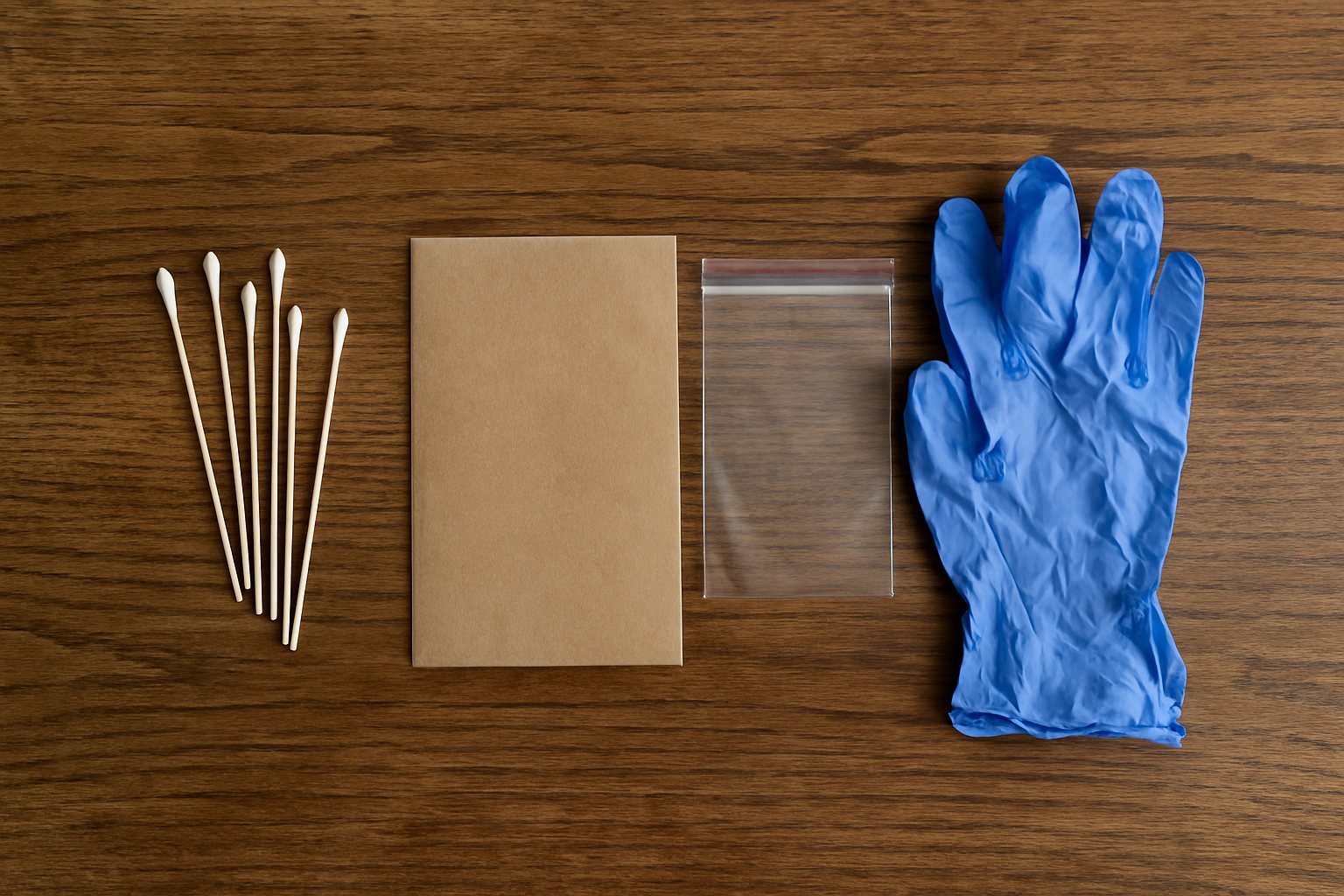
The best lead paint test kit depends on the question you are asking. If you want a quick yes or no on a painted window frame before you sand it, an EPA-recognized swab kit such as LeadCheck is the most practical choice; if you want to know how much lead is in the paint, or you need a result you can rely on, send a paint chip to an accredited laboratory. This guide compares the kits you can actually buy, what each one is documented to detect, what EPA does and does not recognize, and where every home test runs out of road.
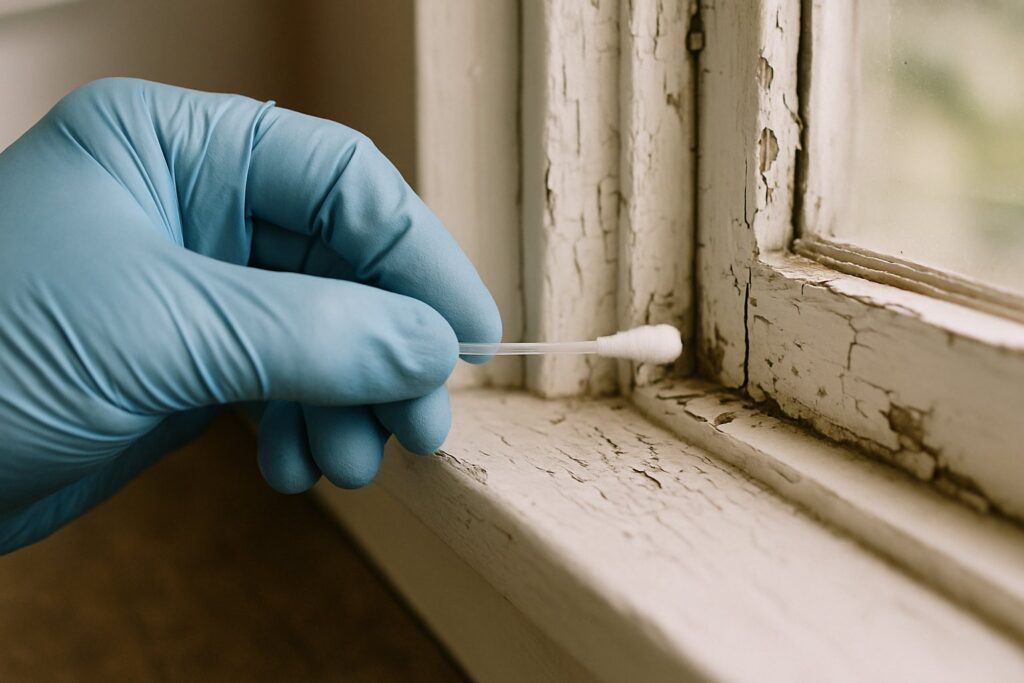
In short: EPA recognizes only three lead paint test kits, LeadCheck, D-Lead and the State of Massachusetts kit, and only for specific surfaces and specific users (certified renovators or trained professionals). All three meet EPA’s criterion for reliable negative results; none has met EPA’s criterion for reliable positive results. A mail-in kit from a lab on EPA’s National Lead Laboratory Accreditation Program (NLLAP) list gives you a measured number instead of a color. For a whole-house answer, a certified lead inspector is the only option that covers every painted surface.
How we compared lead paint test kits
We did not run our own lab tests. We checked each kit against what is published: EPA’s list of recognized test kits and its recognition criteria, the U.S. Consumer Product Safety Commission’s (CPSC) evaluations of home test kits, EPA’s list of accredited lead labs, and each maker’s own product pages and Amazon listings. Prices are what we saw when checked in October 2026; they change often.
One thing to settle first: federal rules define lead-based paint as paint with lead at or above 1.0 milligram per square centimeter or 0.5% by weight (5,000 parts per million). That is the level EPA’s test-kit rules are built around. It is far higher than the 90 ppm limit CPSC sets for paint on toys, children’s products and household paint sold today, so a kit designed for old house paint is not automatically a good test for a painted toy.
Lead paint test kits compared
| Kit | Type | What it is documented to detect | EPA recognition | Price seen (Oct 2026) |
|---|---|---|---|---|
| LeadCheck swabs (now made by Luxfer Magtech; formerly 3M) | Instant chemical swab, red = lead | Lead on painted surfaces; listing says “detects lead down to 600 ppm”; results in about 30 seconds | Yes, for wood, ferrous metal, drywall and plaster, used by certified renovators | About $39 for 8 swabs; about $15 for 2 |
| D-Lead Paint Test Kit (ESCA Tech) | Paint-chip spot test with color comparison | Presence or absence of lead around 1.0 mg/cm², per EPA’s verification statement | Yes, same four surfaces, certified renovators; recognized August 31, 2010 | Sold through distributors; we found no Amazon listing |
| State of Massachusetts kit | Professional kit | Lead-based paint on drywall and plaster | Yes, drywall and plaster only, trained professionals | Not sold to consumers |
| Safe Home Lead in Solids Combo | 10 swabs plus a mail-in sample kit | Maker states swab detection “to 5 ppm” and lab detection to 0.006 ppm (lab fee extra) | Not on EPA’s recognized list | About $20 |
| Schneider Labs mail-in kit (SLGi) | Collect a sample, mail it, lab measures it | Lead in one paint, dust or soil sample by flame atomic absorption (EPA Method 7000B) | Lab is on EPA’s NLLAP list (Sept 2026) | About $35 per sample, return label included |
| Certified lead inspector | On-site XRF readings and/or paint-chip samples | Where lead-based paint is in the whole home | EPA- or state-certified professional | Quote-based; varies by home and region |
What EPA recognition actually means
EPA’s Renovation, Repair and Painting (RRP) rule lets a certified renovator use a recognized test kit to decide whether lead-safe work practices are needed. To be recognized, a kit has to pass one or both of two performance tests, set out in 40 CFR 745.88:
- The negative-response criterion. On paint at or above the regulated level, the kit must give a negative result no more than 5% of the time (with 95% confidence). In plain terms: it should rarely miss lead-based paint.
- The positive-response criterion. On paint below the regulated level, the kit must give a positive result no more than 10% of the time. In plain terms: it should rarely raise a false alarm.
EPA states that all three recognized kits meet only the negative-response criterion, and that no lead test kit has met both. So a negative result from a recognized kit, used correctly on a recognized surface, is the meaningful one: it tells a renovator that regulated lead-based paint is not present there. A positive result may be a true positive or a false alarm, and EPA’s rules simply have the renovator treat that surface as if it contains lead, or bring in a certified inspector or risk assessor to test it properly.
EPA also notes that it only recognizes tests conducted by certified inspectors, risk assessors and RRP-certified renovators. Nothing stops a homeowner from buying the same swabs, but your own result is not an official determination. For a sale, a rental disclosure or a child’s elevated blood lead level, you will need a professional. Our lead paint inspection guide explains the difference between an inspection and a risk assessment.
The kits, one by one
LeadCheck swabs: the EPA-recognized swab most people can buy
LeadCheck is the swab most renovators know as “3M LeadCheck.” According to EPA, 3M sold the LeadCheck formula and trademarks to Luxfer Magtech in September 2024, and EPA now recognizes the Luxfer-made kit; it adds that 3M LeadCheck kits you already own can still be used, but check the expiration date. Luxfer says results come in under 30 seconds in the vast majority of cases, and that a positive swab should be verified with the confirmation card in the pack.
EPA recognition covers wood, ferrous metal (iron and steel), and drywall and plaster. Retail listings describe a sensitivity of 600 ppm. That is well below the 5,000 ppm federal lead-based paint definition, which is part of why the negative results are dependable on house paint. It is far above the 90 ppm CPSC limit, so a negative swab does not tell you a toy or piece of furniture meets today’s standard. LeadCheck tests what the swab can reach: lead under a newer, lead-free top coat can be missed unless the older layers are exposed (CPSC found exactly this problem with coated products).
D-Lead: the paint-chip kit renovators use
D-Lead, from ESCA Tech, works differently. You take a small paint sample, dissolve the lead out of it with a solvent, and compare the color reaction against a standard. EPA’s Environmental Technology Verification program tested it in 2010, and EPA recognized it as a negative-response kit on August 31, 2010, for the same four surfaces as LeadCheck. EPA’s verification statement describes it as detecting the presence or absence of lead at about 1.0 mg/cm². It takes longer than a swab and the color reading is a judgment call. We did not find D-Lead on Amazon; EPA lists ESCA Tech’s phone number (414-962-3006) and says it is sold through certain distributors and retailers.
The State of Massachusetts kit
The third recognized kit is for trained professionals and is recognized only on drywall and plaster. EPA says it is not recognized for wood or ferrous metal.
Safe Home Lead in Solids: swabs plus an optional lab sample
Safe Home combines 10 do-it-yourself swabs with a sample-submission kit, so you can screen several spots and then mail one sample to the company’s lab for a measured result. The maker says the swabs give results in 30 seconds with detection “to 5 ppm,” and that the lab test reaches 0.006 ppm, with lab fees charged separately. It describes the kit as usable on paint, dust, soil, wood, toys, furniture, metal and plastic. Two cautions: this kit is not on EPA’s recognized list, so it cannot be used for RRP decisions, and Safe Home’s swab detection figure is the maker’s own claim, which we could not check against any independent evaluation. Safe Home calls its lab “EPA-certified” and says testing meets NLLAP guidelines; we did not find the lab named in Safe Home’s instructions (Environmental Laboratories, Inc., Madison, Indiana) on EPA’s NLLAP list as of September 2026, so ask the company which accreditation applies to paint before you rely on the lab result for anything official.
Mail-in paint-chip kits: a number, not a color
A mail-in kit swaps speed for certainty. Schneider Laboratories Global (SLGi) in Richmond, Virginia, sells a kit with sampling tools, instructions and a prepaid return label; the lab analyzes one paint, dust or soil sample by flame atomic absorption (EPA Method 7000B) and reports within five business days of receiving it. Schneider Laboratories appears on EPA’s NLLAP list (September 2026), which is the federal program that recognizes labs for paint chips, soil and dust wipes. A measured result in mg/cm² or percent by weight tells you not just whether there is lead but how much, which is what you need to compare against the 1.0 mg/cm² / 0.5% definition.
Any NLLAP lab will do; you do not need to buy a branded kit. Many accept samples directly, and EPA’s list is searchable by state. Our how to test for lead paint guide covers how to take a paint-chip sample safely: all layers down to the substrate, a wet method, and a clean-up afterward.
Lead paint test kits we would buy
These are the kits we found in stock on Amazon when checked in October 2026, matched to the job they suit. Prices change; check the listing.
LeadCheck Swabs, Instant Lead Test, 8 Swabs
- Recognized on wood, ferrous metal, drywall, plaster
- Listing: detects down to 600 ppm, about 30 seconds
- About $39, seen October 2026
Schneider Labs Lead Test Kit, Paint, Dust or Soil (1 sample)
- Lab on EPA's NLLAP list
- Flame AA, EPA Method 7000B; prepaid return label
- About $35, seen October 2026
Safe Home Lead in Solids Combo Test Kit
- 10 swabs plus optional mail-in sample
- Not EPA-recognized; lab fee extra
- About $20, seen October 2026
We left out the many 30- to 300-swab kits that publish no detection limit and are not on EPA’s list: without performance data there is no way to know how often they miss lead. Compare all the options on our lead test kits hub.
False negatives and false positives: the limits of every swab
CPSC has evaluated home lead test kits four times (1992, 1994, 2003 and 2007). In its 2007 study of kits on paints and products, more than half of the 104 results were false negatives, and two were false positives. CPSC concluded that consumers should not use lead test kits to judge consumer products, and that laboratory analysis is the most accurate and reliable way to find out whether paint contains lead and how much. Those studies are older, but the reasons still apply to any color test:
- Buried layers. A swab only reacts with lead it touches. Lead paint under a newer lead-free coat can read negative unless every layer is exposed.
- Low concentrations. Most kits were built for old house paint, where lead levels are high. CPSC found they may not be useful for low lead levels or for materials like metal jewelry and vinyl.
- Interference. CPSC notes that chromate can interfere with rhodizonate-based kits and iron can react with sulfide kits, giving misleading colors.
- Surfaces outside the recognition. EPA recognition covers specific surfaces. On brick, concrete or non-ferrous metal, a recognized kit’s result carries no EPA backing.
Which lead paint test should you choose?
- Planning a small repair in a pre-1978 home: a recognized swab kit (LeadCheck) on the exact spot you will disturb. If it is negative on wood, ferrous metal, drywall or plaster, that is useful information. If it is positive, work lead-safe or get it tested properly. See lead-safe renovation and the RRP rule.
- Wanting to know how much lead is there: a paint-chip sample to an NLLAP lab.
- Buying, selling or renting a home, or a child has an elevated blood lead level: a certified inspector or risk assessor. Start at find a lead professional or read how to choose a lead inspector.
- Checking toys, jewelry or dishes: paint swabs are the wrong tool. Read lead in toys and jewelry and lead in pottery and dishes.
A test kit only tells you about the spot you tested. Lead paint that is chipping, or that is disturbed by work, turns into dust, and EPA treats lead dust on floors and window sills as a hazard in its own right. If you find lead paint, read our lead dust testing guide and the lead paint testing hub. If you are worried about someone’s health, a blood lead test is the only way to know about exposure; talk to a doctor or your local health department, and see lead poisoning.
Using a swab kit safely and correctly
Read the instructions first, expose every paint layer the way the kit describes rather than scraping or sanding, and test each painted component separately, since a window sash and its trim may have different histories. Use the confirmation card if there is one. Wipe up with a damp paper towel, wash your hands, keep children and pets away, and note where you tested. EPA’s National Lead Information Center (1-800-424-5323) can point you to certified professionals and accredited labs.
Frequently asked questions
Is 3M LeadCheck still sold?
The formula is. According to EPA, 3M sold LeadCheck to Luxfer Magtech in September 2024, and EPA now recognizes the Luxfer-made kit. Older 3M kits can still be used if they have not expired.
Are lead paint test kits accurate?
The three EPA-recognized kits are reliable for negative results on the surfaces they are recognized for. EPA says no kit has met its criterion for reliable positive results, and CPSC studies found high false-negative rates for home kits on consumer products. A lab analysis is the accurate option.
Which lead test kits are EPA approved?
EPA uses the word “recognized.” The recognized kits are LeadCheck and D-Lead (wood, ferrous metal, drywall and plaster, for certified renovators) and the State of Massachusetts kit (drywall and plaster only, for trained professionals).
What does a red swab mean?
That lead is probably present on that surface. It does not tell you how much, and it may occasionally be a false alarm. Treat the surface as containing lead, avoid dry sanding or scraping, and confirm with a lab sample or a certified inspector.
Can I use a lead paint swab on dishes or toys?
Not reliably. CPSC advises consumers not to use home test kits to evaluate consumer products, because kits miss lead under coatings and at low levels. FDA says that if pottery tests positive with a swab, do not use it for food or drinks; a negative swab does not prove a dish is safe.