Tag: Lead Service Lines

  • Lead Pipes: How to Tell If Your Pipes Are Lead and What to Do

    Lead Pipes: How to Tell If Your Pipes Are Lead and What to Do

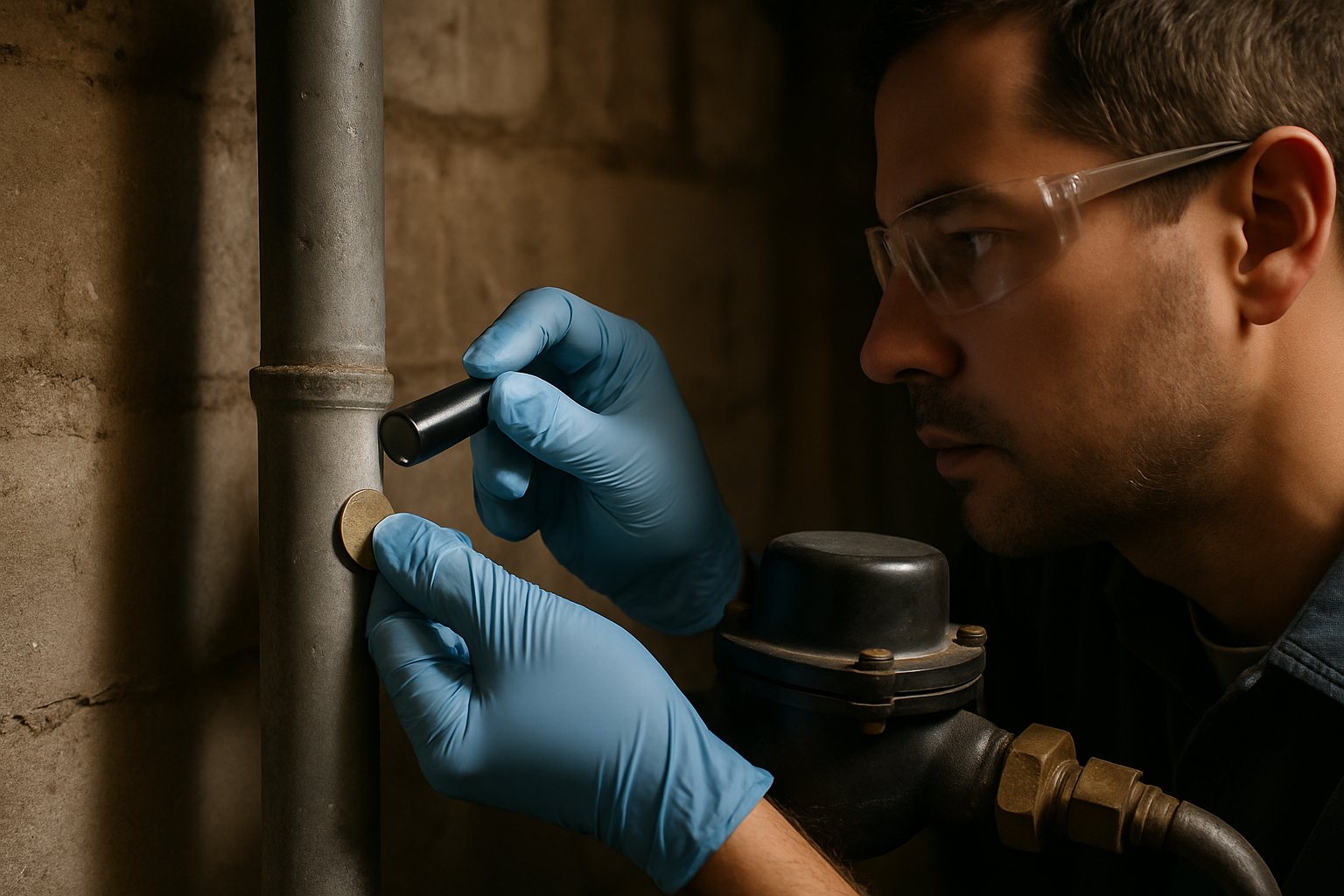
    You can usually tell whether you have lead pipes in about five minutes with a coin or key and a fridge magnet: a lead pipe is dull gray, scratches easily to a shiny silver, and a magnet will not stick to it. Check the pipe where your water line enters the house, look up your address in your utility’s service line inventory, and if either points to lead, test your water and use a certified filter until the line is replaced.
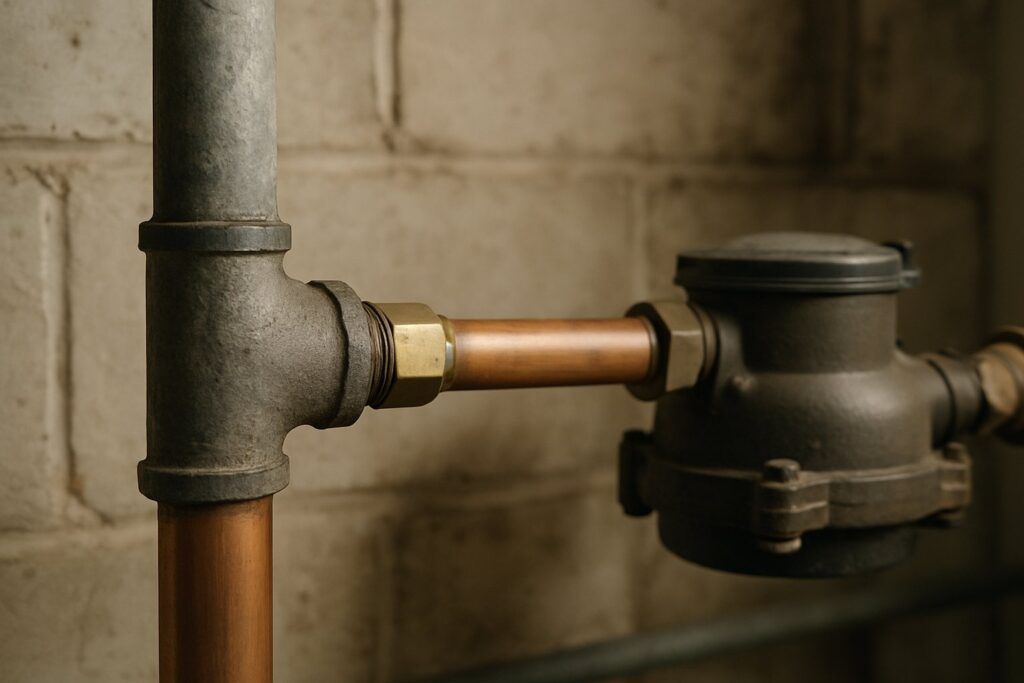
    Old grey lead and newer copper pipes side by side

    In short: the lead pipe that matters most is the service line, the pipe that brings water from the main in the street to your home. EPA’s latest estimate is about 4 million lead service lines in the US. Homes built before 1986 are the most likely to have lead pipes or lead solder, and older brass faucets can add lead too. Utilities had to publish inventories of their service lines by October 2024 and, under EPA’s 2024 rule, must replace lead lines under their control within 10 years in most cases. Your scratch test is a strong hint, not proof; confirm with your utility, a licensed plumber or a lab water test.

    Where lead hides in a home’s plumbing

    EPA says lead enters drinking water when plumbing that contains lead corrodes, and that lead service lines are typically the most significant source where they exist. Lead can sit in several places between the street and your glass:

    WhereWhat to look forWhy it matters
    Service lineThe pipe entering through the basement wall or floor, near the meterUsually the largest source where present (EPA)
    Lead connectorA short piece of pipe that can join the service line to the main, usually out of sightUtilities must now list connectors in their inventories
    Galvanized steel lineGray, hard-to-scratch pipe a magnet sticks toCan hold lead on its inner surface if it ever sat downstream of a lead line
    Lead solderDull gray joints on copper pipes in older homesAllowed until 1986; a common source in homes without lead lines
    Brass faucets and fittingsOlder brass or chrome-plated brass fixtures and valvesEPA names them a common source in homes without lead lines

    How to tell if pipes are lead: the scratch and magnet test

    EPA’s customer guide for identifying service lines, which utilities can hand out to customers, lays out a simple check. You need a key or a coin and a magnet.

    1. Find your water meter. Inside, it is usually in the basement, crawl space or garage. Outside, it sits between the street and the house, on the sidewalk or in the yard.
    2. Find the service line. If the meter is inside, the line enters on the same wall near the meter. If the meter is outside, the line most likely enters at the point closest to it. If you can’t see the pipe, call your utility.
    3. Scratch gently with the coin or key, close to where the pipe comes through the wall or floor.
    4. Try the magnet. See whether it sticks.
    5. Take a photo. EPA’s template suggests utilities let customers send in a picture of the pipe, whatever they find, so the utility can verify it.
    Pipe materialAfter scratchingMagnet
    LeadShiny silver; soft and easy to scratchDoes not stick
    CopperPenny color; may have a green to dark brown filmDoes not stick
    Galvanized iron or steelStays silver or gray; hard to scratchSticks
    PlasticUsually white or gray (other colors exist)Does not stick

    Notice that a magnet does not stick to copper either, so the color of the scratch is what separates lead from copper. Be gentle: you only need to expose a small patch, and you should never dig into a pipe hard enough to damage it. EPA also offers an interactive version of this check called Protect Your Tap, at epa.gov/pyt, in English, Spanish and Portuguese.

    Limits of a home check

    The scratch test only shows the few inches of pipe you can see. A service line can be copper where it enters the house and lead under the yard, or lead on the utility’s side of the curb and copper on yours. Plastic pipe tells you nothing about your faucets and solder, which can still contain lead. So treat a home check as one clue, and combine it with your utility’s records and a water test.

    Check your utility’s service line inventory

    Under EPA’s Lead and Copper Rule Revisions, every community water system had to build an initial inventory of all service lines, whoever owns them, by October 16, 2024. Each line is listed as lead, non-lead, galvanized requiring replacement (GRR) or unknown. Systems serving more than 50,000 people must post the inventory online, and the public version must include a location identifier for each lead and GRR line. Many large utilities offer an address lookup map; Chicago’s, for example, is linked from its Lead Safe Chicago site.

    The 2024 Lead and Copper Rule Improvements (LCRI) go further. Utilities must produce an updated “baseline” inventory, including lead connectors, by November 1, 2027, update it every year, and resolve every “unknown” line by their replacement deadline. Customers served by a lead, GRR or unknown line must be notified every year, and the notice has to explain how to tell the utility if you think your line is listed wrong. Under the improved rule, utilities must respond to those inquiries within 60 days.

    If your line is listed as “unknown,” your scratch test and photo can help the utility classify it. If it is listed as lead or GRR, ask when it is scheduled for replacement and whether there is any cost to you.

    Which homes are most likely to have lead pipes?

    Age and location are the best predictors. EPA says lead pipes are more likely in older cities and homes built before 1986. That was the year Congress amended the Safe Drinking Water Act to limit “lead free” pipes to no more than 8% lead and solder and flux to no more than 0.2%. In 2011, the Reduction of Lead in Drinking Water Act lowered the limit for pipes, fittings and fixtures to a weighted average of 0.25% lead on surfaces that touch water. EPA’s 2020 rule required makers and importers to certify their products meet that standard, with certification required since September 1, 2023.

    Lead service lines are not spread evenly. EPA’s November 2025 update, based on utilities’ own inventories, counts about 3 million reported lead service lines plus about 1 million “unknown” lines predicted to be lead, for an estimated 4 million nationwide. That replaced an earlier estimate of about 9 million, which some groups, including NRDC, have questioned. Chicago’s lead program site notes that service lines there were mostly made of lead until 1986.

    Lead solder and brass fixtures

    Even with a copper or plastic service line, an older home can have lead inside. EPA says that in homes without lead service lines, the most common problems are brass or chrome-plated brass faucets and plumbing with lead solder. Solder joints are hard to judge by eye, and you should not scrape them. If your copper plumbing predates 1986 or your faucets are old brass, a lab water test is the practical way to find out whether they are adding lead. Replacing an old kitchen faucet with a certified lead-free model is one of the simpler fixes a plumber can make.

    I think I have lead pipes. What now?

    1. Call your utility. Report what you found, ask how your line is listed and when it will be replaced, and ask about free testing and filters. Some utilities, such as Denver Water, provide free filter pitchers to customers with a known or suspected lead line.
    2. Test your water with a certified lab. Our guide on how to test water for lead explains first-draw sampling, and best lead water test kits compares the options.
    3. Filter drinking and cooking water with a filter certified to NSF/ANSI 53 for lead (EPA’s consumer tool also looks for NSF/ANSI 42 Class I particulate reduction). See lead water filters and best water filters for lead.
    4. Use cold water only for drinking, cooking and baby formula, and run the tap before use when water has been sitting. EPA says boiling does not remove lead.
    5. Clean faucet aerators regularly, since lead particles can collect there.
    6. Plan for replacement. Read lead service line replacement for who pays, how it works and what to do afterward.
    7. Ask about health. If children or anyone pregnant live in the home, talk to your doctor about a blood lead test. More in lead and health.
    Pitcher pick

    Brita Elite Replacement Filter, 1 Pack

    • OB06 on NSF's lead listing with Tidal and Pacifica pitchers
    • 120 gallons or about 6 months
    • About $20, seen October 2026
    Check price on Amazon
    Mail-in lab test

    Tap Score Lead & Copper in Water Test Kit

    • Sample goes to a lab for analysis
    • Prepaid return shipping
    • About $59, seen October 2026
    Check price on Amazon

    Brita says its Elite filter’s NSF/ANSI 53 lead certification applies in the pitcher models listed on its performance data sheet, so check your pitcher. A mail-in kit is a convenient way to reach a lab; your utility or state-certified lab may test for less.

    Replacing lead pipes

    Filters and flushing reduce exposure, but removing the lead is the lasting fix. Under the LCRI, utilities must fully replace lead and GRR service lines under their control within 10 years in most cases, with most requirements starting November 1, 2027. EPA’s rule generally bans partial replacements, where only one side of the line is changed, except during emergency repairs or planned infrastructure work, because cutting a lead line can release lead for a period afterward.

    Federal money is available: the Bipartisan Infrastructure Law put $15 billion into the Drinking Water State Revolving Fund for lead service line replacement, with 49% to be passed on as grants or forgivable loans, and EPA says the funding can cover the entire line from the main to the home’s plumbing regardless of who owns the property. Some cities replace lines at no direct cost; others share the cost with owners. Interior plumbing such as solder and faucets is the owner’s job; for that, hire a licensed plumber and, for a full home assessment, see find a lead professional.

    For everything about water and lead in one place, start at our lead water testing hub.

    Frequently asked questions

    How can I tell if my pipes are lead?

    Gently scratch the pipe where it enters your home with a coin or key and hold a magnet to it. If the scratch turns shiny silver and the magnet doesn’t stick, EPA’s guide says it is likely lead. Confirm with your utility’s inventory or a plumber.

    Are lead pipes in a house still common?

    EPA estimates about 4 million lead service lines remain in the US, based on 2025 inventory data. They are most likely in older cities and in homes built before 1986.

    Is it safe to shower if I have lead pipes?

    EPA considers bathing and showering safe because skin does not absorb lead in water. The concern is water you drink or cook with.

    Do galvanized pipes contain lead?

    Galvanized steel is not lead, but EPA notes that lead can attach to its inner surface if the pipe is or ever was downstream of a lead service line, and be released over time. That is why such lines are classed as “galvanized requiring replacement.”

    Does a water filter make lead pipes safe?

    A filter certified to NSF/ANSI 53 for lead, used and replaced as directed, reduces lead in the water that passes through it. It does not remove the pipe, so keep using it until the line is replaced and a test confirms the fix.

    Who pays to replace a lead service line?

    It depends on your utility and local rules. Some programs, such as Denver Water’s, replace lines at no direct cost to the customer; others share costs. Ask your utility, and see our replacement guide.
  • Lead Service Line Replacement: Rules, Costs and What to Expect

    Lead Service Line Replacement: Rules, Costs and What to Expect

    Lead service line replacement means removing the whole lead pipe that carries water from the main in the street to your home and putting in a new one, usually copper. Under EPA’s 2024 Lead and Copper Rule Improvements, most water utilities must replace every lead and galvanized-requiring-replacement line under their control within 10 years, and federal money is helping many cities do it at little or no cost to the owner.

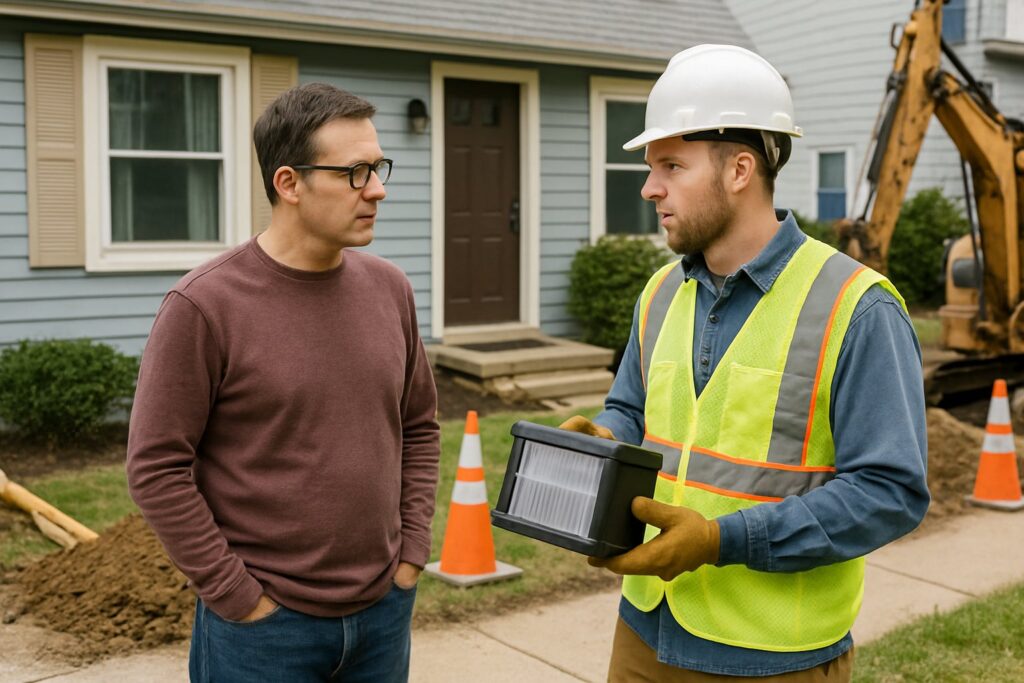
    A homeowner talking with a utility worker on the sidewalk

    In short: ask your utility how your line is listed in its service line inventory, whether it is on the replacement schedule, and what, if anything, you will pay. Aim for a full replacement, from the main to your house, because EPA’s science advisers found that partial replacements are often followed by short-term spikes in lead. After the work, follow your utility’s flushing instructions, use the certified filter it must provide for six months, and retest your water.

    Who owns which part of the line

    A service line runs from the water main to the point where it meets your home’s plumbing. In many places, ownership is split between the utility and the property owner, and where the dividing point falls depends on your utility and local law. Your utility can tell you where its part ends. Some utilities, like Denver Water, refer to “customer-owned” lead service lines, while Chicago talks about the “public and private sides” of the line.

    EPA’s rule sidesteps the ownership question by focusing on control: a line is under the utility’s control wherever it has legal and physical access to do a full replacement. Utilities must replace lines under their control whoever owns them, and where they need an owner’s consent, they must make a reasonable effort to get it, at least four attempts. If you are a renter, the property owner usually has to agree.

    The EPA 10-year replacement requirement

    EPA finalized the Lead and Copper Rule Improvements (LCRI) in October 2024. Most of its requirements apply from November 1, 2027, and as of this writing EPA’s rule page still lists the 10-year replacement requirement. Here is what it asks of community water systems and other covered systems with lead, galvanized requiring replacement (GRR) or unknown lines:

    RequirementWhat the rule says
    DeadlineReplace lead and GRR lines under the system’s control within 10 years, regardless of its lead test results
    PaceA cumulative average of 10% of those lines per year
    Faster or slowerStates must set shorter deadlines where feasible; systems that would need more than 39 replacements per 1,000 connections a year can get deferred deadlines
    PlanA public replacement plan by November 1, 2027, online for systems over 50,000 people, updated yearly
    InventoryAn updated “baseline” inventory, including connectors, by November 1, 2027; all unknown lines identified by the replacement deadline
    Partial replacementProhibited except during emergency repairs or planned infrastructure work that affects service lines
    After replacementA pitcher filter or point-of-use device certified to reduce lead, with six months of cartridges, and an offer to test your tap 3 to 6 months later

    Utilities must also notify everyone served by a lead, GRR or unknown line every year, and must keep the inventory public. If you are not sure how your line is listed, read lead pipes: how to tell for the scratch and magnet test and how to check your utility’s inventory.

    Why galvanized lines are included

    A galvanized steel line that is, or ever was, downstream of a lead line, or is currently downstream of a line of unknown material, counts as “galvanized requiring replacement.” EPA explains that lead can attach to the inner surface of galvanized pipe and be released into the water over time. EPA’s November 2025 estimate of about 4 million lead service lines nationwide counts GRR lines as lead lines.

    Why partial replacement is risky

    For years, some utilities replaced only their own section and left the owner’s side in place. In 2011, EPA’s Science Advisory Board reviewed the evidence and concluded that partial replacements had not been shown to reliably reduce lead in drinking water in the short term, from days to months and possibly longer. It added that partial replacement is frequently associated with short-term elevated lead after the work, suggesting potential for harm rather than benefit during that period. Full replacement, by contrast, appeared generally effective at long-term reductions, though both kinds can raise lead for a while right after the work.

    That is why the 2024 rule generally prohibits partial replacement and requires extra protections when one does happen during an emergency repair, including public education, filters and an offer to replace the remaining portion. If you are offered a replacement of only part of your line, ask why, and ask what it would take to do the whole thing at the same time.

    Who pays: funding and real programs

    Replacement is expensive. Chicago’s lead program, for example, puts the value of a full replacement at $16,000 to $30,000. Costs vary widely with line length, depth, pavement and local labor, so get your own quote or ask your utility before assuming a figure.

    Federal money: the Bipartisan Infrastructure Law

    The Bipartisan Infrastructure Law (formally the Infrastructure Investment and Jobs Act) invests $15 billion in lead service line replacement through the Drinking Water State Revolving Fund. EPA says 49% of those funds must go to communities as grants or principal forgiveness loans, with no state match required. Importantly for homeowners, EPA says the fund can pay for the entire service line, from the main to where it connects with the home’s plumbing, regardless of who owns the property. Since 2025, EPA allots this money to states using the utilities’ own inventory data. Other sources EPA lists include WIIN Act grants for small and disadvantaged communities, Community Development Block Grants and American Rescue Plan recovery funds.

    You don’t apply to EPA yourself. The money flows through your state to utilities, so your utility or state drinking water program is where to ask.

    Examples of utility programs

    • Denver Water (Colorado): its Lead Reduction Program, launched in 2020, replaces customer-owned lead service lines at no direct cost to customers, paid through water rates and boosted by federal funding. Homes that might have a lead line are enrolled automatically, notices go out typically a month or two before work, and customers get free filter pitchers and cartridges until six months after replacement. Denver Water reported passing 25,000 lines replaced.
    • Chicago (Illinois): Lead Safe Chicago offers a free full replacement for eligible owner-occupants with household income below 80% of area median, free replacement of both the public and private sides when a line breaks or leaks (reported through 311), free replacement for licensed daycares in priority areas, and a permit-fee waiver when homeowners hire their own plumber. Check the city’s site for current income limits and terms.

    Many other cities run similar programs, and the details change as funding arrives. Search your utility’s website for “lead service line” or call customer service.

    What to expect during replacement

    Every utility runs its program a little differently, but the steps usually look like this:

    1. Notice and consent. You get a letter or door hanger and, where the utility needs to work on private property, a consent form. Under the rule, utilities must make at least four attempts to reach owners whose consent is needed.
    2. Site visit. Crews or a contractor check where the line enters your home and where the curb valve and meter are.
    3. Scheduling. Ask how long your water will be off, whether they will dig in the yard or use methods that reduce digging, and how they will restore lawn, sidewalk or driveway.
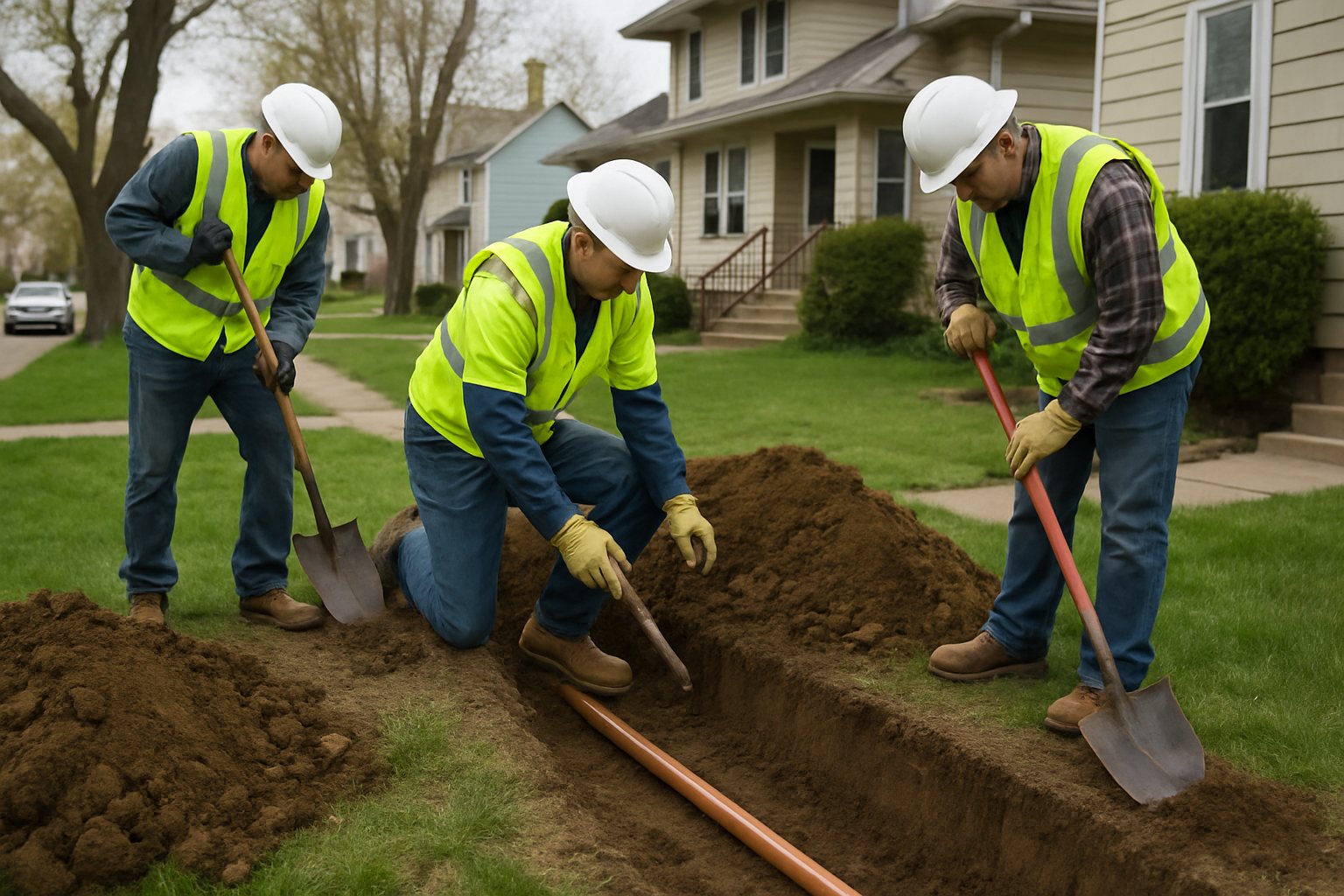
    4. The work. The old line is disconnected at the main and at the house and a new line is installed; Denver Water, for example, installs copper. Your water will be off while the crew connects the new line.
    5. Filter and instructions. Before the new line goes into service, the utility must provide a certified pitcher filter or point-of-use device with six months of cartridges, plus information on reducing exposure. When work disturbs a lead, GRR or unknown line, the rule also requires instructions for a flushing procedure to remove lead particles.
    6. Follow-up test. The utility must offer to test your tap 3 to 6 months after replacement.

    If you decide to replace your side first with your own plumber, coordinate with the utility before you start. Under EPA rules, when a customer replaces the private side of a lead line, the utility must replace its portion within 45 days, or notify the state and do it within 180 days. Hire a licensed plumber and pull any required permit; for a broader lead assessment of the home, see find a lead professional.

    Flushing and filtering after replacement

    Construction can shake loose lead particles from the old pipe and from your home’s plumbing, and EPA’s advisers found lead can stay elevated for a period after any replacement. The rule requires utilities to give flushing instructions when they disturb a lead, GRR or unknown line, so ask for them and follow them exactly; they vary by utility. In general:

    • Flush as instructed before using the water, typically running cold water through the taps for a set time, and clean faucet aerators afterward, since lead particles can collect in the screens (EPA).
    • Use the certified filter for drinking, cooking and baby formula for at least six months, and change cartridges on schedule. Filters certified to NSF/ANSI 53 for lead are the ones to use; see lead water filters and best water filters for lead.
    • Use cold water only for drinking and cooking. Boiling does not remove lead.
    • Retest. Accept the utility’s follow-up test, or test yourself with a certified lab. Our guide on how to test water for lead covers first-draw samples, and best lead water test kits compares options.
    • Check fixtures. A new service line does not fix old brass faucets or lead solder inside the house. If tests stay high, ask a plumber to look at interior plumbing.
    Pitcher pick

    Brita Elite Replacement Filter, 1 Pack

    • OB06 on NSF's lead listing with Tidal and Pacifica pitchers
    • 120 gallons or about 6 months
    • About $20, seen October 2026
    Check price on Amazon
    Retest after the work

    Tap Score Lead & Copper in Water Test Kit

    • Sample goes to a lab for analysis
    • Prepaid return shipping
    • About $59, seen October 2026
    Check price on Amazon

    Use the filter your utility provides first. If you buy your own, check that it is certified to NSF/ANSI 53 for lead; Brita says the Elite filter’s certification applies in the pitcher models listed on its performance data sheet. If anyone in the home is pregnant or a young child, ask your doctor whether a blood lead test makes sense; more in lead and health.

    For the full picture on lead in water, from testing to filters, start at our lead water testing hub.

    Frequently asked questions

    How long do utilities have to replace lead service lines?

    Under EPA’s Lead and Copper Rule Improvements, most must replace all lead and GRR lines under their control within 10 years, with most requirements starting November 1, 2027. States can set shorter deadlines, and a few systems with very many lead lines can get longer ones.

    Do I have to pay for lead service line replacement?

    It depends on your utility. Some, like Denver Water, replace lines at no direct cost; others offer free replacement to income-eligible owners or share costs. Federal funds can cover the whole line regardless of ownership, so ask your utility what applies to you.

    Can I replace my side of the line myself?

    Hire a licensed plumber rather than doing it yourself, and talk to your utility first so the public side is replaced too. Under EPA rules the utility must then replace its portion within 45 days, or within 180 days after notifying the state.

    Is my water safe right after a lead line is replaced?

    Lead can be higher for a while after any replacement. Follow the flushing instructions, use the certified filter for six months and retest.

    What is a partial lead service line replacement?

    Replacing only one part of a lead line, usually the utility’s side, and leaving the rest. EPA’s 2024 rule generally prohibits it except during emergency repairs or planned infrastructure work, because it is often followed by short-term lead spikes.