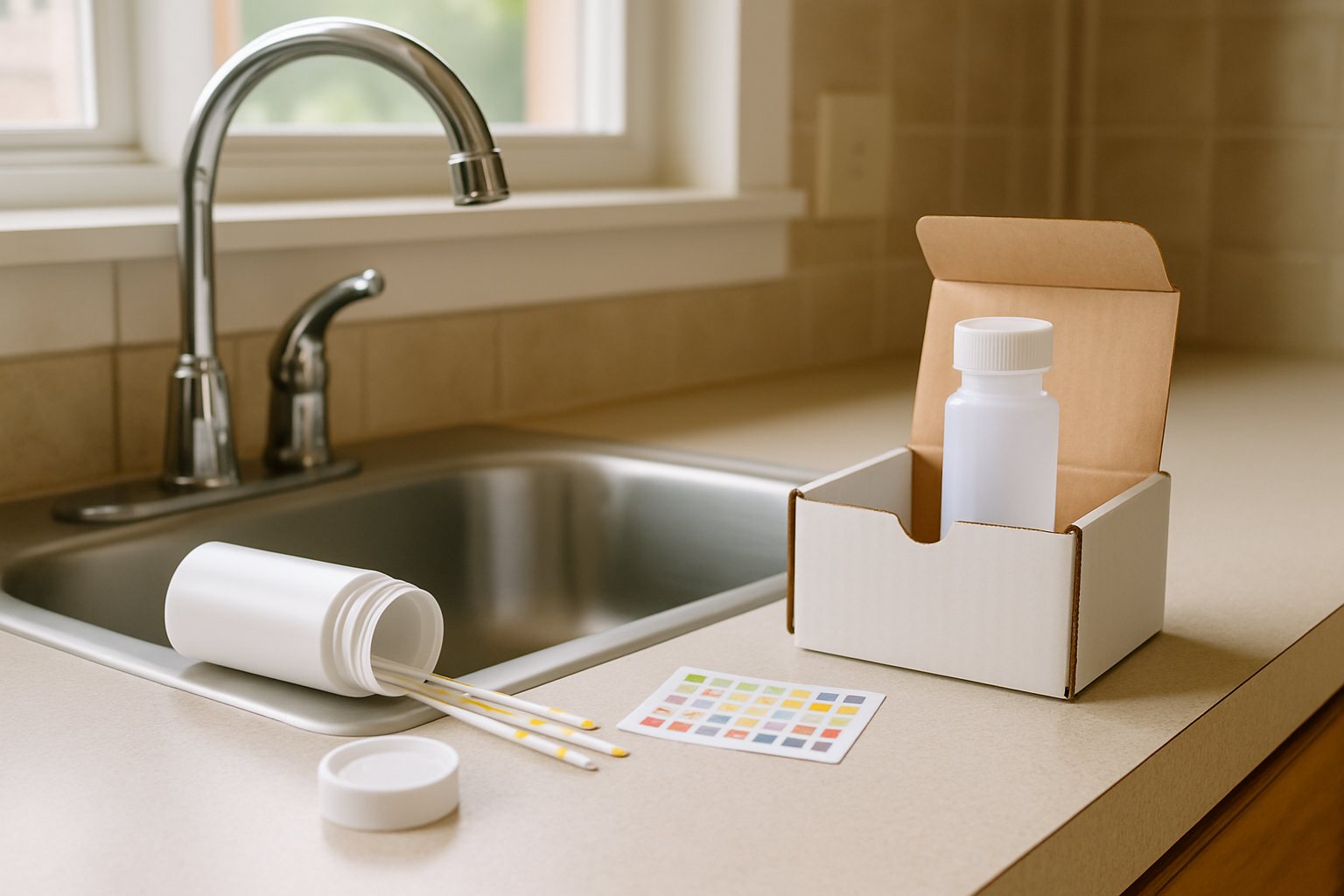
The most reliable lead water test kit is one where a state-certified laboratory analyzes your sample, because lead in drinking water matters at levels of a few parts per billion and only a lab reports an actual number at that level. A home strip or cassette test is a quick, cheap first look: it can tell you roughly whether lead is above or below a threshold, but not how much, and not why. This guide compares both kinds, using the detection limits each maker publishes, and explains what a strip can and cannot tell you.
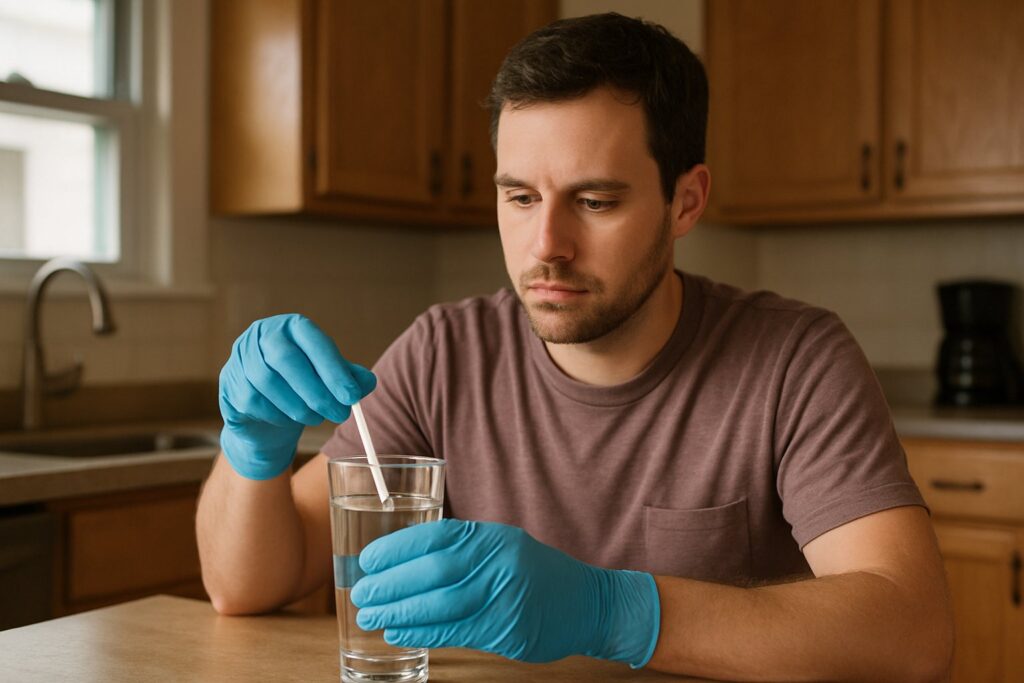
In short: lead cannot be seen, tasted or smelled, and EPA says testing is the only sure way to know whether there is lead in your water. Home kits such as Safe Home’s DIY test (ranges 0–4, 5–15 and 15+ ppb) and Watersafe (detects “below 5 ppb”) give a screening answer in minutes for about $19–$20. Mail-in kits such as Tap Score (about $55–$59) or Safe Home’s lab option send your water to a lab. Before you buy anything, call your water utility: many test for lead, and EPA says tests cost about $20 to $100.
Why a few parts per billion matter
EPA has set the health-based goal for lead in drinking water (the MCLG) at zero, because lead is toxic even at low exposure, and EPA and CDC agree there is no known safe level of lead in a child’s blood. The number you often hear, 15 parts per billion (ppb), is the action level under the Lead and Copper Rule. It is a trigger for water systems, not a safe limit: if more than 10% of a utility’s tap samples exceed it, the system must take extra steps such as improving corrosion control, informing the public and replacing lead service lines. EPA revised the rule again in 2024.
Lead usually gets into tap water on its way to you, from corroding lead service lines, lead solder, and faucets and fixtures. EPA says lead pipes are more likely in older cities and in homes built before 1986. That means two homes on the same street can get different results, and your utility’s average does not describe your tap. Our lead pipes guide shows how to check what your service line is made of.
Home strip tests vs certified lab kits
| Home strip or cassette test | Mail-in lab kit | |
|---|---|---|
| What you get | A color or line read against a threshold or range | A measured concentration, usually in ppb or mg/L |
| Time | 5–15 minutes | Days: shipping plus lab turnaround |
| Typical price seen (Oct 2026) | About $19–$23 per test | About $55–$70 for lead (and often copper) |
| Who analyzes | You, by eye | A laboratory, ideally certified by your state for drinking water |
| Good for | A first screen; checking a tap after a change | A number you can act on, compare over time and show to a landlord or utility |
| Main limits | Reading is subjective; a single threshold; makers’ accuracy claims are their own | Slower; the result depends on collecting the sample exactly as instructed |
The lead water test kits, compared
| Kit | Type | Detection as published by the maker | Lab claims (maker’s wording) | Price seen (Oct 2026) |
|---|---|---|---|---|
| Safe Home DIY Lead in Drinking Water Combo | Home test plus optional lab sample | Ranges 0–4, 5–15, 15+ ppb; results in 5 minutes | “EPA-certified” lab; certified in Indiana and Kentucky; lab fee extra | $19.99 |
| Watersafe Lead in Drinking Water (Silver Lake Research) | Home test strip | Detects lead “below 5 ppb”; 8 minutes | Says accuracy was verified by a third-party lab using EPA Method 200.8 | $18.99 |
| Tap Score Lead and Copper Water Test (SimpleLab) | Mail-in lab kit | Lead and copper measured by a lab; detection limit not stated on the product page | Lab network with “accreditations ranging from ISO to NELAC/ELAP” and state certifications | $55 on Tap Score’s site; $59 on Amazon |
| Safe Home Lead in Drinking Water, in-lab single test | Mail-in lab kit | “Down to 1 ppb”; results in about 3–5 business days | “EPA-Certified Laboratory” | $69.95 on Safe Home’s site |
| Your utility or a state-certified lab directly | Lab analysis | Set by the lab’s approved method | Listed on your state’s certified-lab list | Often free from utilities; EPA says about $20–$100 |
Safe Home DIY Lead in Drinking Water Combo
Safe Home’s combo kit contains one home test for dissolved lead and, in the same box, a second kit for mailing a water sample to the company’s lab. The home test reports one of three ranges, 0–4 ppb, 5–15 ppb or 15+ ppb, in about five minutes. That is more useful than a single pass/fail line, because it separates “nothing detected at this sensitivity” from “detected but below the action level.” The lab analysis costs extra. Safe Home describes its lab as EPA-certified and, on its own site, says the lab is certified in Indiana and Kentucky, adding that some states require a state-certified lab. If you live elsewhere and need a result for a landlord, a sale or a child care program, ask whether your state accepts it.
Watersafe Lead in Drinking Water Test
Watersafe, made by Silver Lake Research, is a single-use strip test: add the water, insert the strip, and read it after eight minutes. The maker says it detects lead below 5 ppb, that it is made in the U.S. in an FDA-registered facility, and that its accuracy was checked by a third-party lab using EPA Method 200.8, the standard lab method for metals in drinking water. We could not find that third-party data published, so treat the accuracy claim as the maker’s. Like any strip, it tells you whether lead is present above its threshold, not the concentration.
Tap Score Lead and Copper Water Test
Tap Score, from SimpleLab, sends you sampling materials and a prepaid return label; a lab in its network measures lead and copper, and you get a written report, plus a pH strip to use at home. Tap Score lists results in about five business days after the lab receives the sample. On its lab claims, Tap Score says every lab in its network is certified, “with accreditations ranging from ISO to NELAC/ELAP, Direct State, DoD, DoE, DoH and beyond.” The product page does not name which lab will test your sample or publish its reporting limit for lead, so if you need that (for example, to compare with a later test), ask before you sample. Copper is a useful extra: it is covered by the same Lead and Copper Rule.
What “certified lab” should mean for drinking water
Drinking water labs in the U.S. are certified mainly by the states. Under the Safe Drinking Water Act, a state that runs its own drinking water program must certify laboratories or have its own certified lab; EPA’s regional offices certify each state’s principal lab and the labs in states without that authority. To stay certified, a lab must use EPA-approved methods, pass proficiency tests each year for each method, and pass on-site audits. EPA does not test home water on request; it encourages people to contact a state-certified drinking water laboratory, and it publishes each state’s list of certified labs.
So “EPA-certified” on a test kit box is shorthand at best. What you want to know is: which lab, certified by which state for lead in drinking water, using which method. A good lab or kit company will tell you. If the answer is vague, choose a lab from your own state’s list. Our how to test water for lead guide walks through finding one.
Lead water test kits we would buy
These were in stock on Amazon when checked in October 2026. Prices change; check the listing.
Safe Home DIY Lead in Drinking Water Combo Test Kit
- Home test: 0-4, 5-15, 15+ ppb in 5 minutes
- Optional mail-in lab sample, fee extra
- About $20, seen October 2026
Watersafe Lead in Drinking Water Test Kit
- Maker: detects lead below 5 ppb
- Result in 8 minutes, single test
- About $19, seen October 2026
Tap Score Lead and Copper Water Test Kit
- Lead and copper measured by a lab
- Prepaid return shipping, written report
- About $59, seen October 2026
We skipped the many 15- to 23-in-1 strip packs that include a lead pad among chlorine, hardness and pH. Some list a lead range, but few publish a detection limit or validation, and a pad designed to cover many chemicals is not a substitute for a dedicated lead test. Compare every option on our lead test kits hub.
What a strip can’t tell you
- How much lead. A strip reads against a threshold or a range. “15+ ppb” could mean 16 or 160, and the right next step can differ.
- Lead it is not designed to see. Safe Home describes its home test as a test for dissolved lead. Lead can also come out of pipes as tiny particles; EPA’s guidance on lead filters asks for particulate reduction certification for that reason. A dissolved-lead test is not designed to measure them.
- Where the lead comes from. A single sample can’t separate a lead service line from a brass faucet. Utilities and labs use sampling sequences for that.
- Whether the water is “safe.” No home kit can certify water as safe to drink. EPA’s goal for lead is zero.
- Tomorrow’s result. One test is one sample at one moment. Repeat tests, and a lab test, give a fuller picture.
Strips are also read by eye, so lighting, timing and color perception affect the answer. Follow the kit’s timing exactly, and read the result in daylight.
Getting an accurate sample
Whatever kit you use, the sample matters as much as the test. Follow the kit’s or lab’s instructions to the letter, especially on how long the water must sit unused beforehand and whether to collect the very first water out of the tap. Use the cold-water tap you drink from, don’t remove the aerator unless told to, and label the sample with the date and time. If you have a filter, test unfiltered water to learn what is in your plumbing, and filtered water separately to check the filter. Your utility can tell you how it samples for the Lead and Copper Rule, which helps you compare.
If lead shows up
- Confirm with a lab if your first result came from a strip, so you know the number.
- Call your water utility. Ask about your service line and its testing or replacement program. See lead service line replacement.
- Use a filter certified for lead for drinking and cooking water in the meantime. EPA advises using a filter certified to remove lead, following its replacement directions, and not running hot water through it. See best water filters for lead and the lead water filters hub.
- Ask about blood testing if young children or someone pregnant has been drinking the water. Talk to your doctor or local health department, and see lead poisoning and blood lead test.
For the bigger picture on water, including how utilities test and what the rules require, start at our lead water testing hub. For when a home kit is enough and when it isn’t, see home lead test vs lab testing.
Frequently asked questions
Are home lead water test strips accurate?
They can flag lead above their published threshold, which for the better kits is around 4–5 ppb. Their accuracy figures come from the makers, they don’t give a concentration, and they can’t certify water as safe. Use them as a screen and confirm with a state-certified lab.
What level of lead in water is safe?
EPA’s health-based goal for lead in drinking water is zero. The 15 ppb action level is a trigger for utilities to act, not a safe level.
Can my water company test for lead for free?
Many utilities offer lead testing or can point you to a lab. EPA’s advice is to contact your water utility and to get a list of certified labs from your state or local drinking water authority.
Should I test well water differently?
The same kits work on well water. Private wells aren’t tested by a utility, though, so plan regular lab tests through a state-certified lab, and ask your local health department what else to test for.
Can I use a water test kit on dishes or paint?
No. Water kits are made and checked for water. For paint, see best lead paint test kits; for dishes, see lead in pottery and dishes.