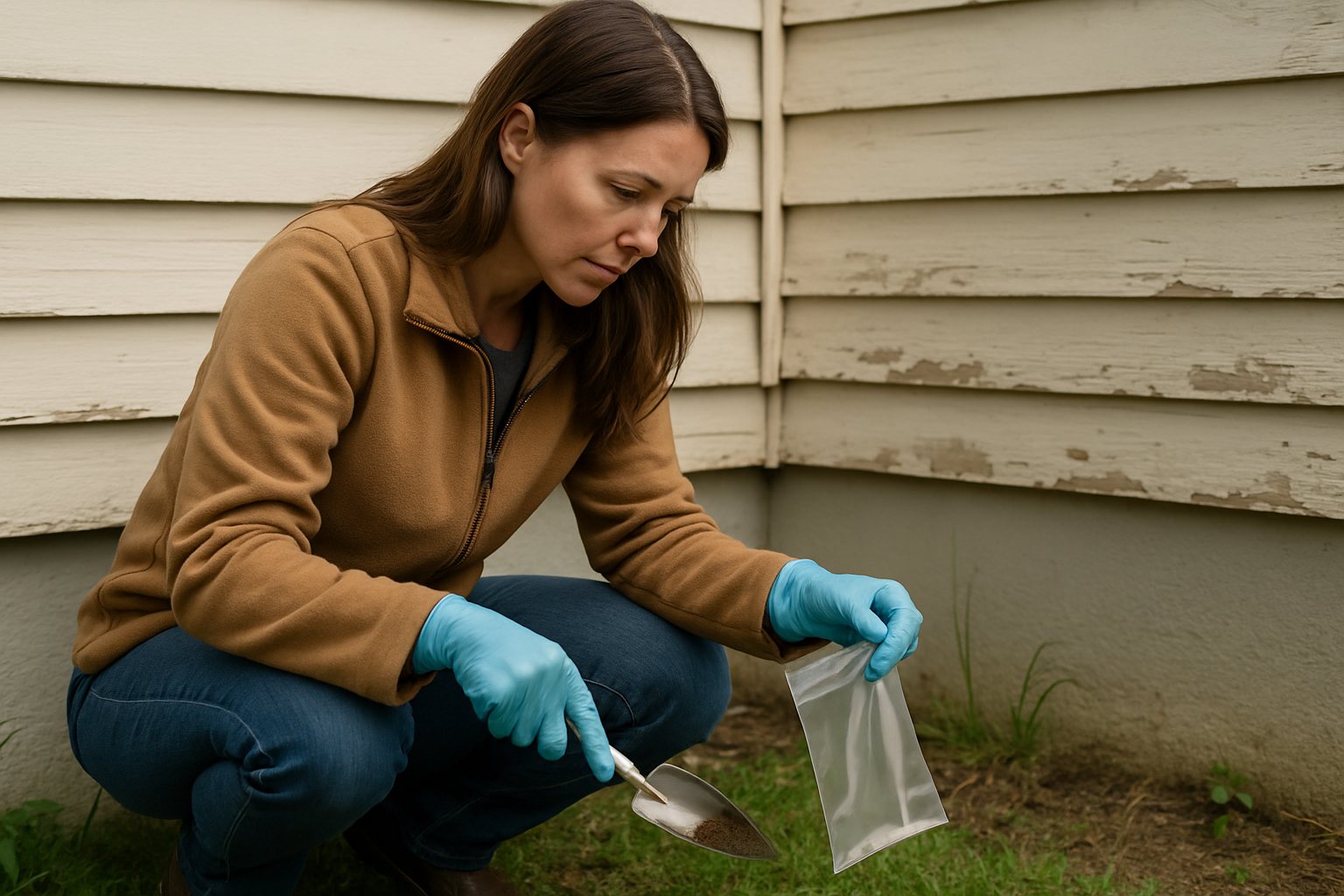
Tag: Nllap

  • Lead in Soil Test: EPA Levels, Where to Sample and Which Labs

    Lead in Soil Test: EPA Levels, Where to Sample and Which Labs

    The most reliable lead in soil test is a laboratory analysis of soil you collect from the spots that matter: where children play, along the drip line of an older house, and in the vegetable garden. Many university extension soil labs test for lead for a modest fee, and EPA-recognized commercial labs do too.
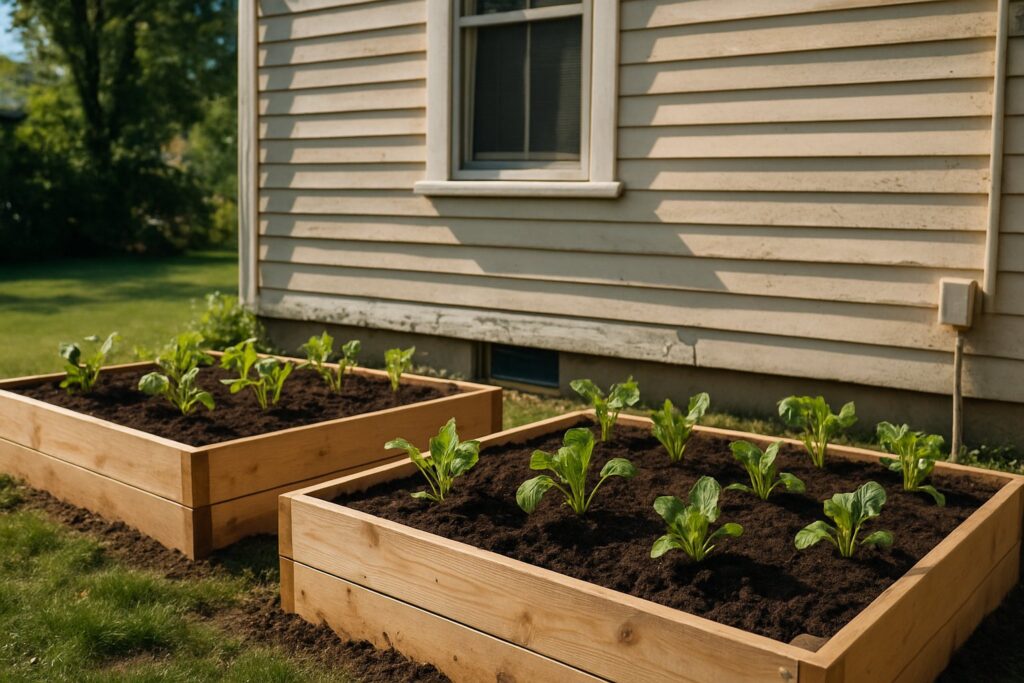
    Raised garden beds with fresh soil next to an older house

    In short: under EPA’s lead hazard rules, bare soil is a hazard at 400 parts per million (ppm) or more in a children’s play area, or an average of 1,200 ppm in the rest of the yard. For gardens, EPA advises caution as levels approach 200 ppm, raised beds with clean soil from 200 to 400 ppm, and not using the existing soil for food above 400 ppm. Separately, EPA uses 200 ppm as a screening level at Superfund and similar cleanup sites. Sample play areas, the foundation and the garden separately, and send the samples to an extension lab or an NLLAP-recognized laboratory.

    Soil lead reference levels (parts per million)
    2004006001,200
    • 200 ppm EPA cleanup screening level
    • 400 ppm Hazard: children's play areas
    • 600 ppm EPA cleanup removal level
    • 1,200 ppm Hazard: rest of the yard

    Cleanup levels apply at Superfund and RCRA sites; the hazard levels are EPA's home standards. Source: EPA (40 CFR 745.65; 2025 soil lead directive)

    Why lead ends up in yards

    Lead is a natural element, and soil always contains a little. UConn Extension says undisturbed Connecticut soils typically hold 10 to 60 ppm from the parent rock. Much higher levels usually come from people. EPA lists the usual sources: past exhaust from leaded gasoline near roadways, the outside of older buildings painted with lead-based paint or fitted with lead gutters and flashing, and industrial sites such as smelters and battery plants. Because lead is an element, it stays in the soil long after the source is gone.

    Children and adults can swallow soil while playing or gardening, eat produce grown in contaminated soil, or carry soil indoors on shoes, clothes and pets, where it becomes part of household dust. That link is why soil and dust are tested together in a professional risk assessment. Our lead dust testing guide covers the indoor side.

    EPA soil lead levels, and which one applies to you

    You will see several EPA numbers quoted online. They come from different programs and are used for different decisions:

    NumberWhat it isWhere it applies
    400 ppmSoil-lead hazard for bare soil in a children’s play areaRisk assessments and abatement in pre-1978 homes and child-occupied facilities (40 CFR 745.65)
    1,200 ppm (average)Soil-lead hazard for bare soil in the rest of the yardSame rule
    400 ppm or lessMaximum lead in replacement soil after soil abatementCertified abatement work (40 CFR 745.227)
    200 ppmRegional screening level for residential soilSuperfund and RCRA hazardous waste cleanup sites (EPA directive of October 16, 2025)
    600 ppmRegional removal management level for residential soilSame cleanup sites
    About 200, 200 to 400, over 400 ppmGardening advice tiersEPA’s healthy gardening guidance for home gardens

    The cleanup-site numbers changed recently. EPA’s January 2024 updated soil lead guidance for Superfund and RCRA sites has been superseded by a directive issued on October 16, 2025, which sets a regional screening level of 200 ppm and a removal management level of 600 ppm for residential soil, and uses a target child blood lead level of 5 µg/dL to set cleanup goals. These numbers guide federal cleanups. They are not limits for ordinary home yards, but UConn Extension notes they are useful reference points for homeowners.

    Soil results are given in ppm or milligrams per kilogram (mg/kg). They are the same thing: 100 ppm equals 100 mg/kg.

    Where to sample in your yard

    Federal rules for risk assessors call for soil samples from three areas where bare soil is present: children’s play areas, the rest of the yard, and the drip line or foundation area. For your own testing, keep each area as its own sample so a high result points somewhere useful.

    • Play areas. Any bare patch where children sit, dig or play. UConn Extension advises collecting the top 1 to 2 inches here, because children touch surface soil.
    • Drip line and foundation. The strip under the eaves of a pre-1978 house, garage or shed, where old exterior paint has weathered and fallen. UConn suggests separate samples by distance from the foundation: 1 to 3 feet, 4 to 7 feet, 8 to 15 feet and more than 15 feet. Do not mix soil from right next to the house with soil farther out.
    • Vegetable gardens. Sample the root zone, the top 6 to 8 inches, per UConn. If parts of the garden have different histories, sample them separately.
    • Near roads and driveways. EPA advises keeping food gardens at least 10 feet from buildings, roads and driveways, where lead levels are likely higher. A sample here tells you how much room you have.

    How to collect a soil sample

    1. Use clean tools. A plastic or stainless steel trowel and a clean plastic bucket. UConn warns against galvanized buckets, brass fittings, painted containers and dirty tools, which can add lead.
    2. Take 6 to 12 small subsamples from different spots in one area, at the depth for that area.
    3. Remove grass, roots and stones, then mix the subsamples well.
    4. Bag about one cup of the mix and label it clearly, for example “front of house, 1 to 3 ft”.
    5. Follow the lab’s own form. Labs differ. The University of Minnesota lab, for example, asks for a separate sample for its lead test and gives its own depth instruction on its 2026 form.

    Professional samplers use the same idea of a composite sample. HUD’s Guidelines describe taking soil cores and keeping only the top half inch for analysis in play areas and along the building perimeter.

    Where to get soil tested for lead

    EPA says the best way to test soil is to send samples to a laboratory qualified to measure lead, such as one recognized under its National Lead Laboratory Accreditation Program, and notes that many state university agricultural departments and extension offices test soil for lead at a cost. Some local health departments offer soil testing, and ATSDR runs soilSHOP events where residents can have garden soil screened.

    Extension soil labs we confirmed offer a lead test (prices as listed when checked in October 2026; they change):

    LabLead test offeredListed price
    University of Maine, Maine Soil Testing ServiceLead Scan (total soil lead by nitric acid extraction); Total Sorbed Metals Package including lead by EPA 3050B; the Standard Soil Test includes a metals scan$12 lead scan; $60 metals package; $20 standard test (price list revised June 2026)
    Penn State Agricultural Analytical Services LabTotal Sorbed Metals Test: cadmium, copper, lead, nickel, chromium and zinc by EPA 3050B + 6010, results only$90
    UConn Soil Nutrient Analysis LaboratoryLead screen with nutrient analysis, and a total sorbed metals testSee the lab’s fee list
    UMass Soil and Plant Nutrient Testing LaboratoryRoutine analysis includes a lead screen; Total Sorbed Metals test for definitive valuesSee the lab’s fee list
    University of Minnesota Soil Testing LaboratoryLead test on its lawn and garden formSee the lab’s current form for the price

    If your own state university runs a soil lab, check it first. Before mailing to a lab in another state, confirm on its form that it accepts out-of-state samples.

    Lead screen or total lead?

    Some Northeast labs add a lead screen to routine nutrient tests. UConn Extension explains that the screen measures an extractable part of soil lead and estimates the total from it, so it should be treated as a screening tool. The total sorbed metals test uses a strong acid digestion (EPA Method 3050B). UConn recommends the total test when you need a defensible number, such as for a real estate deal, a community garden assessment, or to confirm a high screen.

    EPA-recognized labs and mail-in kits

    EPA’s NLLAP list shows which recognized labs analyze soil and which are open to the public. The Wisconsin Occupational Health Laboratory, for example, lists $40 per soil sample at normal turnaround for homeowners. Mail-in kits on Amazon bundle the sampling supplies, return shipping and lab fee (checked October 9, 2026, In Stock that day):

    NLLAP-listed lab

    Schneider Labs Lead Test Kit: Paint, Dust or Soil (1 sample)

    • 1 soil, paint or dust sample
    • Lead by EPA Method 7000B
    • Results 5 business days after arrival
    Check price on Amazon
    Lead plus 8 metals

    SimpleLab Heavy Metals in Soil Test

    • 1 soil sample
    • Lead, arsenic, cadmium and 6 more
    • EPA 6010/6020, report in 10 business days
    Check price on Amazon

    Schneider Laboratories in Richmond, Virginia is on EPA’s NLLAP list for soil. SimpleLab says its analysis is done by a certified laboratory under ISO 17025 but its listing does not name the lab. Instant soil test strips also exist; we have not found independent data on how they compare with lab results, so treat any strip as a rough screen and confirm with a lab. See home test vs lab testing.

    If a child under six lives in or often visits a pre-1978 home, a certified risk assessor can test soil, dust and paint together and tell you which hazards come first. Use our find a lead professional page.

    Gardening on soil with lead: EPA advice

    EPA says one of the best ways to protect yourself when gardening is to use raised beds filled with clean soil, and that gardens in yards with some lead can still be safe with proper care. Its advice by test result:

    Soil resultEPA advice
    Approaching 200 ppmExercise caution: wash hands, produce and clothes after gardening; wear gloves; limit gardening if pregnant or nursing. Deep-root plants go in raised beds.
    200 to 400 ppmModify the soil: raised beds of clean soil and compost, cover bare soil with mulch or ground cover, peel root vegetables, grow root and shallow-root crops in raised beds. Deep-root plants not recommended unless in containers.
    Over 400 ppmDo not use the existing soil: grow only shallow-root plants in raised beds with at least 16 inches of clean soil on top of garden fabric, or use containers. No root vegetables unless in containers. Add clean soil and compost every year.

    Other EPA tips for any garden near older buildings or roads:

    • Wash all produce, peel root crops such as carrots, beets and radishes, and throw away the outer leaves of leafy vegetables. EPA notes root vegetables and leafy greens take up more lead than fruits like tomatoes, peppers and cucumbers.
    • Keep soil pH near neutral (6.5 to 7.5) to limit lead uptake by plants, and use mulch to keep dust down and soil off crops.
    • Bring in compost or manure from outside sources such as garden centers.
    • Wear gloves, keep children and pets out of the garden while lead levels are unknown, store tools outside, and take shoes off at the door.

    If the yard itself tests high

    For play areas and bare yard soil, EPA suggests covering contaminated soil with a thick layer of clean soil, vegetation, mulch or other material, keeping children away from bare soil next to pre-1978 buildings, using doormats inside and outside, and wiping pets’ paws. A permanent fix is soil abatement by a certified firm: removing the soil and replacing it with soil at or below 400 ppm, or permanently covering it. See lead abatement.

    Soil results tell you about the yard, not about anyone’s health. If you are concerned a child has swallowed soil or dust, ask your doctor about a blood lead test, and read more on lead poisoning. For the overview of dust and soil, visit our lead dust and soil testing hub.

    Lead in soil test FAQ

    What level of lead in soil is safe?

    EPA does not name a safe level. Its hazard standards are 400 ppm for bare soil in play areas and an average of 1,200 ppm elsewhere in the yard, and its gardening advice starts urging caution as levels approach 200 ppm.

    How much does a lead in soil test cost?

    At the labs we checked in October 2026, from $12 for a lead scan (University of Maine) to $90 for a total sorbed metals test (Penn State), and $40 per sample at the Wisconsin Occupational Health Laboratory. Mail-in kits on Amazon cost more because they include supplies and shipping.

    Is the 200 ppm EPA level the limit for my yard?

    No. 200 ppm is a screening level for Superfund and RCRA cleanup sites. For homes, EPA’s hazard standards are 400 and 1,200 ppm, while its gardening guidance uses 200 and 400 ppm as decision points.

    Can I test soil with a lead paint swab?

    No. EPA recognizes swab kits only for paint on certain surfaces. Soil needs a laboratory test.

    Is it safe to eat vegetables from my garden?

    It depends on your result and what you grow. Test first, then follow EPA’s tiers above: below about 200 ppm with good habits, raised beds from 200 to 400 ppm, and raised beds or containers only above 400 ppm.
  • Lead Dust Testing: Wipe Tests, EPA Levels and Who Can Test

    Lead Dust Testing: Wipe Tests, EPA Levels and Who Can Test

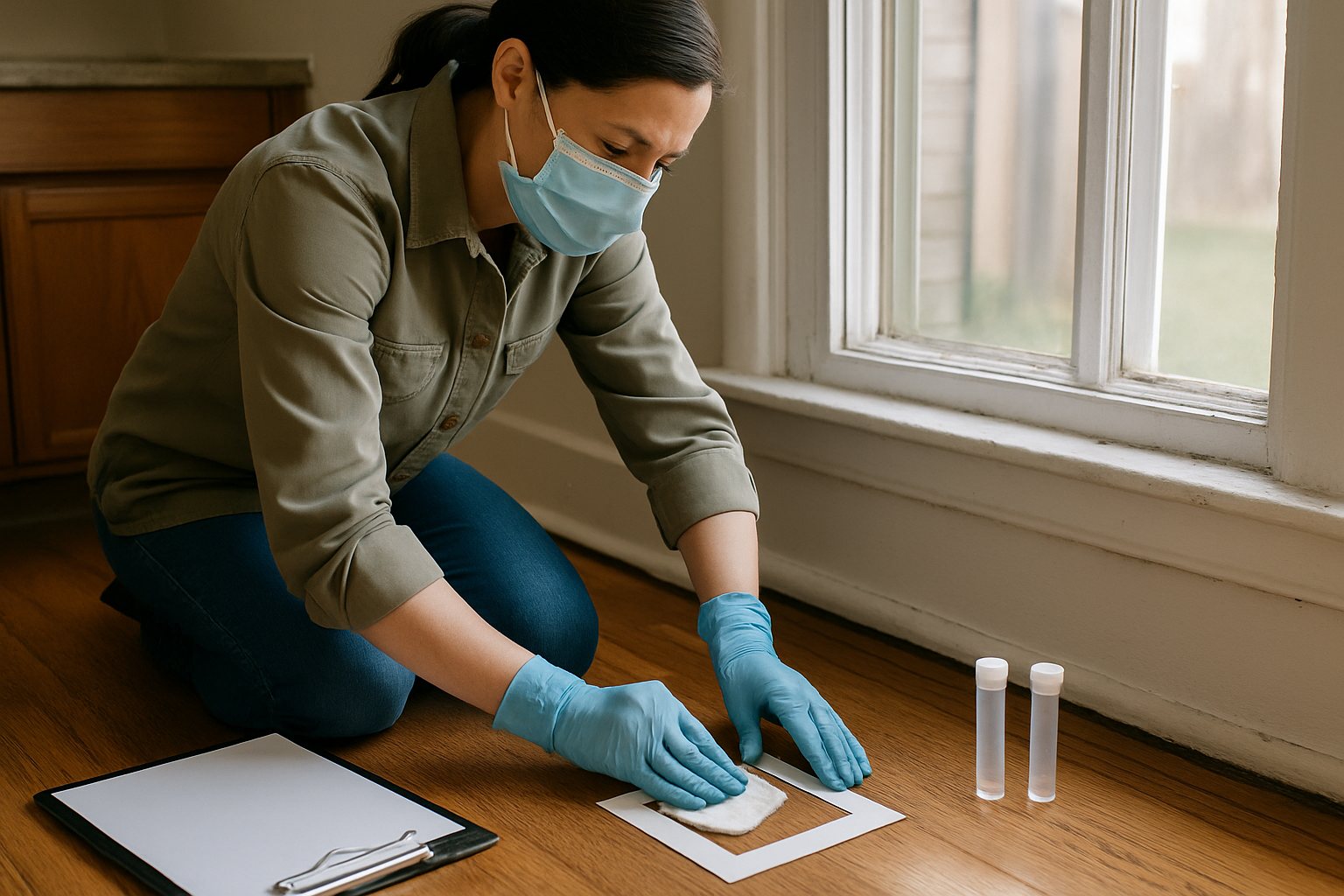
    A lead dust test is a wipe sample: a special moist wipe is pressed over a measured patch of floor, window sill or window trough, sealed in a tube and sent to a laboratory that reports how many micrograms of lead were on each square foot. It is the most direct way to find out whether the lead in an older home is actually reaching the places children crawl and put their hands.

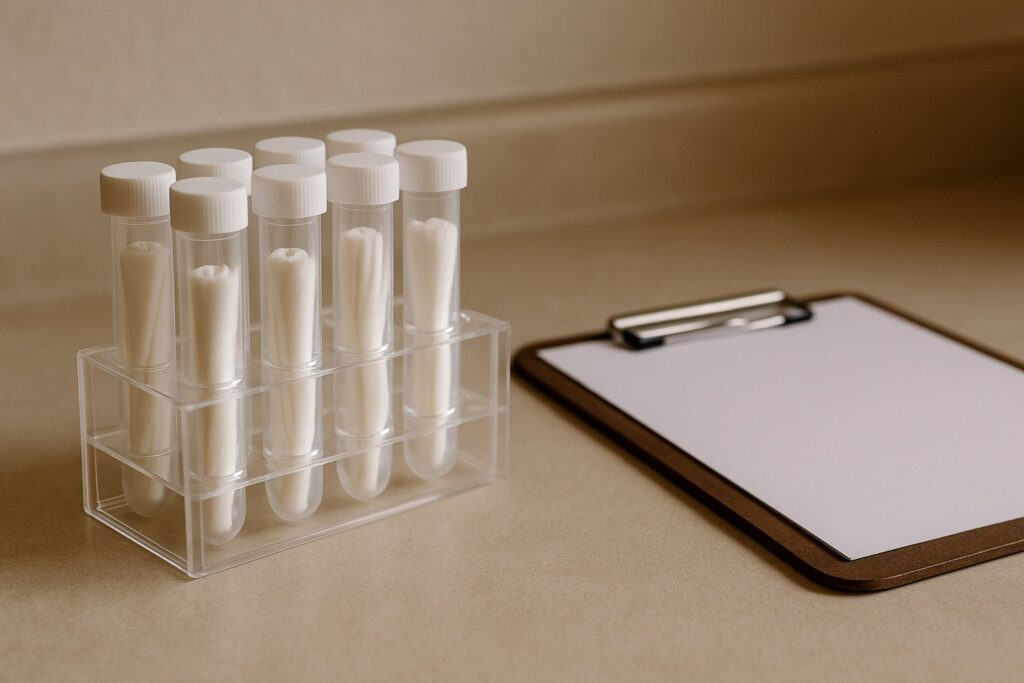
    Dust wipe sample tubes ready for a lab

    In short: since January 12, 2026, in states where EPA runs the lead program, any lead a recognized laboratory can report in floor or window sill dust counts as a dust-lead hazard during a risk assessment, and work after an abatement only passes clearance below 5 µg/ft² on floors, 40 µg/ft² on window sills and 100 µg/ft² in window troughs. You can collect a wipe yourself with a mail-in kit for your own information, but only a certified risk assessor or inspector can produce an official result. Send any sample to a lab in EPA’s National Lead Laboratory Accreditation Program (NLLAP).

    EPA dust-lead clearance levels after lead abatement (since Jan 12, 2026)
    Floors5 µg/ft²
    Window sills40 µg/ft²
    Window troughs100 µg/ft²

    Any reportable level of lead in floor or window sill dust is now a dust-lead hazard. Source: EPA, 40 CFR 745.65 and 745.227

    Why lead dust matters more than the paint you can see

    Lead paint in good condition on a wall is not usually the problem by itself. The trouble starts when paint wears, chips or is disturbed, and the fine dust settles on floors and sills. In its 2024 dust rule, EPA describes young children swallowing dust from floors and surfaces through normal hand-to-mouth behavior as the main pathway of lead exposure for young children. CDC says the most common source of lead exposure in young children is lead dust, and NIEHS says dust is the most common way people in the US are exposed to lead.

    Window areas get extra attention because opening and closing old windows grinds painted surfaces together. EPA’s homeowner guidance points to surfaces with constant friction, like doors and window sills, as places where old paint produces chips and dust. EPA estimates that about 31 million US homes built before 1978 still contain lead-based paint, and that 3.8 million of them have at least one child under six living there.

    If you are worried that a child has already been exposed, a dust test of the home does not answer that question. Only a blood lead test does. Talk to your child’s doctor or your local health department, and see our guides to the blood lead test and lead poisoning.

    EPA dust-lead standards in 2026

    EPA uses two kinds of dust numbers, and they do different jobs. The first decides whether there is a hazard in a home during a risk assessment. The second decides whether an abatement job is finished. EPA’s final rule of November 12, 2024 changed both. The rule took effect on January 13, 2025, and the new values apply from January 12, 2026 in the states and territories where EPA administers the program.

    What it is forSurfaceBefore January 12, 2026From January 12, 2026
    Dust-lead hazard (now called the dust-lead reportable level)Floors10 µg/ft²Any reportable level from an NLLAP-recognized lab
    Dust-lead hazardInterior window sills100 µg/ft²Any reportable level from an NLLAP-recognized lab
    Clearance after abatement (dust-lead action level)Floors10 µg/ft²5 µg/ft²
    Clearance after abatementInterior window sills100 µg/ft²40 µg/ft²
    Clearance after abatementWindow troughs400 µg/ft²100 µg/ft²

    Source: 40 CFR 745.65 and 745.227 and EPA’s hazard standards page. µg/ft² means micrograms of lead per square foot of surface.

    “Any reportable level” is not a fixed number set by EPA. It is the lowest amount the laboratory can reliably report, so it depends on the lab and the size of the area wiped. EPA says the new action levels are the lowest levels that can be reliably and quickly measured in laboratories, and that they match standards New York City put in place in 2021.

    Two cautions. First, most states run their own EPA-authorized lead programs, and they have two years from the rule’s effective date to update their rules, so check your state program for the values it uses today. Second, EPA’s rules do not force owners to test their homes. They set the numbers that certified professionals must use when they do. Other rules, such as HUD’s requirements for assisted housing and some local laws, can require testing.

    How a dust-wipe sample is taken

    Professionals follow a documented protocol. EPA’s rules accept the HUD Guidelines for the Evaluation and Control of Lead-Based Paint Hazards in Housing, EPA methods and equivalent methods, and the federal definition of a wipe sample points to two ASTM standards: E1728 for how to collect it and E1792 for the wipe material. EPA and HUD’s Lead Dust Sampling Technician Field Guide sums up the steps:

    1. Mark the area. Use a clean 12 x 12 inch template, a disposable template or tape. On floors the tape forms a square; on sills and troughs it runs across the sill. Nobody touches the area inside.
    2. Label the tube. Each sample gets an ID number recorded on the sample form and the chain-of-custody form.
    3. New gloves for every sample. After putting them on, touch nothing but the wipe.
    4. Wipe in three passes. Start at an upper corner and wipe side to side in S-shaped strokes without crossing the edge. Fold the wipe dirty side in and wipe again front to back. Fold again and go over the edges and corners.
    5. Seal and measure. Fold the wipe with the sample side in, place it in the tube and cap it. If no template was used, measure the length and width to the nearest 1/8 inch so the lab can convert the result to µg/ft².
    6. Send it to an NLLAP lab recognized for dust wipes.

    Samples can be single-surface (one wipe per surface) or composite (several areas in one tube). The field guide recommends single-surface sampling when you want results for specific surfaces, and notes that HUD discourages composite sampling when clearing federally assisted housing. For clearance after renovation, the guide calls for one window sill and one floor sample in each room, hallway or stairwell of the work area (up to four), a window trough sample if the windows were not closed and covered, and one floor sample just outside the work area.

    Note that this 2009 field guide prints older clearance numbers. Use the 2026 values in the table above, or the values of your state program.

    Where dust samples are taken in a risk assessment

    In a home risk assessment, federal rules require dust samples from interior window sills and floors in the living areas where children under six are most likely to come into contact with dust. In apartment buildings and child-occupied facilities, common areas are sampled too. A risk assessment also looks at deteriorated paint and bare soil, so dust results arrive in context. See lead paint inspection vs risk assessment for how the visit works.

    DIY wipe kits vs a certified risk assessor

    Mail-in dust kits let you take wipes yourself and pay a lab to analyze them. They can be useful for a parent who wants a first look, or for checking a room again after cleaning. They are not the same as a professional evaluation:

    Mail-in wipe kitCertified risk assessor or inspector
    Who collectsYou, following the kit’s instructionsA certified professional following a documented protocol
    LabWhatever lab the kit uses; check it is NLLAP-recognized for dust wipesMust be an EPA-recognized lab
    What you learnLead per area on the spots you choseDust, paint and soil hazards, their sources and options to fix them
    Official usesFor your information onlyRisk assessments, abatement clearance, programs that require a certified report

    Most kits fail on technique, not chemistry. Wipe a measured area, record its size, use a new glove for each sample and do not let the wipe touch anything else. Your results are only as good as that area measurement, because the lab divides the lead found by the area you report.

    Mail-in kits checked on Amazon on October 9, 2026 (In Stock that day; the price and stock can change):

    NLLAP-listed lab

    Schneider Labs Lead Test Kit: Paint, Dust or Soil (1 sample)

    • 1 paint, dust or soil sample
    • Lead by EPA Method 7000B
    • Results 5 business days after arrival
    Check price on Amazon
    Four wipes

    SimpleLab Lead Dust Surface Wipe Test, 4-Pack

    • 4 surface wipe samples, mailed together
    • EPA 7000B analysis
    • Report in 5 business days
    Check price on Amazon
    For cleaning, not testing

    D-Lead Surface Wipes for Lead Dust Cleanup, 48 ct

    • 48 wipes, 9 x 12 in
    • Listed as meeting EPA wet cleaning cloth definition
    • Cleanup, not a test
    Check price on Amazon

    Schneider Laboratories, Inc. of Richmond, Virginia is on EPA’s NLLAP list for paint chips, soil and dust wipes. SimpleLab’s listing does not name the laboratory that analyzes its dust wipes, so ask before you buy if NLLAP recognition matters to you. The D-Lead wipes are for cleaning surfaces, not for measuring lead. Do not use a color-change paint swab on dust: EPA recognizes those kits only for paint on certain surfaces. Our home test vs lab testing guide explains the difference.

    Finding an NLLAP laboratory

    EPA’s National Lead Laboratory Accreditation Program recognizes labs that show they can accurately analyze lead in paint chips, dust and soil. A lab can be recognized for one, two or all three. EPA’s list, updated monthly, shows each lab’s city, phone, accrediting body, whether it is open to the public, and which of the three sample types it covers. Look for an X in the Dust Wipes column.

    Some labs sell directly to homeowners. For example, the Wisconsin Occupational Health Laboratory in Madison lists $40 per sample for lead in soil, paint or dust wipes at normal turnaround (about 7 working days), with faster options at $60 and $80 (checked October 9, 2026). The National Lead Information Center at 1-800-424-LEAD (5323) can also help you find a recognized lab or a certified professional.

    Reading your results

    • Check the units. Results should be in µg/ft². If the report shows only micrograms per wipe, divide by the area wiped in square feet.
    • “Below reporting limit” means the lab could not reliably measure lead on that wipe. It is the best result you can get.
    • Any reported lead on a floor or sill would count as a dust-lead hazard in a federal risk assessment from 2026. That does not mean an emergency, but it does mean the dust is worth tracking to its source.
    • Compare surfaces. High window troughs with low floors point to windows. High floors near an entrance can point to soil tracked in. See our lead in soil testing guide.

    What to do if your dust has lead

    • Get the source found. A certified risk assessor can tell you whether the dust comes from windows, friction surfaces, deteriorated paint or soil, and lay out options. Use our find a lead professional page.
    • Clean wet, not dry. EPA advises wiping sills and surfaces with a damp cloth or paper towel and wet mopping hard floors. Where there is visible dust or debris from chipping paint, it says to use only vacuums with HEPA filters and not to dry sweep.
    • Don’t sand or scrape old paint yourself. Renovation work in pre-1978 homes can create far more dust. Read lead-safe renovation (RRP) before any project.
    • Consider a permanent fix. Lead abatement by a certified firm ends with clearance testing at the new 5/40/100 levels.
    • Talk to a doctor about a blood lead test for young children or anyone pregnant in the home.

    For the bigger picture on dust and soil, go back to our lead dust and soil testing hub.

    Lead dust test FAQ

    What is a safe level of lead dust?

    EPA does not call any level safe. Its 2024 rule recognizes that there is no safe level of lead in blood, and from 2026 any lead a recognized lab can report on floors or sills counts as a hazard in a federal risk assessment. The 5, 40 and 100 µg/ft² figures are clearance levels for finishing abatement work.

    Can I do a lead dust wipe test myself?

    Yes, with a mail-in kit, for your own information. Wipe a measured area and send it to an NLLAP-recognized lab. For official purposes, such as a risk assessment or clearance after abatement, a certified professional must collect the samples.

    Can a lead swab test dust?

    Not reliably. EPA recognizes the LeadCheck, D-Lead and Massachusetts kits only for paint on specific surfaces. Dust needs a wipe sample analyzed by a laboratory.

    How long do results take?

    It depends on the lab. The kits and lab above list from the next working day (paid rush) to about 7 working days after the sample arrives, plus shipping time.

    Do the 2026 dust levels apply in my state?

    They apply now in states where EPA runs the program: Alaska, Arizona, Florida, Idaho, Montana, Nevada, New Mexico, New York, South Carolina, South Dakota and Wyoming, plus some territories and most Tribal lands. Other states run their own programs and have two years from January 13, 2025 to adopt them. Ask your state lead program.