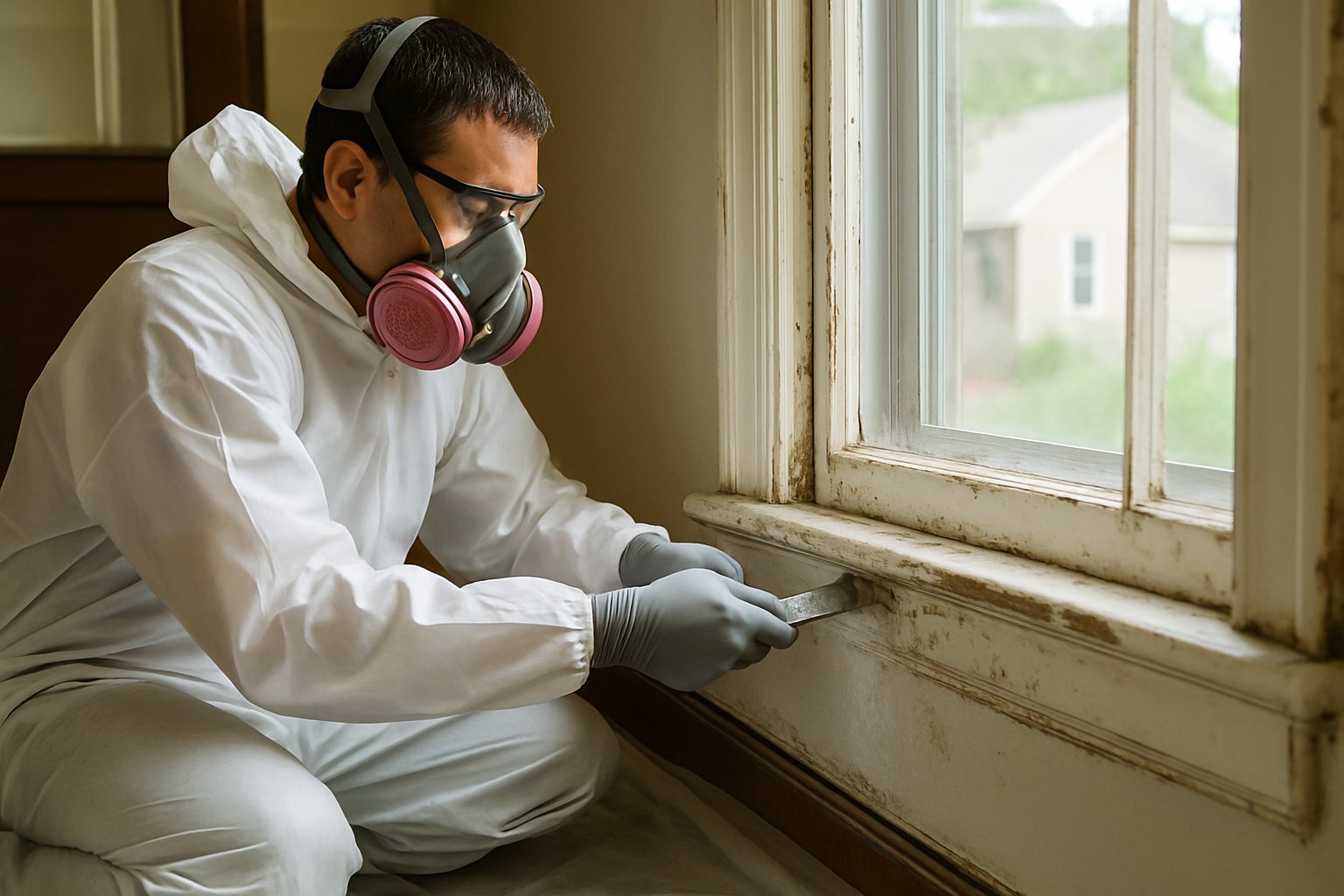
The lead poisoning test for adults is the same as for children: a blood lead test, ordered by a health care provider or done through your employer’s medical program. The CDC says it is the only way to tell whether you have been exposed, and most exposed adults have no symptoms. What matters is whether your work, hobby or home puts you near lead.

In short: adults who work with lead (construction and renovation, battery making and recycling, smelting, firing ranges, welding and cutting, demolition), adults with lead hobbies (shooting, casting bullets or fishing weights, stained glass, lead glazes), and adults who use certain imported remedies, cosmetics or spices should talk to a doctor about a blood lead test. At work, OSHA requires employers to offer free blood lead testing to workers exposed at or above an airborne action level of 30 µg/m³. The CDC does not recommend testing every pregnant woman, but it does recommend a risk assessment at the first prenatal visit and a blood test if even one risk factor is found.
This guide explains what the CDC, NIOSH and OSHA say. It is not medical advice: only a health care provider can decide whether you need a test and what your result means. For urgent questions about a possible poisoning, call Poison Control at 1-800-222-1222.
Which adults should ask about a blood lead test
Most adult lead exposure comes from work. The CDC’s list of jobs that may involve lead includes:
- Repair, renovation, remodeling and painting of homes and commercial buildings, plus abatement and demolition
- Painting or sanding steel structures such as bridges and water towers
- Making products that contain lead, such as batteries, bullets and circuits, and recycling materials such as electronics (NIOSH also names lead-acid battery recycling)
- Melting lead: secondary smelting, foundries and casting, incinerators; and mining or smelting ore
- Using firearms or working at a firing range (law enforcement, military, instructors)
- Welding and cutting, and art work with leaded ceramic glaze, glasswork or stained glass
NIOSH studies have also found lead exposure above OSHA’s limit in radiator repair shops.
Hobbies count too. The CDC names casting or soldering (bullets, fishing weights, stained glass), target shooting, mixing or applying lead glazes and pigments, home renovation in a building from before 1978, and drinking home-distilled liquor such as moonshine. People with bullet fragments retained from a gunshot wound are also on the CDC’s list.
Finally, some products carry lead into the body directly. The CDC lists complementary, alternative or traditional medicines, cosmetics and ceremonial powders that may contain lead; the FDA has warned about kohl (also sold as kajal, surma and other names) and about certain Ayurvedic products; and recalls have involved ground spices, including cinnamon. Our guide to lead in cinnamon and spices covers the food side, and lead poisoning causes and prevention covers the rest.
Who is recommended a test: a quick table
| Your situation | What’s recommended | Source |
|---|---|---|
| Worker exposed to airborne lead at or above 30 µg/m³ (the action level) | The employer must offer blood lead testing (and zinc protoporphyrin) at no cost; periodic testing follows | OSHA 29 CFR 1910.1025 and 1926.62 |
| Construction worker exposed at or above the action level on any day | Initial blood sampling offered by the employer | OSHA 29 CFR 1926.62(j)(1)(i) |
| Worker whose employer does not test | Ask your employer about routine testing; if there is none, talk with your health care provider | CDC/NIOSH Information for Workers |
| Lead hobby (shooting, casting, stained glass, glazes) or pre-1978 home renovation | Contact a health care provider, who decides whether you need a test | CDC Jobs, Hobbies or Other Activities |
| Use of imported remedies, kohl or similar cosmetics | Stop using the product; ask a provider about testing, especially for children and pregnant or nursing women | FDA (kohl); CDC |
| Pregnant, with one or more risk factors | Blood lead test; risk assessment at the earliest prenatal contact | CDC 2010 pregnancy guidelines |
| Breastfeeding parent who works with lead | Also ask the baby’s pediatrician whether you should have a blood lead test | CDC/NIOSH Information for Workers |
Lead exposure at work: what the OSHA lead standards require
Occupational lead exposure in the US is covered by two OSHA standards: 29 CFR 1910.1025 for general industry and 29 CFR 1926.62 for construction. Both set a permissible exposure limit (PEL) of 50 µg/m³ of air and an action level of 30 µg/m³, each averaged over an 8-hour day. The action level is what switches on the blood testing rules. Blood levels below are in µg/dL, as on a lab report.
Blood testing schedule
- General industry: workers exposed at or above the action level for more than 30 days a year get blood lead testing at least every 6 months; every 2 months if the last result was 40 µg/dL or higher (until two results in a row are below 40); and at least monthly while removed from lead work.
- Construction: initial blood sampling for anyone exposed at or above the action level on any day. Workers exposed at that level for more than 30 days in any 12 months are tested at least every 2 months for the first 6 months, then every 6 months; every 2 months while at 40 µg/dL or higher; monthly during removal.
- In construction, tasks such as manual scraping or sanding of lead paint and heat-gun use count as high exposure until measured, with blood monitoring as part of interim protection.
Both standards say the medical surveillance must be provided without cost to employees. In construction, the employer must tell each worker their blood lead result in writing within five working days. In both, workers at 40 µg/dL or higher must be told in writing within five working days, along with the medical removal rules.
Medical removal
| General industry (1910.1025) | Construction (1926.62) | |
|---|---|---|
| Removed from lead exposure at | 60 µg/dL or higher, or an average of the last three tests at 50 µg/dL or higher (not required if the last test was below 40) | 50 µg/dL or higher |
| Return to former job | Two tests in a row below 40 µg/dL | Two tests in a row below 40 µg/dL |
| Medical removal protection | Up to 18 months of benefits (pay, seniority and rights kept) | Up to 18 months of benefits |
Workers also have a right to a second medical opinion, and under the general industry standard a worker can ask for pregnancy testing or a male fertility evaluation as part of the medical exam.
Keep in mind that these numbers date from the 1970s and 1990s. OSHA itself said in 2022, when it opened a rulemaking on the blood lead triggers, that harm in adults can occur below the current removal and return-to-work levels. As of October 2026 OSHA’s page still shows only that 2022 advance notice, with no proposed rule. NIOSH notes that a few state agencies, such as Michigan’s MIOSHA and the California Department of Public Health, have their own blood lead guidance for workers, so check your state. For what health research says about lower levels, see effects of lead poisoning and blood lead levels.
Take-home lead: protecting your family
NIOSH warns that people who work near lead can bring lead dust home on their clothes, shoes and hair, and that children and pregnant women are especially at risk. NIOSH’s advice to workers:
- Change into work clothes and shoes that stay at work, and never leave without cleaning up, even for a quick trip.
- Wash with soap designed to remove lead before eating, drinking or smoking; NIOSH says ordinary soap and water are not enough.
- Shower and wash your hair before leaving if showers are provided; if not, wash as much skin as you can and change clothes and shoes before going home.
- Do not take tools, scrap or packaging home. If work clothes must go home, keep them in a closed plastic bag and wash and dry them alone.
For workers above the PEL, OSHA’s construction standard also requires clean change areas and showers where feasible. If someone in your home works with lead, ask your children’s doctor about testing them; our blood lead test guide explains how it works for children. Home renovators should follow lead-safe renovation (RRP) practices.
Lead test in pregnancy and while breastfeeding
Lead stored in bone can be released during pregnancy and pass to the baby, the CDC says. Its Guidelines for the Identification and Management of Lead Exposure in Pregnant and Lactating Women (November 2010, still linked from CDC’s pregnancy page) say:
- The CDC does not recommend testing all pregnant women. Routine testing is recommended in clinics that serve populations with specific risk factors.
- Elsewhere, providers should assess risk as part of the occupational, environmental and lifestyle history, at the earliest prenatal contact, and test if even one risk factor is found.
- Risk factors named include recent immigration, pica (eating non-food items), work with lead, nutritional status, traditional remedies or imported cosmetics, and lead-glazed pottery used for cooking or storing food. Old paint matters mainly during renovation of older homes.
- Follow-up testing and a search for the source start at 5 µg/dL. The guidelines say pregnant women at 10 µg/dL or higher should be removed from work exposure to lead.
- Breastfeeding: the CDC encourages mothers below 40 µg/dL to breastfeed, and encourages mothers at 40 µg/dL or higher to pump and discard milk until their level drops below 40. CDC’s breastfeeding page says testing breast milk for lead is not recommended.
The American College of Obstetricians and Gynecologists (ACOG) Committee Opinion No. 533 on lead screening in pregnancy also favors a risk assessment over routine testing for everyone. If any of these risk factors apply, tell your provider. Treatment decisions belong to your doctor; do not try supplements or products sold to “remove lead.”
Adult lead surveillance: NIOSH ABLES and your state
NIOSH runs the Adult Blood Lead Epidemiology and Surveillance program (ABLES), which it describes as a state-based surveillance program of laboratory-reported adult blood lead levels. Labs report adult results to participating states, which follow up on high results and track where exposure comes from. Since 2015, NIOSH has used 5 µg/dL as the reference level that marks an elevated adult blood lead level for surveillance. The Council of State and Territorial Epidemiologists (CSTE) uses a reference value of 3.5 µg/dL for adults and children.
How to ask your doctor or employer
- Your employer: NIOSH suggests asking whether they do routine blood lead testing and following their lead control plan. If you are exposed at or above the action level, OSHA requires the employer to offer testing at no cost.
- Your doctor: say plainly what you do: “I scrape paint in old houses,” “I cast my own bullets,” “I use an imported remedy.” NIOSH says lead symptoms look like other illnesses, so your exposure history is what prompts the test.
- Concerns about your workplace: NIOSH offers a free Health Hazard Evaluation on request, and you can contact your nearest OSHA office about unsafe conditions.
Cost and coverage
For workers covered by OSHA’s lead standards, required blood testing is free to the employee. Outside work, the CDC says health care providers and most local health departments can test for lead, and many private insurance plans cover the test. We do not list prices because no official source publishes one; ask your provider, insurer or health department before the test.
Home test kits do not test people. They check paint, dust, soil or water, which helps find a source but cannot replace a blood test. See our lead poisoning test page and the lead poisoning hub.
Frequently asked questions
Is there a lead poisoning test for adults?
Yes. It is a blood lead test, usually a blood draw from a vein, ordered by a health care provider or done through an employer’s medical surveillance program. The CDC says it is the only way to confirm exposure.
Does my employer have to pay for a blood lead test?
If you are exposed at or above OSHA’s action level of 30 µg/m³, the lead standards require the employer to provide medical surveillance, including blood lead tests, without cost to you.
Should every pregnant woman get a lead test?
The CDC does not recommend testing all pregnant women. It recommends a risk assessment at the first prenatal contact and a blood lead test if any risk factor is found, and routine testing where the patient population has known risk factors.