Tag: Rrp Rule

  • Lead Paint Removal: Safe Options, Rules and Real Costs

    Lead Paint Removal: Safe Options, Rules and Real Costs

    Lead paint removal means getting rid of the hazard for good, either by stripping the paint, replacing the painted parts, or covering it permanently. It is not a weekend sanding job: careless removal can spread lead dust and fumes through a home, which is why federal rules ban the riskiest methods outright. In most cases the right answer is a certified professional, a clear plan and a clearance test at the end.
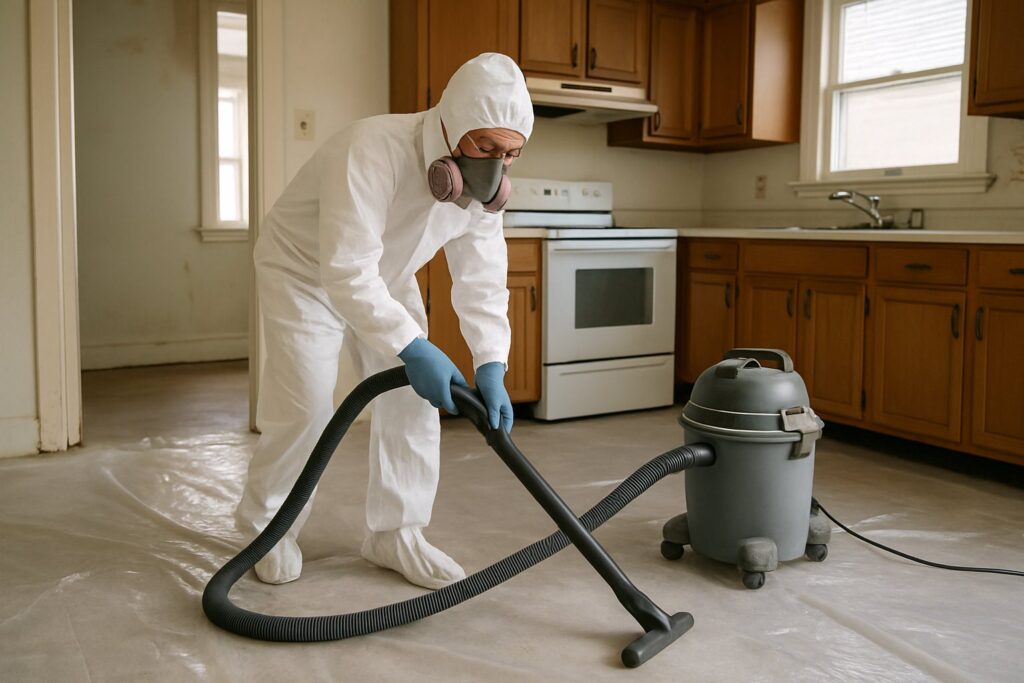
    A worker vacuuming a plastic-covered floor after paint removal

    In short: federal rules split lead paint work into abatement (permanent: removal, replacement, enclosure or encapsulation) and interim controls (temporary: repairs, paint stabilization, specialized cleaning and monitoring). Open-flame burning, torching, and power sanding or blasting without HEPA dust collection are prohibited for professionals, and heat guns must stay below 1,100°F. Contractors paid to disturb paint in pre-1978 homes must be RRP-certified; abatement must be done by certified abatement workers and supervisors. Every abatement ends with a dust clearance test by a certified inspector or risk assessor. Painting over lead paint with ordinary paint is not abatement.

    First, do you need to remove it at all?

    Not all lead paint has to come off. Under EPA’s definition, lead paint is a hazard when it is deteriorated (cracking, chipping, peeling), when it is on friction or impact surfaces like window sashes and door edges, or when it is on surfaces a child can chew, and when it contaminates dust or soil. Before you spend money, confirm what you have: see how to test for lead paint, and ideally get a risk assessment, whose report lists each hazard with interim control and abatement options in order of priority.

    Abatement vs interim controls

    EPA defines abatement as any measure designed to permanently eliminate lead-based paint hazards. It includes removing paint and dust, permanently enclosing or encapsulating lead paint, replacing painted surfaces or fixtures, and removing or permanently covering contaminated soil, plus the preparation, clean-up, disposal and post-abatement testing that go with it.

    Interim controls are measures designed to temporarily reduce exposure: specialized cleaning, repairs, maintenance, painting, temporary containment, ongoing monitoring, and resident education. They cost less up front but need upkeep.

    ApproachWhat it meansPermanent?Good to know
    Paint removal (stripping)Taking the paint off, on site or by removing the part for off-site strippingYes (abatement)Generates the most dust; banned methods apply
    Component replacementReplacing old windows, doors or trim with new onesYes (abatement)Removes the lead along with the part
    EnclosureCovering with rigid, durable construction materials mechanically fastened in placeYes, if maintainedThe lead stays behind the barrier
    EncapsulationCoating with a barrier product made for lead paintYes, if maintainedNot for friction or impact surfaces; see lead paint encapsulation
    Interim controlsPaint stabilization, fixing rubbing doors and windows, wet cleaning, monitoringNoNeeds regular checks and repeat work

    EPA is explicit that painting over hazards with regular paint is not abatement.

    Why DIY sanding, scraping and burning are dangerous

    Removing paint the usual way turns lead into fine dust and fumes. That is why federal rules for professionals restrict these methods.

    For abatement (40 CFR 745.227(e)):

    • Open-flame burning or torching of lead-based paint is prohibited.
    • Machine sanding, grinding, abrasive blasting or sandblasting is prohibited unless used with HEPA exhaust control that removes particles of 0.3 microns or larger at 99.97% efficiency or better.
    • Dry scraping is allowed only with heat guns, around electrical outlets, or for small spots (no more than 2 square feet per room inside or 20 square feet outside).
    • Heat guns are allowed only below 1,100°F.

    For renovation by paid contractors (40 CFR 745.85), open-flame burning or torching of painted surfaces is prohibited; high-speed machines such as sanders, grinders, power planers, needle guns and blasters are prohibited unless they have shrouds or containment with a HEPA vacuum attachment collecting dust at the source; and heat guns must stay below 1,100°F.

    These rules bind professionals, not homeowners working on their own home. But the hazard is the same for everyone. If you do work yourself, EPA’s lead-safe guidance for do-it-yourselfers says to:

    • Move furniture and rugs out, seal what stays, cover floors with plastic sheeting, seal doors, and turn off forced-air heating and cooling
    • Mist surfaces with water before sanding, scraping, drilling or cutting, to keep the dust down
    • Vacuum often with a HEPA vacuum, and clean the work area at the end of every day
    • At the end, mop floors, wipe walls, HEPA-vacuum every surface, then wipe with wet disposable cloths until they come out clean
    • Seal debris in heavy plastic bags, and check state and local disposal rules
    • Keep everyone else out of the work area, wash hands and face when you stop, and wash work clothes separately

    EPA still recommends hiring a lead-safe certified contractor for this kind of work in pre-1978 homes. If young children or a pregnant family member live in the home, talk to your doctor and see lead and health; only a blood test shows exposure.

    The EPA RRP rule: what contractors must do

    EPA’s Renovation, Repair and Painting (RRP) rule covers anyone paid to do work that disturbs paint in housing and child-occupied facilities built before 1978, including property management companies that do or offer such work. The firm must be EPA lead-safe certified (sole proprietors included), and the work must be done or directed by a certified renovator using lead-safe practices.

    In general, the RRP rule does not apply to homeowners working on their own home. It does apply if you rent out all or part of the home, run a child care center in it, or buy, renovate and sell homes for profit. Small jobs are partly exempt as minor repair and maintenance: 6 square feet or less of painted surface per room inside, or 20 square feet or less outside, as long as no prohibited practices are used and the job is not window replacement or demolition.

    RRP work is renovation, not abatement. A renovator works lead-safe so the job does not create a hazard; an abatement contractor is hired specifically to eliminate lead hazards permanently. Read more in lead-safe renovation and the RRP rule.

    Professional lead abatement: how it works

    Abatement must be done by individuals certified by EPA or an authorized state or tribal program. Under 40 CFR 745.227(e):

    • Every project has a certified supervisor, on site during work site preparation and post-abatement clean-up, and reachable within 2 hours at other times.
    • Where EPA runs the program, the certified firm must notify EPA at least 5 business days before starting, with a shorter path for work ordered after a child’s elevated blood lead level or an emergency order. States with their own programs may set their own rules.
    • A written occupant protection plan describes how residents are kept safe during the work.
    • The prohibited practices above apply.
    • Removed soil must be replaced with soil at or below 400 ppm lead, as close to local background as practicable.
    • An abatement report is prepared by the certified supervisor or project designer.

    Families usually stay out of work areas until they pass clearance. HUD-funded programs are strict about this: the City of Warren, Michigan’s lead program guidelines state that federal regulations prohibit occupancy of areas under abatement or interim control work until the entire house passes a clearance examination, and households arrange temporary relocation. Ask your contractor what applies to your job. To compare companies, see lead abatement and find a lead professional.

    Clean-up and clearance testing

    Clearance is how you know the job is done. After abatement, a certified inspector or risk assessor:

    • Does a visual inspection; any remaining deteriorated paint or visible dust, debris or residue must be fixed first
    • Waits at least 1 hour after final clean-up, then takes dust samples from floors, interior window sills and window troughs, in at least four rooms, hallways or stairwells (or all of them if there are fewer)
    • For exterior work, checks the area below for paint chips on the drip line and next to the foundation
    • Compares lab results with EPA’s dust-lead action levels

    On or after January 12, 2026, those action levels are 5 micrograms per square foot for floors, 40 for interior window sills and 100 for window troughs, down from 10, 100 and 400. Any area that fails is cleaned again and retested. Keep the clearance report with your inspection records; you will need it if you sell or rent.

    How much does lead paint removal cost?

    EPA and HUD do not publish a consumer price list for lead paint removal, and costs vary widely with the method, the number of surfaces, access, containment and clearance testing. We could not find a published average we trust, so here is what is documented, checked in October 2026:

    • Program caps show the scale of full projects. The City of Warren, Michigan, which runs a HUD-funded lead hazard control program, caps its grant at $75,000 per home, with HUD permission needed to go higher for high-cost units. In its landlord example, $15,000 of abatement work means a $1,500 (10%) owner co-pay. These are program limits and examples, not typical prices.
    • Testing is a separate line. Clearance and risk assessment dust samples are billed per sample by labs; an NLLAP-listed lab, the Wisconsin Occupational Health Laboratory, charges $40 per sample at normal turnaround.

    Get at least two written quotes from certified abatement firms that name the method for each surface, the containment, who does clearance testing, and what happens if clearance fails. Ask your local health or housing department about HUD-funded lead hazard control grants. Some cities run them for income-eligible households; Warren, for example, gives priority to households with a child who has an elevated blood lead level.

    Clean-up tools we checked

    A HEPA vacuum is central to EPA’s lead-safe clean-up advice. These two were in stock on amazon.com when checked in October 2026 (limited stock on both); claims about RRP and OSHA compliance are the seller’s, not EPA’s:

    Lead clean-up

    Dustless Technologies D1606 HEPA Wet/Dry Vacuum

    • Individually tested, serialized HEPA filter
    • Listing: certified for lead paint pickup
    • About $574, seen October 2026
    Check price on Amazon
    Lower price

    Dustless Technologies D1618 HEPA Wet+Dry Pro Vacuum, 8 Gallon

    • Certified HEPA system per listing
    • Wet and dry pickup
    • About $313, seen October 2026
    Check price on Amazon

    EPA’s do-it-yourself guidance names a HEPA vacuum specifically, not an ordinary shop vacuum. For testing before and after work, see lead dust testing.

    Frequently asked questions

    Can I remove lead paint myself?

    On your own home, federal RRP rules generally do not apply to you, but the health risk does. If you do it, follow EPA’s DIY lead-safe steps: contain the area, mist before scraping, never use an open flame or an unshrouded power sander, HEPA-vacuum and wet-clean daily, and keep others out. EPA recommends a lead-safe certified contractor.

    Is it illegal to sand lead paint?

    For professionals, power sanding lead paint without HEPA dust collection is prohibited in both abatement and RRP work. For homeowners, check state and local rules, and remember that dry sanding spreads lead dust through a home.

    What is the safest way to remove lead paint?

    There is no single answer; a risk assessor or certified abatement firm chooses per surface. Replacing a part, or enclosing or encapsulating a surface, avoids stripping paint on site. When stripping is needed, the rules limit it to methods such as HEPA-controlled tools and heat guns below 1,100°F, inside containment, followed by clearance testing.

    Does painting over lead paint count as removal?

    No. EPA says painting over hazards with regular paint is not abatement. Special encapsulant coatings can be part of abatement when used correctly; see lead paint encapsulation.

    How do I know the job was done right?

    A passing clearance examination by a certified inspector or risk assessor, with dust results below EPA’s action levels. Ask for the clearance report and the abatement report and keep them. Our lead paint testing hub has more on testing after work.
  • Lead-Safe Renovation: The EPA RRP Rule and RRP Certification Explained

    Lead-Safe Renovation: The EPA RRP Rule and RRP Certification Explained

    If someone is paid to disturb paint in a home built before 1978, EPA’s Renovation, Repair and Painting (RRP) Rule says the firm must be lead-safe certified and the work must follow lead-safe practices. That covers remodelers, painters, window installers, plumbers, electricians, handymen and landlords’ maintenance staff, not just “lead” companies. This guide explains who needs EPA RRP certification, the exact size thresholds, the work practices and cleaning check the rule requires, the paperwork you should get, how to check a contractor, and what EPA advises if you do the work yourself.

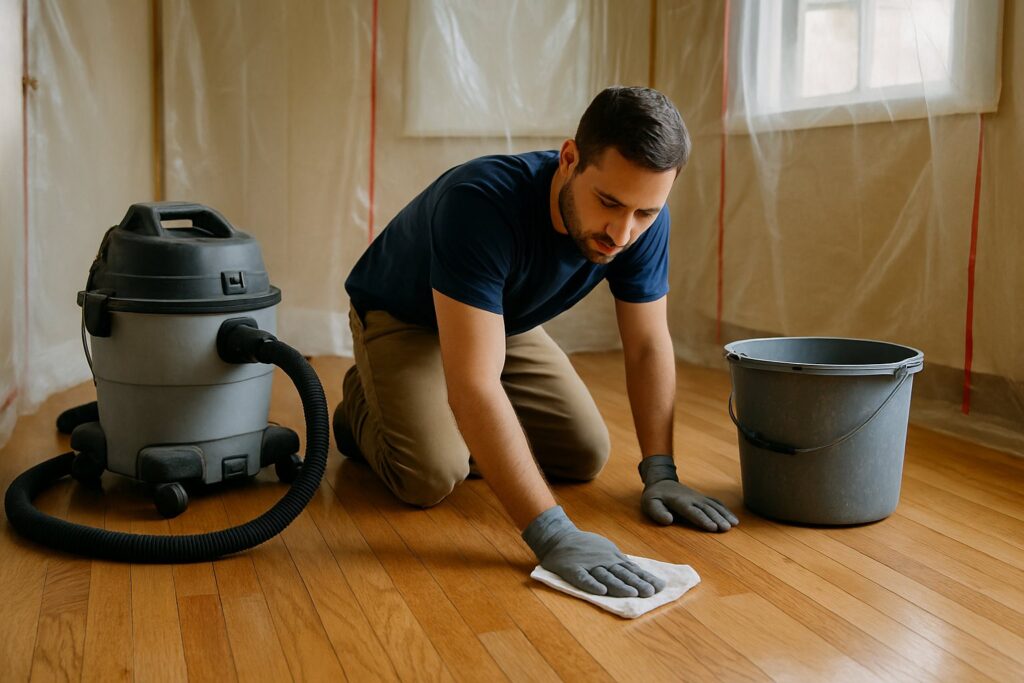
    A contractor wet-wiping a floor after renovation work

    In short: the RRP Rule (40 CFR part 745, subpart E) applies to paid renovation that disturbs painted surfaces in pre-1978 housing and in child-occupied facilities such as preschools. The firm needs EPA (or state) certification, and each job needs a certified renovator. Small jobs that disturb 6 square feet or less of paint per room inside, or 20 square feet or less outside, are exempt, but window replacement, demolition and prohibited practices are never exempt. The firm must hand out the Renovate Right pamphlet, contain the work area, clean up and verify the cleaning, and keep records for 3 years. Homeowners working on their own home are generally not covered, but EPA urges them to work lead-safe too.

    Why the RRP Rule exists

    Ordinary renovation is one of the quickest ways to turn old lead paint into lead dust. EPA estimates that about three-quarters of US homes built before 1978 still contain some lead-based paint, and CDC lists sanding, cutting and replacing windows among the common activities that create hazardous lead dust. The rule is designed to keep that dust inside the work area and out of the home afterward. For more on when lead paint becomes a hazard, see is lead paint dangerous?

    What the RRP Rule covers

    Under 40 CFR 745.82, the rule applies to all renovations performed for compensation in target housing and child-occupied facilities. “Renovation” means modifying any existing structure in a way that disturbs painted surfaces. EPA’s contractor page lists remodeling, repair and maintenance, electrical work, plumbing, painting preparation, carpentry and window replacement as examples.

    • Target housing: housing built before 1978. Housing for the elderly or people with disabilities and zero-bedroom units (studios, dorms) are excluded unless a child under 6 lives or is expected to live there.
    • Child-occupied facilities: pre-1978 buildings, or parts of them, visited regularly by the same child under 6 on at least two different days in a week, with each visit at least 3 hours, combined weekly visits at least 6 hours and combined annual visits at least 60 hours. Think day care centers and preschools.
    • Who it applies to: anyone paid to do the work, including sole proprietors. EPA says it also applies to landlords, child care operators working in their homes and house flippers, and property management companies that do this work must be certified firms.

    The 6 and 20 square foot thresholds

    The rule exempts “minor repair and maintenance activities.” In the exact terms of 40 CFR 745.83, that means work that disturbs:

    WhereExempt if it disturbsNever exempt
    Interior6 square feet or less of painted surface per roomWindow replacement, demolition of painted surfaces, prohibited practices
    Exterior20 square feet or less of painted surfaceWindow replacement, demolition of painted surfaces, prohibited practices

    Two catches. First, jobs in the same room within the same 30 days count as one job, so you can’t split a project into small pieces to stay under the line. Second, a single window replacement is covered no matter how little paint it disturbs.

    When testing takes a job out of the rule

    Testing is optional. Without documentation that the affected paint is not lead-based, the firm must follow the rule. The paint can be shown to be below the federal definition (1.0 mg/cm² or 0.5% by weight) in three ways: a written determination by a certified inspector or risk assessor; an EPA-recognized test kit used by a certified renovator; or paint chips collected by a certified renovator and analyzed by an EPA-recognized lab. EPA recognizes three kits: LeadCheck and D-Lead for wood, ferrous metal, drywall and plaster, and the Massachusetts kit for drywall and plaster only, all for negative results only. For your own testing options, see how to test for lead paint and lead paint testing.

    EPA RRP certification: firms and renovators

    There are two separate credentials, and a legal job needs both: a certified firm and a certified renovator assigned to the job. Other workers can be trained on the job by the certified renovator.

    Firm certificationRenovator certification
    How you get itApply online to EPA through its lead program siteTake an initial course from an EPA-accredited training provider
    TrainingNone for the firm itself8-hour initial course, including 2 hours of hands-on learning
    Fee (EPA)$300 for certification or recertification ($20 for tribal firms)Set by the training provider
    How long it lasts5 years; apply to recertify at least 90 days before expiry5 years with a hands-on refresher, 3 years with an online refresher
    Staying certifiedRecertify before expiry4-hour refresher before expiry; hands-on every other time. If it lapses, retake the 8-hour course

    States with their own programs. EPA certification does not apply where a state or tribe runs its own authorized RRP program. When we checked, EPA listed Alabama, Delaware, Georgia, Iowa, Kansas, Massachusetts, Mississippi, North Carolina, Oklahoma, Oregon, Rhode Island, Utah, Vermont, Washington, Wisconsin and the Bois Forte Band of Chippewa. Firms working there apply to that program, and firms working in several states may need more than one certification.

    Before the job: the Renovate Right pamphlet

    No more than 60 days before work starts, the firm must give the owner EPA’s pamphlet Renovate Right: Important Lead Hazard Information for Families, Child Care Providers and Schools, and get a signed acknowledgment or a certificate of mailing sent at least 7 days before the work. If the owner doesn’t live there, an adult occupant gets a copy too. Common-area jobs in apartment buildings need written notice to each affected unit or posted signs, and child care facility jobs require notice to parents and guardians (40 CFR 745.84).

    Lead-safe work practices required on the job

    The work practice standards are in 40 CFR 745.85. In plain terms:

    • Signs. Post warning signs around the work area, in the occupants’ primary language where practicable, until cleaning verification is done.
    • Interior containment. Remove or cover objects, close and cover ducts and doors, and cover the floor with taped-down plastic at least 6 feet beyond the work surfaces (or farther if needed), so no dust or debris leaves the area.
    • Exterior containment. Close doors and windows within 20 feet and cover the ground at least 10 feet beyond the work surfaces; use vertical containment when working within 10 feet of a property line.
    • Prohibited and restricted practices. No open-flame burning or torching of painted surfaces. Sanders, grinders, abrasive blasters and other high-speed paint removal machines only with shrouds or containment and a HEPA vacuum attachment, with no visible dust escaping. Heat guns only below 1,100°F.
    • Waste. Contain waste before it leaves the work area, store it securely at the end of each day, and keep it contained during transport.
    • Cleaning. Collect debris and seal it in heavy-duty bags, remove sheeting carefully, clean walls top to bottom with a HEPA vacuum or damp cloth, HEPA-vacuum all remaining surfaces, wipe them with damp cloths and mop floors with separate wash and rinse water.

    Cleaning verification: how the job is checked

    Interior jobs end with a check against EPA’s cleaning verification card. After a visual inspection, the certified renovator wipes each window sill with a damp disposable cleaning cloth and compares it with the card. A cloth that matches or is lighter than the card passes; a darker one means re-clean and wipe again. Uncarpeted floors and countertops are checked the same way, in sections of no more than 40 square feet each, using a long-handled applicator on floors. If a surface still fails after re-cleaning, the renovator waits at least 1 hour or until it is dry and wipes it with a dry disposable cloth. Exterior jobs need a visual inspection of the work area, sills and ground below. Only then can the warning signs come down.

    A job can use dust clearance testing instead, when the contract or a law requires it: a certified inspector, risk assessor or dust sampling technician takes samples, and the firm re-cleans until results are below EPA’s dust-lead action levels. Cleaning verification is a work check, not a lab measurement. If you want numbers, ask for clearance testing or see lead dust testing.

    Records you should get afterward

    Firms must keep records showing compliance for 3 years after the renovation is completed (40 CFR 745.86). The owner (and an adult occupant, if different) must receive the compliance information with the final invoice or within 30 days of completion, whichever comes first. It typically includes who the certified renovator was, worker training, how the area was contained, how waste was handled, cleaning and cleaning verification results, and any test kit or paint chip results. EPA’s Sample Renovation Recordkeeping Checklist is one way firms provide it. Keep your copy with your home records; it can matter later, for example in a lead paint disclosure when you sell or rent.

    How to check a contractor’s RRP certification

    1. Search EPA’s locator. EPA’s lead-safe certified firm search finds EPA- or state-certified renovation firms near you.
    2. Ask for both certificates. The firm’s certificate and the certified renovator’s course certificate, with expiry dates. In a state-run program, check with that state.
    3. Look for the logo. EPA tells homeowners to look for the Lead-Safe Certified Firm logo, but verify it in the locator.
    4. Ask how they will contain and clean. Expect plastic sheeting, HEPA vacuums, no open flame and cleaning verification.
    5. Expect the pamphlet before work and records after. If neither shows up, ask.

    RRP renovation is not the same as lead abatement, which is a separately regulated activity aimed at ending lead hazards for good, done by certified abatement professionals. EPA explains the difference on its “Lead Abatement versus Lead RRP” page; our lead abatement, lead paint removal and lead paint encapsulation guides cover those options. To find inspectors, risk assessors and certified firms, use find a lead professional. You can report suspected violations through EPA’s lead complaints, tips and violations page.

    Penalties under the RRP Rule

    RRP violations are enforced under the Toxic Substances Control Act. EPA’s inflation-adjusted table in 40 CFR 19.4 lists a maximum civil penalty of $49,772 per violation under TSCA section 16 for penalties assessed on or after January 8, 2025. The figure can change with future adjustments.

    Doing it yourself: EPA’s homeowner guidance

    The RRP Rule generally doesn’t apply when homeowners work on their own home. It does apply if you rent out all or part of it, run a child care center there, or flip houses for profit. EPA’s first recommendation is to hire a lead-safe certified contractor. If you do it yourself, EPA’s do-it-yourself guidance says:

    • Find out first. If the home is pre-1978, assume lead paint unless a certified inspector or risk assessor says otherwise.
    • Set up. Move belongings out, cover floors and vents with plastic, seal doors and windows and turn off forced-air heating and cooling. Keep family members, especially children, out of the work area.
    • Protect yourself. EPA lists an N-100 respirator, disposable coveralls, a painter’s hat, shoe covers, eye protection and gloves. Wash hands and face whenever you stop, and wash work clothes separately. Don’t eat, drink or smoke in the work area.
    • Keep dust down. Mist surfaces before sanding, scraping or cutting, use a HEPA vacuum attachment with power tools, and avoid dry sanding and high-heat tools; a heat gun below 1,100°F or a chemical stripper used per its instructions are EPA’s suggested alternatives.
    • Clean daily and at the end. Bag waste as you go, HEPA-vacuum often, and before anyone comes back mop floors, clean walls, HEPA-vacuum everything and wipe surfaces with wet disposable cloths until they come up clean. Dust-lead testing by a certified professional afterward is an option.
    • Dispose properly. Seal debris in heavy plastic bags and check your state and local disposal rules.

    EPA’s booklet Steps to LEAD Safe Renovation, Repair and Painting (2026 edition, PDF) walks through each step in detail. If anyone in the home is pregnant or a young child lives there, CDC advises keeping them away during renovation; see lead and health and lead and children.

    Tools for a lead-safe project

    A swab kit helps you decide whether to treat a surface as lead paint; a HEPA vacuum is the one tool EPA mentions again and again. The swab’s EPA recognition covers certified renovators testing wood, ferrous metal, drywall and plaster, for negative results only. The vacuum below is sold as a certified HEPA unit; we have not confirmed that any particular model meets the RRP Rule’s HEPA vacuum definition, so ask the maker if you need that for compliance. Both were in stock on Amazon when checked in October 2026:

    Screen before you sand

    LeadCheck Swabs, Instant Lead Test, 8 Swab Pack

    • Seller states detects lead down to 600 ppm
    • Color change on the swab tip
    • About $39, seen October 2026
    Check price on Amazon
    HEPA cleanup

    Dustless Technologies HEPA Wet+Dry Pro Vacuum, 8 Gallon (D1618)

    • Maker: certified HEPA system
    • Wet and dry pickup, 138 CFM
    • About $313, seen October 2026
    Check price on Amazon

    RRP rule questions

    Does the RRP Rule apply to homeowners?

    Generally not when you work on the home you own and live in. It does apply to landlords, house flippers and child care operators working in their homes, and to anyone you pay to do the work.

    How do I get EPA RRP certification?

    Individuals take an 8-hour initial renovator course from an EPA-accredited training provider. Firms apply to EPA online and pay $300. In states with their own programs, apply to the state instead.

    How long does RRP certification last?

    Firm certification lasts 5 years. Renovator certification lasts 5 years with a hands-on refresher or 3 years with an online refresher; refreshers are 4 hours and must be taken before the current certificate expires.

    Is replacing one window covered by the RRP Rule?

    Yes. Window replacement is excluded from the minor repair exemption, so it is covered in pre-1978 homes regardless of how much paint it disturbs.

    What is the difference between RRP and lead abatement?

    RRP covers ordinary renovation and repair done in a lead-safe way. Abatement is a separately regulated activity aimed at ending lead-based paint hazards for good, done by certified abatement professionals. See lead abatement.