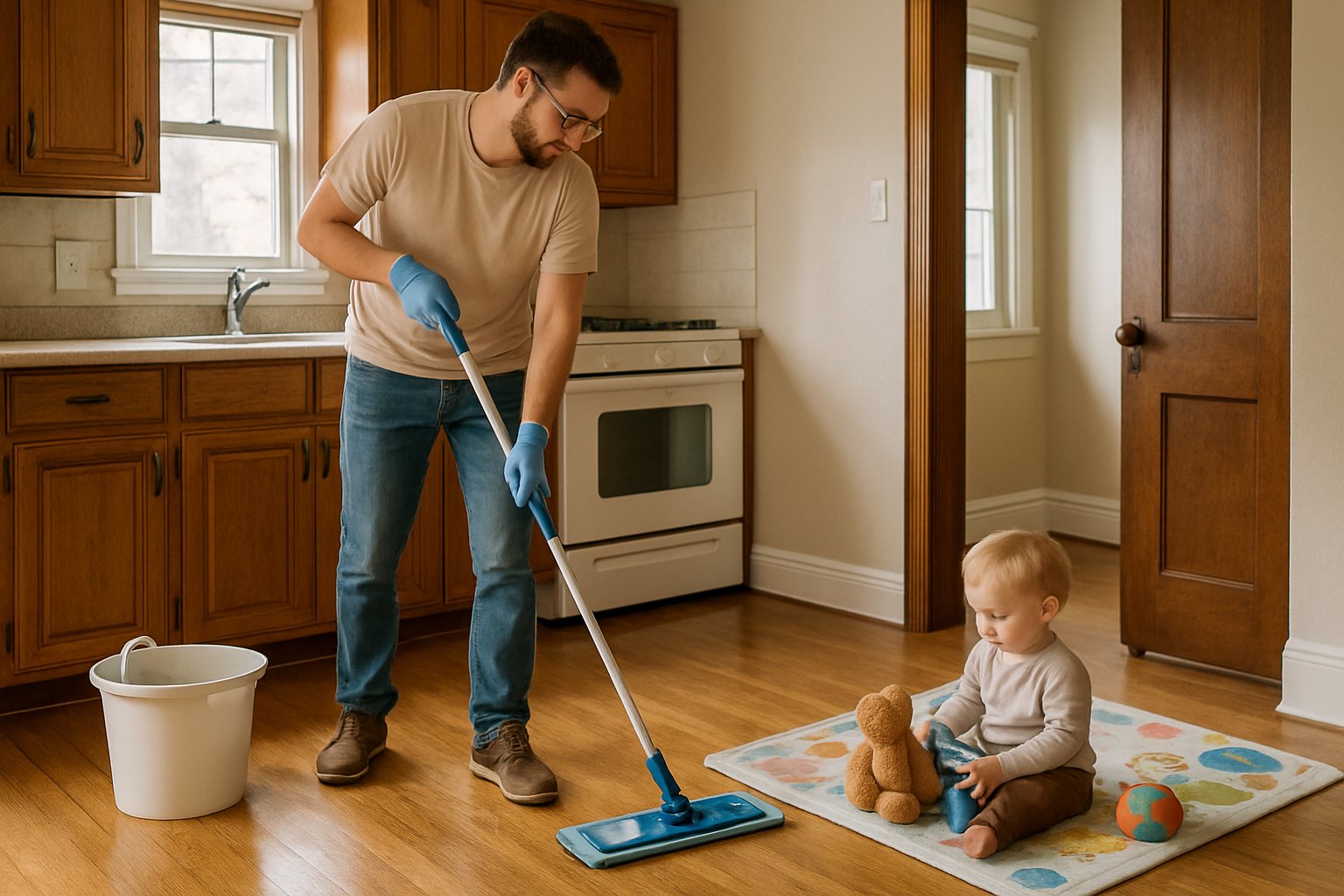
Young children are the people most at risk from lead, because they put their hands and toys in their mouths and because their brains and bodies are still developing. The CDC says no safe blood lead level in children has been identified, and that the most effective protection is to remove lead from a child’s surroundings before exposure happens.

In short: the main sources are dust from old paint in homes built before 1978, drinking water from lead pipes and fixtures, soil, and some imported foods, spices, candies, remedies, toys and jewelry. The CDC, EPA and American Academy of Pediatrics (AAP) recommend keeping dust down with wet cleaning, washing hands and toys often, using cold tap water for drinking and baby formula, hiring lead-safe certified contractors for work on older homes, and checking recalls. Most children with lead in their blood look healthy, so a blood lead test is the only way to know. Ask your child’s doctor about testing.
This page summarizes official guidance. It is not medical advice. If you think your child swallowed something containing lead, call Poison Control at 1-800-222-1222, and call 911 for severe symptoms.
Why children are most at risk
The CDC says children younger than 6 are more likely to be exposed because of their hand-to-mouth behavior. They crawl, play on floors and put toys, fingers and other objects in their mouths, picking up lead dust and soil along the way. The EPA calls young children “the most vulnerable” for the same reason.
The harm is also greater in children. The CDC lists damage to the brain and nervous system, slowed growth and development, learning and behavior problems, and hearing and speech problems, and links these to lower IQ, a shorter attention span and doing less well at school; see effects of lead poisoning. Exposure can begin before birth: the CDC says lead can pass from a pregnant person to the baby, including lead stored in the parent’s bones from earlier exposure.
The CDC estimates that about 500,000 US children have blood lead levels at or above its reference value of 3.5 µg/dL.
Where children’s lead comes from
| Source | Why it matters for children | Our guide |
|---|---|---|
| Paint and dust in homes built before 1978 | The CDC says homes built before 1978 probably contain lead-based paint; peeling or cracking paint makes dust that children swallow or breathe in | Is lead paint dangerous? |
| Drinking water | Lead can enter water from lead service lines, solder and fixtures | Lead pipes |
| Soil | The CDC lists soil near airports, highways and factories; the EPA adds soil near building walls | Lead in soil testing |
| Foods, spices, candies, remedies, cosmetics | The CDC names some imported candies and traditional remedies; the FDA has issued alerts on ground cinnamon and recalled cinnamon applesauce pouches | Lead in cinnamon and spices |
| Toys and jewelry | The CDC names some imported toys, antique toys and toy jewelry | Lead in toys and jewelry |
| Dishes and pottery | The FDA warns about some traditional and antique glazed pottery | Lead in pottery and dishes |
| A parent’s job or hobby | Lead dust can come home on clothes, shoes and tools (CDC, NIOSH) | Lead poisoning |
Prevention steps from the CDC, EPA and AAP
The CDC calls removing lead hazards from a child’s environment before exposure (“primary prevention”) the most effective way to avoid long-term harm. The AAP’s 2016 policy statement on preventing childhood lead toxicity makes the same point, stressing that there is no identified safe blood lead level and that reducing lead in housing, soil, water and consumer products pays off. These are the everyday steps official sources list; lead poisoning causes and prevention covers the same ground for the whole family.
At home: dust and paint
- In homes built before 1978, regularly wet-mop floors and wipe windowsills and other flat surfaces; household dust can be a major source of lead (CDC). Use warm water and an all-purpose cleaner, and never mix ammonia and bleach products.
- Take shoes off at the door so dust and soil stay outside (CDC).
- Do not sand, scrape or dry-sweep old paint yourself. For repairs, renovation or painting in pre-1978 homes, hire a firm certified under the EPA’s Renovation, Repair and Painting (RRP) Rule, and keep children and pregnant people away from the work area. See lead-safe renovation (RRP).
- If your home was built before 1978, the CDC recommends having it checked by a licensed lead inspector. See lead paint inspection and find a lead professional.
Hands, toys and play
- Wash children’s hands often, especially before eating and sleeping, and after playing outside or with pets (CDC).
- Wash toys regularly; they can pick up lead from dust and soil (CDC).
- Cover bare soil, keep children from playing in it, and use doormats so soil is not tracked indoors (EPA). See dust and soil testing.
Water and baby formula
- Use only cold tap water for drinking, cooking and making baby formula; hot water can draw more lead from pipes, and boiling does not remove lead (EPA).
- If water has been sitting in the pipes, run the tap, take a shower or do laundry first to flush it (EPA). How long depends on whether you have a lead service line.
- Clean faucet aerators regularly, and if you use a filter, choose one certified to reduce lead and replace cartridges on schedule (EPA). See best water filters for lead and how to test water for lead.
Food, products and work
- Check FDA alerts and recalls for foods and spices, and CPSC recalls for toys and children’s products. The CDC also advises not letting children play with toys made before 2009, when tighter federal limits for children’s products began to take effect.
- Be cautious with imported candies and traditional remedies such as azarcon and greta, which the CDC warns may contain lead.
- If someone in the home works with lead, they should change clothes and shoes before coming home and wash work clothes separately (CDC).
Diet
The CDC says a diet rich in iron and calcium is part of follow-up for children with lead in their blood. Diet does not make lead safe or remove it from the home, and supplements should only be used on a doctor’s advice.
Screening and testing
Most children with lead in their blood have no obvious symptoms, so testing is how lead is found. Our blood lead test guide covers it in depth; the key rules are:
- Medicaid: children enrolled in Medicaid must be tested at 12 and 24 months, and between 24 and 72 months if never tested. A risk questionnaire alone does not meet the requirement (CMS).
- Other children: the CDC recommends testing children at higher risk, including those who live in or visit pre-1978 homes, children from low-income households, children who are immigrants, refugees or recently adopted from other countries, and children exposed through a household member’s job or hobby. The AAP calls for a lead risk assessment at well-child visits at 6, 9, 12, 18 and 24 months.
- Results: the CDC’s blood lead reference value is 3.5 µg/dL. It is not a safe level; it flags children with more lead than 97.5% of US children aged 1 to 5.
States set their own rules too, and some require testing of all young children. Ask your pediatrician or state health department.
Lead in school and child care drinking water
Children spend many hours a day at school or child care, and both may have older plumbing.
- EPA 3Ts program. The EPA’s voluntary 3Ts program (Training, Testing and Taking action) gives schools and child care facilities a toolkit for sampling their taps, reading the results and fixing problems.
- Lead and Copper Rule Improvements (LCRI). Under the EPA’s final rule from October 2024, community water systems must, starting November 1, 2027, compile a list of the schools and licensed child care facilities they serve. In the first five years, they must sample at least 20% of the elementary schools and child care facilities each year, sample secondary schools on request, and share the results with the facility and health officials. States may waive this where an equally strict state or local program exists. Rules can change, so check the EPA and your water system for the current schedule.
- AAP recommendation. In its 2016 policy statement, the AAP urged state and local governments to make sure water fountains in schools do not exceed 1 part per billion (ppb) of lead. That is a recommendation, not a federal law.
Ask your school or child care center whether its taps have been tested, when, and where the results are posted. Some states require testing on their own schedule.
When to call a doctor or Poison Control
| Situation | Who to contact |
|---|---|
| Severe symptoms such as seizures, repeated vomiting or loss of consciousness | 911 |
| Your child swallowed paint chips, a piece of jewelry or a product that may contain lead | Poison Control, 1-800-222-1222 |
| Your home has old paint, lead pipes or recent renovation, or your child used a recalled product | Your child’s doctor or local health department, to ask about a blood lead test |
| You want your home checked | A certified lead inspector or risk assessor; see find a lead professional |
More on symptoms is on our lead poisoning symptoms page and the lead poisoning hub.
Frequently asked questions
What age is lead most dangerous for children?
The CDC says children younger than 6 are more likely to be exposed because of hand-to-mouth behavior, and Medicaid requires testing at 12 and 24 months because those are ages of high risk. Exposure before birth also matters.
How can I protect my baby from lead?
Official steps include wet-cleaning dust in older homes, washing hands and toys, using cold tap water for drinking and formula, hiring RRP-certified contractors for work on pre-1978 homes, and checking recalls. Ask your pediatrician about a blood lead test.
Do children with lead poisoning look sick?
Usually not. The CDC says most children with lead in their blood have no obvious immediate symptoms, which is why testing matters.
Is there lead in school drinking water?
It can happen when plumbing or fixtures contain lead. Under the EPA’s 2024 rule, water systems must begin sampling elementary schools and child care facilities from November 1, 2027. Ask your school whether it has tested.
Should I buy a home test to check my child for lead?
No home kit tests a child. Blood lead tests are done through a doctor, health department or lab. Home kits test surfaces or water, and each has limits; see our lead test kits guide.