Tag: Xrf

  • Lead Paint Inspection vs Risk Assessment: What to Expect

    Lead Paint Inspection vs Risk Assessment: What to Expect

    A lead paint inspection tells you whether a home has lead-based paint and exactly where it is, surface by surface. A risk assessment tells you something different: whether lead from paint, dust or soil is a hazard right now, and what to do about it. Both must be done by a certified professional, and many families need the second more than the first.
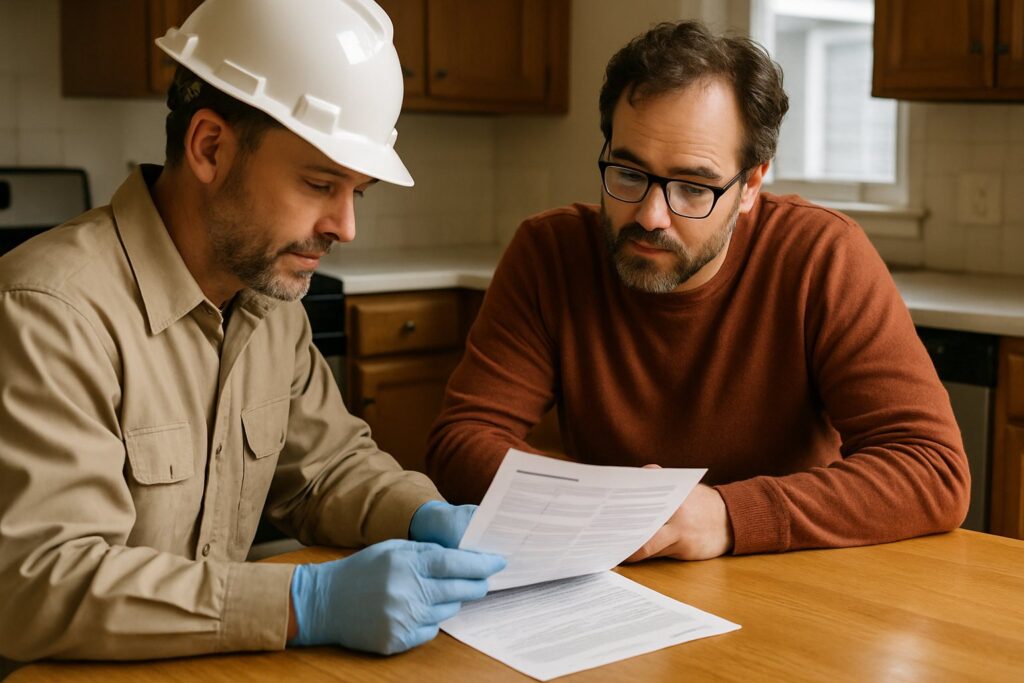
    An inspector reviewing a report with a homeowner

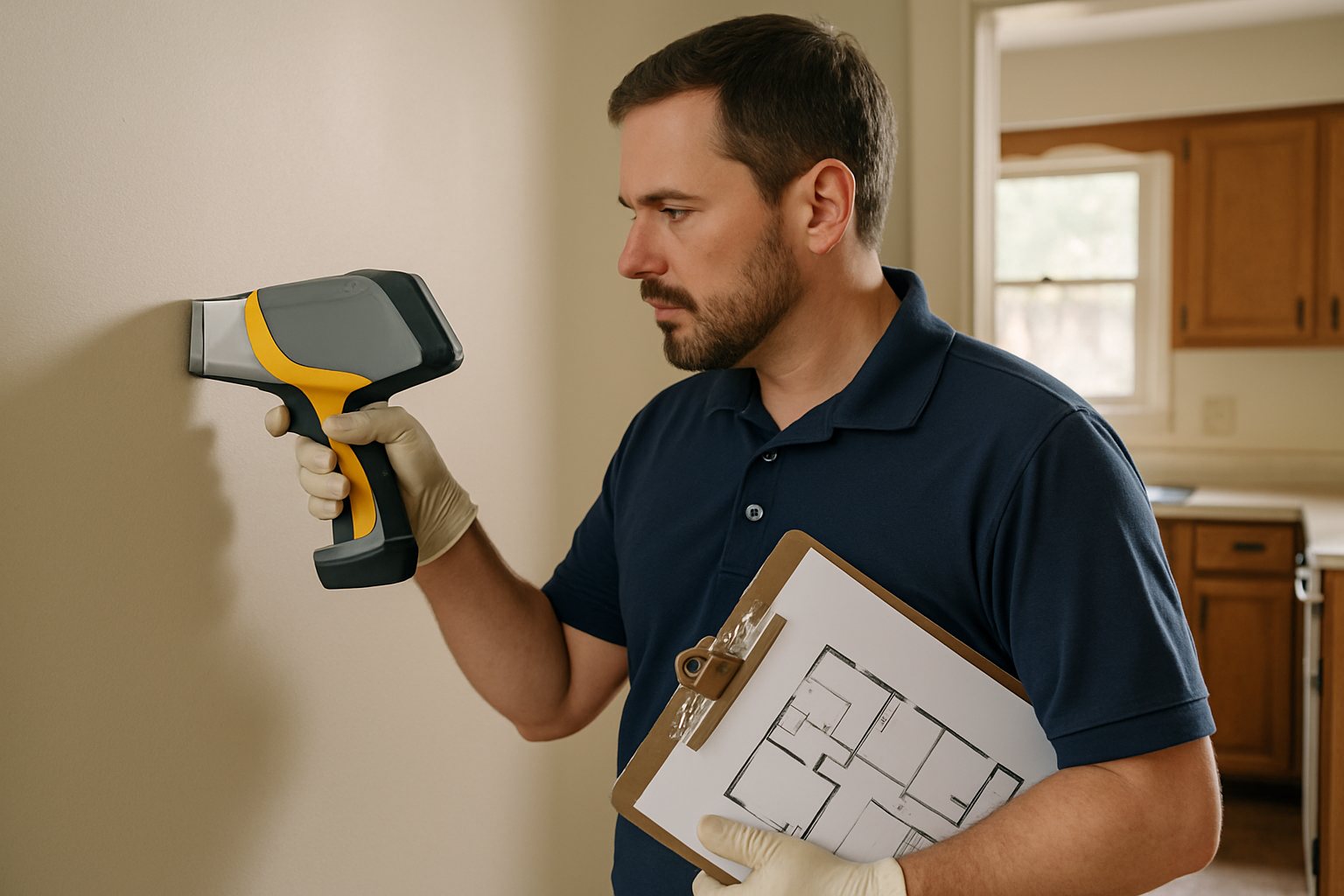
    In short: under EPA rules, an inspection is a surface-by-surface check for lead-based paint, done only by a certified inspector or risk assessor, usually with an XRF analyzer. A risk assessment looks for hazards, samples dust and soil as well as damaged paint, and recommends fixes; only a certified risk assessor may do it. A lead hazard screen is a cheaper, limited risk assessment for homes in good condition. You will want one of these when you buy or rent a pre-1978 home, before renovating, or when a child has an elevated blood lead level.

    Inspection, risk assessment and lead hazard screen compared

    These three services are defined in federal rules (40 CFR 745.223 and 745.227). States and tribes with their own EPA-authorized programs use the same basic structure, sometimes with extra requirements.

    ServiceThe question it answersWho may do itWhat gets sampled
    Lead-based paint inspectionIs there lead-based paint, and where?Certified inspector or risk assessorEvery painted component with a distinct painting history, inside and outside
    Risk assessmentAre there lead hazards now, and how do we fix them?Certified risk assessor onlyDeteriorated paint, dust on floors and window sills, bare soil
    Lead hazard screenIs a full risk assessment likely needed?Certified risk assessor onlyPaint in poor condition, two composite dust samples (floors and windows)
    Clearance examinationIs the area clean after lead work?Certified inspector or risk assessorVisual check plus dust samples after cleanup

    EPA puts the difference simply: an inspection tells you if a building has lead-based paint and where, but not whether there are hazards or how to handle them. A risk assessment tells you if there are lead hazards from paint, dust or soil, and what actions to take.

    What happens during a lead-based paint inspection

    An inspection is thorough by design. Under 40 CFR 745.227(b), the inspector selects locations using documented methods and tests each component with a distinct painting history, such as each door, window, wall and trim type in every room, plus exterior parts. They can skip components they determine were replaced after 1978 or do not contain lead-based paint. In apartment buildings, common areas are tested too.

    Most inspectors use a portable X-ray fluorescence (XRF) analyzer, which reads lead through the paint layers. Where needed, they cut paint-chip samples, which must go to a lab recognized under EPA’s National Lead Laboratory Accreditation Program (NLLAP). Paint counts as lead-based paint at 1.0 mg/cm² or more, or at 0.5% by weight or more.

    What the inspection report must include

    Federal rules list the contents. Expect:

    • Date of the inspection, address, date of construction and apartment numbers if any
    • Owner’s name, address and phone number
    • Name, signature and certification number of each inspector or risk assessor, and their certified firm
    • Each testing method, device and sampling procedure, with quality control data and the serial number of any XRF used
    • The specific location of each painted component tested
    • The results, in units suited to the method

    Keep this report. If you sell or rent the home later, federal disclosure rules require you to share the lead information you know, including available records and reports. See lead paint disclosure.

    What happens during a risk assessment

    A risk assessment, under 40 CFR 745.227(d), is about exposure. The certified risk assessor:

    • Does a visual inspection to find deteriorated paint, how much there is and why it is failing
    • Collects background on the home and how it is used, with a focus on children under 6
    • Tests painted surfaces that are visibly deteriorated, starting with friction surfaces (such as window sashes) and impact surfaces (such as door edges)
    • Takes dust samples from interior window sills and floors in living areas where young children are likely to spend time
    • Samples bare soil in play areas, the rest of the yard and along the foundation drip line
    • Sends paint, dust and soil samples to an NLLAP-recognized lab

    The risk assessment report includes everything an inspection report does for the surfaces tested, plus the lab’s name, the visual inspection results, the location, type and severity of each lead hazard, and a description of interim controls or abatement options with a suggested order for tackling them. If the assessor recommends an encapsulant or enclosure, the report must also recommend a maintenance and monitoring schedule.

    New dust standards since January 2026

    In a 2024 final rule, EPA tightened its dust-lead standards. It now treats any reportable level of lead in dust, as measured by an NLLAP-recognized lab, as a dust-lead hazard, and it lowered the post-abatement dust-lead action levels to 5 micrograms per square foot on floors, 40 on window sills and 100 on window troughs, effective January 12, 2026. EPA explains the change by noting that no level of lead in blood has been found to be safe for children. This makes dust sampling, part of every risk assessment, more important than before.

    The lead hazard screen: a limited risk assessment

    A lead hazard screen is for homes that look to be in good condition. Only a certified risk assessor can do one. They collect background information, look for deteriorated paint and test any in poor condition, and take two composite dust samples, one from floors and one from windows, where young children are most likely to come into contact with dust. The report includes the same core information as a risk assessment and recommends a full risk assessment if the screen finds a possible problem.

    When you need a lead paint inspection or risk assessment

    SituationWhat federal rules sayWhat usually helps most
    Buying a pre-1978 homeSellers must give you 10 days to have a paint inspection or risk assessment, unless you agree otherwise or waive it in writing. Sellers are not required to test.Inspection plus risk assessment, booked within the 10 days
    Renting a pre-1978 homeLandlords must disclose known lead paint and give the EPA pamphlet, but the disclosure rule does not require them to test.Ask for existing reports; a risk assessment answers the hazard question
    Planning a renovationPaid contractors must follow EPA’s RRP rule. Firms may test with a recognized method or simply assume lead is present and work lead-safe.Inspection of the parts you will disturb
    A child with an elevated blood lead levelCDC advises clinicians to arrange an environmental investigation of the home for a blood lead level of 3.5 µg/dL or more, as required locally.Contact your local health department first; it may investigate
    After lead removal or encapsulationAbatement must end with clearance testing by a certified inspector or risk assessor.Clearance examination

    If a child’s blood test came back high, the health side comes first: follow your doctor’s advice, and see our blood lead test and lead and health pages. For poisoning emergencies, call Poison Control at 1-800-222-1222.

    How a typical visit works

    • Book a certified professional. Ask for their EPA or state certification number and their firm’s certification. Our directory of lead professionals and the guide how to choose a lead inspector can help.
    • Agree on the scope. Inspection, risk assessment, both, or a lead hazard screen; interior only or exterior too; whether soil is included.
    • The site visit. Expect the professional to walk every room, take XRF readings or paint chips, wipe floors and sills for dust, and sample bare soil outside.
    • Lab results. Dust, soil and any paint chips go to an NLLAP-recognized lab.
    • The report. Read the hazard list and the recommended options in order of priority.

    You can also send a request through our request an inspection page.

    How much does a lead paint inspection cost?

    There is no federal fee schedule, and EPA and HUD do not publish typical consumer prices. Prices depend on the size of the home, the number of painted components, how many dust and soil samples are taken, and how fast you need lab results. Published prices we could confirm, when checked in October 2026:

    • MA Lead Inspections, a Massachusetts company serving Greater Boston and Central Massachusetts, says its inspections for single-family homes start at $450, with custom pricing for multi-unit buildings.
    • Lab fees are part of the bill for risk assessments and paint-chip testing. The Wisconsin Occupational Health Laboratory, an NLLAP-listed lab, charges $40 per paint, dust-wipe or soil sample at normal turnaround, $60 priority and $80 rush.

    Ask for a written quote that lists the service (inspection, risk assessment or both), how many samples are included, the lab used and the turnaround. Some cities run HUD-funded lead hazard control programs that pay for an inspection and risk assessment as the first step for eligible households; the City of Warren, Michigan, for example, requires both for every pre-1978 home in its program. Ask your local health or housing department.

    Can you skip the professional and test yourself?

    For your own peace of mind, yes. Swab kits and mail-in lab kits are covered in how to test for lead paint. But EPA only recognizes test kit results from certified inspectors, risk assessors and renovators, and federal rules require samples for official inspections and risk assessments to be collected by certified professionals. A home test cannot tell you about dust and soil hazards the way a risk assessment does.

    If you just want a first look before booking, these were in stock on amazon.com in October 2026:

    NLLAP-listed lab

    Schneider Labs Lead Test Kit, Paint, Dust or Soil (1 sample)

    • Mail-in lab analysis, EPA Method 7000B
    • Results within 5 business days of arrival
    • About $35, seen October 2026
    Check price on Amazon
    EPA-recognized formula

    LeadCheck Swabs, 8-Swab Pack

    • Instant color-change swabs
    • Recognized for certified users on wood, metal, drywall
    • About $39, seen October 2026
    Check price on Amazon

    More options are compared in best lead paint test kits and on our lead paint testing hub.

    Frequently asked questions

    What is the difference between a lead inspection and a risk assessment?

    An inspection finds where lead-based paint is, on every surface. A risk assessment finds lead hazards now, from damaged paint, dust and soil, and recommends how to fix them. A combined inspection and risk assessment gives you both answers.

    Who can do a lead paint inspection?

    Only a person certified by EPA, or by an EPA-authorized state or tribal program, as a lead inspector or risk assessor. Risk assessments and lead hazard screens require a certified risk assessor.

    How long does a lead inspection take?

    Federal rules do not set a time. It depends on the number of rooms and painted components, and lab results for dust and soil take extra days; one NLLAP-listed lab quotes 7 working days at normal speed. Ask the professional for an estimate when you book.

    Does a seller have to do a lead paint inspection?

    No. Sellers of pre-1978 homes must disclose known lead paint and hazards, give you the EPA pamphlet, and give you a 10-day opportunity to inspect, but they are not required to test.

    What happens after a lead inspection finds lead paint?

    The paint is not automatically a hazard. A risk assessment tells you which surfaces need action. Options range from interim controls to permanent abatement; see lead paint removal and lead paint encapsulation.
  • How to Test for Lead Paint: Swab Kits, Lab Tests and XRF

    How to Test for Lead Paint: Swab Kits, Lab Tests and XRF

    You can test for lead paint in three ways: rub an instant swab on the paint, send a paint chip to an accredited laboratory, or hire a certified inspector or risk assessor who measures the paint with an XRF analyzer. Swabs give a quick yes or maybe, a lab gives a number, and a certified professional gives the documented answer you need for a home sale, a rental or a child’s safety.

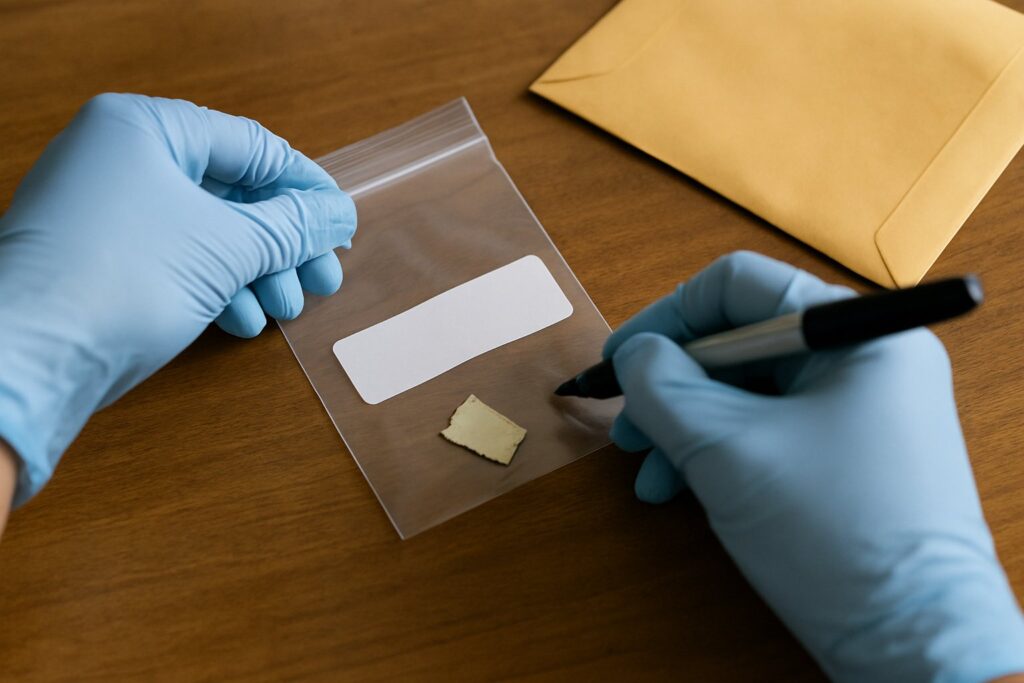
    A paint chip sample bag being labeled for a lab

    In short: if your home was built before 1978, start by assuming the paint could contain lead. EPA estimates that about three-quarters of US homes built before 1978 still have some lead-based paint. A swab kit is a useful first look, but EPA recognizes only three kits, only on certain surfaces, and only when used by certified professionals. For a measured result, mail a paint chip to a lab accredited under EPA’s National Lead Laboratory Accreditation Program (NLLAP). For a whole-home answer, book a certified lead inspection, which usually uses XRF. Never sand or scrape paint just to test it.

    First, how likely is lead paint in your home?

    Age is the best first clue. EPA says that if your home was built before 1978, it is more likely to have lead-based paint. EPA’s estimates by age of home are striking:

    Year the home was builtShare with some lead-based paint (EPA estimate)
    Before 194087%
    1940 to 195969%
    1960 to 197724%

    EPA also notes you can simply assume a pre-1978 home has lead paint and act on that, instead of testing. Many families still want to know for sure, especially before a renovation, a purchase, or when a baby is on the way. That is where the three testing options come in.

    The three ways to test, side by side

    MethodWhat it tells youWho does itMain limits
    Instant swab kitLead is or may be present at the spot you swabbedAnyone can buy one; EPA recognizes results only from certified prosOnly three kits are EPA-recognized, for certain surfaces; no lead amount
    Paint-chip lab testHow much lead the sample holds, usually as percent by weight or ppmYou or a pro collects; an accredited lab analyzesOnly one spot per sample; a homeowner-collected sample is not an official inspection
    XRF inspection by a certified inspectorLead on every painted surface tested, in mg per square centimeter, with a written reportEPA- or state-certified inspector or risk assessorCosts more; you need to book a professional

    Option 1: Instant swab kits, and what EPA actually recognizes

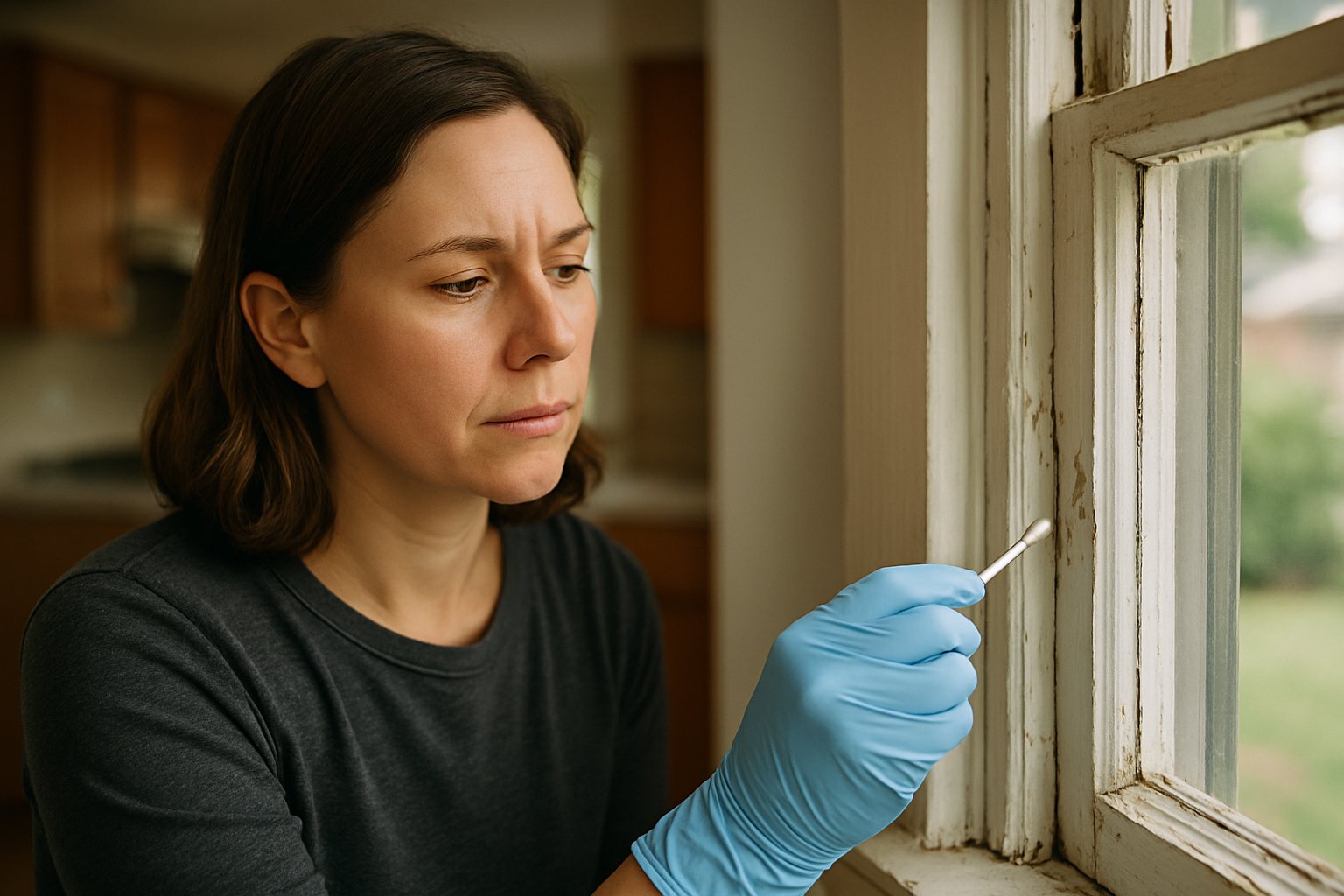
    Swab kits use a chemical that changes color when it touches lead. They are cheap and fast, which is why they are the first thing most people try. The catch is that many kits sold online have never been evaluated by EPA for paint.

    EPA’s lead test kit page, last updated November 6, 2025, lists the only kits EPA recognizes under its Renovation, Repair and Painting (RRP) rule:

    • LeadCheck, now made by Luxfer Magtech: recognized for wood, ferrous metal (iron-containing metals), and drywall and plaster. 3M stopped making LeadCheck in October 2023 and sold the formula and trademark to Luxfer Magtech in September 2024. EPA says 3M LeadCheck kits already on hand can still be used until they expire.
    • D-Lead, made by ESCA Tech: recognized for wood, ferrous metal, and drywall and plaster, as a negative-response-only kit (recognized August 31, 2010).
    • The State of Massachusetts kit: recognized for drywall and plaster only, not for wood or ferrous metal, and meant for trained professionals.

    What the recognition means is narrow. When a recognized kit is used by a certified renovator, inspector or risk assessor and the result is negative, EPA accepts that regulated lead-based paint is not present on that surface. EPA states that no kit has met both of its performance criteria: a low false-negative rate and a false-positive rate of 10% or less. So a positive swab is not proof, and a negative swab you did yourself is not an official result. EPA only recognizes tests done by certified inspectors, risk assessors and RRP-certified renovators.

    How to use a swab kit at home

    Every kit has its own instructions, and they come first. The general steps for LeadCheck, as Luxfer describes them, are crush, shake and swab:

    • Read the whole instruction sheet and check the expiry date.
    • Crush the two marked points on the swab barrel, shake it tip-down and squeeze until the liquid reaches the tip.
    • Rub the tip on the test spot. Luxfer says most results show in under 30 seconds.
    • Red or pink means lead. Use the confirmation card in the kit to check that a swab that stayed clear was working.
    • Wipe the spot with a damp disposable cloth and wash your hands.

    A swab only reacts with lead it actually touches. Lead paint is often buried under newer coats, so follow the kit’s directions on reaching the lower layers, and treat a clear swab on a top coat with caution. Swabs do not tell you how much lead is there.

    Option 2: Mail a paint chip to an accredited lab

    A laboratory test turns a guess into a number. EPA runs the National Lead Laboratory Accreditation Program (NLLAP), which recognizes labs that pass on-site assessments and ongoing proficiency testing for paint chips, dust and soil. EPA keeps the current list of accredited labs online; check that a lab is on it for paint chips before you mail anything.

    Two examples of real prices, checked in October 2026:

    • Wisconsin Occupational Health Laboratory (Madison, WI), on EPA’s NLLAP list for paint chips, soil and dust wipes, charges $40 per paint, soil or dust-wipe sample with a normal 7-working-day turnaround, $60 for priority and $80 for rush. It asks for about one square inch of dried paint, taken from cracked, chipped or peeling areas.
    • Schneider Laboratories (Richmond, VA), also NLLAP-listed for paint chips, soil and dust wipes, sells a home kit on Amazon (about $35 for one sample when checked). The listing says it includes sampling tools, a prepaid return label and instructions, and that the lab analyzes by flame atomic absorption (EPA Method 7000B) with results within 5 business days of the kit arriving.

    How to take a paint chip sample safely

    The goal is a small sample with every layer of paint, without spreading dust. EPA’s lead-safe advice for do-it-yourselfers applies here: keep the dust down with water and clean up wet.

    • Keep children, pets and anyone not helping out of the room.
    • Lay plastic sheeting or a damp paper towel under the spot.
    • Mist the area lightly with water from a spray bottle before cutting.
    • Wear disposable gloves. Cut out a small piece, about the size the lab asks for, down to the bare wood, plaster or metal so all layers are included.
    • Put the chip in the clean, sealable bag or container the lab specifies and label it with the room and surface.
    • Wipe the spot and the sheeting with wet disposable cloths, bag the waste, and wash your hands and face.
    • Seal the bare spot with paint or tape so it does not keep flaking.

    Federal rules require samples for an official inspection or risk assessment to be collected by a certified inspector or risk assessor. A sample you take yourself is useful information for you, but it does not replace a certified inspection when one is required.

    Option 3: An XRF inspection by a certified inspector or risk assessor

    For a complete answer, a professional is the standard route. Under EPA rules, a lead-based paint inspection is a surface-by-surface investigation that finds where lead-based paint is, and only a certified inspector or risk assessor may do one. Most use a portable X-ray fluorescence (XRF) analyzer, which reads lead through the paint layers without removing paint; EPA’s rule requires the report to list the serial number of any XRF device used.

    The inspector tests each painted component with a distinct painting history, inside and out, except parts they determine were replaced after 1978. You get a written report with the date, address, the inspector’s certification number, each testing method and its quality control data, the location of every surface tested and its result. If you also want to know whether lead is causing a hazard right now, including dust and soil, ask for a risk assessment. Our guide to lead paint inspection vs risk assessment explains the difference, and you can find a certified lead professional near you.

    How to read your results

    Federal rules define lead-based paint as paint with lead at or above 1.0 milligram per square centimeter, or 0.5 percent by weight (5,000 parts per million). Your result will usually be in one of these units:

    Result typeLead-based paint under the federal definitionWhat to keep in mind
    Swab color changeRed or pink means lead is likely presentNo amount; a positive swab is not an official result
    Lab paint chip0.5% by weight (5,000 ppm) or moreCovers only the spot sampled
    XRF reading1.0 mg/cm² or moreProfessionals report results per surface, with quality control data

    A result below the federal line does not mean a surface is safe to sand. EPA notes there is no level of lead in blood that has been found to be safe for children, and paint below the definition can still add lead to dust when it is disturbed. If you plan to renovate, read about lead-safe renovation and the EPA RRP rule first.

    What to do if the test is positive

    Do not start scraping. Under EPA’s definition, lead paint becomes a hazard mainly when it is deteriorated (cracking, chipping or peeling), when it is on surfaces that rub or get bumped, such as windows and doors, or when it is on surfaces a child can chew, and when it ends up in dust or soil. Wet-clean window sills and floors, keep children away from peeling paint, and plan any work with lead-safe methods. Your options range from temporary repairs to permanent fixes, covered in our guides to lead paint removal and lead paint encapsulation. Lead in household dust is one of the hazards a risk assessor measures, and a lead dust test tells you more about day-to-day exposure than another paint test.

    If you are worried that a child or a pregnant family member has been exposed, call your doctor about a blood lead test and see our lead and health section. Only a blood test can show exposure. For urgent questions, Poison Control is at 1-800-222-1222.

    Test kits we checked

    If you want a first look before booking a professional, these listings were in stock on amazon.com when we checked in October 2026. The LeadCheck listings are sold by third-party sellers under the LeadCheck brand; the 8-swab listing says “EPA recognized” and “detects lead down to 600 ppm.” Remember EPA’s recognition applies to certified users on wood, ferrous metal, and drywall and plaster. Compare more options in best lead paint test kits and our lead paint testing hub.

    EPA-recognized formula

    LeadCheck Swabs, 8-Swab Pack

    • Instant color-change swabs
    • Listing: detects lead down to 600 ppm
    • About $39, seen October 2026
    Check price on Amazon
    Small first test

    LeadCheck Swabs, 2-Swab Pack

    • 2 swabs for a quick check
    • Wood, metal, drywall per listing
    • About $15, seen October 2026
    Check price on Amazon
    NLLAP-listed lab

    Schneider Labs Lead Test Kit, Paint, Dust or Soil (1 sample)

    • Mail-in lab analysis, EPA Method 7000B
    • Prepaid return label included
    • About $35, seen October 2026
    Check price on Amazon

    A swab answers “is there lead here?” A lab answers “how much?” For more on choosing between them, see home lead test vs lab testing. Paint swabs are for paint and similar surfaces; for dishes, toys or water, use the right method from our guides to lead in pottery and dishes and lead water testing.

    Frequently asked questions

    Are home lead paint test kits accurate?

    They can be useful but they have limits. EPA recognizes only LeadCheck, D-Lead and the Massachusetts kit, each for specific surfaces, and says no kit has met both of its performance criteria. A positive swab is a strong hint to get a lab or professional test; a negative swab you did yourself is not an official result.

    What is the most reliable way to test for lead paint?

    A lead-based paint inspection by a certified inspector or risk assessor, usually with XRF and sometimes paint-chip samples sent to an NLLAP-accredited lab. It covers every painted surface with a distinct painting history and comes with a written report.

    How much does it cost to test for lead paint?

    Swab packs on Amazon ranged from about $15 for 2 swabs to $39 for 8 when we checked in October 2026. Lab analysis at the Wisconsin Occupational Health Laboratory is $40 per sample at normal speed. Professional inspection prices are set locally; our lead paint inspection guide lists the published prices we could confirm.

    Can I test for lead paint myself before selling or renting?

    You can, for your own information. Federal disclosure rules require sellers and landlords of pre-1978 housing to disclose what they know about lead paint, and homebuyers get a 10-day window to have their own inspection or risk assessment. Read more in lead paint disclosure.

    Does a negative swab mean my paint is lead-free?

    Not necessarily. The swab only tests the spot and layers it touched, and EPA recognizes a negative result only from a recognized kit used by a certified professional on the listed surfaces. A lab test of a chip with all layers, or an XRF inspection, gives a firmer answer.