This article contains affiliate links: if you buy through them we may earn a commission, at no extra cost to you. Read our affiliate disclosure.
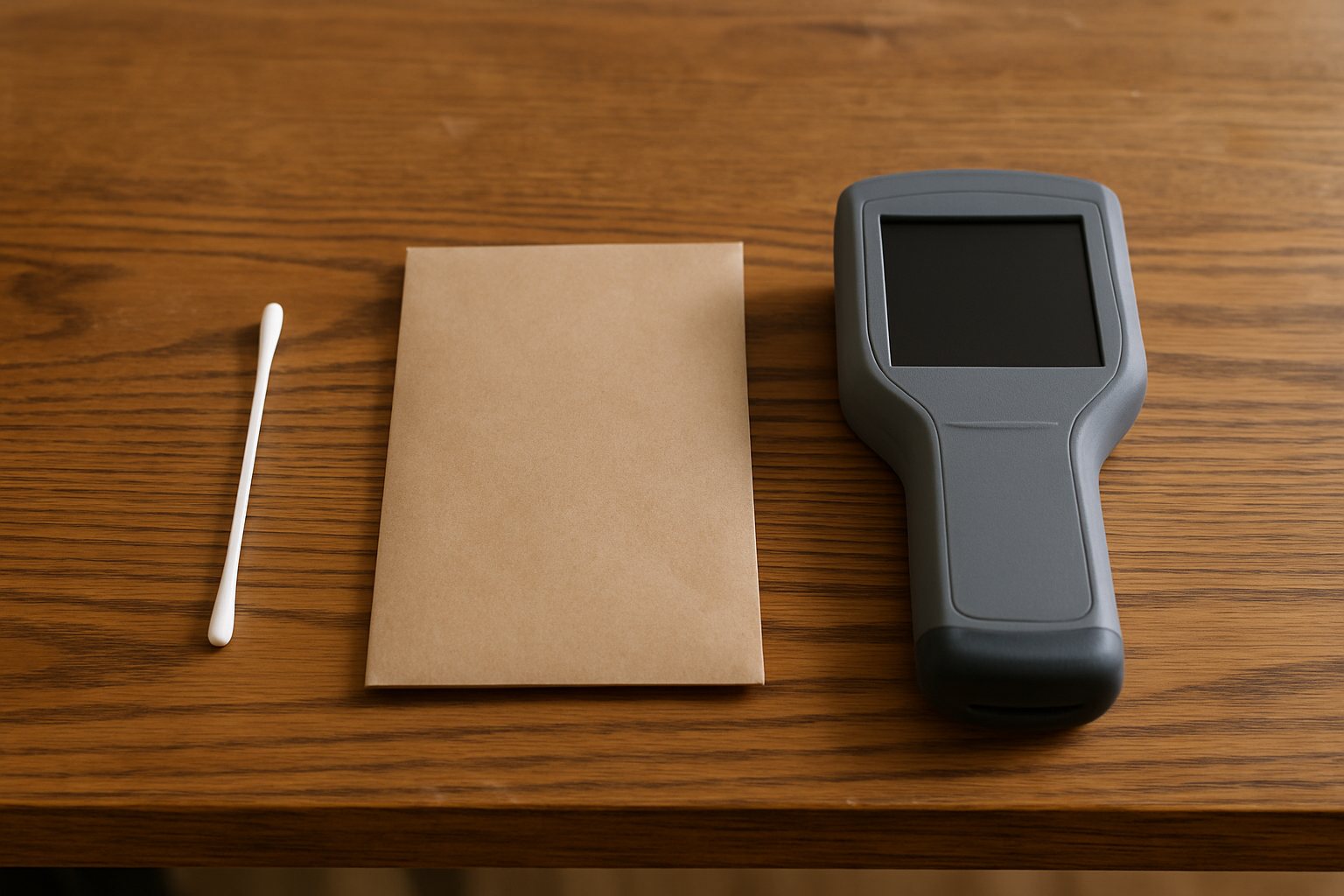
A home lead test is a screen: it can tell you that lead is probably there, quickly and cheaply, but not how much, and a negative result is only as good as the kit and the spot you tested. A laboratory test measures the amount of lead in a sample you collect. A certified professional (a lead inspector or risk assessor) decides where to sample, tests the whole home, and gives you a result that counts for disclosure, rentals and health department follow-up. Which one you need depends on what you are testing and what you will do with the answer.
In short: use a home kit when you want a fast first look and are ready to treat a positive as real. Use an accredited or state-certified lab when you need a number: for drinking water, for dust and soil around children, or to confirm a positive swab. Call a certified inspector or risk assessor for a pre-1978 home where children live or visit, before buying or renting out, before major renovation, and whenever a child has an elevated blood lead level. For consumer products like toys and dishes, the CPSC advises against relying on home test kits at all.
Three levels of lead testing
- Home screening. Color-change swabs for surfaces, strips or cassettes for water. Minutes, a few dollars a test, read by eye. Answers “is lead probably present at or above this kit’s threshold?”
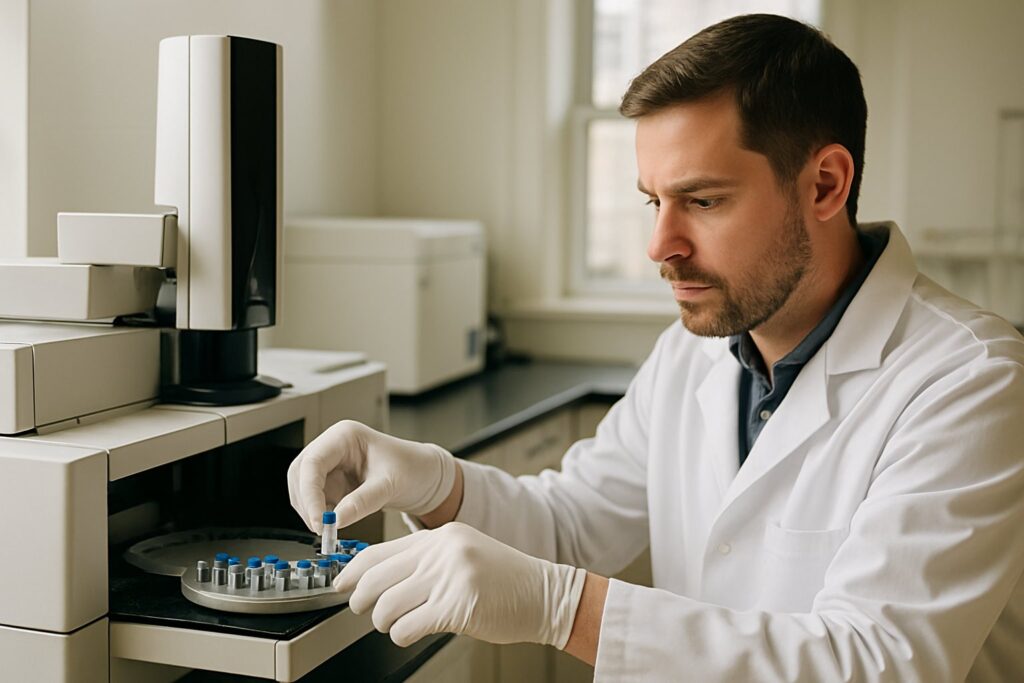
- Laboratory analysis. You collect a paint chip, dust wipe, soil sample or water bottle and mail it in. Days; the mail-in kits we checked cost about $35 to $70 a sample in October 2026, and EPA puts water tests at about $20 to $100. Answers “how much lead is in this sample?”
- Professional evaluation. An EPA- or state-certified lead inspector or risk assessor. Quote-based. Answers “where is the lead in this home, and is it a hazard right now?”
The levels are not rivals; they build on each other. Many people start with a kit, confirm with a lab, and bring in a professional when the stakes are high. The mistake is stopping at a negative home test when the situation calls for more.
Home test vs lab vs professional, by what you are testing
| What | Home screening | Laboratory | Professional | Reference point |
|---|---|---|---|---|
| Paint | EPA-recognized swabs (LeadCheck, D-Lead) are reliable for negatives on wood, ferrous metal, drywall and plaster | Paint-chip analysis by an NLLAP-recognized lab | Lead inspection (XRF and/or chips) or risk assessment | Lead-based paint: 1.0 mg/cm² or 0.5% by weight |
| Drinking water | Strips with published thresholds around 4–5 ppb | State-certified drinking water lab | Your utility; a risk assessor for a full home check | EPA goal: zero; action level: 15 ppb |
| Dust | Swabs can react to lead on a surface, but give no loading | Dust wipe analyzed by an NLLAP-recognized lab | Risk assessment; clearance testing after lead work | Hazard: any reportable level on floors or sills (from Jan 12, 2026) |
| Soil | Not a home-swab job | NLLAP lab, university extension or some health departments | Risk assessor for pre-1978 homes and child-occupied facilities | Hazard: 400 ppm in play areas, 1,200 ppm average elsewhere |
| Toys, jewelry, dishes | CPSC advises against relying on home kits | Specialist labs | Health department, if a child is affected | CPSC: 90 ppm in paint, 100 ppm total lead in children’s products |
Paint: when a swab is enough
Paint is where home kits are best documented. EPA recognizes three kits, LeadCheck, D-Lead and a State of Massachusetts kit, and all three meet EPA’s test for reliable negative results: on paint at the federal lead-based paint level, a recognized kit should give a negative no more than 5% of the time. EPA says no kit has met its test for reliable positive results, and recognition covers only certain surfaces and certified users.
A swab is enough when you are about to disturb one small area, you use a recognized kit on a recognized surface, and you are prepared to work lead-safe if it turns red. Go to a lab when you want to know how much lead is there, or the swab is positive and you’d rather not assume. Hire a professional for a whole-home answer: EPA describes a lead-based paint inspection as telling you whether a building has lead-based paint and where, and a risk assessment as telling you whether there are lead hazards from paint, dust or soil and what to do. Compare kits in best lead paint test kits and read lead paint inspection.
Water: when a strip is enough
EPA says lead can’t be seen, tasted or smelled, and that testing is the only sure way to know. The better home kits publish thresholds around 4 to 5 parts per billion. Safe Home’s home test, for example, reports 0–4, 5–15 or 15+ ppb. That is useful as a screen, but the accuracy claims are the makers’ own, and no strip gives you a concentration.
A strip is enough for a first look, or to recheck a tap you have already tested with a lab. Use a lab for any decision: whether to filter, whether to press your landlord or utility, or whether to worry about a baby’s formula water. EPA encourages people to use a state-certified drinking water laboratory, and says tests cost about $20 to $100. Call your utility too: it may test for free and can tell you whether you have a lead service line. See best lead water test kits and how to test water for lead.
Dust: a lab number is the point
Lead dust is measured as a loading, micrograms of lead per square foot of surface, and that requires a wipe sample and a lab. Federal hazard standards now set the dust-lead hazard on floors and window sills at any reportable level found by a lab recognized under EPA’s National Lead Laboratory Accreditation Program (NLLAP), effective January 12, 2026. EPA’s action levels after lead abatement are 5 µg/ft² for floors, 40 µg/ft² for window sills and 100 µg/ft² for window troughs.
A home swab can turn red on a dusty sill, but it can’t tell you whether the loading is 3 or 300. Use a lab for dust wipes; several mail-in kits accept dust samples. Hire a risk assessor when children under 6 live in or regularly visit a pre-1978 home After lead abatement, professional clearance dust testing confirms the work area is clean. See lead dust testing.
Soil: send it to a lab
Federal rules define a soil-lead hazard as bare soil with 400 parts per million or more in a children’s play area, or an average of 1,200 ppm in the rest of the yard. Those numbers come from lab analysis of soil samples. EPA lists the options: an NLLAP-accredited lab (the best option), a state university or extension office that tests soil for a fee, some local health departments, and certified risk assessors for pre-1978 homes and child-occupied facilities. Home swabs are not designed for soil. See lead in soil testing and the lead dust and soil testing hub.
Toys, jewelry and dishes: be most careful here
This is where home kits are weakest. In the CPSC’s 2007 evaluation of home kits on paints and products, more than half of 104 results were false negatives. CPSC staff found kits often missed lead covered by a non-leaded coating, and gave the example of a bracelet clasp over 80% lead that read negative because of its plating. CPSC concluded that consumers should not use lead test kits to evaluate consumer products. The legal limits are also low: 90 ppm for paint on children’s products and furniture, and 100 ppm total lead in accessible parts of children’s products, far below what most swabs are designed to detect.
For pottery, FDA’s advice is one-directional: if a swab shows lead on a dish, don’t use it for food or drink. A negative swab doesn’t prove a dish is safe. See lead in pottery and dishes and lead in toys and jewelry.
When home testing is enough, and when it isn’t
| Situation | Home kit enough? | What to use |
|---|---|---|
| Small repair on one painted surface, adults only | Often, with a recognized kit | LeadCheck or D-Lead; work lead-safe if positive |
| Curious about your tap water | As a first look | Strip, then a state-certified lab |
| Baby formula or a pregnancy in the home | No | Lab water test; ask your utility |
| Pre-1978 home with a child under 6 | No | Risk assessment (paint, dust, soil) |
| Buying, selling or renting out pre-1978 housing | No | Certified inspector or risk assessor |
| Garden or play area | No | Soil sample to a lab or extension office |
| After lead abatement | No | Professional clearance dust testing |
| Toy, jewelry or dish | No | Stop using it if in doubt; check CPSC recalls |
| A child’s blood lead test came back high | No | Health department and a risk assessor |
Kits that bridge home and lab
If you want to start at home and move to a lab number, these two kits were in stock on Amazon when checked in October 2026: an EPA-recognized swab for paint, and a mail-in kit from a lab on EPA’s NLLAP list that accepts paint, dust or soil. For more options, see the lead test kits hub.
LeadCheck Swabs, Instant Lead Test, 8 Swabs
- EPA-recognized on wood, ferrous metal, drywall, plaster
- Reliable for negatives, not positives
- About $39, seen October 2026
Schneider Labs Lead Test Kit, Paint, Dust or Soil (1 sample)
- Lab on EPA's NLLAP list
- Paint, dust or soil; prepaid return label
- About $35, seen October 2026
Testing your home is not testing your family
Every test on this page looks at the environment. None tells you whether anyone has been exposed. CDC says a blood lead test is the best way to find out if a child has lead poisoning, and that children with lead poisoning often show no visible signs. Health care providers and most local health departments can do the test. If you are worried, talk to your doctor or local health department, or call Poison Control at 1-800-222-1222. See blood lead test and lead poisoning.
To find certified inspectors, risk assessors and accredited labs, use find a lead professional, read how to choose a lead inspector, or call EPA’s National Lead Information Center at 1-800-424-5323.
Frequently asked questions
Are home lead tests accurate?
It depends on the kit and the material. EPA-recognized paint kits are reliable for negative results on specific surfaces. Water strips publish thresholds, but their accuracy claims are the makers’ own. For consumer products, CPSC found home kits unreliable. A lab result is the accurate option in every case.
What is the difference between a lead inspection and a risk assessment?
EPA says an inspection tells you whether a building has lead-based paint and where it is. A risk assessment tells you whether there are lead hazards from paint, dust or soil and what actions to take. You can have one or both.
Can I send my own samples to a lab?
Yes. For paint, dust and soil, use a lab on EPA’s NLLAP list. For drinking water, use a lab on your state’s certified list. Ask the lab how to collect the sample before you start.
Does a negative home test mean there is no lead?
No. It means the kit didn’t detect lead at the spot you tested, at its threshold. Buried paint layers, low levels and the wrong surface can all hide lead. For anything involving children, confirm with a lab or a professional.
Worried someone has been exposed to lead?
Testing your home finds the source; only a blood lead test shows whether a person has lead in their body. Here is how to get tested, and what the numbers mean.
How to test for lead poisoningBlood lead levels explainedLead screening for childrenTesting for adultsSymptoms
Leave a Reply