Author: LeadDetector Experts

  • Lead Test Kits at Home Depot, Lowe’s, Walmart and Amazon: What Each Store Sells

    Lead Test Kits at Home Depot, Lowe’s, Walmart and Amazon: What Each Store Sells

    Home Depot’s website lists four lead test kits: two from PRO-LAB (a surface swab kit and a lead-in-water kit) and two from Safe Home (a swab-plus-lab kit for paint and other solids, and a lead-in-water kit), priced from about $9 to $20 when we checked in October 2026. None of them is one of the three paint kits EPA recognizes. For an EPA-recognized kit, LeadCheck, the easiest place we found it was Amazon; its maker also lists Lowe’s and Walmart as sellers.
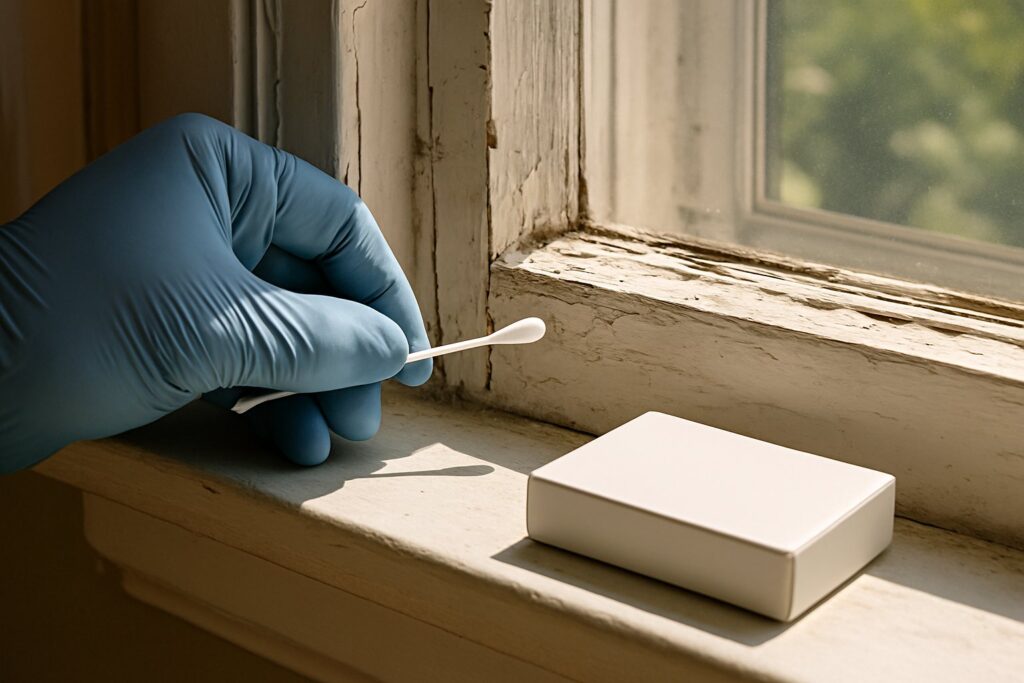
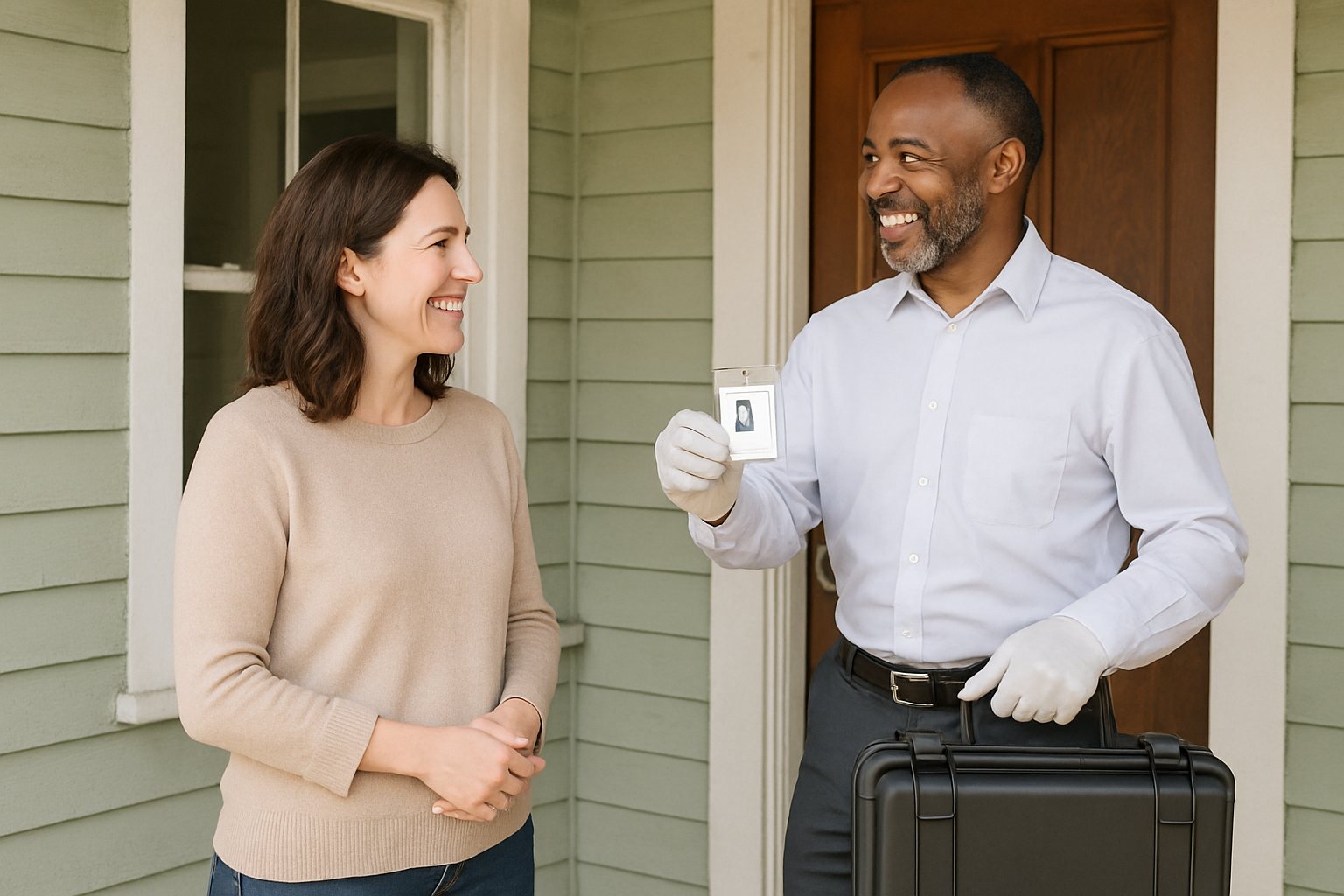
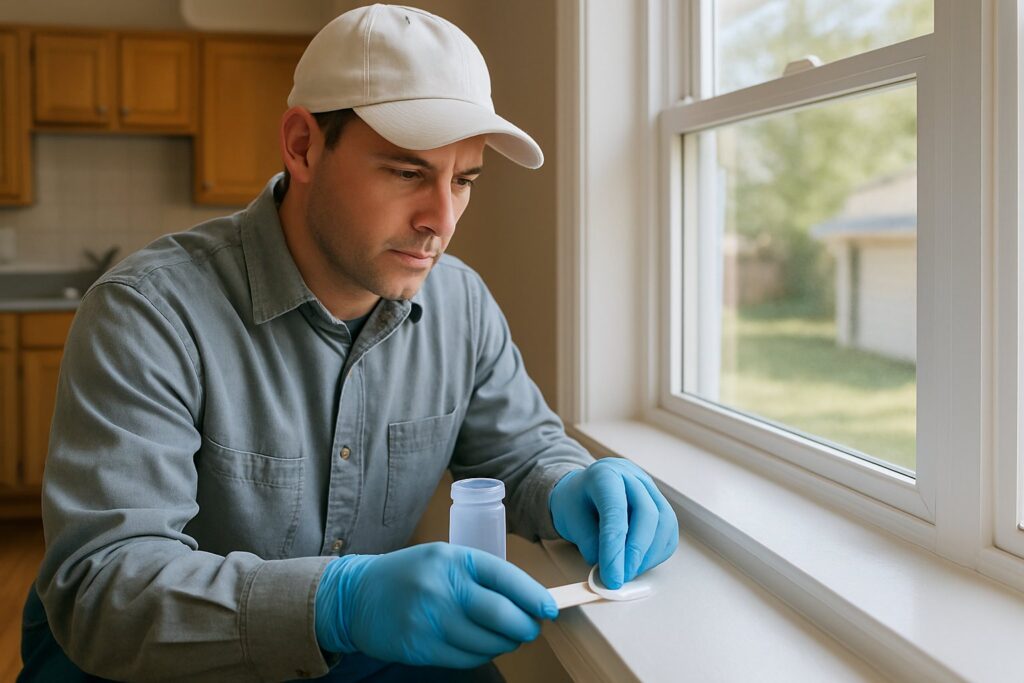
    Gloved hand checking a swab against old painted window trim at home

    In short: the kits on store shelves are cheap and quick, but most are screening tools with no EPA recognition. EPA recognizes only LeadCheck (made by Luxfer Magtech, formerly 3M), D-Lead (ESCA Tech) and the State of Massachusetts kit, only for lead-based paint, only on certain surfaces, and only when used by trained or certified professionals. “EPA approved” is not a term EPA uses for any kit. Water kits are a different category entirely: no home water kit is EPA-recognized, and the meaningful credential there is a state-certified drinking water lab. Pick the store by the kit you need, not the other way around.

    How we checked the stores

    On October 9, 2026, we searched each retailer’s own website for lead test kits and recorded what came back. Where a site blocked automated access, we say so and use the makers’ own “where to buy” pages instead of guessing. Prices are what each site showed online that day; they change often, and store stock varies. We did not buy or lab-test any kit.

    Lead test kits by store, at a glance

    StoreLead kits listedPrice seen (Oct 2026)EPA-recognized?
    Home Depot (homedepot.com)PRO-LAB Lead Surface Test Kit (LS104); PRO-LAB Lead-In Water Test Kit (LW107); Safe Home Lead in Solids Combo, 10 swabs; Safe Home Do-It-Yourself Lead in Water Test Kit$8.59; $8.72; $19.99; $19.99No. LeadCheck and D-Lead did not appear in Home Depot’s results, even when we searched “leadcheck.”
    Lowe’s (lowes.com)Could not check: the site blocked our requests. LeadCheck’s maker lists Lowe’s as a seller; PRO-LAB names Lowe’s among stores carrying its kitsNot seenLeadCheck is, if your store carries it; PRO-LAB is not
    Walmart (walmart.com)PRO-LAB surface, water and paint-and-dust kits; D-LEAD Lead Paint Test Kit, 24 tests; Schneider Labs mail-in kits; many generic swab packs. Mostly third-party sellersPRO-LAB surface about $14; D-LEAD $89.99; Schneider 1-sample (1-day) $65D-LEAD is (paint, certain surfaces). LeadCheck’s maker links to a Walmart listing we could not open
    Ace Hardware (acehardware.com)Could not check: the site blocked our requests. PRO-LAB names Ace among its storesNot seenPRO-LAB is not
    Amazon (amazon.com)LeadCheck 2-swab and 8-swab packs; PRO-LAB Lead Surface; Safe Home solids and water kits; Schneider Labs mail-in kit$15 and $39; $13.96; $19.99 each; $35LeadCheck is. We found no D-Lead listing

    Home Depot: four lead kits, none EPA-recognized

    Five different searches on homedepot.com, including “leadcheck,” returned the same four lead kits, all marked in stock online. The PRO-LAB kits appeared as store-and-online items and the Safe Home kits as online-only, so check the product page with your local store selected.

    • PRO-LAB Lead Surface Test Kit (LS104), $8.59. An instant swab test you wet with water. PRO-LAB says its swabs detect lead “to as little as 5 parts per million”, a maker’s claim; the kit is not on EPA’s recognized list. PRO-LAB’s page describes twelve swabs, while a one-pack listing on Amazon lists two test pads, so check the count on the package.
    • PRO-LAB Lead-In Water Test Kit (LW107), $8.72. A mail-in lab test, not an instant strip. PRO-LAB says you collect a water sample, ship it to its lab, and get a report “accurate to just 1 ppb” within seven business days. The page we read did not say whether a separate lab fee applies, so check the box before you buy.
    • Safe Home Lead in Solids Combo (10 swabs), $19.99. Ten swabs plus a sample you can mail to Safe Home’s lab (fee extra). Not EPA-recognized. More in our best lead paint test kits comparison.
    • Safe Home Do-It-Yourself Lead in Water Test Kit, $19.99. This looks like the DIY kit Safe Home sells on its own site for the same price (the model numbers differ slightly). Safe Home says the at-home test reads lead in three ranges (0-4, 5-15 and above 15 parts per billion) in about five minutes, with an optional mail-in sample for its lab at extra cost.

    The search also returned general water-quality kits (LABTECH, PurTest); check the box for lead before counting one as a lead test.

    Lowe’s: blocked, so here is what the makers say

    Lowe’s website refused our requests (an “access denied” response) on every page we tried, so we cannot tell you which lead kits lowes.com lists today or what they cost. Two makers do name Lowe’s. LeadCheck’s distributor page lists Lowe’s under “Marketplaces,” and its link goes to a Lowe’s search for “leadcheck.” PRO-LAB says its kits are sold at more than 40,000 outlets and names Lowe’s, Home Depot, Menards, Ace Hardware, True Value, Do It Best, Kroger, Fred Meyer, Giant Eagle and CVS. A marketplace listing may ship from a third-party seller rather than your local store.

    Walmart and Ace Hardware

    Walmart’s site showed us one search for “lead paint test kit” before switching to a robot check. Nearly every lead kit in that search was sold by a third-party seller with home delivery, not by Walmart itself. It included the PRO-LAB surface kit (about $14), PRO-LAB Lead in Water ($8.72) and PRO-LAB Lead Paint and Dust (about $13), Schneider Labs mail-in paint, dust or soil kits sold by the lab itself ($65 for one sample with one-day turnaround), and the D-LEAD Lead Paint Test Kit, 24 tests, at $89.99. That was the only place we saw D-Lead offered to consumers. Most of the rest were generic swab packs with no published detection limit.

    LeadCheck’s maker links to a Walmart listing for a 48-test LeadCheck box, but the robot check stopped us before we could open it. Ace Hardware’s site blocked us too; PRO-LAB lists Ace among its stores.

    Amazon: the easiest place to find LeadCheck

    Amazon had the widest range when we checked: LeadCheck in a 2-swab pack ($15) and an 8-swab pack ($39), both in stock; the same PRO-LAB surface kit sold at Home Depot ($13.96); Safe Home’s solids and water kits ($19.99 each); and Schneider Labs’ single-sample mail-in kit ($35). The LeadCheck listings name the brand as “Lead Check” and are sold by third-party sellers, and they do not say whether a box was made by Luxfer Magtech or is older 3M stock. EPA says older 3M kits may still be used; check the expiration date. We found no D-Lead listing on Amazon.

    Which lead test kits does EPA recognize?

    EPA’s lead test kit page says it “recognizes three lead test kits” for use under its Renovation, Repair and Painting (RRP) rule:

    • LeadCheck (Luxfer Magtech; 3M sold the formula and trademarks to Luxfer Magtech in 2024): wood, ferrous metal (iron and steel), drywall and plaster, when used by a certified renovator.
    • D-Lead (ESCA Tech): the same four surfaces, certified renovators. EPA says it is sold through certain distributors and retailers, or by calling ESCA Tech at 414-962-3006.
    • State of Massachusetts kit: drywall and plaster only, trained professionals. It is not something you will find in a store.

    Recognition has a narrow meaning. All three kits meet EPA’s criterion for reliable negative results: on paint at or above the federal lead-based paint level (1.0 mg/cm² or 0.5% by weight), they should rarely miss it. EPA says no kit has met its second criterion for reliable positive results. So a negative result on a recognized surface is the useful one; a positive may be a false alarm and should be confirmed. EPA also states that recognition applies when the kit is used by a trained professional. You can buy LeadCheck as a homeowner, but your own result is not an official determination for a sale, a rental or a child with an elevated blood lead level.

    “EPA approved” and “EPA-certified lab”: what the labels mean

    People search for “lead paint test kits EPA approved,” and some makers use the phrase. LeadCheck’s own consumer site calls it “EPA-approved,” and PRO-LAB calls its water kit “an EPA approved laboratory test.” EPA’s test kit page does not use the word “approved” at all. Its term is “recognized,” and it applies only to the three paint kits above. If a box says “EPA approved” and the kit is not LeadCheck, D-Lead or the Massachusetts kit, treat that as marketing.

    “EPA-certified lab,” printed on many mail-in and combo kits, needs a closer look too, and it depends on what you are testing:

    • Paint chips, dust wipes and soil: the federal credential is accreditation under EPA’s National Lead Laboratory Accreditation Program (NLLAP). EPA publishes the list. Schneider Laboratories appears on it; we did not find Safe Home’s named lab on it as of September 2026.
    • Drinking water: labs are certified by EPA or, in most cases, by state programs. EPA tells consumers to use a state-certified drinking water lab and lists each state’s program. Ask the kit maker which state certifies its lab for lead in drinking water.

    No home water test kit, strip or mail-in, is “EPA-recognized” the way the paint kits are. Our best lead water test kits guide explains what to look for instead.

    Kits we found in stock on Amazon

    These three were in stock on Amazon when checked in October 2026, one for each common question. Prices change; check the listing.

    EPA-recognized swab

    LeadCheck Swabs, Instant Lead Test, 2 Swab Blister Pack

    • Recognized on wood, ferrous metal, drywall, plaster
    • Red means lead; results in about 30 seconds
    • About $15, seen October 2026
    Check price on Amazon
    Water screen + lab option

    Safe Home DIY Lead in Drinking Water Combo Test Kit

    • Maker: 3 ranges, 0-4, 5-15, 15+ ppb in 5 minutes
    • Optional mail-in lab sample, fee extra
    • About $20, seen October 2026
    Check price on Amazon
    Measured lab result

    Schneider Labs Lead Test Kit, Paint, Dust or Soil (1 sample)

    • Lab on EPA's NLLAP list
    • Flame AA, EPA Method 7000B; prepaid return label
    • About $35, seen October 2026
    Check price on Amazon

    Which kit to buy, by the question you are asking

    1. “Is there lead paint where I’m about to sand or scrape?” An EPA-recognized swab (LeadCheck, or D-Lead) on wood, ferrous metal, drywall or plaster. Expose every paint layer, and read how to test for lead paint first.
    2. “How much lead is in this paint, dust or soil?” A mail-in kit from an NLLAP-accredited lab, or send a sample to any lab on EPA’s list.
    3. “Is there lead in my tap water?” A water kit, never a paint swab. A strip gives a range; a state-certified lab gives a number. EPA also suggests contacting your water utility.
    4. “Are these toys or dishes safe?” Home swabs are unreliable here; CPSC advises against using them on consumer products. A lab is the dependable route.
    5. Buying, selling or renting, or a child has an elevated blood lead level: skip the store and hire a certified lead inspector or risk assessor. See find a lead professional.

    Our home lead test vs lab testing guide goes deeper on when a store kit is enough, and the lead test kits hub compares every type. A test of your house is not a test of your family: if you are worried about exposure, ask a doctor about a blood lead test and see lead poisoning.

    Frequently asked questions

    Does Home Depot sell 3M LeadCheck?

    Not on homedepot.com when we checked in October 2026: searches for “leadcheck” and “3m leadcheck” returned only PRO-LAB and Safe Home kits. LeadCheck was in stock on Amazon, and its maker lists Lowe’s and Walmart among its sellers.

    Which lead paint test kits are EPA approved?

    EPA’s word is “recognized,” not “approved.” It recognizes LeadCheck and D-Lead for wood, ferrous metal, drywall and plaster, used by certified renovators, and the State of Massachusetts kit for drywall and plaster only, used by trained professionals.

    Is the PRO-LAB lead test kit at Home Depot any good?

    It is a low-cost screening swab. PRO-LAB says it detects lead down to 5 ppm, but it is not EPA-recognized and we found no independent evaluation of that claim. A negative result on old house paint is less dependable than one from LeadCheck or D-Lead; confirm anything important with a lab.

    Does Home Depot sell a lead water test kit?

    Yes. It listed the PRO-LAB Lead-In Water Test Kit ($8.72), a mail-in lab test, and the Safe Home Do-It-Yourself Lead in Water Test Kit ($19.99), an at-home test with an optional lab sample. Neither is EPA-recognized; no home water kit is.

  • Lead Test Kit for Dishes: What a Swab Can and Can’t Tell You

    Lead Test Kit for Dishes: What a Swab Can and Can’t Tell You

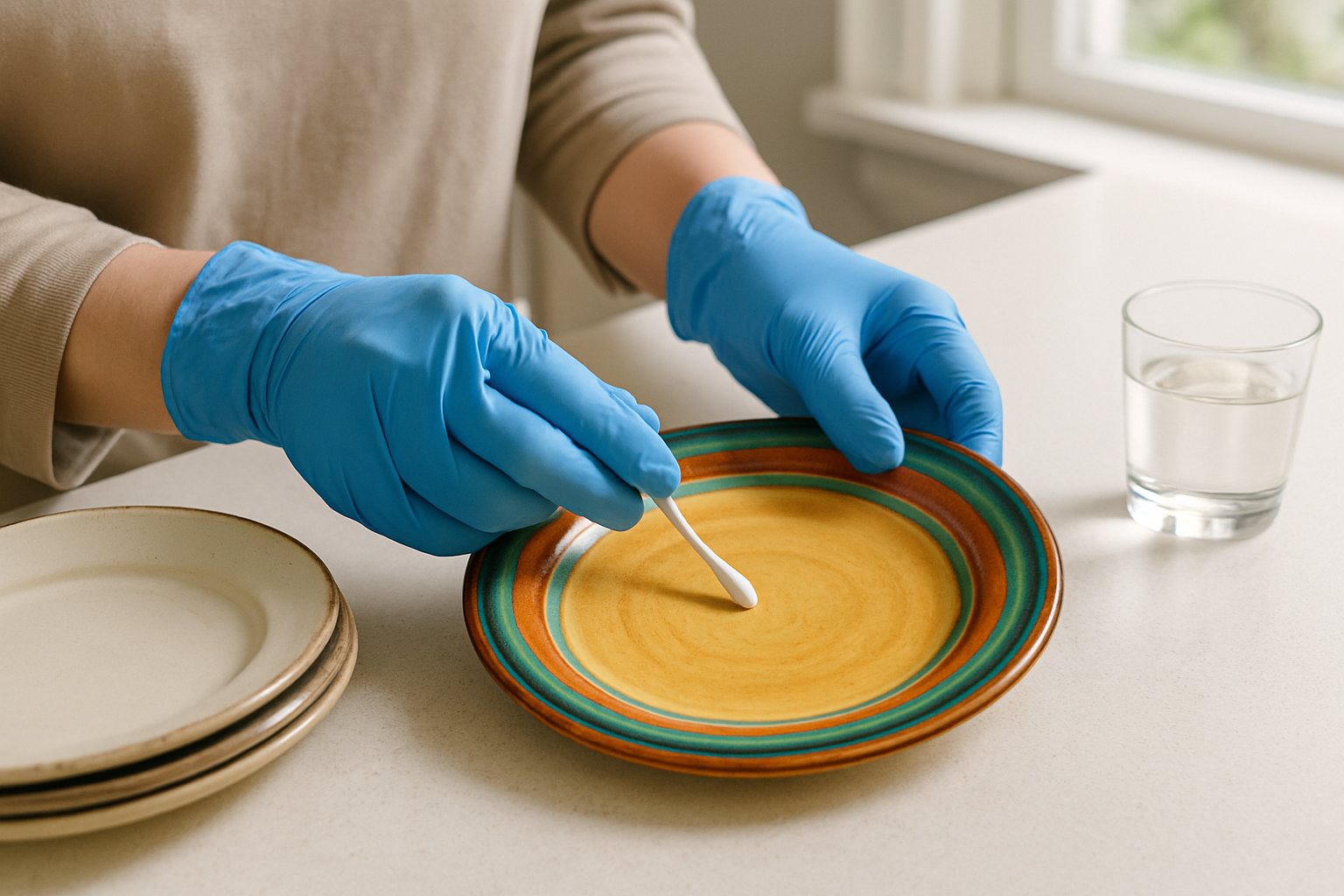
    A lead test kit for dishes can warn you that a plate, mug or glass gives off lead at its surface, but it cannot prove a dish is safe. The FDA says swab kits sold in hardware stores and online can be used on pottery and that you should stop using a piece for food if a swab shows leachable lead, while the CPSC found that home kits often miss lead in consumer products.

    Vintage china, decorated glasses and a crystal decanter on an open kitchen shelf

    In short: use a swab kit as a quick screen on the food-contact surface and the rim, especially on old, handmade, worn or brightly decorated pieces. Treat a color change as a reason to stop using the piece for food and drink. A negative proves little: no swab kit is EPA-recognized for ceramics or glass, a fired glaze can hide lead, and the FDA’s limits are measured with a lab leach test. If a dish matters to you, or children use it, the reliable answer is a lab leach test or simply keeping the piece for display.

    For why some dishes contain lead in the first place, see lead in pottery and dishes.

    How swab kits react to lead

    Most home lead swabs use one of two chemical reactions. A study of lead test kits by the National Institute of Standards and Technology (NIST) for HUD describes kits based on sulfide, which turns gray or black with lead, and kits based on rhodizonate, which turns pink or red. You rub the wet swab on the surface; if lead dissolves onto the tip, the color changes.

    So a swab only reacts to lead it can reach and dissolve in seconds at the exact spot you rub. The FDA describes it the same way for pottery: in most kits the swab changes color if lead leaches onto it.

    • Glazed surfaces. A swab can pick up lead from a glaze that is poorly fired, worn, corroded or chalky. A sound, fired glaze can hold lead underneath where the swab never touches it. The CPSC found that none of the kits it tested consistently detected lead covered by a non-leaded coating.
    • Decorations and decals. The California Department of Public Health (CDPH) warns about bright colors or decorations on surfaces that touch food or drink, including the upper rim of a cup or bowl, and about decorations that sit on top of the glaze. If you can feel the design with your finger, it is probably on top. Swab those spots.
    • Rims. Your lips touch it, so test it separately.

    What official sources say about home kits

    • EPA recognizes kits only for paint. The EPA recognizes three kits (LeadCheck, D-Lead and a Massachusetts kit) and only for telling a certified professional that regulated lead-based paint is not present on wood, ferrous metal, drywall or plaster (the Massachusetts kit only on drywall and plaster). Ceramics, china and glass are not on the list.
    • CPSC says kits are unreliable on consumer products. In its October 2007 staff study, the CPSC got 56 false negatives out of 104 results, plus two false positives, and concluded that consumers should not use lead test kits to evaluate consumer products. It said qualified lab testing is the only reliable way to assess a product.
    • FDA accepts kits as a warning sign for pottery. The FDA says consumers can buy lead-testing kits in hardware stores or online, and if a test finds leachable lead, it strongly advises against using that pottery for cooking, serving or storing food or drinks.

    A positive swab is meaningful; a negative is weak evidence. Our lead test kits hub explains which kit is designed for which material.

    What the FDA actually measures

    The FDA does not judge dishes by a swab. Its Compliance Policy Guide Sec. 545.450 sets action levels for lead that leaches out of ceramic ware into an acid solution in a standard laboratory test (ASTM C738). The limits get stricter for pieces that hold liquid for longer, such as cups and pitchers:

    Ceramic wareFDA action level (lead in leach solution)
    Flatware (plates, saucers), average of 6 units3.0 µg/mL
    Small hollowware (bowls, other than cups and mugs)2.0 µg/mL
    Large hollowware (other than pitchers)1.0 µg/mL
    Cups and mugs0.5 µg/mL
    Pitchers0.5 µg/mL

    A swab result has no unit that compares to these numbers. A dish can pass a swab and still release more lead than the cup limit, and the swab will not tell you. Decorative ceramics that contain lead must carry a warning such as “Not for Food Use—May Poison Food” under 21 CFR 109.16; never use those for food, whatever a swab says.

    Glassware with painted rims and decals

    Glasses, mugs and tumblers with colored designs near the top are a common worry. There is a dedicated laboratory method for them: ASTM C927 measures lead and cadmium extracted from the lip and rim area of glass tumblers decorated on the outside with ceramic glass enamels. ASTM calls it a severe test, not a measure of real use.

    We found no federal consumer guide specifically for decorated drinking glasses. CDPH’s tableware guidance is the practical rule: decorations where food, drink or lips touch, including the rim, deserve the most caution, especially when worn. If a glass has a painted band or decal that reaches the area where your mouth goes, swab that band, and if it reacts, retire the glass to display or use it only for things like pens. A negative swab on a glossy enamel does not clear it, for the same coating reason as glazes.

    Vintage china and lead crystal

    Vintage china. CDPH lists antique tableware handed down in families or found in antique stores, flea markets and garage sales among the pieces most likely to contain lead, because they were made before lead in tableware was regulated. It also flags corroded glaze or a dusty, chalky gray residue after washing as a possible serious hazard. CDPH notes that plain white dishes rarely contain lead. A swab is a fair first check on old china, but heirlooms you want to use daily are worth a lab test.

    Lead crystal. Lead crystal contains lead by design, so a swab tells you little. We found no current FDA consumer page on it. The EPA advises avoiding storing or serving food and liquids in lead crystal. CDPH says occasional use is unlikely to expose you to large amounts unless liquids have been stored in it, that children should never eat or drink from leaded crystal, and that food or alcohol should not be stored in crystal decanters because leaching increases with time. A 1992 study in the American Journal of Public Health measured 100 to 1,800 µg/L of lead in drinks stored in decanters from 14 makers.

    How to swab a dish correctly

    1. Read the kit’s own instructions. Activation differs: some swabs have crushable vials, some need water or white vinegar. Note what the maker says the kit is for.
    2. Clean and dry the surface. Remove food residue and grease so the swab touches the glaze.
    3. Test the food-contact areas. Swab the inside of cups and bowls, the eating surface of plates, and the rim. Use a fresh swab for each spot and each color in the decoration.
    4. Focus on the risky spots. Worn, chipped, crazed or chalky areas, raised decorations and bright reds, oranges and yellows, which the FDA lists among higher-risk signs.
    5. Rub firmly for the time stated and read the color in good light within the time window the kit gives. Use the kit’s confirmation card if it has one.

    Do not scrape or chip a glaze to “get under it.” It damages the dish and still won’t show how much lead leaches into food. The FDA also notes that no amount of washing or boiling removes lead from pottery.

    What a negative result does not prove

    • It does not prove the dish is lead-free. Lead under an intact glaze or enamel may not reach the swab. One kit maker below states this on its own listing.
    • It does not show the dish meets FDA limits, which are measured by a leach test.
    • It does not account for use. CDPH says heating, storing food and acidic foods and drinks (citrus, tomatoes, soy sauce, juice, cola, coffee, tea, alcohol) all increase leaching, and the dishwasher can damage a leaded glaze over time.

    Home kits compared with lab testing

    MethodWhat it tells youLimitsCost (published)
    Rhodizonate swab (pink/red)Lead dissolved from the surface at one spotNot EPA-recognized for ceramics or glass; misses lead under intact glaze or coating; no amountEasy@Home 30 swabs about $8; LeadCheck 8 swabs about $39 (Amazon, Oct 2026)
    Sulfide swab (gray/black)Same idea, different reagentSame limits; dark colors are hard to read on dark glazesNot compared here
    Fluorescent spray and UV lightMaker says lead on the surface glows under UVMaker’s claims only; no EPA or CPSC evaluation foundFluoro-SPEC about $63 (Amazon, Oct 2026)
    Lab leach test (ASTM C738; C927 for glass rims)How much lead leaches into acid, comparable to FDA action levelsFew labs take single household pieces; may need several units; may be destructiveNo consumer price published by labs we checked
    Ask the seller or makerWhether current tableware meets Prop 65 or FDA limitsOnly works for dishes still on saleFree

    For a wider look at home screens versus lab numbers, see home lead test vs lab testing.

    The best lead test kit for dishes: screening only

    There is no “best” kit in the sense of one that can clear a dish, because no home kit is recognized for ceramics or glass. If you want a quick screen, these were in stock on Amazon when checked in October 2026. For paint, see our best lead paint test kits.

    Many spots, low cost

    Easy@Home Lead Test Kit, 30 Rapid Testing Swabs

    • 30 swabs, pink or red in 30 seconds; white vinegar needed, not included
    • Maker: cannot detect lead under intact baked ceramic glazes
    • About $8, seen October 2026
    Check price on Amazon
    Known swab brand

    LeadCheck Swabs, Instant Lead Test, 8 Swabs

    • Rhodizonate swab, turns red; confirmation card
    • EPA-recognized for paint only, not ceramics
    • About $39, seen October 2026
    Check price on Amazon
    Different method

    Fluoro-SPEC Instant Lead Test Kit with UV Light

    • Spray reagent, UV flashlight, maker: up to 3,600 uses
    • Maker's sensitivity claims not independently evaluated
    • About $63, seen October 2026
    Check price on Amazon

    Getting a laboratory leach test

    Ceramic leach testing to ASTM C738 is mostly sold to manufacturers and importers. When we checked in October 2026, we could not confirm a US lab that publishes a consumer price for testing a single household dish, so we do not name one. To find one:

    • Ask testing labs whether they run ASTM C738 (ceramics) or ASTM C927 (decorated glass rims) for individuals, and whether they are accredited (ISO/IEC 17025) for that method.
    • Ask how many pieces they need, whether the test damages them, the turnaround and the price per piece.
    • Make sure you get a leach result in µg/mL, not just a total-lead or XRF reading, so you can compare it with the FDA table above.
    • For dishes still on sale, CDPH suggests asking the store or the manufacturer whether they meet Proposition 65 standards.

    For lead testing in your home itself, see find a lead professional.

    If a dish tests positive

    1. Stop using it for food and drink. The FDA strongly advises against using pottery with leachable lead for cooking, serving or storing food or drinks.
    2. Keep it as decoration or retire it. Label it so no one uses it by mistake, and keep it out of the dishwasher with other dishes.
    3. Report new products. If you bought it new in the US, you can report it to the FDA; CDPH lists the FDA as the agency for import and retail violations.
    4. Think about who used it. If a child ate or drank from it regularly, the FDA suggests asking a health care provider about a blood lead test. If you are pregnant and used it, mention it to your provider too. For urgent questions, call Poison Control at 1-800-222-1222. See lead poisoning for what official sources say about health effects.

    Other everyday sources are on our lead in household items hub.

    Frequently asked questions

    Do lead test kits work on dishes?

    Partly. The FDA says swab kits can be used on pottery and a color change means you should stop using the piece for food. But no kit is EPA-recognized for ceramics, and the CPSC found home kits often miss lead in consumer products, so a negative result does not prove a dish is safe.

    Can I use a lead test kit on glassware?

    You can swab painted bands and decals on the outside rim of a glass as a screen. Undecorated glass is not where official guidance points the concern, and lead crystal contains lead by design, so a swab is not useful there. The lab method for decorated glass rims is ASTM C927.

    Is a lead test kit for china different from one for ceramics?

    No. Kits sold for dishes, china and ceramics use the same swab chemistry as paint kits. What changes is where you test: the glaze, the decorations and the rim.

    My dish tested negative. Can I use it?

    If it is a modern, commercially made dish in good condition, the FDA says it is much less likely to be a problem. If it is old, handmade, worn or of unknown origin, a negative swab is not enough: use it for display, or get a lab leach test before using it for food, especially for children.

  • How to Choose a Lead Inspector: Certification, Questions, Red Flags

    How to Choose a Lead Inspector: Certification, Questions, Red Flags

    To choose a lead inspector, first decide whether you need an inspection (where is the lead paint?) or a risk assessment (is there a hazard right now, from paint, dust or soil?), then hire someone whose certification for that job you have checked yourself on EPA’s locator or your state’s list. Everything else, from price to schedule, comes after that check.

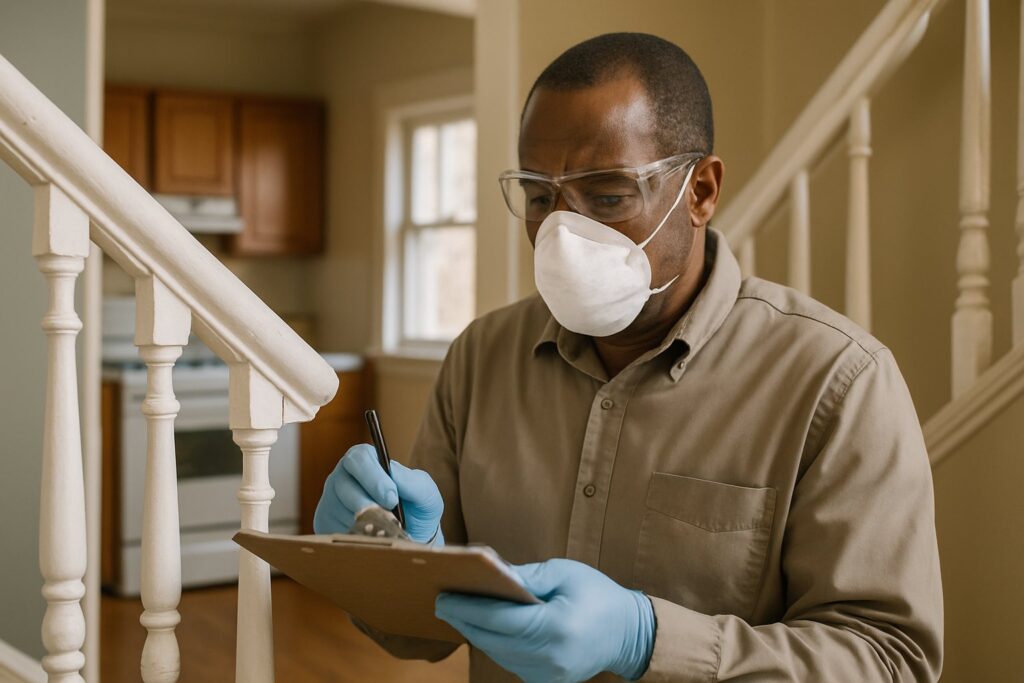
    An inspector writing notes during a home inspection

    In short: only a certified lead inspector or risk assessor can legally do a lead-based paint inspection in pre-1978 housing, and only a certified risk assessor can do a risk assessment. In Alaska, Arizona, Florida, Idaho, Montana, Nevada, New Mexico, New York, South Carolina, South Dakota and Wyoming, EPA certifies them; everywhere else, your state program does. Ask for the certificate, the firm’s certification, the lab they use, and a sample report. Be wary of anyone who offers a quick swab “inspection” or has no written report.

    Inspector or risk assessor: who do you need?

    People search for a “lead inspector near me” for very different reasons. The right professional depends on the question you need answered:

    ProfessionalWhat they doBest for
    Certified lead inspectorSurface-by-surface lead-based paint inspection, with a written report of where lead paint isBuying, selling or renting a home; planning renovation
    Certified risk assessorRisk assessment: finds paint, dust and soil hazards, how severe they are, and options to fix them. Can also do inspectionsYoung children in the home, a child with a high blood lead level, deciding what to fix first
    Risk assessor, lead hazard screenA limited risk assessment with fewer samples, such as two composite dust samplesA quick check of a well-kept home
    Inspector or risk assessor, clearanceVisual check and dust wipes after abatementConfirming an abatement job is finished
    Lead dust sampling technicianDust clearance after renovation work and some HUD-assisted housing workAfter renovation; never post-abatement clearance

    EPA says you can also have a combined inspection and risk assessment, and that either way you get a written report. If you are not sure, a risk assessor can usually do both. Our guide to lead paint inspection vs risk assessment walks through each visit in detail.

    Common situations

    • Buying a pre-1978 home. Federal rules give buyers a 10-day opportunity to have a lead paint inspection or risk assessment, which buyer and seller can lengthen, shorten or waive in writing. Book early so the inspector fits that window. See lead paint disclosure.
    • A child with an elevated blood lead level. CDC guidance tells clinicians to arrange an environmental investigation of the home, as required locally. Your health department may send its own risk assessor, so call them before hiring privately. Read more on lead poisoning.
    • Planning a renovation. An inspection tells your contractor which surfaces contain lead, so lead-safe work practices can focus on them. See lead-safe renovation (RRP).
    • After abatement. You need clearance by a certified inspector or risk assessor. Read lead abatement.

    How to verify a lead inspector’s certification

    EPA requires individuals and firms doing lead-based paint inspections, risk assessments and abatement in pre-1978 housing and child-occupied facilities to be certified and to follow specific work practices. Checking takes about five minutes:

    1. Find out who certifies in your state. EPA runs the program in the 11 states listed above, plus American Samoa, Guam, the Northern Mariana Islands, the US Virgin Islands and most Tribal lands. All other states, and a few Tribes, run EPA-authorized programs. EPA links to each state program from its Lead-Based Paint Abatement and Evaluation Program overview.
    2. Search the official list. In EPA states, use EPA’s Certified Inspection, Risk Assessment, and Abatement Firms Locator. In other states, use the state’s licensed lead professionals list.
    3. Match the details. Ask for the individual’s certificate and the firm’s certification. Check the person’s name, the discipline (inspector or risk assessor), the certificate number and the expiration date against the list.
    4. Don’t confuse it with RRP. An EPA lead-safe certified renovation firm is trained to work safely around lead paint. That is a different certificate, and it does not allow someone to perform a lead-based paint inspection or risk assessment.

    EPA’s own advice to homeowners is short: a competent lead-based paint professional will know how to work safely and will have proof of certification. If you cannot find someone, the National Lead Information Center at 1-800-424-LEAD (5323) can help, or start from our find a lead professional page.

    Questions to ask before you hire

    • Are you certified as an inspector, a risk assessor, or both, and in this state? Is your firm certified?
    • Will this be an inspection, a risk assessment, a lead hazard screen, or a combination? What question will the report answer?
    • How will you test paint: a portable XRF analyzer, paint-chip samples sent to a lab, or both?
    • Will you take dust wipe and soil samples? Which rooms and surfaces?
    • Which laboratory analyzes samples, and is it on EPA’s NLLAP list for that sample type?
    • Which dust-lead values will you report against? From January 12, 2026, federal risk assessments in EPA states treat any reportable lead on floors and sills as a hazard. Authorized states may still use older values while they update.
    • Can I see a sample report with personal details removed?
    • When will I get the written report, and will you go over it with me?
    • What is the total price, and what does it include (lab fees, travel, multiple units, a re-visit)?
    • Do you or your firm also sell abatement or renovation work? If so, how do you keep testing separate?

    What the report should include

    Federal rules spell out what each report must contain, so you can check it line by line:

    Inspection reportRisk assessment report
    Date of the inspection; address and date of construction; owner; inspector’s name, signature and certification number; firmDate; address, apartment number and date of construction; owner; risk assessor’s name, signature and certification number; firm
    Each testing method and device used, with quality control data and XRF serial numbersName and address of each recognized laboratory; paint testing methods; all on-site and lab results with quality control data
    The specific locations of each painted component testedVisual inspection results and locations of tested components
    The results of each testResults for paint, dust, soil and other samples, and earlier relevant results
    The location, type and severity of each hazard, and interim control and abatement options in order of priority
    A maintenance and monitoring schedule if encapsulation or enclosure is recommended

    If your report is missing whole sections, such as no lab name for dust results or no list of tested components, ask the inspector to complete it. Keep the report: under the federal disclosure rule, sellers and landlords of pre-1978 housing must share available records and reports about lead-based paint with buyers and renters.

    Red flags

    • No certificate, or one you cannot find on the official list.
    • A swab-only “inspection”. EPA recognizes the LeadCheck, D-Lead and Massachusetts swab kits only to show that regulated lead paint is not present, when used by trained professionals, and only on specific surfaces. No kit has yet met both of EPA’s performance criteria. A real inspection uses documented methods such as XRF or lab-analyzed paint chips.
    • Dust results without a lab name, or from a lab that is not NLLAP-recognized for dust wipes.
    • No written report, or a one-page “pass” with no locations or numbers.
    • A renovation contractor calling an RRP course an inspection license.
    • Pressure to buy abatement on the spot. The point of a risk assessment is to give you options, including interim controls and ongoing maintenance, and you can get a second opinion.

    What a lead inspection costs

    Prices depend on home size, number of units, the type of evaluation and lab work, and few official sources publish them. What we found when checked in October 2026:

    • A private firm’s published price: Massachusetts Lead Paint Inspections lists inspections starting at $450 for a single-family home, with custom pricing for multi-unit properties.
    • Lab fees, if billed separately: the Wisconsin Occupational Health Laboratory charges homeowners $40 per paint, soil or dust wipe sample at normal turnaround.
    • Free through local programs: Hennepin County, Minnesota offers eligible families a free home test, and the City of Boston offers free lead paint inspections to eligible homeowners in its Lead Safe Boston program. Ask your health department what is available where you live.

    Get at least two written quotes that describe the same scope, so you are comparing an inspection with an inspection, not with a quick screen.

    While you wait for the inspector

    Some owners use a swab or a mail-in lab kit to get an early hint. These do not replace a certified inspection, but they can help you decide how urgently to book one. Checked on Amazon October 9, 2026, In Stock that day:

    Paint pre-check

    LeadCheck Swabs, Instant Lead Test, 8 Swab Pack

    • 8 swabs
    • Listing: EPA recognized, detects down to 600 ppm
    • EPA: negatives on wood, metal, drywall, plaster
    Check price on Amazon
    Lab result

    Schneider Labs Lead Test Kit: Paint, Dust or Soil (1 sample)

    • 1 paint, dust or soil sample
    • NLLAP-listed lab
    • Results 5 business days after arrival
    Check price on Amazon

    For how these compare with professional testing, see home lead test vs lab testing and how to test for lead paint. When you are ready, request an inspection or browse certified pros on find a lead professional.

    Lead inspector FAQ

    Can a home inspector test for lead paint?

    Only if they also hold lead inspector or risk assessor certification. A general home inspection license does not cover lead-based paint inspections in pre-1978 housing.

    How long does a lead inspection take?

    It depends on the size of the home and the number of surfaces tested. Lab results for dust and soil add days. Ask the inspector for both the visit time and the report date.

    What is the difference between a lead inspector and a risk assessor?

    An inspector finds where lead-based paint is. A risk assessor finds which paint, dust and soil hazards exist and how to control them. Risk assessors can do inspections too.

    Where do I check a lead inspector’s license?

    On EPA’s firm locator if you live in an EPA-administered state, or on your state lead program’s list everywhere else. EPA’s program overview page links to every state program.

    Do landlords have to hire a lead inspector?

    The federal disclosure rule does not require landlords to get an inspection, only to disclose what they know and share available records. Some states, cities and HUD programs do require inspections or risk assessments, so check your local rules.

  • Lead Abatement: Process, Contractors, Costs and Grants

    Lead Abatement: Process, Contractors, Costs and Grants

    Lead abatement is work designed to permanently eliminate lead-based paint hazards in a home, by removing, enclosing or encapsulating lead paint, replacing painted parts, or removing or covering contaminated soil. It must be done by a certified abatement firm, and it is not finished until an independent dust test shows the area is clean.

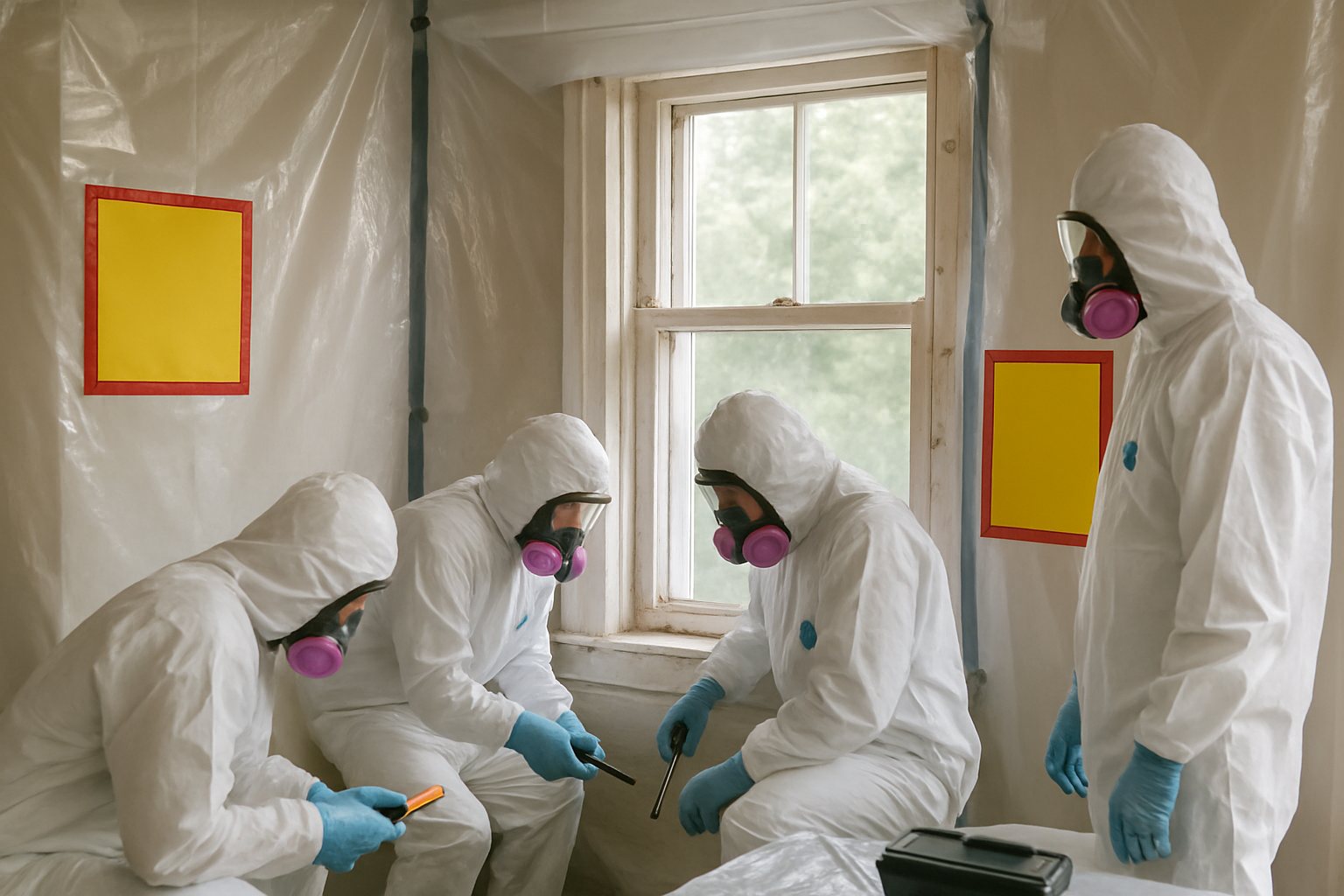
    An inspector doing a clearance check after abatement

    In short: abatement is permanent; interim controls such as repairs, specialized cleaning and repainting are temporary and need ongoing checks. In pre-1978 homes and child-occupied facilities, abatement firms and workers must be certified by EPA or by an EPA-authorized state, occupants move out during the work, and the job passes only when a certified inspector or risk assessor finds lead dust below 5 µg/ft² on floors, 40 µg/ft² on window sills and 100 µg/ft² in window troughs. Costs vary widely.

    Abatement vs interim controls vs renovation

    Three kinds of work can look alike from the sidewalk. They are regulated differently, and the difference matters when you hire someone.

    AbatementInterim controlsRenovation, repair and painting (RRP)
    GoalPermanently eliminate lead-based paint hazardsTemporarily reduce exposureRemodeling or repairs that happen to disturb paint
    Typical workPaint removal, enclosure, encapsulation, replacing windows or doors, soil removal or coveringSpecialized cleaning, repairs, maintenance, painting, temporary containment, monitoringWindow replacement, demolition, sanding, painting prep
    Who does itCertified abatement firm and certified workers and supervisorVaries by program and stateEPA lead-safe certified renovation firm
    OccupantsFirm must make sure occupants are outVaries by programNot required to leave, but kept out of the work area
    Ends withClearance testing against EPA action levelsOngoing monitoringCleaning verification, or clearance where a program requires it

    EPA is blunt about one point: painting over lead paint with regular paint does not permanently address the hazard. If your contractor offers to “seal it with primer”, that is not abatement. For renovation rules, see lead-safe renovation (RRP).

    Abatement methods

    • Removal. Stripping the paint by permitted methods. Federal rules ban open-flame burning or torching, ban machine sanding, grinding or abrasive blasting unless HEPA exhaust control is used, limit dry scraping, and require heat guns to run below 1,100°F. More in lead paint removal.
    • Enclosure. Covering the painted surface with rigid, durable materials mechanically fastened in place, such as drywall or paneling.
    • Encapsulation. Coating the paint with an encapsulant, a product that forms a barrier between the paint and the environment. It needs a sound surface and periodic monitoring. See lead paint encapsulation.
    • Component replacement. Taking out lead-painted windows, doors or trim and installing new ones. Old windows are frequent targets because friction makes dust.
    • Soil abatement. Removing contaminated soil and replacing it with soil at or below 400 ppm lead, or permanently covering it. Read lead in soil testing first.

    Most projects mix methods. A certified risk assessor or project designer helps choose them; when encapsulation or enclosure is recommended, the risk assessment report must include a maintenance and monitoring schedule.

    Who can do lead abatement: certification

    EPA requires individuals and firms that do lead-based paint inspections, risk assessments and abatement in pre-1978 housing and child-occupied facilities to be trained, certified and to follow specific work practices. Individual roles include abatement worker, supervisor, inspector, risk assessor and project designer. The firm itself must be certified too.

    Who issues the certificate depends on where you live. EPA runs the program itself in Alaska, Arizona, Florida, Idaho, Montana, Nevada, New Mexico, New York, South Carolina, South Dakota and Wyoming, plus American Samoa, Guam, the Northern Mariana Islands, the US Virgin Islands and most Tribal lands. In those places, check firms with EPA’s Certified Inspection, Risk Assessment, and Abatement Firms Locator. Every other state runs its own EPA-authorized program, with its own license list; EPA links to each one from its program overview page.

    Note that an EPA lead-safe certified renovator (RRP) is not an abatement contractor. If the goal is to get rid of lead hazards, hire an abatement firm. Our find a lead professional page explains how to search, and how to choose a lead inspector covers the testing side.

    The abatement process, step by step

    1. Find the hazards. A lead inspection shows where lead paint is; a risk assessment shows which paint, dust and soil hazards exist and the options to fix them. See lead paint inspection vs risk assessment.
    2. Plan the work. Before work starts, a certified supervisor or project designer writes an occupant protection plan specific to the building, describing how residents will be protected.
    3. Notify. In EPA-administered areas, the firm must notify EPA at least 5 business days before abatement starts (shorter windows apply to emergency or elevated-blood-lead orders). States have their own notice rules.
    4. Prepare and contain. Occupants and belongings move out of the work area; the crew seals it with plastic sheeting and controls dust. A certified supervisor must be on site during preparation and final cleanup, and reachable within 2 hours at other times.
    5. Do the work using permitted methods, then clean up the work area.
    6. Clearance. A certified inspector or risk assessor does a visual check for deteriorated paint, dust and debris, then takes dust wipe samples at least one hour after final cleanup. From January 12, 2026, in EPA-administered areas, results must be below 5 µg/ft² on floors, 40 µg/ft² on interior window sills and 100 µg/ft² in window troughs. If not, the area is cleaned again and retested.
    7. Abatement report. The supervisor or project designer prepares a report with the dates, firms, the occupant protection plan, a description of the work and the clearance results. Keep it: you may need it when you sell or rent the home.

    States that run their own programs may still use older clearance values until they adopt EPA’s 2024 rule (they have two years from January 13, 2025). Our lead dust testing guide explains the wipe test and the numbers.

    Relocation during the work

    EPA’s comparison of abatement and renovation says abatement firms are required to make sure occupants are out of the home, child care facility or preschool. Program documents say the same in practice. The City of Warren, Michigan’s HUD-funded program guidelines state that federal regulations prohibit occupancy of areas where lead abatement or interim control work is happening until the whole house passes clearance. Hennepin County, Minnesota tells applicants that no one can live in the home during repairs, and its grant covers lodging up to $175 per day or $875 per week.

    Ask early how long you will be out, who pays for lodging, and what happens to pets and belongings. Children and anyone pregnant should not be in the home during work or before clearance.

    Lead abatement cost: what published sources show

    There is no official national price list for abatement, and the cost depends on how many surfaces, windows and doors are involved, the method, the size and age of the home, soil work, and relocation. These are the published figures we found when checked in October 2026:

    SourceFigureWhat it means
    City of Warren, Michigan, HUD-funded program (June 2026)Maximum grant $75,000 per home; more for high-cost units with HUD permissionA program cap, not a typical cost
    Hennepin County, MinnesotaGrant of up to $15,000 in lead removal work; landlords pay at least 10% of repairsProgram cap
    City of Boston, Lead Safe BostonForgivable loans of up to $12,000 per unit, plus free lead paint inspectionsProgram cap
    MassHousing Get the Lead OutLow- and no-interest loans of $30,000 to $45,000 depending on property typeLoan cap

    Treat these as context, not a quote. The only reliable price for your home is a written estimate from a certified abatement firm, based on an inspection or risk assessment report. Get more than one, and make sure each covers the same scope, the clearance test and the cleanup.

    Grants, loans and tax credits for abatement

    HUD’s Office of Lead Hazard Control and Healthy Homes funds lead hazard reduction grants to state and local governments, which then run programs that homeowners and landlords apply to. In October 2024, HUD announced more than $420 million in awards to remove lead hazards from homes, according to EPA. You do not apply to HUD directly: you apply to your city, county or state program.

    Programs differ, but these real examples show the usual pattern:

    • Warren, Michigan. HUD-funded grants for low- and moderate-income households. Owner-occupants must be at or below 80% of area median income; rental owners pay a 10% copay and agree to prioritize income-eligible families with young children. Homes need an inspection and risk assessment.
    • Hennepin County, Minnesota. A free home test and up to $15,000 in grant funding for homes built before 1978 where a child under six lives or regularly visits, for households that meet income limits. Landlords qualify with occupant consent.
    • Boston, Massachusetts. Forgivable loans of up to $12,000 per unit, technical advice from city lead specialists and free lead paint inspections.
    • Massachusetts tax credit. Owners who fully delead a unit can claim a state income tax credit of up to $3,000 per unit, or up to $1,000 for partial work (interim control), with a seven-year carryover.

    To find a program near you, search your city or county name with “lead hazard control program”, ask your local health department, or call the National Lead Information Center at 1-800-424-LEAD (5323). Priority usually goes to homes with a child who has an elevated blood lead level. If you are worried about a child’s exposure, talk to your doctor about a blood lead test and read our lead poisoning guide.

    How to hire a lead abatement contractor

    • Check both certificates: the firm’s certification and the supervisor’s individual certificate, on EPA’s locator or your state’s list. EPA notes a competent lead professional will have proof of certification.
    • Ask for the plan in writing: methods by surface, containment, the occupant protection plan, waste handling and who notifies EPA or the state.
    • Ask who does clearance. It must be a certified inspector or risk assessor. You can hire your own.
    • Get the report. The price should include the abatement report and clearance results.

    Ready to start? Use find a lead professional or request an inspection.

    Keeping dust down before and after

    Until work is done, EPA advises wet cleaning surfaces and HEPA vacuums where there is visible paint debris. Months after clearance, some owners recheck floors and sills with a lab wipe kit. Checked on Amazon October 9, 2026, In Stock that day:

    For cleaning

    D-Lead Surface Wipes for Lead Dust Cleanup, 48 ct

    • 48 wipes, 9 x 12 in
    • Listed as meeting EPA wet cleaning cloth definition
    • Cleanup, not a test
    Check price on Amazon
    Follow-up check

    Schneider Labs Lead Test Kit: Paint, Dust or Soil (1 sample)

    • 1 dust, paint or soil sample
    • NLLAP-listed lab
    • Not an official clearance
    Check price on Amazon

    A do-it-yourself wipe is only for your information; official clearance must be done by a certified professional.

    Lead abatement FAQ

    Is encapsulation considered abatement?

    Yes. EPA’s definition of abatement includes permanent enclosure or encapsulation of lead-based paint, when done by certified people following the rules. It needs monitoring over time.

    Can I abate lead paint myself?

    The federal rules exempt owners working in a home they own, unless someone other than the owner’s immediate family lives there during the work, or a child living there has been identified with an elevated blood lead level. States can have stricter rules, and do-it-yourself paint removal can create serious dust hazards. Check your state lead program before touching old paint.

    How long does lead abatement take?

    It depends on the scope. In EPA-administered areas, add at least 5 business days for the required notice before work starts, plus time for clearance testing and lab results.

    Does abatement have to remove all lead paint?

    No. Abatement permanently eliminates the identified hazards. Intact lead paint can stay if it is enclosed, encapsulated or not a hazard, which is why the inspection or risk assessment report comes first.

    Who pays for abatement in a rental?

    EPA says that if you rent housing not funded by HUD, local laws may require your landlord to pay, and HUD or state and local governments may require landlords or housing authorities to pay in some cases. Ask your local health department.

  • Lead in Soil Test: EPA Levels, Where to Sample and Which Labs

    Lead in Soil Test: EPA Levels, Where to Sample and Which Labs

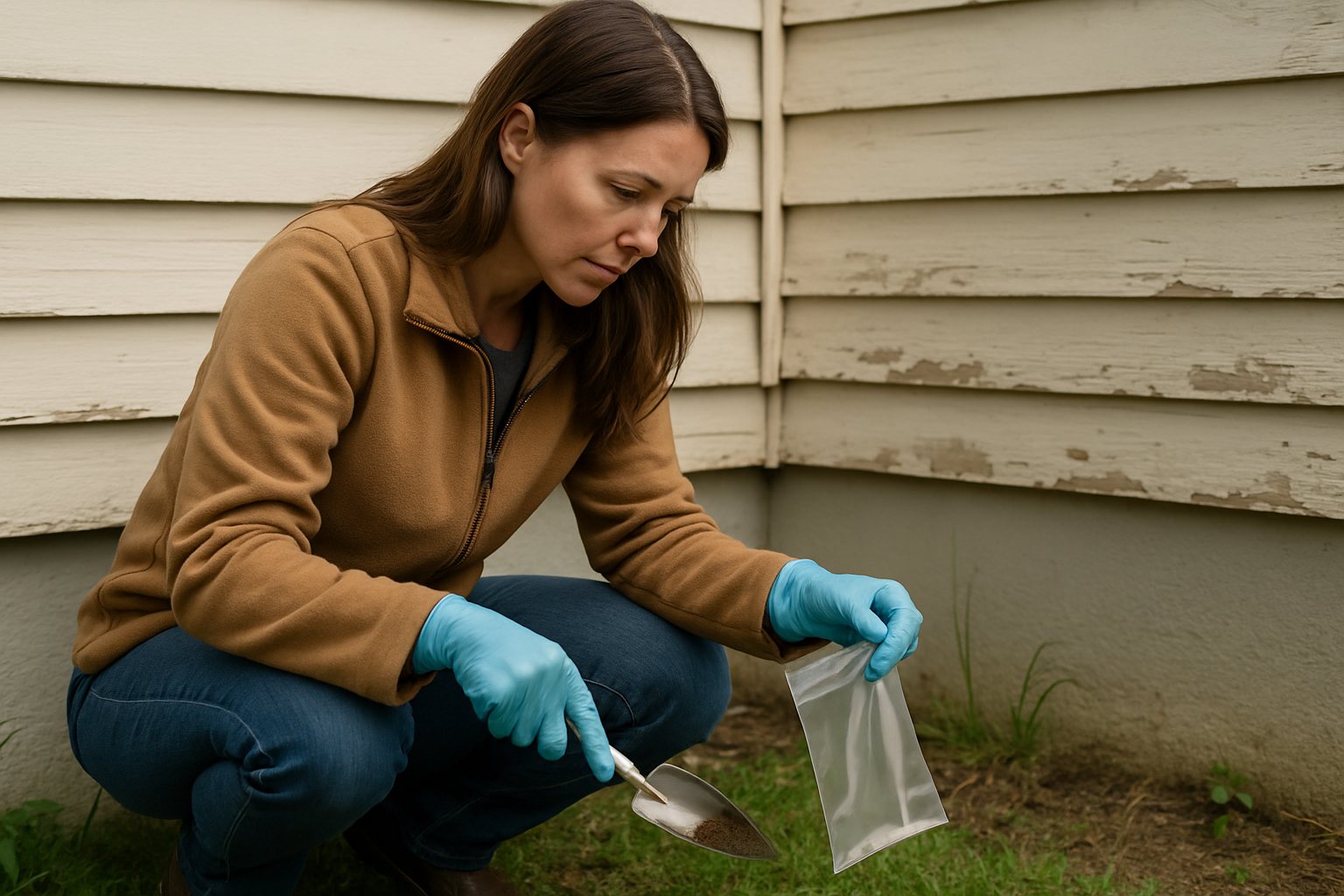
    The most reliable lead in soil test is a laboratory analysis of soil you collect from the spots that matter: where children play, along the drip line of an older house, and in the vegetable garden. Many university extension soil labs test for lead for a modest fee, and EPA-recognized commercial labs do too.

    Raised garden beds with fresh soil next to an older house

    In short: under EPA’s lead hazard rules, bare soil is a hazard at 400 parts per million (ppm) or more in a children’s play area, or an average of 1,200 ppm in the rest of the yard. For gardens, EPA advises caution as levels approach 200 ppm, raised beds with clean soil from 200 to 400 ppm, and not using the existing soil for food above 400 ppm. Separately, EPA uses 200 ppm as a screening level at Superfund and similar cleanup sites. Sample play areas, the foundation and the garden separately, and send the samples to an extension lab or an NLLAP-recognized laboratory.

    Soil lead reference levels (parts per million)
    2004006001,200
    • 200 ppm EPA cleanup screening level
    • 400 ppm Hazard: children's play areas
    • 600 ppm EPA cleanup removal level
    • 1,200 ppm Hazard: rest of the yard

    Cleanup levels apply at Superfund and RCRA sites; the hazard levels are EPA's home standards. Source: EPA (40 CFR 745.65; 2025 soil lead directive)

    Why lead ends up in yards

    Lead is a natural element, and soil always contains a little. UConn Extension says undisturbed Connecticut soils typically hold 10 to 60 ppm from the parent rock. Much higher levels usually come from people. EPA lists the usual sources: past exhaust from leaded gasoline near roadways, the outside of older buildings painted with lead-based paint or fitted with lead gutters and flashing, and industrial sites such as smelters and battery plants. Because lead is an element, it stays in the soil long after the source is gone.

    Children and adults can swallow soil while playing or gardening, eat produce grown in contaminated soil, or carry soil indoors on shoes, clothes and pets, where it becomes part of household dust. That link is why soil and dust are tested together in a professional risk assessment. Our lead dust testing guide covers the indoor side.

    EPA soil lead levels, and which one applies to you

    You will see several EPA numbers quoted online. They come from different programs and are used for different decisions:

    NumberWhat it isWhere it applies
    400 ppmSoil-lead hazard for bare soil in a children’s play areaRisk assessments and abatement in pre-1978 homes and child-occupied facilities (40 CFR 745.65)
    1,200 ppm (average)Soil-lead hazard for bare soil in the rest of the yardSame rule
    400 ppm or lessMaximum lead in replacement soil after soil abatementCertified abatement work (40 CFR 745.227)
    200 ppmRegional screening level for residential soilSuperfund and RCRA hazardous waste cleanup sites (EPA directive of October 16, 2025)
    600 ppmRegional removal management level for residential soilSame cleanup sites
    About 200, 200 to 400, over 400 ppmGardening advice tiersEPA’s healthy gardening guidance for home gardens

    The cleanup-site numbers changed recently. EPA’s January 2024 updated soil lead guidance for Superfund and RCRA sites has been superseded by a directive issued on October 16, 2025, which sets a regional screening level of 200 ppm and a removal management level of 600 ppm for residential soil, and uses a target child blood lead level of 5 µg/dL to set cleanup goals. These numbers guide federal cleanups. They are not limits for ordinary home yards, but UConn Extension notes they are useful reference points for homeowners.

    Soil results are given in ppm or milligrams per kilogram (mg/kg). They are the same thing: 100 ppm equals 100 mg/kg.

    Where to sample in your yard

    Federal rules for risk assessors call for soil samples from three areas where bare soil is present: children’s play areas, the rest of the yard, and the drip line or foundation area. For your own testing, keep each area as its own sample so a high result points somewhere useful.

    • Play areas. Any bare patch where children sit, dig or play. UConn Extension advises collecting the top 1 to 2 inches here, because children touch surface soil.
    • Drip line and foundation. The strip under the eaves of a pre-1978 house, garage or shed, where old exterior paint has weathered and fallen. UConn suggests separate samples by distance from the foundation: 1 to 3 feet, 4 to 7 feet, 8 to 15 feet and more than 15 feet. Do not mix soil from right next to the house with soil farther out.
    • Vegetable gardens. Sample the root zone, the top 6 to 8 inches, per UConn. If parts of the garden have different histories, sample them separately.
    • Near roads and driveways. EPA advises keeping food gardens at least 10 feet from buildings, roads and driveways, where lead levels are likely higher. A sample here tells you how much room you have.

    How to collect a soil sample

    1. Use clean tools. A plastic or stainless steel trowel and a clean plastic bucket. UConn warns against galvanized buckets, brass fittings, painted containers and dirty tools, which can add lead.
    2. Take 6 to 12 small subsamples from different spots in one area, at the depth for that area.
    3. Remove grass, roots and stones, then mix the subsamples well.
    4. Bag about one cup of the mix and label it clearly, for example “front of house, 1 to 3 ft”.
    5. Follow the lab’s own form. Labs differ. The University of Minnesota lab, for example, asks for a separate sample for its lead test and gives its own depth instruction on its 2026 form.

    Professional samplers use the same idea of a composite sample. HUD’s Guidelines describe taking soil cores and keeping only the top half inch for analysis in play areas and along the building perimeter.

    Where to get soil tested for lead

    EPA says the best way to test soil is to send samples to a laboratory qualified to measure lead, such as one recognized under its National Lead Laboratory Accreditation Program, and notes that many state university agricultural departments and extension offices test soil for lead at a cost. Some local health departments offer soil testing, and ATSDR runs soilSHOP events where residents can have garden soil screened.

    Extension soil labs we confirmed offer a lead test (prices as listed when checked in October 2026; they change):

    LabLead test offeredListed price
    University of Maine, Maine Soil Testing ServiceLead Scan (total soil lead by nitric acid extraction); Total Sorbed Metals Package including lead by EPA 3050B; the Standard Soil Test includes a metals scan$12 lead scan; $60 metals package; $20 standard test (price list revised June 2026)
    Penn State Agricultural Analytical Services LabTotal Sorbed Metals Test: cadmium, copper, lead, nickel, chromium and zinc by EPA 3050B + 6010, results only$90
    UConn Soil Nutrient Analysis LaboratoryLead screen with nutrient analysis, and a total sorbed metals testSee the lab’s fee list
    UMass Soil and Plant Nutrient Testing LaboratoryRoutine analysis includes a lead screen; Total Sorbed Metals test for definitive valuesSee the lab’s fee list
    University of Minnesota Soil Testing LaboratoryLead test on its lawn and garden formSee the lab’s current form for the price

    If your own state university runs a soil lab, check it first. Before mailing to a lab in another state, confirm on its form that it accepts out-of-state samples.

    Lead screen or total lead?

    Some Northeast labs add a lead screen to routine nutrient tests. UConn Extension explains that the screen measures an extractable part of soil lead and estimates the total from it, so it should be treated as a screening tool. The total sorbed metals test uses a strong acid digestion (EPA Method 3050B). UConn recommends the total test when you need a defensible number, such as for a real estate deal, a community garden assessment, or to confirm a high screen.

    EPA-recognized labs and mail-in kits

    EPA’s NLLAP list shows which recognized labs analyze soil and which are open to the public. The Wisconsin Occupational Health Laboratory, for example, lists $40 per soil sample at normal turnaround for homeowners. Mail-in kits on Amazon bundle the sampling supplies, return shipping and lab fee (checked October 9, 2026, In Stock that day):

    NLLAP-listed lab

    Schneider Labs Lead Test Kit: Paint, Dust or Soil (1 sample)

    • 1 soil, paint or dust sample
    • Lead by EPA Method 7000B
    • Results 5 business days after arrival
    Check price on Amazon
    Lead plus 8 metals

    SimpleLab Heavy Metals in Soil Test

    • 1 soil sample
    • Lead, arsenic, cadmium and 6 more
    • EPA 6010/6020, report in 10 business days
    Check price on Amazon

    Schneider Laboratories in Richmond, Virginia is on EPA’s NLLAP list for soil. SimpleLab says its analysis is done by a certified laboratory under ISO 17025 but its listing does not name the lab. Instant soil test strips also exist; we have not found independent data on how they compare with lab results, so treat any strip as a rough screen and confirm with a lab. See home test vs lab testing.

    If a child under six lives in or often visits a pre-1978 home, a certified risk assessor can test soil, dust and paint together and tell you which hazards come first. Use our find a lead professional page.

    Gardening on soil with lead: EPA advice

    EPA says one of the best ways to protect yourself when gardening is to use raised beds filled with clean soil, and that gardens in yards with some lead can still be safe with proper care. Its advice by test result:

    Soil resultEPA advice
    Approaching 200 ppmExercise caution: wash hands, produce and clothes after gardening; wear gloves; limit gardening if pregnant or nursing. Deep-root plants go in raised beds.
    200 to 400 ppmModify the soil: raised beds of clean soil and compost, cover bare soil with mulch or ground cover, peel root vegetables, grow root and shallow-root crops in raised beds. Deep-root plants not recommended unless in containers.
    Over 400 ppmDo not use the existing soil: grow only shallow-root plants in raised beds with at least 16 inches of clean soil on top of garden fabric, or use containers. No root vegetables unless in containers. Add clean soil and compost every year.

    Other EPA tips for any garden near older buildings or roads:

    • Wash all produce, peel root crops such as carrots, beets and radishes, and throw away the outer leaves of leafy vegetables. EPA notes root vegetables and leafy greens take up more lead than fruits like tomatoes, peppers and cucumbers.
    • Keep soil pH near neutral (6.5 to 7.5) to limit lead uptake by plants, and use mulch to keep dust down and soil off crops.
    • Bring in compost or manure from outside sources such as garden centers.
    • Wear gloves, keep children and pets out of the garden while lead levels are unknown, store tools outside, and take shoes off at the door.

    If the yard itself tests high

    For play areas and bare yard soil, EPA suggests covering contaminated soil with a thick layer of clean soil, vegetation, mulch or other material, keeping children away from bare soil next to pre-1978 buildings, using doormats inside and outside, and wiping pets’ paws. A permanent fix is soil abatement by a certified firm: removing the soil and replacing it with soil at or below 400 ppm, or permanently covering it. See lead abatement.

    Soil results tell you about the yard, not about anyone’s health. If you are concerned a child has swallowed soil or dust, ask your doctor about a blood lead test, and read more on lead poisoning. For the overview of dust and soil, visit our lead dust and soil testing hub.

    Lead in soil test FAQ

    What level of lead in soil is safe?

    EPA does not name a safe level. Its hazard standards are 400 ppm for bare soil in play areas and an average of 1,200 ppm elsewhere in the yard, and its gardening advice starts urging caution as levels approach 200 ppm.

    How much does a lead in soil test cost?

    At the labs we checked in October 2026, from $12 for a lead scan (University of Maine) to $90 for a total sorbed metals test (Penn State), and $40 per sample at the Wisconsin Occupational Health Laboratory. Mail-in kits on Amazon cost more because they include supplies and shipping.

    Is the 200 ppm EPA level the limit for my yard?

    No. 200 ppm is a screening level for Superfund and RCRA cleanup sites. For homes, EPA’s hazard standards are 400 and 1,200 ppm, while its gardening guidance uses 200 and 400 ppm as decision points.

    Can I test soil with a lead paint swab?

    No. EPA recognizes swab kits only for paint on certain surfaces. Soil needs a laboratory test.

    Is it safe to eat vegetables from my garden?

    It depends on your result and what you grow. Test first, then follow EPA’s tiers above: below about 200 ppm with good habits, raised beds from 200 to 400 ppm, and raised beds or containers only above 400 ppm.

  • Lead Dust Testing: Wipe Tests, EPA Levels and Who Can Test

    Lead Dust Testing: Wipe Tests, EPA Levels and Who Can Test

    A lead dust test is a wipe sample: a special moist wipe is pressed over a measured patch of floor, window sill or window trough, sealed in a tube and sent to a laboratory that reports how many micrograms of lead were on each square foot. It is the most direct way to find out whether the lead in an older home is actually reaching the places children crawl and put their hands.

    Dust wipe sample tubes ready for a lab

    In short: since January 12, 2026, in states where EPA runs the lead program, any lead a recognized laboratory can report in floor or window sill dust counts as a dust-lead hazard during a risk assessment, and work after an abatement only passes clearance below 5 µg/ft² on floors, 40 µg/ft² on window sills and 100 µg/ft² in window troughs. You can collect a wipe yourself with a mail-in kit for your own information, but only a certified risk assessor or inspector can produce an official result. Send any sample to a lab in EPA’s National Lead Laboratory Accreditation Program (NLLAP).

    EPA dust-lead clearance levels after lead abatement (since Jan 12, 2026)
    Floors5 µg/ft²
    Window sills40 µg/ft²
    Window troughs100 µg/ft²

    Any reportable level of lead in floor or window sill dust is now a dust-lead hazard. Source: EPA, 40 CFR 745.65 and 745.227

    Why lead dust matters more than the paint you can see

    Lead paint in good condition on a wall is not usually the problem by itself. The trouble starts when paint wears, chips or is disturbed, and the fine dust settles on floors and sills. In its 2024 dust rule, EPA describes young children swallowing dust from floors and surfaces through normal hand-to-mouth behavior as the main pathway of lead exposure for young children. CDC says the most common source of lead exposure in young children is lead dust, and NIEHS says dust is the most common way people in the US are exposed to lead.

    Window areas get extra attention because opening and closing old windows grinds painted surfaces together. EPA’s homeowner guidance points to surfaces with constant friction, like doors and window sills, as places where old paint produces chips and dust. EPA estimates that about 31 million US homes built before 1978 still contain lead-based paint, and that 3.8 million of them have at least one child under six living there.

    If you are worried that a child has already been exposed, a dust test of the home does not answer that question. Only a blood lead test does. Talk to your child’s doctor or your local health department, and see our guides to the blood lead test and lead poisoning.

    EPA dust-lead standards in 2026

    EPA uses two kinds of dust numbers, and they do different jobs. The first decides whether there is a hazard in a home during a risk assessment. The second decides whether an abatement job is finished. EPA’s final rule of November 12, 2024 changed both. The rule took effect on January 13, 2025, and the new values apply from January 12, 2026 in the states and territories where EPA administers the program.

    What it is forSurfaceBefore January 12, 2026From January 12, 2026
    Dust-lead hazard (now called the dust-lead reportable level)Floors10 µg/ft²Any reportable level from an NLLAP-recognized lab
    Dust-lead hazardInterior window sills100 µg/ft²Any reportable level from an NLLAP-recognized lab
    Clearance after abatement (dust-lead action level)Floors10 µg/ft²5 µg/ft²
    Clearance after abatementInterior window sills100 µg/ft²40 µg/ft²
    Clearance after abatementWindow troughs400 µg/ft²100 µg/ft²

    Source: 40 CFR 745.65 and 745.227 and EPA’s hazard standards page. µg/ft² means micrograms of lead per square foot of surface.

    “Any reportable level” is not a fixed number set by EPA. It is the lowest amount the laboratory can reliably report, so it depends on the lab and the size of the area wiped. EPA says the new action levels are the lowest levels that can be reliably and quickly measured in laboratories, and that they match standards New York City put in place in 2021.

    Two cautions. First, most states run their own EPA-authorized lead programs, and they have two years from the rule’s effective date to update their rules, so check your state program for the values it uses today. Second, EPA’s rules do not force owners to test their homes. They set the numbers that certified professionals must use when they do. Other rules, such as HUD’s requirements for assisted housing and some local laws, can require testing.

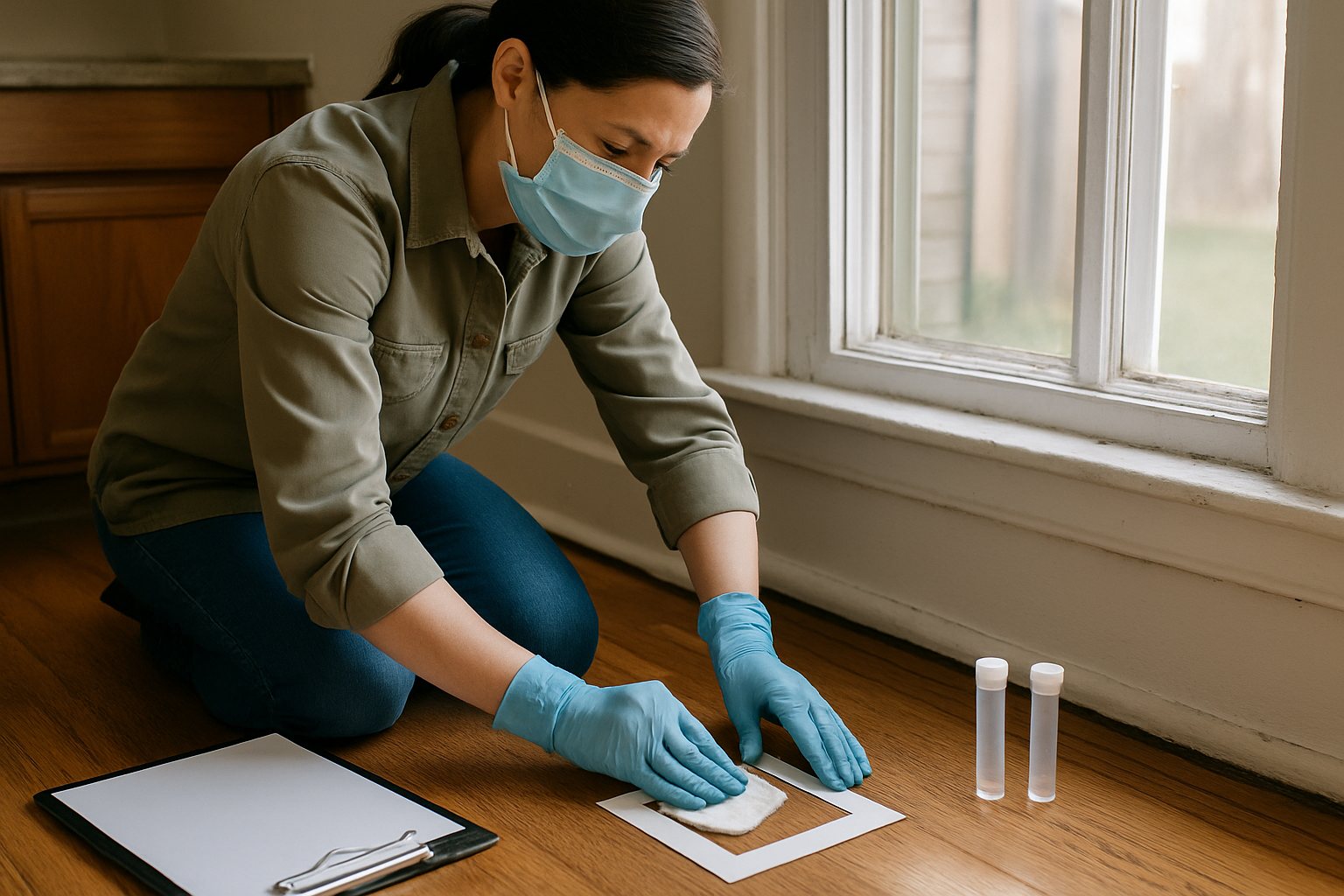
    How a dust-wipe sample is taken

    Professionals follow a documented protocol. EPA’s rules accept the HUD Guidelines for the Evaluation and Control of Lead-Based Paint Hazards in Housing, EPA methods and equivalent methods, and the federal definition of a wipe sample points to two ASTM standards: E1728 for how to collect it and E1792 for the wipe material. EPA and HUD’s Lead Dust Sampling Technician Field Guide sums up the steps:

    1. Mark the area. Use a clean 12 x 12 inch template, a disposable template or tape. On floors the tape forms a square; on sills and troughs it runs across the sill. Nobody touches the area inside.
    2. Label the tube. Each sample gets an ID number recorded on the sample form and the chain-of-custody form.
    3. New gloves for every sample. After putting them on, touch nothing but the wipe.
    4. Wipe in three passes. Start at an upper corner and wipe side to side in S-shaped strokes without crossing the edge. Fold the wipe dirty side in and wipe again front to back. Fold again and go over the edges and corners.
    5. Seal and measure. Fold the wipe with the sample side in, place it in the tube and cap it. If no template was used, measure the length and width to the nearest 1/8 inch so the lab can convert the result to µg/ft².
    6. Send it to an NLLAP lab recognized for dust wipes.

    Samples can be single-surface (one wipe per surface) or composite (several areas in one tube). The field guide recommends single-surface sampling when you want results for specific surfaces, and notes that HUD discourages composite sampling when clearing federally assisted housing. For clearance after renovation, the guide calls for one window sill and one floor sample in each room, hallway or stairwell of the work area (up to four), a window trough sample if the windows were not closed and covered, and one floor sample just outside the work area.

    Note that this 2009 field guide prints older clearance numbers. Use the 2026 values in the table above, or the values of your state program.

    Where dust samples are taken in a risk assessment

    In a home risk assessment, federal rules require dust samples from interior window sills and floors in the living areas where children under six are most likely to come into contact with dust. In apartment buildings and child-occupied facilities, common areas are sampled too. A risk assessment also looks at deteriorated paint and bare soil, so dust results arrive in context. See lead paint inspection vs risk assessment for how the visit works.

    DIY wipe kits vs a certified risk assessor

    Mail-in dust kits let you take wipes yourself and pay a lab to analyze them. They can be useful for a parent who wants a first look, or for checking a room again after cleaning. They are not the same as a professional evaluation:

    Mail-in wipe kitCertified risk assessor or inspector
    Who collectsYou, following the kit’s instructionsA certified professional following a documented protocol
    LabWhatever lab the kit uses; check it is NLLAP-recognized for dust wipesMust be an EPA-recognized lab
    What you learnLead per area on the spots you choseDust, paint and soil hazards, their sources and options to fix them
    Official usesFor your information onlyRisk assessments, abatement clearance, programs that require a certified report

    Most kits fail on technique, not chemistry. Wipe a measured area, record its size, use a new glove for each sample and do not let the wipe touch anything else. Your results are only as good as that area measurement, because the lab divides the lead found by the area you report.

    Mail-in kits checked on Amazon on October 9, 2026 (In Stock that day; the price and stock can change):

    NLLAP-listed lab

    Schneider Labs Lead Test Kit: Paint, Dust or Soil (1 sample)

    • 1 paint, dust or soil sample
    • Lead by EPA Method 7000B
    • Results 5 business days after arrival
    Check price on Amazon
    Four wipes

    SimpleLab Lead Dust Surface Wipe Test, 4-Pack

    • 4 surface wipe samples, mailed together
    • EPA 7000B analysis
    • Report in 5 business days
    Check price on Amazon
    For cleaning, not testing

    D-Lead Surface Wipes for Lead Dust Cleanup, 48 ct

    • 48 wipes, 9 x 12 in
    • Listed as meeting EPA wet cleaning cloth definition
    • Cleanup, not a test
    Check price on Amazon

    Schneider Laboratories, Inc. of Richmond, Virginia is on EPA’s NLLAP list for paint chips, soil and dust wipes. SimpleLab’s listing does not name the laboratory that analyzes its dust wipes, so ask before you buy if NLLAP recognition matters to you. The D-Lead wipes are for cleaning surfaces, not for measuring lead. Do not use a color-change paint swab on dust: EPA recognizes those kits only for paint on certain surfaces. Our home test vs lab testing guide explains the difference.

    Finding an NLLAP laboratory

    EPA’s National Lead Laboratory Accreditation Program recognizes labs that show they can accurately analyze lead in paint chips, dust and soil. A lab can be recognized for one, two or all three. EPA’s list, updated monthly, shows each lab’s city, phone, accrediting body, whether it is open to the public, and which of the three sample types it covers. Look for an X in the Dust Wipes column.

    Some labs sell directly to homeowners. For example, the Wisconsin Occupational Health Laboratory in Madison lists $40 per sample for lead in soil, paint or dust wipes at normal turnaround (about 7 working days), with faster options at $60 and $80 (checked October 9, 2026). The National Lead Information Center at 1-800-424-LEAD (5323) can also help you find a recognized lab or a certified professional.

    Reading your results

    • Check the units. Results should be in µg/ft². If the report shows only micrograms per wipe, divide by the area wiped in square feet.
    • “Below reporting limit” means the lab could not reliably measure lead on that wipe. It is the best result you can get.
    • Any reported lead on a floor or sill would count as a dust-lead hazard in a federal risk assessment from 2026. That does not mean an emergency, but it does mean the dust is worth tracking to its source.
    • Compare surfaces. High window troughs with low floors point to windows. High floors near an entrance can point to soil tracked in. See our lead in soil testing guide.

    What to do if your dust has lead

    • Get the source found. A certified risk assessor can tell you whether the dust comes from windows, friction surfaces, deteriorated paint or soil, and lay out options. Use our find a lead professional page.
    • Clean wet, not dry. EPA advises wiping sills and surfaces with a damp cloth or paper towel and wet mopping hard floors. Where there is visible dust or debris from chipping paint, it says to use only vacuums with HEPA filters and not to dry sweep.
    • Don’t sand or scrape old paint yourself. Renovation work in pre-1978 homes can create far more dust. Read lead-safe renovation (RRP) before any project.
    • Consider a permanent fix. Lead abatement by a certified firm ends with clearance testing at the new 5/40/100 levels.
    • Talk to a doctor about a blood lead test for young children or anyone pregnant in the home.

    For the bigger picture on dust and soil, go back to our lead dust and soil testing hub.

    Lead dust test FAQ

    What is a safe level of lead dust?

    EPA does not call any level safe. Its 2024 rule recognizes that there is no safe level of lead in blood, and from 2026 any lead a recognized lab can report on floors or sills counts as a hazard in a federal risk assessment. The 5, 40 and 100 µg/ft² figures are clearance levels for finishing abatement work.

    Can I do a lead dust wipe test myself?

    Yes, with a mail-in kit, for your own information. Wipe a measured area and send it to an NLLAP-recognized lab. For official purposes, such as a risk assessment or clearance after abatement, a certified professional must collect the samples.

    Can a lead swab test dust?

    Not reliably. EPA recognizes the LeadCheck, D-Lead and Massachusetts kits only for paint on specific surfaces. Dust needs a wipe sample analyzed by a laboratory.

    How long do results take?

    It depends on the lab. The kits and lab above list from the next working day (paid rush) to about 7 working days after the sample arrives, plus shipping time.

    Do the 2026 dust levels apply in my state?

    They apply now in states where EPA runs the program: Alaska, Arizona, Florida, Idaho, Montana, Nevada, New Mexico, New York, South Carolina, South Dakota and Wyoming, plus some territories and most Tribal lands. Other states run their own programs and have two years from January 13, 2025 to adopt them. Ask your state lead program.

  • Lead Poisoning in Dogs and Cats: Signs, Sources and What to Do

    Lead Poisoning in Dogs and Cats: Signs, Sources and What to Do

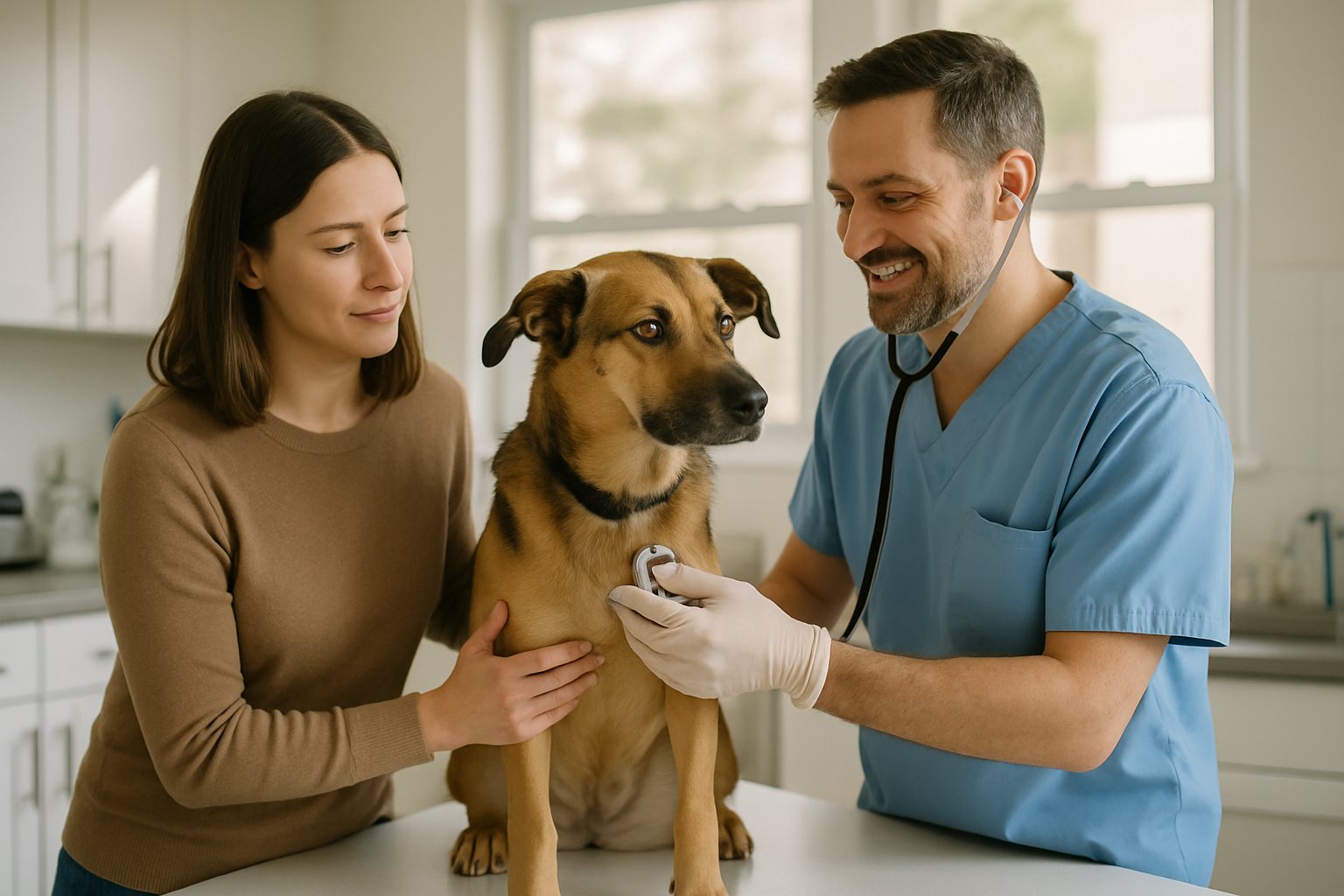
    Lead poisoning in dogs and cats is uncommon, but it does happen, and the signs are easy to mistake for an upset stomach or another illness. Veterinary sources describe vomiting, diarrhea, loss of appetite, belly pain, lethargy, behavior changes, wobbliness, tremors and seizures, usually after a pet swallows old paint chips or dust, a lead object such as a fishing sinker, or dust from a home renovation.

    A cat resting near a sunny window in an older home

    In short: if you think your dog or cat has swallowed something with lead or shows these signs, call your veterinarian right away, or the ASPCA Animal Poison Control Center at (888) 426-4435, which answers 24 hours a day, 365 days a year; the ASPCA says a consultation fee may apply. Do not make your pet vomit unless a professional tells you to. A vet confirms lead poisoning with a blood test and decides on treatment. Because pets and young children are often exposed to the same lead, a poisoned pet is also a reason to ask your doctor about testing the children in your home.

    This page summarizes what the ASPCA Animal Poison Control Center, the Merck Veterinary Manual and veterinary schools publish. It is not veterinary advice; only your vet can examine and treat your pet.

    How common is lead poisoning in pets?

    Not very. The ASPCA’s poison control primer for veterinarians says lead toxicity is not a common issue in dogs and cats, but that cases do happen. In 2015, as reported by the AVMA’s news service, the ASPCA center handled 65 lead cases out of about 181,000 animal poisoning cases. The Merck Veterinary Manual lists dogs, cattle and pet birds as the animals in which lead poisoning is most common, and notes that young animals absorb lead more readily, so young age, a habit of chewing or eating non-food items, and easy access to lead are the key risk factors.

    Rare does not mean unimportant. Lead poisoning can look like many other illnesses, and veterinary researchers point out that it can be missed unless someone thinks to test for it.

    Signs of lead poisoning in dogs and cats

    The ASPCA and the Merck Veterinary Manual describe two patterns. Signs mostly involve the stomach and gut and the nervous system:

    Type of exposureSigns veterinary sources list
    Sudden (acute), such as swallowing a lead object or a large amount of paintNot eating, vomiting, belly pain, behavior changes, a wobbly or unsteady walk (ataxia), tremors, overexcitement and seizures that come and go
    Long-term (chronic), such as repeated paint dust or chipsVaguer signs: belly discomfort, vomiting, diarrhea, not eating, lethargy, weight loss, anemia, behavior changes, occasional seizures, and in some dogs an enlarged, weak esophagus (megaesophagus), which is rarely reported in cats

    The Merck Veterinary Manual says lead colic, a painful belly, can occur in all species, and that lead poisoning can resemble other nervous system and digestive diseases, so a vet may need to rule those out. Cornell University’s Feline Health Center lists vomiting, seizures and an unsteady gait among poisoning signs in cats that call for prompt action.

    None of these signs is specific to lead. A dog with vomiting and diarrhea most likely has something else, but if there is old paint, renovation dust or a lead object in its life, tell your vet.

    Puppies and young animals

    Young animals are at higher risk on two counts. They chew and swallow things more, and, according to the ASPCA’s primer, a young animal may absorb as much as half of the lead it swallows, compared with roughly 5 to 15 percent in adults. If a puppy has been chewing on old windowsills, painted furniture or anything metal and heavy, mention it to your vet even if the puppy seems well.

    Signs in cats

    Cats rarely chew on objects the way puppies do. The Merck Veterinary Manual reports that cats have been poisoned by grooming dust off their fur after lead-painted woodwork was sanded, which turns dust on the coat into lead in the stomach. Cornell’s Feline Health Center names lead among the frequent causes of poisoning in cats and says they are exposed through many sources, including paint chips, linoleum and dust in older homes. The Merck manual notes there is no good information on a toxic dose for cats, one more reason to call a professional rather than guess.

    Common sources of lead for pets

    • Old paint, chips and dust. The Merck Veterinary Manual says house paint made before 1978 can contain high concentrations of lead, and that a chip the size of a thumbnail can hold 50 to 200 mg of lead. See lead paint testing.
    • Home renovation. Sanding and scraping old paint spreads fine dust that pets walk through and lick off their paws and fur. The ASPCA’s poison control director has said remodeling is the most common situation in which the center sees pets exposed to lead.
    • Lead weights. Fishing sinkers and other lead weights, and lead shot. Some older curtain and drapery hem weights are also made of lead; a curtain weight has poisoned a child, according to a case report indexed by the NIH’s National Library of Medicine.
    • Other household items. The Merck manual and the ASPCA also list linoleum, solder, toys, bullets, putty, caulk, ceramic glazes on food and water bowls, and the foil covers on some wine corks.
    • Soil. Dogs that dig near older painted buildings or busy roads can swallow lead in soil. See dust and soil testing.

    What to do if you suspect lead poisoning

    1. Call your veterinarian or an emergency vet clinic right away. If your pet is having a seizure, collapsing or struggling to breathe, go straight to an emergency clinic.
    2. Or call the ASPCA Animal Poison Control Center: (888) 426-4435. It is open around the clock, every day of the year. The ASPCA says a consultation fee may apply.
    3. Do not make your pet vomit unless a veterinarian or poison control expert tells you to, as Cornell’s Feline Health Center advises.
    4. Bring what you can. A sinker, chip or package, or a photo of it, and a note of when it happened and what signs you have seen.
    5. Keep other pets and children away from the area until the source is found.

    Do not give your pet any medicine, supplement or home remedy for lead. Only a vet can decide what is safe for your animal.

    How vets diagnose lead poisoning

    According to the Merck Veterinary Manual, the diagnosis is made by measuring lead in a blood sample, and only a small amount of blood is needed. X-rays can show lead objects in the stomach or intestines, and some blood smear findings can point toward lead but do not confirm it. Treatment, if needed, is decided by the veterinarian based on the pet’s signs and test results, and it always includes removing the lead source from the pet’s surroundings so the animal is not exposed again. Follow-up blood tests are part of that care.

    Your pet as an early warning for your family

    The Merck Veterinary Manual notes that dogs and cats can be sentinels for human exposure: the paint dust, soil or object that poisoned a pet may be reaching a toddler too. The CDC says most children with lead in their blood have no obvious symptoms, so if your pet is diagnosed, ask your child’s doctor or your local health department about a blood lead test, and read lead and children. For people, the number is Poison Control at 1-800-222-1222, and our guides to lead poisoning symptoms and lead poisoning explain what to watch for.

    How to protect your dog or cat from lead

    • Know your home. If it was built before 1978, test for lead paint before you sand, scrape or remodel, and use a certified, lead-safe contractor. See lead-safe renovation and our professional directory.
    • Keep pets out of work areas during renovation and until cleanup is finished, since cats groom dust off their coats and dogs lick their paws.
    • Wet-clean dust on floors and windowsills, and wash pet bedding, toys and bowls often.
    • Store fishing tackle, ammunition and lead weights out of reach, and check old curtains for hem weights if your pet chews fabric.
    • Use bowls made for food. Skip old or decorative glazed ceramics of unknown origin; see lead in pottery and dishes.
    • Watch the yard. Discourage digging along the walls of older painted buildings, and test soil if you are unsure.

    Frequently asked questions

    What are the first signs of lead poisoning in a dog?

    Veterinary sources most often list not eating, vomiting, belly pain and behavior changes, and with more severe exposure, a wobbly walk, tremors or seizures. These signs are not specific to lead, so call your vet.

    My dog swallowed a fishing sinker. What should I do?

    Call your veterinarian or the ASPCA Animal Poison Control Center at (888) 426-4435 right away, even if your dog seems fine. Don’t make it vomit unless told to. A vet may take an X-ray to find the sinker.

    Can cats get lead poisoning from dust?

    Yes. The Merck Veterinary Manual reports cats poisoned by grooming dust from sanded lead-painted woodwork off their fur. Keep cats out of renovation areas in older homes.

    Is the ASPCA poison hotline free?

    The ASPCA says a consultation fee may apply; it does not publish the amount on its main page. Your own vet is also a good first call.

    Can I test my pet for lead at home?

    No. Lead in an animal is measured with a blood test done by a vet. Home swab kits are made for surfaces such as paint, not for pets or people, and EPA recognizes only certain kits for certain surfaces.

  • Lead Poisoning Causes and Prevention: Sources and Steps

    Lead Poisoning Causes and Prevention: Sources and Steps

    Lead poisoning is caused by swallowing or breathing in lead, and in the US the most common source is dust from old lead-based paint. Other causes include tap water that runs through lead pipes or fixtures, contaminated soil, lead brought home from work or hobbies, and some imported spices, remedies, cosmetics and dishes.

    A family wiping window sills during cleaning

    In short: lead gets into the body mainly through the mouth (dust on hands, toys and food; paint chips; water) and through the lungs (dust and fumes). Touching lead matters mostly because lead on the hands ends up being swallowed; official sources describe skin absorption of common lead compounds as a much smaller route. Prevention means finding the source before anyone is exposed: test older homes for paint, dust and soil hazards, check your water, keep dust down with wet cleaning and handwashing, leave work lead at work, and avoid products named in FDA and CPSC warnings. If you are worried about exposure, ask a doctor about a blood test or call Poison Control at 1-800-222-1222.

    This guide is based on the CDC, EPA, NIOSH, ATSDR, FDA and CPSC. It is general information, not medical advice; our lead poisoning hub has the overview. For what happens in the body, see effects of lead poisoning; for warning signs, see lead poisoning symptoms.

    How lead gets into the body

    • Swallowing (ingestion). The main route for young children. The EPA says children crawl, play on floors and put hands, toys and other objects in their mouths, so they swallow settled dust and soil. The EPA’s 2024 dust-lead rule calls hand-to-mouth contact with floor and surface dust the main pathway of exposure for young children. Adults and children also swallow lead in water, food, spices and remedies.
    • Breathing (inhalation). Fine dust or fumes from sanding, scraping, cutting or heating painted surfaces, from some jobs such as construction, mining and lead-acid battery recycling, and from hobbies that heat or melt lead. ATSDR says the effects are the same whether lead is breathed in or swallowed.
    • Skin. See the next section.
    • Before birth. The CDC says lead stored in a mother’s bones can be released during pregnancy and reach the baby.

    Can you get lead poisoning from touching lead?

    Touching lead is a risk mainly because of what happens next. Lead dust on the hands gets onto food, cigarettes, toys and fingers and is swallowed. ATSDR’s toxicological profile for lead says the common (inorganic) forms of lead can be absorbed through the skin, but much less efficiently than by breathing or swallowing, apart from hand-to-mouth transfer. NIOSH lists skin as one of the routes in the workplace and says lead’s health effects are the same whether it is breathed in, swallowed or absorbed through the skin.

    So the practical answer is: handling a fishing sinker or an old painted window is far less likely to put lead into your body through the skin than through your mouth, but it does leave lead on your hands. Wash your hands with soap and water afterward and before eating, drinking or smoking, and keep children from handling lead objects. NIOSH tells people who work with lead to wash as much skin as they can, with lead-removal soap, before going home.

    Lead poisoning from paint

    Lead-based paint was banned for homes in 1978, and the CDC says homes built before then probably contain it. The EPA estimates that about three-quarters of homes built before 1978 still have some lead paint, rising to 87% of homes built before 1940. Paint in good condition is usually not a hazard, according to the EPA. It becomes one when it peels, chips or cracks, when it rubs on friction surfaces such as windows and doors, or when it is disturbed by sanding, scraping or renovation, which can create large amounts of fine dust.

    The CDC lists lead dust as the most common source of exposure for young children. Our lead paint testing hub explains swab kits, lab tests and professional inspections, and is lead paint dangerous? covers when it is a hazard. Any paid renovation work in a pre-1978 home must follow the EPA’s lead-safe RRP rule.

    Lead poisoning from water

    Lead usually gets into drinking water from the plumbing, not from the river or well that supplies it. The EPA says lead service lines are the most significant source where they exist, and that homes built before 1986 are more likely to have lead pipes, fixtures and solder. Without a lead service line, brass or chrome-plated brass faucets and lead solder are the most common sources. You cannot see, taste or smell lead in water; a test is the only way to know.

    The EPA’s steps: use only cold water for drinking, cooking and baby formula; know that boiling does not remove lead; run the tap before drinking if water has sat for hours (showering or laundry also flushes pipes); clean faucet aerators; and if you use a filter, choose one certified to remove lead and replace the cartridge as directed. See lead in water testing, lead pipes and lead water filters.

    Lead in soil and outdoor dust

    The EPA says lead in soil comes mainly from old paint along the drip line of older buildings, past use of leaded gasoline near busy roads, and industry such as smelters and battery sites, and that it does not break down over time. Children are exposed when they play in bare soil or when it is tracked indoors. The EPA’s steps: cover bare soil with grass, mulch or other cover, keep children from playing in bare soil near older buildings, use doormats and take shoes off at the door. Gardeners should follow the EPA’s healthy gardening advice. Our dust and soil testing hub explains lab soil tests.

    Jobs and hobbies: take-home lead

    Most adults with high blood lead are exposed at work, according to NIEHS, in jobs such as construction, mining, welding and battery manufacturing. NIOSH warns that workers can carry lead dust home on their clothes, shoes and hair, putting their families, especially children and pregnant women, at risk. The CDC also names hobbies, such as stained glass work, that involve lead-based products. NIOSH’s steps for workers:

    • Change into work clothes and shoes that stay at work, and change back before going home.
    • Shower and wash your hair before leaving work if showers are provided; otherwise wash as much skin as you can with lead-removal soap.
    • Don’t take home tools, scrap or packaging that may have lead on them.
    • Store work clothes in a closed plastic bag, away from other clothes, and wash and dry them alone.

    Imported products, spices and cosmetics

    Federal agencies have found lead in a range of consumer goods, most often imported ones:

    ProductWhat the agency saysOur guide
    SpicesFDA has issued alerts on ground cinnamon from several brands with elevated lead; in 2023 cinnamon in applesauce pouches was linked to more than 500 reported cases of lead exposure.Lead in cinnamon and spices
    CosmeticsFDA warns that kohl, kajal and surma eye cosmetics can contain lead and use color additives that are not approved in the US.Lead in household items
    Traditional remedies and candiesThe CDC lists some imported candies and traditional medicines, such as azarcon and greta.Lead in household items
    Pottery and cookwareFDA warns about some traditional lead-glazed pottery and some imported aluminum and brass cookware that may leach lead.Lead in pottery and dishes
    Toys and jewelryThe CDC names some imported and older toys and toy jewelry; CPSC limits lead in children’s products.Lead in toys and jewelry

    Check the FDA and CPSC recall pages, stop using any product named in a warning, and don’t bring home spices, remedies or cosmetics of unknown origin for children. See our lead in household items hub for testing limits: home swab kits are not made for food, spices or cosmetics.

    How to prevent lead poisoning: CDC and EPA steps

    The CDC calls removing lead hazards before a child is exposed, primary prevention, the most effective approach. These steps come from the CDC and EPA:

    1. Know your home. If it was built before 1978, have it checked for lead paint and dust by a certified inspector or risk assessor. Find one in our professional directory.
    2. Keep dust down. Wet-mop floors and wipe windowsills and other flat surfaces with warm water and an all-purpose cleaner. Never mix ammonia and bleach.
    3. Wash hands and toys. Wash children’s hands before eating and sleeping and after playing outside; wash toys often.
    4. Block access to peeling paint. Keep children away from chipping paint and chewable painted surfaces such as windowsills.
    5. Renovate safely. Hire RRP-certified firms for work in pre-1978 homes and keep children and pregnant women away until cleanup is done.
    6. Test and manage your water. Use cold water for drinking, cooking and formula, and test if you may have lead pipes.
    7. Shoes off, doormats down. Reduce soil and dust tracked indoors.
    8. Leave work lead at work. Follow the NIOSH steps above.
    9. Watch recalls. Check FDA and CPSC warnings for spices, remedies, cosmetics, dishes and toys.
    10. Test children. Ask your child’s doctor about a blood lead test. Medicaid requires testing at 12 and 24 months; see lead and children.

    Frequently asked questions

    What is the most common cause of lead poisoning?

    In the US, lead dust, mostly from old lead-based paint. The CDC names lead dust as the most common source for young children, and NIEHS calls it the most common way people are exposed.

    Can you get lead poisoning from touching lead?

    Mostly through what reaches your mouth afterward. ATSDR says skin absorption of common lead compounds is much less efficient than swallowing or breathing them. Wash your hands after handling lead and before eating.

    Does boiling water remove lead?

    No. The EPA says boiling does not remove lead. Use cold water, test it, and use a filter certified for lead if needed.

    Is lead paint dangerous if it is not peeling?

    The EPA says lead paint in good condition is usually not a hazard, but paint on windows, doors and other rubbing surfaces can make dust, and any sanding or scraping releases it. Test before you renovate.

    What should I do if I think my family was exposed?

    Ask your doctor or local health department about a blood lead test. If someone may have swallowed something with lead, call Poison Control at 1-800-222-1222; for severe symptoms, call 911. Then find and fix the source.

  • Effects of Lead Poisoning on Children and Adults

    Effects of Lead Poisoning on Children and Adults

    The effects of lead poisoning depend on age, how much lead and for how long, but official health agencies agree on the main ones. In children, lead harms the developing brain and nervous system, with effects on learning, attention and behavior; in adults, it is linked to higher blood pressure, kidney damage and fertility problems, and some effects in both can be permanent.

    An adult having blood pressure checked by a nurse

    In short: the CDC says no safe blood lead level in children has been identified, and the World Health Organization says there is no known safe blood lead concentration. Even low levels in children are associated with lower IQ scores and school achievement and with attention and behavior problems, according to the CDC and NIEHS. In adults, NIEHS links levels below 10 µg/dL to higher blood pressure and reduced kidney function, and NIOSH lists anemia, nerve and brain damage and infertility at high exposure. Because damage may not be reversible, prevention and early testing matter most. If you are worried, talk to a doctor or your local health department, or call Poison Control at 1-800-222-1222.

    This page explains what the CDC, the National Institutes of Health (through NIEHS and its National Toxicology Program), NIOSH and WHO publish. It is not a diagnosis or medical advice. For an overview of the topic, start at our lead poisoning hub.

    Lead toxicity: why lead harms the body

    Lead toxicity is the medical term for the harm lead does once it is inside the body. Lead travels in the blood, reaches the brain, kidneys and other organs, and is stored in bones and teeth, the WHO explains. Stored lead can move back into the blood years later, for example during pregnancy, and reach a developing baby.

    Doctors measure exposure with a blood lead test, reported in micrograms per deciliter (µg/dL). The CDC’s blood lead reference value for children is 3.5 µg/dL. That number marks the top 2.5% of US children aged 1 to 5; it is a screening tool, not a line below which lead is harmless.

    Effects of lead on children

    Children are the main concern for three reasons the CDC and WHO describe: they put hands and objects in their mouths, so they swallow more dust and soil; their bodies absorb more of the lead they swallow than adults do; and their brains are still developing. Children under 6 are the most likely to be exposed, the CDC says.

    The CDC lists these effects of lead exposure in children:

    • Damage to the brain and nervous system
    • Slowed growth and development
    • Learning and behavior problems
    • Hearing and speech problems

    The CDC adds that these can show up as lower IQ, a shorter attention span and doing less well in school. The WHO describes reduced attention span and increased antisocial behavior, and says lead exposure in children also causes anemia, high blood pressure, kidney problems and harm to the immune and reproductive systems.

    Most of this happens quietly. The CDC says most children with lead in their blood have no obvious immediate symptoms, which is why testing matters more than watching for signs. Our lead poisoning symptoms guide lists the signs that do appear, mostly at higher levels, and our lead and children guide covers screening ages and prevention.

    Effects at low levels

    NIEHS, part of the NIH, summarizes the research by blood lead level. It says health effects in children are found at levels below 5 µg/dL and may include lower IQ scores and academic achievement, and that levels at or below 10 µg/dL are associated with more behavioral effects and delayed puberty. The National Toxicology Program’s 2012 review of low-level lead concluded there is evidence of harm in both children and adults below 10 µg/dL and, for some effects, below 5 µg/dL.

    These are associations found across many studies of groups of people. They describe risk across a population; they cannot predict what will happen to one particular child. A child’s doctor is the right person to talk to about a specific result.

    Effects at very high levels

    At very high levels, lead can cause severe illness. The NIH’s MedlinePlus lists vomiting, a staggering walk, muscle weakness, seizures and coma. The WHO says children who survive severe lead poisoning may be left with permanent intellectual disability and behavior disorders. These are medical emergencies: call 911.

    Effects of lead on adults

    Most adults with high blood lead are exposed at work, according to NIEHS, in jobs such as construction, mining, welding and battery manufacturing. Others are exposed through home renovation, hobbies or contaminated products.

    Body systemWhat official sources say
    Heart and blood pressureNIEHS: levels below 10 µg/dL are associated with increases in blood pressure; above 15 µg/dL with cardiovascular effects. WHO: increased risk of high blood pressure and cardiovascular problems. NIOSH lists heart disease.
    KidneysNIEHS: levels below 10 µg/dL are associated with decreased kidney function, and even below 5 µg/dL may decrease it. WHO and NIOSH list kidney damage.
    Brain and nervesNIOSH: high exposure may cause neurologic and brain damage; long-term exposure can bring depression, irritability, mood changes, distraction and forgetfulness, and pain or tingling in the hands or feet.
    ReproductionNIOSH: infertility in both men and women. NIEHS links levels above 15 µg/dL to fertility problems.
    BloodNIOSH and ATSDR: anemia.
    OtherNIOSH also lists hearing damage, decreased lung function, bone or tooth loss and more infections, and says lead is possibly linked to cancer.

    NIOSH notes that these effects are the same whether lead is breathed in, swallowed or absorbed through the skin, that symptoms look like those of other illnesses and may develop slowly, and that very high exposure can kill. If you work with lead, tell your doctor.

    Effects during pregnancy

    Lead crosses the placenta. The CDC says lead stored in a mother’s bones can be released into the blood during pregnancy, and that lead exposure in pregnancy can raise the risk of miscarriage, of a baby being born too early or too small, and of harm to the baby’s brain, kidneys and nervous system. NIEHS says maternal blood lead levels even below 5 µg/dL are associated with reduced fetal growth, and the WHO lists reduced fetal growth and preterm birth. If you are pregnant and think you may have been exposed, the CDC’s advice is to talk to your health care provider.

    Long-term effects of lead poisoning

    The official wording here is careful, and so are we. What the agencies say:

    • CDC: “The effects of lead poisoning can be permanent and disabling.”
    • WHO: lead can permanently affect children’s brain development, and lead causes long-term harm in adults, including increased risk of high blood pressure.
    • NIEHS: many effects are permanent, and research suggests some psychological effects of childhood exposure may not appear until adulthood. NIEHS-funded research has also linked early-life lead exposure with psychiatric disorders and substance abuse.
    • WHO, worldwide: citing estimates from the Institute for Health Metrics and Evaluation, more than 3.5 million deaths in 2023 were attributed to lead exposure, mainly through effects on the heart and blood vessels.

    A few cautions help read this research well. Many long-term findings come from studies that follow groups of people over time, and they show links, not certainty for any one person. Global death estimates are models, and they include countries with far higher exposure than the US. And lead stored in bone means that exposure in the past can still matter today, which is one reason doctors ask about old jobs, hobbies and homes.

    Can the effects be reversed?

    Blood lead levels can come down once the source is removed, and doctors can treat very high levels. But treatment does not undo damage that has already happened, and the CDC and WHO both describe some effects as permanent. That is why the CDC’s follow-up for children includes early educational services and developmental checks alongside removing the lead. Our guide to lead poisoning treatment explains what doctors and health departments do at each blood lead level.

    Why prevention matters most

    Because damage may be permanent and often has no symptoms, the CDC’s approach is to remove lead hazards before a child is exposed, which it calls primary prevention. In most US homes that means:

    • Old paint and dust. Homes built before 1978 probably contain lead-based paint, the CDC says, and peeling paint and renovation dust are the most common hazards. See lead paint testing and dust and soil testing.
    • Water. Lead pipes, solder and some brass fixtures can add lead to tap water. See lead in water testing.
    • Products. Some imported spices, candies, remedies, cosmetics, pottery, toys and jewelry. See lead in household items.
    • Work and hobbies. Lead dust carried home on clothes, shoes and hair.

    Our guide to lead poisoning causes and prevention covers each source and the CDC and EPA steps in detail. When a home needs inspection or repair, use a certified professional from our directory.

    Frequently asked questions

    What are the long-term effects of lead poisoning?

    In children, official sources describe lasting effects on learning, attention, behavior and development; in adults, higher blood pressure, heart and kidney problems and fertility effects. The CDC says effects can be permanent. How a specific person is affected depends on the level and length of exposure.

    Is lead toxicity the same as lead poisoning?

    The terms are used for the same problem: harm from lead in the body. Health agencies also talk about lead exposure, meaning any lead taken in, since no safe level has been identified in children.

    Can a small amount of lead cause harm?

    NIEHS says health effects in children are found below 5 µg/dL, and the CDC says no safe level in children has been identified. That is why doctors take any detectable level seriously and look for the source.

    Do adults recover from lead exposure?

    Blood levels fall once exposure stops, but lead stored in bone can stay for years, and some effects may last. An adult with possible exposure should talk to a doctor, who can order a blood test and advise on follow-up.

    How do I know if my child has been affected?

    Only a blood test shows exposure. Ask your child’s doctor or your local health department. If your child may have swallowed something with lead, call Poison Control at 1-800-222-1222; for severe symptoms such as a seizure, call 911.

  • Lead Poisoning Treatment: How Doctors Manage High Blood Lead

    Lead Poisoning Treatment: How Doctors Manage High Blood Lead

    Lead poisoning treatment starts with finding the lead and getting the person away from it. For most children and adults with lead in their blood, the CDC’s guidance for health care providers centers on removing the source, repeat blood tests, a healthy diet and close follow-up, with medicine to pull lead from the body (chelation) kept for very high levels and given only by medical professionals.

    A health department nurse visiting a family at home

    In short: there is no home treatment for lead poisoning. If a blood test shows lead, a doctor and often the local health department will look for where it came from, schedule follow-up tests, check diet and development, and in some cases send an inspector to the home. At very high levels, the CDC tells providers to consider hospital care and to consult a medical toxicologist about treatments such as chelation. If you are worried about lead exposure, call your doctor, your local health department or Poison Control at 1-800-222-1222. Call 911 for severe symptoms such as a seizure.

    This page explains what the CDC and its toxic-substances agency ATSDR publish for health care providers. It is not medical advice, and it is not a plan you can follow at home. Only a health care provider who knows the patient can decide on care.

    Step one: find the lead and remove it

    Lead does not leave the body while new lead keeps coming in. That is why every level of the CDC’s recommended actions includes looking for the source. The CDC tells parents that when a child’s blood lead level is above its reference value, follow-up services can include finding and removing lead from the child’s environment, a diet high in iron and calcium, early educational services and follow-up blood testing. The CDC also describes primary prevention, removing lead hazards from the environment before a child is exposed, as the most effective way to protect children. Our lead poisoning hub sums up what the CDC, NIEHS and WHO say about why.

    ATSDR, the CDC’s sister agency for toxic substances, says medical and environmental steps should happen at the same time to best protect a child, and that providers should start a prompt investigation for the source of exposure. In practice, the source is often in the home: deteriorating paint and the dust it makes, water from lead pipes, bare soil, a parent’s work clothes, or an imported spice, remedy or cosmetic. Our guides to lead paint testing, lead in water testing, dust and soil testing and lead in household items explain how each one is checked.

    Do not try to strip or sand old paint yourself to “get rid of” the lead. The EPA warns that renovation can create large amounts of lead dust, and that lead abatement should be done by certified professionals. Find one through our lead professional directory.

    What the CDC recommends at each blood lead level

    The CDC publishes a table of recommended actions for children’s blood lead levels, measured in micrograms per deciliter (µg/dL). Its blood lead reference value is 3.5 µg/dL, the level that marks the top 2.5% of US children aged 1 to 5. The reference value is a screening tool, not a safe line: the CDC says no safe blood lead level in children has been identified. Each row below includes all the actions in the rows above it. We summarize the CDC’s provider guidance as published on its “Recommended Actions Based on Blood Lead Level” page (dated August 21, 2025).

    Blood lead level (µg/dL)What the CDC tells providers to do
    Below 3.5Teach families about lead sources and prevention; check development, diet and nutrition at well-child visits; repeat testing at intervals based on age and risk.
    3.5 to 19All of the above, plus: report to the state or local health department; take an environmental exposure history; arrange an environmental investigation as required where you live; test for and treat iron deficiency; review diet with a focus on calcium and iron; check development and refer for services as needed; schedule follow-up blood tests.
    20 to 44All of the above, plus: a full history and physical exam looking for signs of lead exposure; arrange or refer for an environmental investigation and lead hazard reduction; consider an abdominal X-ray to look for swallowed lead chips or objects; consult a Pediatric Environmental Health Specialty Unit (PEHSU) or Poison Control.
    45 or higherAll of the above, plus: a detailed neurological exam; abdominal X-ray and, if needed, bowel decontamination; hospital admission if the child has symptoms, or if the home is not lead-safe or the source is unknown; consultation with a medical toxicologist or a pediatrician experienced in lead poisoning about decontamination or chelation.

    A finger-prick (capillary) result at or above the reference value is confirmed with a blood draw from a vein, because lead on the skin can make a finger-prick read high. The higher the first result, the sooner the CDC wants that confirmation: within 3 months for 3.5 to 9 µg/dL, within 1 month for 10 to 19, within 2 weeks for 20 to 44, and within 48 hours for 45 or more. Our blood lead test guide explains the two kinds of test and what a result means.

    Case management and the health department

    Once a child’s blood lead level is at or above the reference value, the CDC tells providers to report it to the state or local health department. Many health departments then run what is called case management: a nurse or case worker follows the child, helps the family find and fix the source, and makes sure repeat tests happen. What the health department does, and at what level, is set by each state or city. The CDC’s guidance says environmental investigations should be arranged “as required,” because the rules differ from place to place. It also notes that in housing covered by HUD’s Lead Safe Housing Rule, an investigation may not be triggered below 5 µg/dL.

    An environmental investigation usually means a trained inspector or risk assessor visits the home to look for paint, dust, soil and water hazards, and asks about jobs, hobbies, foods, spices, remedies and cosmetics. If you rent, tell your health department and your landlord; if you own, the investigator’s report tells you which hazards need professional work. For the difference between an inspection and a risk assessment, see lead paint inspection.

    Nutrition: what the CDC says

    The CDC’s advice on food is short and specific: for a child with a blood lead level above the reference value, it lists “a diet high in iron and calcium” among the follow-up services a doctor may recommend. For providers, it adds testing for and treating iron deficiency, reviewing the child’s diet with a focus on calcium and iron, and referring families to nutrition programs such as WIC.

    A good diet supports a child’s health while the source is removed. It is not a treatment that removes lead, and it does not make lead exposure safe. Do not give a child iron, calcium or any other supplement for lead unless the child’s own doctor tells you to; the CDC’s guidance has the provider test for iron deficiency first.

    Chelation: only for high levels, only by medical professionals

    Chelation therapy uses prescription medicine that binds to lead so the body can get rid of it. The CDC says that if a child does have high levels of lead in the blood, they may receive chelation therapy, and its provider guidance places it at 45 µg/dL and above, decided together with a medical toxicologist or a pediatrician experienced in lead poisoning. ATSDR adds that 45 µg/dL is a guideline rather than a fixed threshold, that professional judgment should guide the decision for a child or an adult, and that chelation is not risk free.

    We describe chelation only so you know what a doctor may talk about. It is a hospital or specialist treatment. Products sold online as “detox” or “chelation” for lead are not the same thing, and no official source we use recommends them. If anyone suggests a home lead detox, talk to your doctor or call Poison Control at 1-800-222-1222 first.

    Follow-up blood tests

    Treatment is measured with repeat blood tests. The CDC’s schedule for children after a confirmed venous result is:

    Venous blood lead level (µg/dL)Early follow-upLater follow-up, once levels are falling
    3.5 to 93 months6 to 9 months
    10 to 191 to 3 months3 to 6 months
    20 to 442 weeks to 1 month1 to 3 months
    45 or higherAs soon as possibleAs soon as possible

    The CDC notes that blood lead levels can change with the seasons, and that more time outdoors in summer may call for more frequent checks. ATSDR lists reasons a level may rise again: a source nobody has found yet, incomplete repairs, a hazard that was not controlled, or lead stored in the body moving back into the blood. A level that will not come down is a signal to look again, not a reason to give up.

    Adults and pregnancy

    For adults, most elevated blood lead comes from work, according to NIEHS, in jobs such as construction, mining, welding and battery manufacturing. NIOSH, the CDC’s worker-safety institute, asks people who work with lead to tell their doctor, and describes steps at work, such as changing clothes and showering before going home, that protect both the worker and the family. ATSDR says professional judgment should guide any decision to chelate an adult.

    Lead stored in the bones can move into the blood during pregnancy and reach the baby, the CDC says. If you are pregnant or breastfeeding and think you may have been exposed, talk to your health care provider. Do not start or stop anything on your own.

    Why there is no home treatment

    The CDC says the effects of lead poisoning can be permanent and disabling, and most children with lead in their blood have no obvious symptoms (see lead poisoning symptoms). Treatment cannot undo damage that has already happened, which is why the official focus is on stopping exposure early, supporting the child’s development and checking that levels fall. All of that runs through a doctor and the health department. What you can do at home is the prevention side: wet-clean dust, wash hands and toys, keep children away from peeling paint, use cold tap water for drinking and cooking, and test your home. Our guide to lead and children has the full CDC and EPA list.

    Who to call

    • 911 for severe symptoms such as a seizure, collapse or trouble breathing.
    • Poison Control, 1-800-222-1222, if you think someone swallowed something with lead or you have urgent questions. It is free and answers around the clock.
    • Your doctor or your child’s pediatrician for a blood lead test and follow-up.
    • Your local health department for testing, case management and home investigations.

    Frequently asked questions

    Can lead poisoning be cured?

    Blood lead levels can come down once the source is removed, and doctors can treat very high levels. But the CDC says some effects of lead can be permanent, so the goal is to stop exposure as early as possible. Ask your doctor what to expect for your situation.

    How do you treat lead poisoning at home?

    You don’t. There is no home treatment. At home, you can help by following the health department’s advice to remove lead sources, keeping dust down and making sure follow-up blood tests happen. Any medical treatment comes from a doctor.

    At what level is chelation used?

    The CDC’s guidance for children places it at 45 µg/dL and above, decided with a medical toxicologist or experienced pediatrician. ATSDR calls 45 a guideline, not a fixed rule. The decision belongs to the medical team.

    How long does it take for blood lead levels to go down?

    Official sources do not give one timeline; it depends on the level, how long the exposure lasted and whether the source is gone. That is why the CDC sets follow-up tests from 2 weeks to 9 months apart depending on the result.

    Does eating well lower lead levels?

    The CDC recommends a diet high in iron and calcium for children with elevated blood lead, alongside removing the source. Diet supports the child; it does not remove lead or replace medical follow-up. Don’t give supplements unless your doctor says so.

    Who pays for testing and follow-up?

    The CDC says many private insurance policies cover blood lead testing, and Medicaid covers it for enrolled children. Ask your health department about home investigations and local programs, which vary by state.