Author: LeadDetector Experts

  • Lead in Stanley Cups: What the Sealing Pellet Means for You

    Lead in Stanley Cups: What the Sealing Pellet Means for You

    Yes, many Stanley tumblers contain a small amount of lead, but not where your drink goes. Stanley says the lead is in a sealing pellet at the bottom of the vacuum-insulated wall, covered by a stainless steel cap, and that no lead is present on any surface that touches you or what you drink.
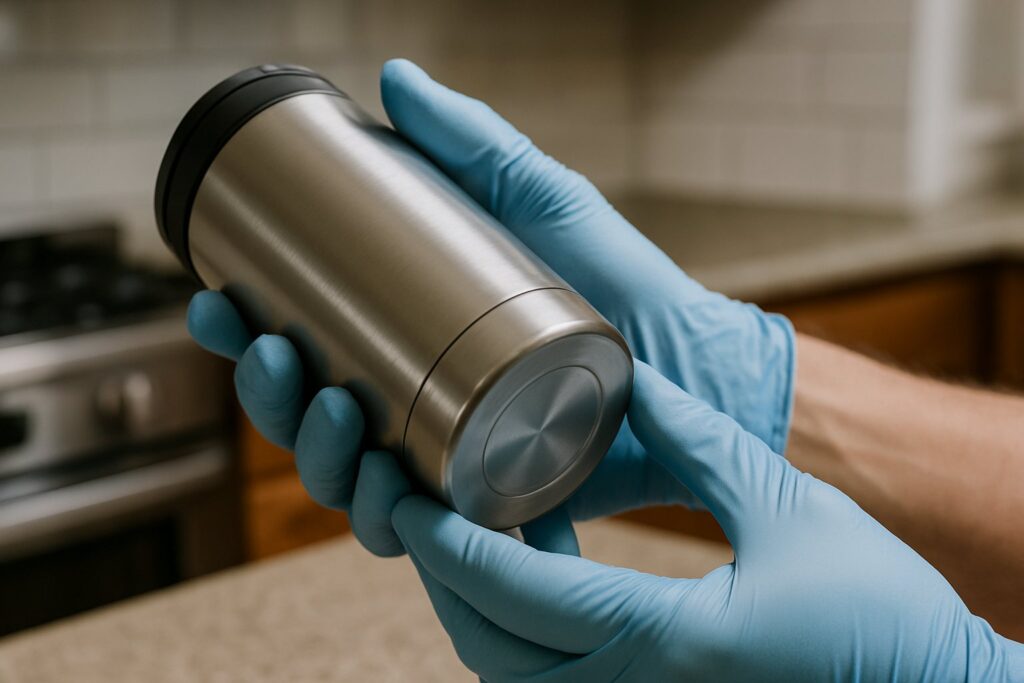
    A person inspecting the base of a tumbler

    In short: in January 2024, after viral videos of people testing their cups, Stanley confirmed it uses an “industry standard pellet” containing some lead to seal the vacuum insulation, covered by a durable stainless steel layer. Experts quoted by TODAY and NBC News said there is no exposure while that cover stays on; the concern is a damaged or missing base cap, especially around young children who might chew or mouth it. The CPSC has recalled several children’s insulated cups from other brands whose lead solder at the base was accessible. If a base cap has come off, keep the cup away from children and contact the maker.

    This guide reports what Stanley and the experts said at the time, and what the CPSC has done with similar products. It is not a lab result for any specific cup, and nobody we cite measured how much lead each pellet contains.

    What happened in 2024

    In January 2024, social media videos showed people swabbing the bottoms of Stanley tumblers with home lead test kits, some of which changed color. The tumblers were at the height of their popularity, and the posts spread quickly.

    Stanley’s parent company, Pacific Market International (PMI), responded with a statement that several news outlets published. In short, Stanley said:

    • Its manufacturing process uses an industry-standard pellet to seal the vacuum insulation at the base of its products, and the sealing material includes some lead.
    • Once sealed, the area is covered with a durable stainless steel layer that makes it inaccessible to consumers.
    • No lead is present on the surface of any Stanley product that comes into contact with the consumer or the contents of the product.
    • Its products meet all US regulatory requirements, including California’s Proposition 65, and it said its engineering and supply chain teams were making progress on alternative sealing materials.

    Stanley’s current support page repeats that the vacuum insulation is sealed with pellets that include some lead and are covered by a stainless steel layer, that no lead is on surfaces that touch the consumer or the drink, and that if the base cap comes off during ordinary use the product may be covered by its Lifetime Warranty.

    In February 2024, NBC News reported that a potential class action had been filed against PMI, alleging that the company had not disclosed the lead or warned about exposure if the seal is damaged. PMI said exposure potential was minimal. NBC did not report an outcome, and we have not confirmed one.

    Why insulated tumblers use a sealing pellet

    A vacuum-insulated tumbler has two stainless steel walls with the air pumped out between them. That vacuum is what keeps ice frozen for hours. To close the vacuum, makers seal a small opening, usually at the bottom of the outer wall, with a pellet or dot of sealing material, then cover it with a steel cap or plate.

    Stanley called its pellet an industry standard. CPSC recall notices show that other brands have used lead solder at the same spot, as we cover below. So the question for any insulated cup is not only whether it contains lead somewhere, but whether that lead can be reached.

    Is there a contact risk? What experts said

    An article published by TODAY on NBC News on January 24, 2024 asked several lead specialists. Their views, summarized:

    ExpertWhat they said
    Ronnie Levin, former EPA scientist, Harvard T.H. Chan School of Public HealthIf the base barrier stays intact, there is no lead exposure and no risk from owning the cup. A single touch of exposed lead is unlikely to poison someone, but a child who mouths an exposed base could be contaminated.
    Jenna Forsyth, Stanford University School of MedicineTouching exposed lead once is low risk; swallowing lead is what matters most. Scraping the exposed spot on hard surfaces could flake off tiny pieces.
    Dr. Vicki Iannotti, pediatrician, Columbia UniversityRepeated exposure is the main worry, not a single incident.
    Paul Allwood, CDC lead poisoning prevention branchSpoke generally: even low lead levels once thought safe are now linked to harm. He did not comment on Stanley cups specifically.

    Other reporting from the same period quoted Jack Caravanos of New York University’s School of Global Public Health saying there is practically zero risk of ingesting the lead in the cup. Several experts added that they would still rather companies used no lead at all.

    The picture from these experts is consistent: an intact cup is not a lead source for your drink. A cup whose bottom cap has fallen off is a different story, because the sealing material may then be exposed where small hands and mouths can reach it.

    What the CPSC has done with similar cups

    Stanley tumblers are general-use products, not children’s products. Children’s products face the federal lead content limit of 100 parts per million in any accessible part. The CPSC has used that rule to recall several children’s insulated cups whose lead solder was accessible:

    • Green Sprouts toddler stainless steel bottles and cups (November 2022, about 10,500 units): the bottom base can break off, exposing a solder dot that contains lead. The firm had seven reports of bases breaking off and no injuries.
    • PandaEar stainless steel children’s cups (November 2023, about 1,600 units, sold on Amazon): an accessible solder bead on the bottom exterior had lead above the federal limit.
    • Klickpick Home stainless steel children’s cup sets (November 2023, about 3,600 units, sold on Amazon): same problem, an accessible solder bead on the bottom.
    • CUPKIN stainless steel children’s cups (July 2023, about 346,000 units): lead above the federal limit in the cups.

    A CPSC spokesperson told TODAY at the time that consumers can report lead concerns about any product at SaferProducts.gov, and that each report is reviewed.

    How to check your Stanley or any other insulated tumbler

    1. Look at the bottom. Most insulated cups have a steel cap or plate over the seal. If it is intact and firmly attached, the experts above said there is no exposure from the seal.
    2. If the cap is loose, dented or missing, stop letting children use or handle the cup. Do not pick at, scrape or file the exposed spot. Contact the maker; Stanley says a base cap that comes off in ordinary use may be covered by its warranty.
    3. Check recalls. Search the brand on CPSC.gov/Recalls, especially for children’s cups and sippy cups. The CDC’s list of lead-related recalls also includes stainless steel bottles and sippy cups.
    4. Choose children’s cups with care. For cups marketed to children, check the CPSC recall list and buy from sellers that can show compliance with the federal lead limits for children’s products.
    5. Be cautious with home swab tests. The bright-colored swabs people used in the videos are made for paint. The EPA recognizes certain kits only for paint on wood, ferrous metal, drywall and plaster. A CPSC staff study found home lead kits often gave false negatives and some false positives on paints and other products. A color change on a cup’s bottom does not tell you whether the drink is exposed. For a real answer about a specific product, you need a laboratory test, for example with an X-ray fluorescence (XRF) analyzer, the kind of instrument the CPSC uses; see home lead test vs lab testing.

    Should you worry if you have used one for years?

    If the base cap has always been in place, the experts quoted by TODAY said the cup was not exposing you to lead. If a cap came off and a child chewed or mouthed the base, or you are worried for any other reason, talk to your doctor or your child’s pediatrician; a blood lead test is the only way to know whether someone has been exposed. For urgent questions, call Poison Control at 1-800-222-1222.

    Most lead exposure in the US still comes from familiar sources: old paint and dust, lead pipes, soil and certain imported products. Our lead and children page and the lead poisoning hub explain them. For other everyday items, see our lead in household items hub, including pottery and dishes, toys and jewelry and cinnamon and spices.

    Frequently asked questions

    Do Stanley cups have lead?

    Stanley says the sealing pellet at the base of its vacuum-insulated products includes some lead, covered by a stainless steel layer. It says no lead is on any surface that touches you or your drink.

    Can lead from a Stanley cup get into my drink?

    According to Stanley and the experts quoted in early 2024 coverage, no: the lead is outside the drinking chamber, under a steel cap on the outer wall. Exposure is only possible if that cap comes off and someone touches or mouths the seal.

    What should I do if the bottom of my Stanley cup fell off?

    Keep it away from children, do not scrape the exposed spot and contact Stanley, which says a base cap that comes off during ordinary use may be covered by its Lifetime Warranty.

    Are other tumbler brands lead-free?

    Some makers say their cups use lead-free seals; we have not verified individual brand claims. CPSC has recalled several children’s insulated cups whose lead solder at the base was accessible, so check the CPSC recall list for any cup a child uses.

    Can I test my cup with a home lead swab?

    You can, but the result will not tell you much. Swab kits are made for paint, and the CPSC has found home kits unreliable on other materials. A laboratory test is the only reliable way to measure lead in a specific product.

  • Lead in Cinnamon and Spices: FDA Alerts, Recalls and What to Do

    Lead in Cinnamon and Spices: FDA Alerts, Recalls and What to Do

    Some ground cinnamon sold in the US has contained elevated levels of lead, and the FDA has asked consumers to throw away specific brands and lots. The worst case, the 2023 cinnamon applesauce pouches, sickened hundreds of children; later FDA alerts since 2024 have covered a growing list of ground cinnamon brands with much lower, but still concerning, lead levels.

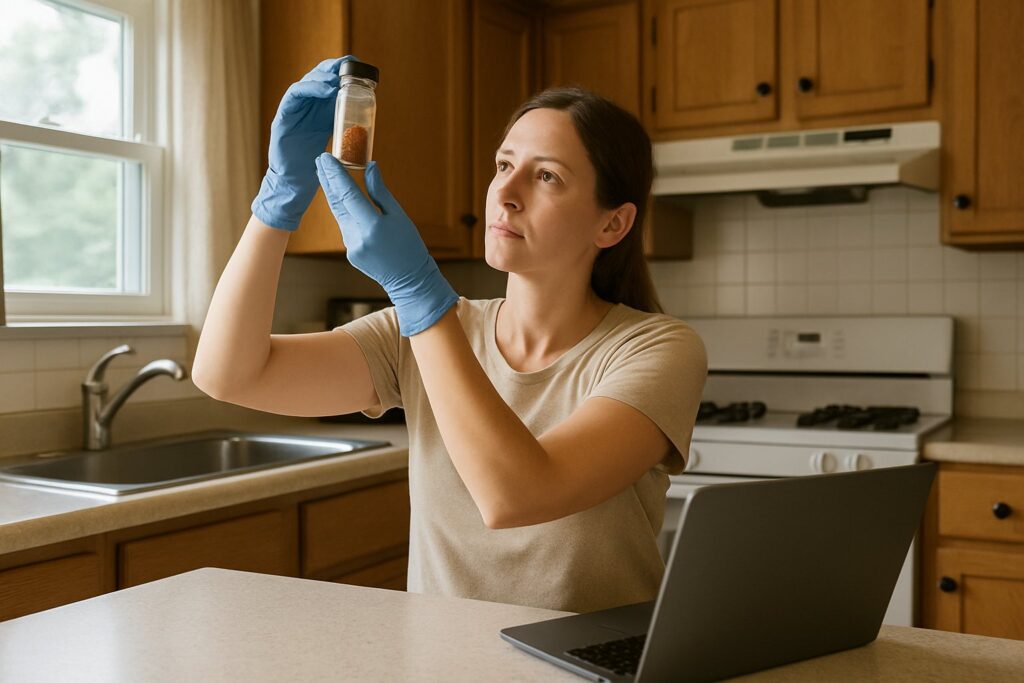
    A woman checking a spice jar at her kitchen counter

    In short: in late 2023, WanaBana, Schnucks and Weis cinnamon applesauce pouches were recalled after cinnamon from Ecuador was found to contain lead chromate; the CDC counted 519 confirmed, probable and suspected cases in 44 states, DC and Puerto Rico. Since March 2024, FDA alerts have named ground cinnamon from a series of brands, mostly sold at discount and ethnic grocery stores, with lead from about 2 to over 10 parts per million (ppm). The FDA says to check your pantry, throw away listed products and talk to a health care provider about a blood lead test if you think you or your child were exposed. The FDA’s alert pages are the up-to-date list.

    This guide sums up what the FDA and CDC have published. It is not medical advice. If a child may have been exposed, call your doctor or Poison Control at 1-800-222-1222.

    The 2023 cinnamon applesauce pouch recall

    In late October 2023, WanaBana recalled its apple cinnamon fruit puree pouches after North Carolina health officials traced elevated blood lead levels in four young children to the pouches. On November 9, 2023 the recall was expanded to Schnucks cinnamon-flavored applesauce pouches and variety packs and to Weis cinnamon applesauce pouches.

    According to the FDA’s investigation:

    • The cinnamon came from Negasmart, a supplier in Ecuador, and was used by the manufacturer, Austrofoods. Ecuadorian officials named a cinnamon processor, Carlos Aguilera, as the likely source.
    • Samples of the cinnamon contained up to 5,110 ppm of lead. A recalled pouch sampled at a Dollar Tree store contained 2.18 ppm of lead. The cinnamon also contained high chromium.
    • The FDA confirmed the lead and chromium came from lead chromate, and its leading hypothesis is economically motivated adulteration: the compound may have been added to make the cinnamon weigh more or look brighter.
    • As of March 22, 2024, the CDC counted 136 confirmed, 345 probable and 38 suspected cases, 519 in total, across 44 states, Washington DC and Puerto Rico. The FDA separately received 90 adverse event reports; the two counts use different data and should not be added together.
    • The FDA sent a warning letter to Austrofoods in August 2024 and one to Dollar Tree in June 2024 for failing to pull recalled pouches from shelves. Austrofoods and Negasmart were placed on FDA import alerts.

    The FDA’s advice for the pouches still applies if you find one: do not eat, sell or serve it; open it and empty it into the trash before throwing away the packaging; clean up spills and wash your hands; and if a child may have eaten one, ask a health care provider about a blood lead test.

    The ground cinnamon alerts, 2024 to 2026

    After the pouch recall, the FDA ran a targeted survey of ground cinnamon from discount retail stores. That led to two public health alerts, which it has updated as more products were found.

    March 6, 2024 alert

    The FDA’s first alert named ground cinnamon sold under six brands: La Fiesta, Marcum, MK, Swad, Supreme Tradition and El Chilar, sold at stores including Save A Lot, Patel Brothers, Dollar Tree and Family Dollar. Lead levels ranged from 2.03 to 3.40 ppm. The FDA noted these levels are far lower than the 2,270 to 5,110 ppm in the cinnamon tied to the applesauce pouches, but said prolonged exposure to them may be unsafe.

    July 30, 2024 alert, updated through September 2026

    The FDA published a second alert on July 30, 2024 and has added products several times since. As of its September 28, 2026 update, the alert lists ground cinnamon from these brands, among others:

    Brands in the FDA alert (as of Sept. 28, 2026)
    Lior Gourmet Spices (Galil), Lucky Foods, Venzu Traders, DEVI, BaiLiFeng, Roshni, HAETAE (HT)
    Durra, Wise Wife, Jiva Organics, Super Brand, Asli, El Chilar, Marcum
    SWAD, Supreme Tradition, Compania Indillor Orientale, ALB Flavor, Shahzada, Spice Class, La Frontera

    The FDA’s text describes lead levels of 2.03 to 7.68 ppm, while its product table shows readings up to about 10.7 ppm. Several companies issued their own recalls in 2025 and 2026, including Wise Wife (SLR Food Distribution, September 2025), Durra (Eureka, October 2025), HAETAE (Haitai, October 2025), DEVI (Homeneeds, October 2025) and Lior (Galil Importing, September 2026). Specific lots, sizes and stores are listed on the FDA pages; the brand name alone does not mean every product from that brand is affected.

    The FDA said no illnesses or adverse events had been reported in connection with the ground cinnamon products in the alert. It asks consumers to throw them away and not buy them.

    What the numbers mean

    The figures above are lead concentrations in the spice itself, in parts per million. A teaspoon of cinnamon weighs only a few grams, so the amount eaten in one meal is small. The concern, in the FDA’s words, is that prolonged exposure to these products may be unsafe and could contribute to elevated blood lead levels, especially for children who eat cinnamon often.

    The FDA has not published a single legal limit for lead in spices. For context, its January 2025 guidance for industry set action levels for lead in processed food for babies and young children: 10 parts per billion (ppb) for fruits, most vegetables, mixtures, yogurts, custards and single-ingredient meats, and 20 ppb for single-ingredient root vegetables and dry infant cereals. Those levels apply to packaged baby foods, not to spices, and are not binding, but they show how low the agency aims to keep lead in children’s food under its Closer to Zero plan.

    What consumers should do

    1. Check your pantry. Ground cinnamon keeps for a long time, so the FDA says to look for listed products even if you bought them months ago. Compare the brand, size and lot or date codes with the FDA alert table.
    2. Throw listed products away. Do not use, sell or give them away. If you are not sure whether your cinnamon is affected, the FDA’s advice is the safer path: do not use it.
    3. Think about who ate it. If a child, or someone who is pregnant, used a listed product regularly, talk to a health care provider about a blood lead test. Most people with lead in their blood have no obvious symptoms. See our blood lead test guide.
    4. Report problems. The FDA asks consumers to report illnesses or complaints to the agency; its alert pages explain how.
    5. Keep watching the list. The FDA updates the alert as it finds more products. Its recalls page and the CDC’s list of lead-related recalls are the best places to check.

    Other spices, candies and remedies

    Cinnamon is the spice the FDA has acted on most in recent years, but the CDC warns more broadly that certain spices, imported candies and traditional remedies, such as azarcon and greta, may contain lead. Families who buy spices in bulk, bring them back from trips abroad or receive them from relatives are harder to protect by recalls, because those products may never appear on a US label or recall list.

    The steps are the same: buy from sellers you can trace, keep an eye on FDA alerts, and if a child has been using a product you are unsure about, ask the doctor about testing. Our lead and children page lists other common sources.

    Can you test spices for lead at home?

    We know of no home kit that the FDA or EPA recognizes for testing food or spices. The EPA recognizes certain swab kits only for paint on specific surfaces, such as wood, ferrous metal, drywall and plaster, and the CPSC has found that home swab kits give false results on other materials. A food testing laboratory can measure lead in a spice sample; ask the lab what method it uses and whether it is accredited for metals in food. For most families, checking the FDA list and replacing a doubtful jar costs far less than a lab test.

    For a clear view of what home kits can and cannot do, see home lead test vs lab testing. Other everyday items are covered on our lead in household items hub, including pottery and dishes, toys and jewelry and Stanley cups. For health questions, see lead poisoning.

    Frequently asked questions

    Which cinnamon brands have lead?

    The FDA’s current alert lists ground cinnamon from brands including Lior, Lucky Foods, Venzu Traders, DEVI, BaiLiFeng, Roshni, HAETAE, Durra, Wise Wife, Jiva Organics, Super Brand, Asli, El Chilar, Marcum, SWAD, Supreme Tradition, Compania Indillor Orientale, ALB Flavor, Shahzada, Spice Class and La Frontera, for specific products and lots. Check the FDA alert for the exact items.

    Is cinnamon from major brands safe?

    The FDA has not said that all cinnamon is unsafe; its alerts name specific products. Its survey focused on discount retail stores. There is no way to know the lead level of a given jar without testing, so the practical step is to check the FDA list.

    What should I do if my child ate recalled cinnamon applesauce?

    The FDA says to ask a health care provider about a blood lead test, because most children have no obvious symptoms. If a child has severe symptoms, call 911; for other questions, call Poison Control at 1-800-222-1222.

    Why was there lead in cinnamon?

    In the applesauce case, the FDA found lead chromate and believes it was added on purpose to increase weight or color. For the ground cinnamon alerts, the FDA has not named a single cause; one recalling firm pointed to possibly adulterated raw material or lead naturally present in cinnamon.

    Does cooking remove lead from cinnamon?

    No. Lead is a metal, and heat does not destroy it. The FDA’s advice is simply to throw listed products away.

  • Lead and Children: Risks, Sources, Prevention and Testing

    Lead and Children: Risks, Sources, Prevention and Testing

    Young children are the people most at risk from lead, because they put their hands and toys in their mouths and because their brains and bodies are still developing. The CDC says no safe blood lead level in children has been identified, and that the most effective protection is to remove lead from a child’s surroundings before exposure happens.

    A family eating a healthy meal together

    In short: the main sources are dust from old paint in homes built before 1978, drinking water from lead pipes and fixtures, soil, and some imported foods, spices, candies, remedies, toys and jewelry. The CDC, EPA and American Academy of Pediatrics (AAP) recommend keeping dust down with wet cleaning, washing hands and toys often, using cold tap water for drinking and baby formula, hiring lead-safe certified contractors for work on older homes, and checking recalls. Most children with lead in their blood look healthy, so a blood lead test is the only way to know. Ask your child’s doctor about testing.

    This page summarizes official guidance. It is not medical advice. If you think your child swallowed something containing lead, call Poison Control at 1-800-222-1222, and call 911 for severe symptoms.

    Why children are most at risk

    The CDC says children younger than 6 are more likely to be exposed because of their hand-to-mouth behavior. They crawl, play on floors and put toys, fingers and other objects in their mouths, picking up lead dust and soil along the way. The EPA calls young children “the most vulnerable” for the same reason.

    The harm is also greater in children. The CDC lists damage to the brain and nervous system, slowed growth and development, learning and behavior problems, and hearing and speech problems, and links these to lower IQ, a shorter attention span and doing less well at school; see effects of lead poisoning. Exposure can begin before birth: the CDC says lead can pass from a pregnant person to the baby, including lead stored in the parent’s bones from earlier exposure.

    The CDC estimates that about 500,000 US children have blood lead levels at or above its reference value of 3.5 µg/dL.

    Where children’s lead comes from

    SourceWhy it matters for childrenOur guide
    Paint and dust in homes built before 1978The CDC says homes built before 1978 probably contain lead-based paint; peeling or cracking paint makes dust that children swallow or breathe inIs lead paint dangerous?
    Drinking waterLead can enter water from lead service lines, solder and fixturesLead pipes
    SoilThe CDC lists soil near airports, highways and factories; the EPA adds soil near building wallsLead in soil testing
    Foods, spices, candies, remedies, cosmeticsThe CDC names some imported candies and traditional remedies; the FDA has issued alerts on ground cinnamon and recalled cinnamon applesauce pouchesLead in cinnamon and spices
    Toys and jewelryThe CDC names some imported toys, antique toys and toy jewelryLead in toys and jewelry
    Dishes and potteryThe FDA warns about some traditional and antique glazed potteryLead in pottery and dishes
    A parent’s job or hobbyLead dust can come home on clothes, shoes and tools (CDC, NIOSH)Lead poisoning

    Prevention steps from the CDC, EPA and AAP

    The CDC calls removing lead hazards from a child’s environment before exposure (“primary prevention”) the most effective way to avoid long-term harm. The AAP’s 2016 policy statement on preventing childhood lead toxicity makes the same point, stressing that there is no identified safe blood lead level and that reducing lead in housing, soil, water and consumer products pays off. These are the everyday steps official sources list; lead poisoning causes and prevention covers the same ground for the whole family.

    At home: dust and paint

    • In homes built before 1978, regularly wet-mop floors and wipe windowsills and other flat surfaces; household dust can be a major source of lead (CDC). Use warm water and an all-purpose cleaner, and never mix ammonia and bleach products.
    • Take shoes off at the door so dust and soil stay outside (CDC).
    • Do not sand, scrape or dry-sweep old paint yourself. For repairs, renovation or painting in pre-1978 homes, hire a firm certified under the EPA’s Renovation, Repair and Painting (RRP) Rule, and keep children and pregnant people away from the work area. See lead-safe renovation (RRP).
    • If your home was built before 1978, the CDC recommends having it checked by a licensed lead inspector. See lead paint inspection and find a lead professional.

    Hands, toys and play

    • Wash children’s hands often, especially before eating and sleeping, and after playing outside or with pets (CDC).
    • Wash toys regularly; they can pick up lead from dust and soil (CDC).
    • Cover bare soil, keep children from playing in it, and use doormats so soil is not tracked indoors (EPA). See dust and soil testing.

    Water and baby formula

    • Use only cold tap water for drinking, cooking and making baby formula; hot water can draw more lead from pipes, and boiling does not remove lead (EPA).
    • If water has been sitting in the pipes, run the tap, take a shower or do laundry first to flush it (EPA). How long depends on whether you have a lead service line.
    • Clean faucet aerators regularly, and if you use a filter, choose one certified to reduce lead and replace cartridges on schedule (EPA). See best water filters for lead and how to test water for lead.

    Food, products and work

    • Check FDA alerts and recalls for foods and spices, and CPSC recalls for toys and children’s products. The CDC also advises not letting children play with toys made before 2009, when tighter federal limits for children’s products began to take effect.
    • Be cautious with imported candies and traditional remedies such as azarcon and greta, which the CDC warns may contain lead.
    • If someone in the home works with lead, they should change clothes and shoes before coming home and wash work clothes separately (CDC).

    Diet

    The CDC says a diet rich in iron and calcium is part of follow-up for children with lead in their blood. Diet does not make lead safe or remove it from the home, and supplements should only be used on a doctor’s advice.

    Screening and testing

    Most children with lead in their blood have no obvious symptoms, so testing is how lead is found. Our blood lead test guide covers it in depth; the key rules are:

    • Medicaid: children enrolled in Medicaid must be tested at 12 and 24 months, and between 24 and 72 months if never tested. A risk questionnaire alone does not meet the requirement (CMS).
    • Other children: the CDC recommends testing children at higher risk, including those who live in or visit pre-1978 homes, children from low-income households, children who are immigrants, refugees or recently adopted from other countries, and children exposed through a household member’s job or hobby. The AAP calls for a lead risk assessment at well-child visits at 6, 9, 12, 18 and 24 months.
    • Results: the CDC’s blood lead reference value is 3.5 µg/dL. It is not a safe level; it flags children with more lead than 97.5% of US children aged 1 to 5.

    States set their own rules too, and some require testing of all young children. Ask your pediatrician or state health department.

    Lead in school and child care drinking water

    Children spend many hours a day at school or child care, and both may have older plumbing.

    • EPA 3Ts program. The EPA’s voluntary 3Ts program (Training, Testing and Taking action) gives schools and child care facilities a toolkit for sampling their taps, reading the results and fixing problems.
    • Lead and Copper Rule Improvements (LCRI). Under the EPA’s final rule from October 2024, community water systems must, starting November 1, 2027, compile a list of the schools and licensed child care facilities they serve. In the first five years, they must sample at least 20% of the elementary schools and child care facilities each year, sample secondary schools on request, and share the results with the facility and health officials. States may waive this where an equally strict state or local program exists. Rules can change, so check the EPA and your water system for the current schedule.
    • AAP recommendation. In its 2016 policy statement, the AAP urged state and local governments to make sure water fountains in schools do not exceed 1 part per billion (ppb) of lead. That is a recommendation, not a federal law.

    Ask your school or child care center whether its taps have been tested, when, and where the results are posted. Some states require testing on their own schedule.

    When to call a doctor or Poison Control

    SituationWho to contact
    Severe symptoms such as seizures, repeated vomiting or loss of consciousness911
    Your child swallowed paint chips, a piece of jewelry or a product that may contain leadPoison Control, 1-800-222-1222
    Your home has old paint, lead pipes or recent renovation, or your child used a recalled productYour child’s doctor or local health department, to ask about a blood lead test
    You want your home checkedA certified lead inspector or risk assessor; see find a lead professional

    More on symptoms is on our lead poisoning symptoms page and the lead poisoning hub.

    Frequently asked questions

    What age is lead most dangerous for children?

    The CDC says children younger than 6 are more likely to be exposed because of hand-to-mouth behavior, and Medicaid requires testing at 12 and 24 months because those are ages of high risk. Exposure before birth also matters.

    How can I protect my baby from lead?

    Official steps include wet-cleaning dust in older homes, washing hands and toys, using cold tap water for drinking and formula, hiring RRP-certified contractors for work on pre-1978 homes, and checking recalls. Ask your pediatrician about a blood lead test.

    Do children with lead poisoning look sick?

    Usually not. The CDC says most children with lead in their blood have no obvious immediate symptoms, which is why testing matters.

    Is there lead in school drinking water?

    It can happen when plumbing or fixtures contain lead. Under the EPA’s 2024 rule, water systems must begin sampling elementary schools and child care facilities from November 1, 2027. Ask your school whether it has tested.

    Should I buy a home test to check my child for lead?

    No home kit tests a child. Blood lead tests are done through a doctor, health department or lab. Home kits test surfaces or water, and each has limits; see our lead test kits guide.

  • Blood Lead Test: How It Works and What Your Results Mean

    Blood Lead Test: How It Works and What Your Results Mean

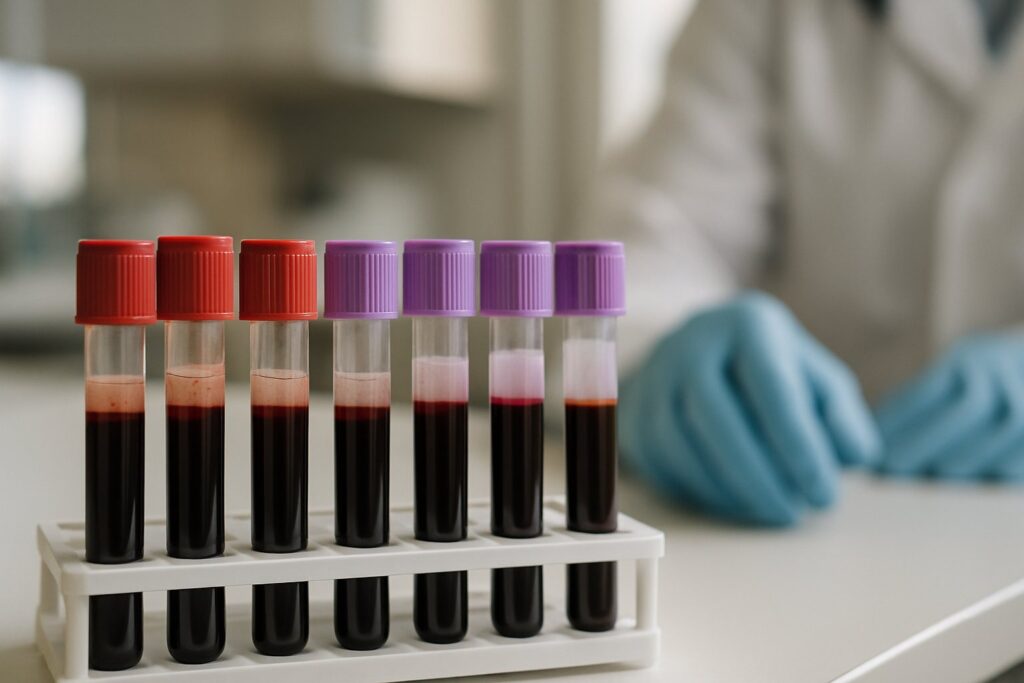
    A blood lead test measures how much lead is in a person’s blood, and it is the only reliable lead poisoning test: the one way to know whether someone has been exposed. The CDC calls it the best way to find out whether a child has lead poisoning, because most children with lead in their blood look and act healthy.

    Blood sample tubes in a laboratory rack

    In short: the test is a small blood sample, taken either from a finger or heel (capillary) or from a vein (venous). Results come in micrograms of lead per deciliter of blood (µg/dL). The CDC’s blood lead reference value is 3.5 µg/dL, in use since October 2021: a child at or above it has more lead than 97.5% of US children aged 1 to 5. A high finger-stick result should be confirmed with a venous test. Children on Medicaid must be tested at 12 and 24 months, and between 24 and 72 months if never tested. Ask your child’s doctor or your local health department about testing.

    This guide explains what official sources say about the test and the numbers. It is not medical advice, and only a health care provider can interpret a result for you or your child. For urgent questions about a possible poisoning, call Poison Control at 1-800-222-1222.

    What a blood lead test measures

    Lead that is swallowed or breathed in enters the bloodstream. A blood lead test reports the concentration in µg/dL. The CDC says any detectable lead means a child has been exposed, and may still be exposed, and it states that no safe level of lead in children has been identified.

    A blood test shows mainly recent and ongoing exposure. It does not show where the lead came from, so a high result is usually the start of a search for the source, not the end of the story. For that search, see our guides on lead paint testing, lead water testing and dust and soil testing.

    Finger-stick vs venous: the two kinds of sample

    Capillary (finger-stick or heel-stick)Venous (blood draw from a vein)
    How it is takenA prick on the finger or heel; a few drops of bloodA standard blood draw from a vein in the arm
    SpeedOften the first step; can give fast results, including point-of-care tests in the officeResults usually take a few days from a lab
    ReliabilityCan read falsely high if lead on the skin gets into the sampleThe CDC says venous samples are more reliable at identifying lower blood lead levels
    Typical useScreeningConfirming a capillary result at or above the reference value; follow-up

    The CDC advises that when a capillary result is at or above the reference value, a venous sample should be collected to confirm it. If the first test was already venous, no second draw is needed for confirmation. That risk of lead on the skin getting into the sample is the main reason a high finger-stick result is not treated as final.

    The CDC blood lead reference value: 3.5 µg/dL

    The blood lead reference value (BLRV) is how the CDC identifies children with more lead in their blood than most US children. It is 3.5 µg/dL. The CDC lowered it from 5 µg/dL to 3.5 µg/dL in October 2021, based on the National Health and Nutrition Examination Survey (NHANES) cycles from 2015 to 2018. It marks the 97.5th percentile of blood lead levels among US children aged 1 to 5, so a child at or above it is in the top 2.5%.

    Two points are easy to miss:

    • The BLRV is not a safe level and not a health-based standard. The CDC’s 2021 report says plainly that no safe blood lead level in children exists. A result below 3.5 µg/dL does not mean lead can be ignored.
    • The value can change. The CDC says it reviews the latest two NHANES cycles every four years to decide whether to update it. The CDC estimates that about 500,000 US children have blood lead levels at or above the current value.

    Who should be tested, and when

    Children on Medicaid

    Federal Medicaid rules require that all children enrolled in Medicaid receive blood lead screening tests at 12 months and 24 months of age. Any child between 24 and 72 months with no record of a previous blood lead test must also be tested. This applies whether coverage comes through Medicaid (title XIX) or CHIP-funded Medicaid (title XXI). A CMS bulletin from 2016 adds that a risk questionnaire alone does not meet the requirement; the blood test must actually be done. Medicaid covers point-of-care tests drawn in the doctor’s office.

    Other children

    For children not on Medicaid, the CDC recommends testing children at higher risk. It names children who live in or often visit homes or buildings built before 1978, children in low-income households, children who are immigrants, refugees or recently adopted from other countries, and children exposed through a household member’s job or hobby. The American Academy of Pediatrics’ Bright Futures schedule calls for a lead risk assessment at the 6, 9, 12, 18 and 24 month well-child visits, followed by a blood test when the assessment shows risk. Many states set their own rules, sometimes universal testing at certain ages, so ask your pediatrician or state health department what applies where you live.

    Adults and pregnancy

    Adults can be tested too, usually when a doctor suspects exposure from work, a hobby, a home renovation or a contaminated product. NIOSH advises anyone who works with lead to tell their doctor. During pregnancy, the CDC says lead can pass to the baby, and its guidance asks providers to look for the source of exposure when a pregnant or breastfeeding person’s level is 5 µg/dL or higher. If you are pregnant and think you may have been exposed, ask your provider about a test.

    Where to get a lead poisoning test and what it costs

    The CDC says health care providers and most local health departments can test for lead. Many private insurance plans cover it, and Medicaid covers it for enrolled children. We do not list prices because they vary by lab, insurer and state; ask your provider or health department before the test.

    Home swab kits and water kits do not test people. They are for surfaces or water, and our lead test kits hub explains what each kind can and cannot do.

    What your child’s results mean: the CDC follow-up table

    The CDC publishes recommended actions for health care providers based on a child’s confirmed venous blood lead level. This summary is for understanding the conversation with your doctor, not a substitute for it.

    Venous blood lead levelConfirm a capillary result withinFollow-up testing (CDC)Other actions the CDC lists for providers
    Below 3.5 µg/dLNot neededPer the usual age-based schedule (Medicaid: 12 and 24 months)Education about lead sources, developmental checks, diet review
    3.5 to 9 µg/dL3 monthsEarly follow-up at 3 months, later every 6 to 9 monthsReport to the health department, exposure history, environmental investigation as required, check for iron deficiency, review diet and development
    10 to 19 µg/dL1 month1 to 3 months, later every 3 to 6 monthsSame as above
    20 to 44 µg/dL2 weeks2 weeks to 1 month, later every 1 to 3 monthsAbove, plus full history and exam, environmental investigation and hazard reduction; providers may consult a Pediatric Environmental Health Specialty Unit or Poison Control
    45 µg/dL or higher48 hoursAs soon as possibleUrgent medical evaluation; the doctor decides on treatment, which may include hospital care

    For children above the reference value, the CDC says a doctor may recommend finding and removing lead from the home, a diet rich in iron and calcium, early educational services and repeat testing. Treatment decisions are for the child’s doctor; our lead poisoning treatment page explains what official guidance describes. Do not try home remedies or supplements sold to “remove lead.”

    After a high result: finding the source

    In many states, a child’s elevated result is reported to the health department, which may offer a home visit or an environmental investigation. Medicaid also pays for lead investigations in the homes of enrolled children with elevated levels. You can also hire a certified risk assessor; see find a lead professional and lead paint inspection vs risk assessment.

    Common places to look, depending on your home and habits (our lead poisoning causes and prevention page covers each in more depth):

    More on symptoms and health is on our lead poisoning symptoms page and the lead poisoning hub.

    Frequently asked questions

    What is a normal blood lead level?

    There is no “normal” or safe level. The CDC uses 3.5 µg/dL as a reference value to identify children with more lead than 97.5% of US children aged 1 to 5, and it says no safe blood lead level in children has been identified.

    Is a finger-prick lead test accurate?

    It is a good screening test, but it can read high if lead on the skin gets into the sample. The CDC recommends confirming a capillary result at or above 3.5 µg/dL with a venous blood draw.

    At what age should my child get a blood lead test?

    Medicaid requires tests at 12 and 24 months, and between 24 and 72 months if never tested. For other children, the CDC recommends testing those at higher risk, and the AAP calls for a risk assessment at well-child visits from 6 to 24 months. Ask your pediatrician what applies to your child.

    How long do blood lead test results take?

    Finger-stick tests done in the office can give results quickly. Venous samples sent to a lab usually take a few days, according to the CDC.

    Can I test my own blood for lead at home?

    Lead in people is measured with a blood test through a health care provider, a health department or a lab. Home swab kits are for surfaces such as paint, not for people.

    My child’s level is above 3.5 µg/dL. What happens next?

    The CDC recommends confirming the result with a venous test, then follow-up testing, a search for the source and a review of diet and development. Your doctor and local health department will guide the next steps. If your child has severe symptoms, call 911.

  • Lead Poisoning Symptoms in Children and Adults

    Lead Poisoning Symptoms in Children and Adults

    Lead poisoning symptoms are often vague or missing altogether, which is why so many cases are found only through a blood test. The CDC says most children with lead in their blood have no obvious immediate symptoms, and in adults the signs, such as stomach pain, headaches, tiredness or irritability, look like many other everyday illnesses.

    A doctor talking with an adult patient in a clinic

    In short: when symptoms do appear, official sources list stomach pain and cramping, constipation, nausea, headaches, tiredness, irritability, trouble sleeping, poor appetite and, in young children, learning, behavior and development problems. Very high levels can cause vomiting, a staggering walk, seizures or coma. A blood lead test is the only way to know. If someone has severe symptoms such as seizures or repeated vomiting, call 911. For other worries about exposure, call Poison Control at 1-800-222-1222 or talk to a doctor or your local health department.

    This page explains what the CDC, its worker-safety institute NIOSH and the National Institutes of Health (through MedlinePlus) say about symptoms. It is not a diagnosis and not medical advice. Only a health care provider can tell you what a symptom means for you or your child.

    Why lead poisoning is easy to miss

    Lead builds up quietly. It is swallowed or breathed in as dust, chips, soil or contaminated food and water, and much of the harm happens before anyone notices anything. The CDC states plainly that most children with any lead in their blood have no obvious immediate symptoms, and that no safe blood lead level in children has been identified.

    NIOSH makes the same point about adults: lead symptoms are similar to those of other illnesses and may develop slowly, so lead poisoning can be overlooked. A parent may put a toddler’s crankiness down to teething, and an adult may blame stress or poor sleep for headaches and fatigue. That is why doctors rely on a blood lead test, not on symptoms, to find exposure.

    Signs of lead poisoning in children

    The CDC describes the effects of lead in children mainly in terms of how it affects growing bodies and brains, rather than a short checklist of signs. According to the CDC, lead exposure in children can cause:

    • Damage to the brain and nervous system
    • Slowed growth and development
    • Learning and behavior problems
    • Hearing and speech problems

    The CDC links these effects to lower IQ, a shorter attention span and doing less well in school, and notes evidence that childhood exposure can cause harm that lasts. Our page on the effects of lead poisoning explains the longer-term picture.

    MedlinePlus, the National Library of Medicine’s consumer health site, adds symptoms that families sometimes notice day to day. For young children it lists the loss of developmental skills they had already learned, alongside irritability, aggressive behavior, low appetite and energy, trouble sleeping, constipation, and stomach pain and cramping. It also lists anemia (a low red blood cell count), which a doctor can find with a blood test.

    None of these signs, alone or together, proves lead poisoning. They are common in children for many reasons. What they do mean is that if your child has them and also lives in or visits an older home, or may have been around one of the sources on our lead and children page, it is worth asking the pediatrician about a blood lead test.

    Symptoms in adults

    NIOSH, the CDC’s worker-safety institute, splits adult symptoms into two patterns.

    PatternSymptoms NIOSH lists
    High exposure over a short timeMetallic taste; stomach pain, nausea, vomiting; diarrhea or constipation; dehydration, headache, exhaustion, irritability, weakness; loss of appetite; memory loss; pain or tingling in the hands or feet
    Exposure over a long timeStomach pain, nausea and constipation; depression, irritability and mood or behavior changes; distraction and forgetfulness; higher blood pressure
    Other effects NIOSH listsDecreased lung function; bone or tooth loss; more infections in general; fertility problems in men and women

    MedlinePlus also lists headaches, hearing loss, reduced sensations, difficulty getting pregnant and anemia among the symptoms of lead poisoning, and notes that stomach pain and cramping are usually the first sign of a high, toxic dose.

    Adults most often meet lead at work or through hobbies: construction and renovation of older buildings, battery recycling, metal work, firing ranges, stained glass and similar crafts. NIOSH notes that workers can carry lead dust home on clothes, shoes and tools, exposing their families. If you work with lead, NIOSH advises telling your doctor and your family’s doctors.

    Lead in pregnancy

    The CDC says lead stored in a person’s bones from earlier exposure can be released into the blood during pregnancy, and that lead can pass to the baby. It links lead in the blood during pregnancy to a higher risk of miscarriage, of a baby being born too early or too small, and of harm to the baby’s brain, kidneys and nervous system. If you are pregnant or breastfeeding and think you may have been exposed, talk to your health care provider about testing.

    Signs of very high exposure: when it is an emergency

    MedlinePlus lists the signs of very high lead levels as vomiting, a staggering walk, muscle weakness, seizures and coma. These are rare, but they are emergencies.

    SituationWhat official sources say to do
    Severe symptoms, such as seizures, repeated vomiting or loss of consciousnessCall 911 right away (MedlinePlus)
    Other symptoms that might be from lead, or a child swallowed something that may contain leadCall Poison Control at 1-800-222-1222, free and confidential, any time
    You suspect ongoing low-level exposure (old paint, work dust, a recalled product)Contact your health care provider or local health department; an emergency room visit is usually not needed unless the exposure was a high dose (MedlinePlus)

    Poison Control is staffed by specialists who can tell you whether a situation needs urgent care. Keep the number in your phone.

    The only way to know: a blood lead test

    Because symptoms are unreliable, the CDC calls a blood lead test the best way to find out whether a child has lead poisoning, and the best way to assess a person’s exposure in general. Results are given in micrograms of lead per deciliter of blood (µg/dL). The CDC uses a blood lead reference value of 3.5 µg/dL to flag children whose levels are higher than most US children’s, and says any detectable lead means a child has been exposed.

    The CDC says health care providers and most local health departments can do the test, many private insurance plans cover it, and Medicaid covers it for enrolled children. Children on Medicaid are required to be tested at 12 and 24 months, and between 24 and 72 months if they have never been tested. Our blood lead test guide explains finger-stick and venous tests, what results mean and what follow-up the CDC recommends.

    Do not try to treat suspected lead poisoning at home or with supplements or products sold online. Decisions about care belong to a doctor, who can look at the test results, the source of exposure and the whole picture. Our lead poisoning treatment page explains what official guidance says doctors do.

    When to ask a doctor about testing

    The signs of lead poisoning are easy to miss, so risk matters more than symptoms. The CDC recommends that children at higher risk be tested. It names children who live in or regularly visit homes or buildings built before 1978, children in low-income households, children who are immigrants, refugees or recently adopted from other countries, and children who may be exposed through a household member’s job or hobby. Talk to a doctor if:

    • Your home was built before 1978 and has chipping or peeling paint, or has been renovated recently. See is lead paint dangerous?
    • Your home has a lead service line or you are not sure. See lead pipes.
    • Someone in the household works with lead or has a lead-related hobby.
    • Your child used a recalled product, such as the 2023 cinnamon applesauce pouches. See lead in cinnamon and spices.
    • You use imported spices, candies, traditional remedies, cosmetics or glazed pottery that could contain lead. See lead in pottery and dishes.
    • Your child has any of the symptoms above and you want to rule lead out.

    Finding and removing the source

    A blood test tells you whether someone has been exposed; it does not tell you where the lead came from. When a child’s level is at or above the reference value, the CDC says health departments may help find the source, and doctors may recommend removing lead hazards from the home, a diet rich in iron and calcium, early educational services and repeat testing.

    For the home itself, the first steps are usually checking paint, dust, water and soil. Our guides on lead paint testing, lead water testing and dust and soil testing explain the options, and you can find a certified lead inspector or risk assessor for a full investigation. Where lead comes from and how to keep it out of your home is covered in lead poisoning causes and prevention, and more on health is on our lead poisoning hub.

    Frequently asked questions

    What are the first signs of lead poisoning?

    Often there are none. The CDC says most children with lead in their blood have no obvious immediate symptoms. MedlinePlus notes that stomach pain and cramping are usually the first sign of a high, toxic dose. Only a blood lead test can tell.

    What are the symptoms of lead exposure in adults?

    NIOSH lists stomach pain, nausea, constipation, headaches, tiredness, irritability, mood changes, forgetfulness, higher blood pressure, tingling in the hands or feet and fertility problems, among others. Because they resemble other illnesses, tell your doctor if you may have been exposed.

    Can lead poisoning symptoms go away?

    Symptoms can come and go, which is one reason they are unreliable. The CDC says even low levels can affect children and that some effects can last. Ask a doctor about testing and follow-up rather than waiting to see whether symptoms fade.

    How fast do symptoms appear?

    It depends on how much lead and over how long. NIOSH separates short, high exposures, which can cause symptoms such as stomach pain and vomiting, from long, low exposures, which build up slowly. Many children with lead in their blood show nothing at all.

    Who should I call if I think my child swallowed something with lead?

    Call Poison Control at 1-800-222-1222. If your child has severe symptoms such as a seizure, trouble breathing or repeated vomiting, call 911.

    Is there a home test for lead poisoning?

    Lead in a person is measured with a blood test ordered by a health care provider or local health department. Home swab kits are made for surfaces like paint, not for people. Ask your doctor or health department about blood testing.

  • Lead Service Line Replacement: Rules, Costs and What to Expect

    Lead Service Line Replacement: Rules, Costs and What to Expect

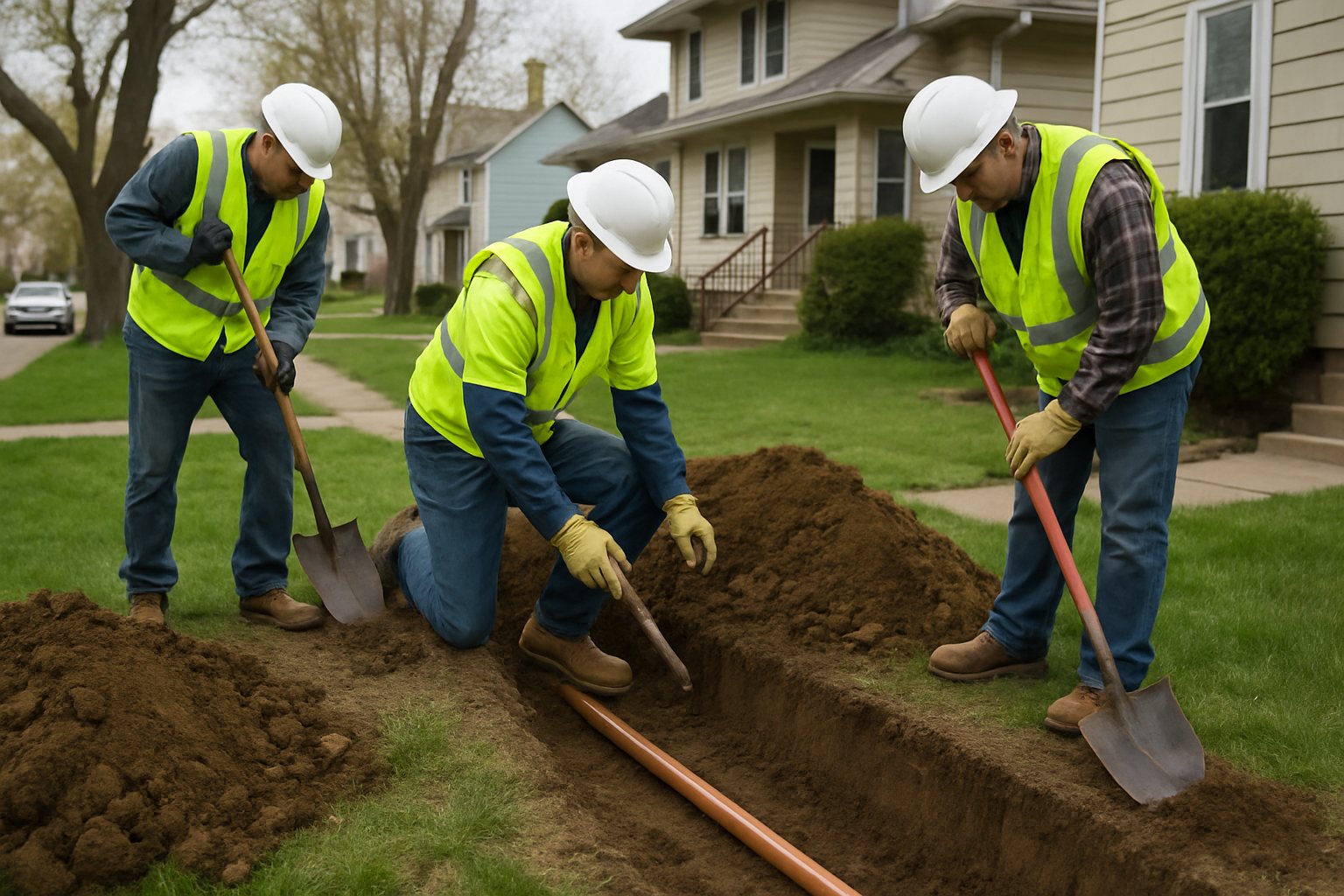
    Lead service line replacement means removing the whole lead pipe that carries water from the main in the street to your home and putting in a new one, usually copper. Under EPA’s 2024 Lead and Copper Rule Improvements, most water utilities must replace every lead and galvanized-requiring-replacement line under their control within 10 years, and federal money is helping many cities do it at little or no cost to the owner.

    A homeowner talking with a utility worker on the sidewalk

    In short: ask your utility how your line is listed in its service line inventory, whether it is on the replacement schedule, and what, if anything, you will pay. Aim for a full replacement, from the main to your house, because EPA’s science advisers found that partial replacements are often followed by short-term spikes in lead. After the work, follow your utility’s flushing instructions, use the certified filter it must provide for six months, and retest your water.

    Who owns which part of the line

    A service line runs from the water main to the point where it meets your home’s plumbing. In many places, ownership is split between the utility and the property owner, and where the dividing point falls depends on your utility and local law. Your utility can tell you where its part ends. Some utilities, like Denver Water, refer to “customer-owned” lead service lines, while Chicago talks about the “public and private sides” of the line.

    EPA’s rule sidesteps the ownership question by focusing on control: a line is under the utility’s control wherever it has legal and physical access to do a full replacement. Utilities must replace lines under their control whoever owns them, and where they need an owner’s consent, they must make a reasonable effort to get it, at least four attempts. If you are a renter, the property owner usually has to agree.

    The EPA 10-year replacement requirement

    EPA finalized the Lead and Copper Rule Improvements (LCRI) in October 2024. Most of its requirements apply from November 1, 2027, and as of this writing EPA’s rule page still lists the 10-year replacement requirement. Here is what it asks of community water systems and other covered systems with lead, galvanized requiring replacement (GRR) or unknown lines:

    RequirementWhat the rule says
    DeadlineReplace lead and GRR lines under the system’s control within 10 years, regardless of its lead test results
    PaceA cumulative average of 10% of those lines per year
    Faster or slowerStates must set shorter deadlines where feasible; systems that would need more than 39 replacements per 1,000 connections a year can get deferred deadlines
    PlanA public replacement plan by November 1, 2027, online for systems over 50,000 people, updated yearly
    InventoryAn updated “baseline” inventory, including connectors, by November 1, 2027; all unknown lines identified by the replacement deadline
    Partial replacementProhibited except during emergency repairs or planned infrastructure work that affects service lines
    After replacementA pitcher filter or point-of-use device certified to reduce lead, with six months of cartridges, and an offer to test your tap 3 to 6 months later

    Utilities must also notify everyone served by a lead, GRR or unknown line every year, and must keep the inventory public. If you are not sure how your line is listed, read lead pipes: how to tell for the scratch and magnet test and how to check your utility’s inventory.

    Why galvanized lines are included

    A galvanized steel line that is, or ever was, downstream of a lead line, or is currently downstream of a line of unknown material, counts as “galvanized requiring replacement.” EPA explains that lead can attach to the inner surface of galvanized pipe and be released into the water over time. EPA’s November 2025 estimate of about 4 million lead service lines nationwide counts GRR lines as lead lines.

    Why partial replacement is risky

    For years, some utilities replaced only their own section and left the owner’s side in place. In 2011, EPA’s Science Advisory Board reviewed the evidence and concluded that partial replacements had not been shown to reliably reduce lead in drinking water in the short term, from days to months and possibly longer. It added that partial replacement is frequently associated with short-term elevated lead after the work, suggesting potential for harm rather than benefit during that period. Full replacement, by contrast, appeared generally effective at long-term reductions, though both kinds can raise lead for a while right after the work.

    That is why the 2024 rule generally prohibits partial replacement and requires extra protections when one does happen during an emergency repair, including public education, filters and an offer to replace the remaining portion. If you are offered a replacement of only part of your line, ask why, and ask what it would take to do the whole thing at the same time.

    Who pays: funding and real programs

    Replacement is expensive. Chicago’s lead program, for example, puts the value of a full replacement at $16,000 to $30,000. Costs vary widely with line length, depth, pavement and local labor, so get your own quote or ask your utility before assuming a figure.

    Federal money: the Bipartisan Infrastructure Law

    The Bipartisan Infrastructure Law (formally the Infrastructure Investment and Jobs Act) invests $15 billion in lead service line replacement through the Drinking Water State Revolving Fund. EPA says 49% of those funds must go to communities as grants or principal forgiveness loans, with no state match required. Importantly for homeowners, EPA says the fund can pay for the entire service line, from the main to where it connects with the home’s plumbing, regardless of who owns the property. Since 2025, EPA allots this money to states using the utilities’ own inventory data. Other sources EPA lists include WIIN Act grants for small and disadvantaged communities, Community Development Block Grants and American Rescue Plan recovery funds.

    You don’t apply to EPA yourself. The money flows through your state to utilities, so your utility or state drinking water program is where to ask.

    Examples of utility programs

    • Denver Water (Colorado): its Lead Reduction Program, launched in 2020, replaces customer-owned lead service lines at no direct cost to customers, paid through water rates and boosted by federal funding. Homes that might have a lead line are enrolled automatically, notices go out typically a month or two before work, and customers get free filter pitchers and cartridges until six months after replacement. Denver Water reported passing 25,000 lines replaced.
    • Chicago (Illinois): Lead Safe Chicago offers a free full replacement for eligible owner-occupants with household income below 80% of area median, free replacement of both the public and private sides when a line breaks or leaks (reported through 311), free replacement for licensed daycares in priority areas, and a permit-fee waiver when homeowners hire their own plumber. Check the city’s site for current income limits and terms.

    Many other cities run similar programs, and the details change as funding arrives. Search your utility’s website for “lead service line” or call customer service.

    What to expect during replacement

    Every utility runs its program a little differently, but the steps usually look like this:

    1. Notice and consent. You get a letter or door hanger and, where the utility needs to work on private property, a consent form. Under the rule, utilities must make at least four attempts to reach owners whose consent is needed.
    2. Site visit. Crews or a contractor check where the line enters your home and where the curb valve and meter are.
    3. Scheduling. Ask how long your water will be off, whether they will dig in the yard or use methods that reduce digging, and how they will restore lawn, sidewalk or driveway.
    4. The work. The old line is disconnected at the main and at the house and a new line is installed; Denver Water, for example, installs copper. Your water will be off while the crew connects the new line.
    5. Filter and instructions. Before the new line goes into service, the utility must provide a certified pitcher filter or point-of-use device with six months of cartridges, plus information on reducing exposure. When work disturbs a lead, GRR or unknown line, the rule also requires instructions for a flushing procedure to remove lead particles.
    6. Follow-up test. The utility must offer to test your tap 3 to 6 months after replacement.

    If you decide to replace your side first with your own plumber, coordinate with the utility before you start. Under EPA rules, when a customer replaces the private side of a lead line, the utility must replace its portion within 45 days, or notify the state and do it within 180 days. Hire a licensed plumber and pull any required permit; for a broader lead assessment of the home, see find a lead professional.

    Flushing and filtering after replacement

    Construction can shake loose lead particles from the old pipe and from your home’s plumbing, and EPA’s advisers found lead can stay elevated for a period after any replacement. The rule requires utilities to give flushing instructions when they disturb a lead, GRR or unknown line, so ask for them and follow them exactly; they vary by utility. In general:

    • Flush as instructed before using the water, typically running cold water through the taps for a set time, and clean faucet aerators afterward, since lead particles can collect in the screens (EPA).
    • Use the certified filter for drinking, cooking and baby formula for at least six months, and change cartridges on schedule. Filters certified to NSF/ANSI 53 for lead are the ones to use; see lead water filters and best water filters for lead.
    • Use cold water only for drinking and cooking. Boiling does not remove lead.
    • Retest. Accept the utility’s follow-up test, or test yourself with a certified lab. Our guide on how to test water for lead covers first-draw samples, and best lead water test kits compares options.
    • Check fixtures. A new service line does not fix old brass faucets or lead solder inside the house. If tests stay high, ask a plumber to look at interior plumbing.
    Pitcher pick

    Brita Elite Replacement Filter, 1 Pack

    • OB06 on NSF's lead listing with Tidal and Pacifica pitchers
    • 120 gallons or about 6 months
    • About $20, seen October 2026
    Check price on Amazon
    Retest after the work

    Tap Score Lead & Copper in Water Test Kit

    • Sample goes to a lab for analysis
    • Prepaid return shipping
    • About $59, seen October 2026
    Check price on Amazon

    Use the filter your utility provides first. If you buy your own, check that it is certified to NSF/ANSI 53 for lead; Brita says the Elite filter’s certification applies in the pitcher models listed on its performance data sheet. If anyone in the home is pregnant or a young child, ask your doctor whether a blood lead test makes sense; more in lead and health.

    For the full picture on lead in water, from testing to filters, start at our lead water testing hub.

    Frequently asked questions

    How long do utilities have to replace lead service lines?

    Under EPA’s Lead and Copper Rule Improvements, most must replace all lead and GRR lines under their control within 10 years, with most requirements starting November 1, 2027. States can set shorter deadlines, and a few systems with very many lead lines can get longer ones.

    Do I have to pay for lead service line replacement?

    It depends on your utility. Some, like Denver Water, replace lines at no direct cost; others offer free replacement to income-eligible owners or share costs. Federal funds can cover the whole line regardless of ownership, so ask your utility what applies to you.

    Can I replace my side of the line myself?

    Hire a licensed plumber rather than doing it yourself, and talk to your utility first so the public side is replaced too. Under EPA rules the utility must then replace its portion within 45 days, or within 180 days after notifying the state.

    Is my water safe right after a lead line is replaced?

    Lead can be higher for a while after any replacement. Follow the flushing instructions, use the certified filter for six months and retest.

    What is a partial lead service line replacement?

    Replacing only one part of a lead line, usually the utility’s side, and leaving the rest. EPA’s 2024 rule generally prohibits it except during emergency repairs or planned infrastructure work, because it is often followed by short-term lead spikes.

  • Lead Pipes: How to Tell If Your Pipes Are Lead and What to Do

    Lead Pipes: How to Tell If Your Pipes Are Lead and What to Do

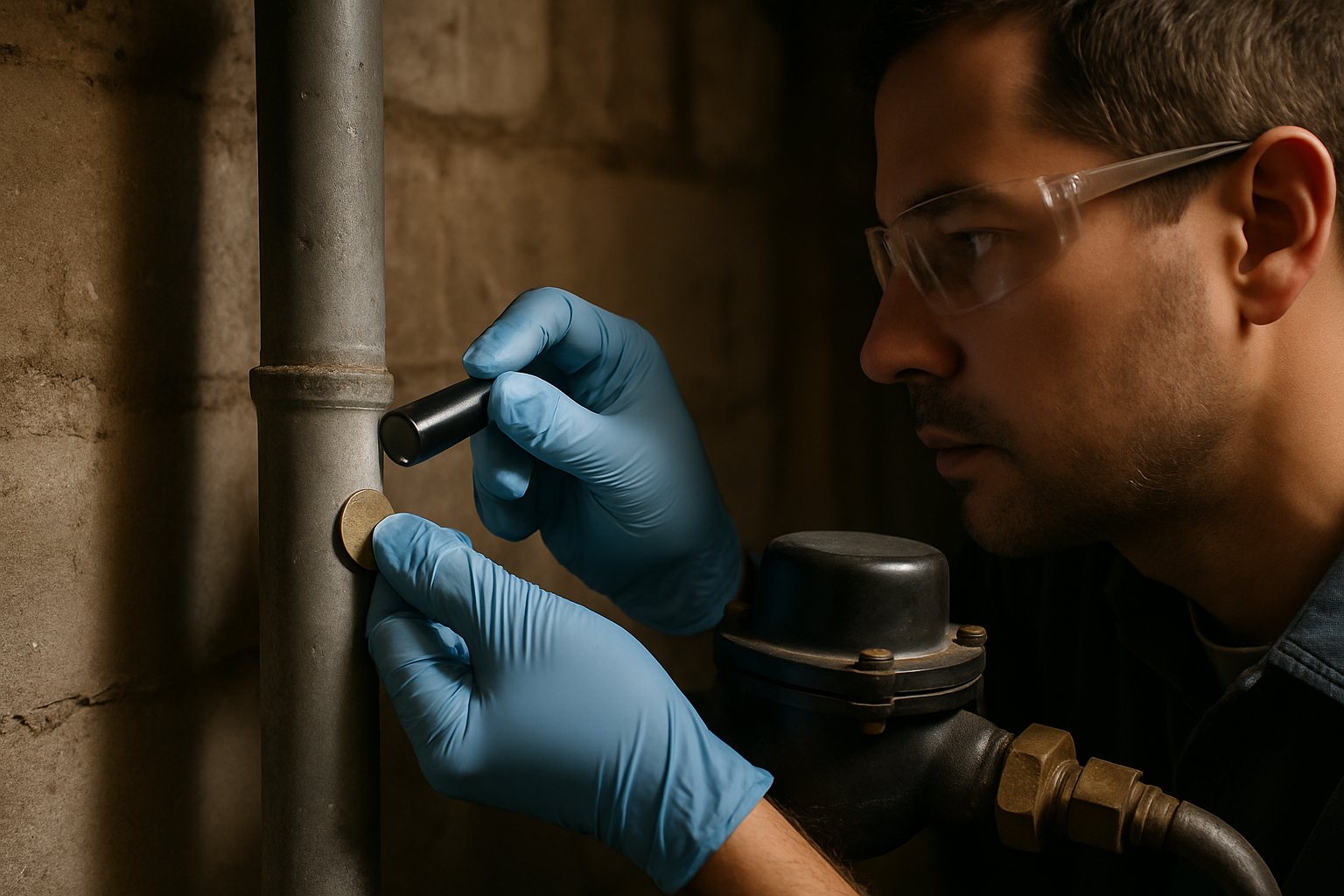
    You can usually tell whether you have lead pipes in about five minutes with a coin or key and a fridge magnet: a lead pipe is dull gray, scratches easily to a shiny silver, and a magnet will not stick to it. Check the pipe where your water line enters the house, look up your address in your utility’s service line inventory, and if either points to lead, test your water and use a certified filter until the line is replaced.

    Old grey lead and newer copper pipes side by side

    In short: the lead pipe that matters most is the service line, the pipe that brings water from the main in the street to your home. EPA’s latest estimate is about 4 million lead service lines in the US. Homes built before 1986 are the most likely to have lead pipes or lead solder, and older brass faucets can add lead too. Utilities had to publish inventories of their service lines by October 2024 and, under EPA’s 2024 rule, must replace lead lines under their control within 10 years in most cases. Your scratch test is a strong hint, not proof; confirm with your utility, a licensed plumber or a lab water test.

    Where lead hides in a home’s plumbing

    EPA says lead enters drinking water when plumbing that contains lead corrodes, and that lead service lines are typically the most significant source where they exist. Lead can sit in several places between the street and your glass:

    WhereWhat to look forWhy it matters
    Service lineThe pipe entering through the basement wall or floor, near the meterUsually the largest source where present (EPA)
    Lead connectorA short piece of pipe that can join the service line to the main, usually out of sightUtilities must now list connectors in their inventories
    Galvanized steel lineGray, hard-to-scratch pipe a magnet sticks toCan hold lead on its inner surface if it ever sat downstream of a lead line
    Lead solderDull gray joints on copper pipes in older homesAllowed until 1986; a common source in homes without lead lines
    Brass faucets and fittingsOlder brass or chrome-plated brass fixtures and valvesEPA names them a common source in homes without lead lines

    How to tell if pipes are lead: the scratch and magnet test

    EPA’s customer guide for identifying service lines, which utilities can hand out to customers, lays out a simple check. You need a key or a coin and a magnet.

    1. Find your water meter. Inside, it is usually in the basement, crawl space or garage. Outside, it sits between the street and the house, on the sidewalk or in the yard.
    2. Find the service line. If the meter is inside, the line enters on the same wall near the meter. If the meter is outside, the line most likely enters at the point closest to it. If you can’t see the pipe, call your utility.
    3. Scratch gently with the coin or key, close to where the pipe comes through the wall or floor.
    4. Try the magnet. See whether it sticks.
    5. Take a photo. EPA’s template suggests utilities let customers send in a picture of the pipe, whatever they find, so the utility can verify it.
    Pipe materialAfter scratchingMagnet
    LeadShiny silver; soft and easy to scratchDoes not stick
    CopperPenny color; may have a green to dark brown filmDoes not stick
    Galvanized iron or steelStays silver or gray; hard to scratchSticks
    PlasticUsually white or gray (other colors exist)Does not stick

    Notice that a magnet does not stick to copper either, so the color of the scratch is what separates lead from copper. Be gentle: you only need to expose a small patch, and you should never dig into a pipe hard enough to damage it. EPA also offers an interactive version of this check called Protect Your Tap, at epa.gov/pyt, in English, Spanish and Portuguese.

    Limits of a home check

    The scratch test only shows the few inches of pipe you can see. A service line can be copper where it enters the house and lead under the yard, or lead on the utility’s side of the curb and copper on yours. Plastic pipe tells you nothing about your faucets and solder, which can still contain lead. So treat a home check as one clue, and combine it with your utility’s records and a water test.

    Check your utility’s service line inventory

    Under EPA’s Lead and Copper Rule Revisions, every community water system had to build an initial inventory of all service lines, whoever owns them, by October 16, 2024. Each line is listed as lead, non-lead, galvanized requiring replacement (GRR) or unknown. Systems serving more than 50,000 people must post the inventory online, and the public version must include a location identifier for each lead and GRR line. Many large utilities offer an address lookup map; Chicago’s, for example, is linked from its Lead Safe Chicago site.

    The 2024 Lead and Copper Rule Improvements (LCRI) go further. Utilities must produce an updated “baseline” inventory, including lead connectors, by November 1, 2027, update it every year, and resolve every “unknown” line by their replacement deadline. Customers served by a lead, GRR or unknown line must be notified every year, and the notice has to explain how to tell the utility if you think your line is listed wrong. Under the improved rule, utilities must respond to those inquiries within 60 days.

    If your line is listed as “unknown,” your scratch test and photo can help the utility classify it. If it is listed as lead or GRR, ask when it is scheduled for replacement and whether there is any cost to you.

    Which homes are most likely to have lead pipes?

    Age and location are the best predictors. EPA says lead pipes are more likely in older cities and homes built before 1986. That was the year Congress amended the Safe Drinking Water Act to limit “lead free” pipes to no more than 8% lead and solder and flux to no more than 0.2%. In 2011, the Reduction of Lead in Drinking Water Act lowered the limit for pipes, fittings and fixtures to a weighted average of 0.25% lead on surfaces that touch water. EPA’s 2020 rule required makers and importers to certify their products meet that standard, with certification required since September 1, 2023.

    Lead service lines are not spread evenly. EPA’s November 2025 update, based on utilities’ own inventories, counts about 3 million reported lead service lines plus about 1 million “unknown” lines predicted to be lead, for an estimated 4 million nationwide. That replaced an earlier estimate of about 9 million, which some groups, including NRDC, have questioned. Chicago’s lead program site notes that service lines there were mostly made of lead until 1986.

    Lead solder and brass fixtures

    Even with a copper or plastic service line, an older home can have lead inside. EPA says that in homes without lead service lines, the most common problems are brass or chrome-plated brass faucets and plumbing with lead solder. Solder joints are hard to judge by eye, and you should not scrape them. If your copper plumbing predates 1986 or your faucets are old brass, a lab water test is the practical way to find out whether they are adding lead. Replacing an old kitchen faucet with a certified lead-free model is one of the simpler fixes a plumber can make.

    I think I have lead pipes. What now?

    1. Call your utility. Report what you found, ask how your line is listed and when it will be replaced, and ask about free testing and filters. Some utilities, such as Denver Water, provide free filter pitchers to customers with a known or suspected lead line.
    2. Test your water with a certified lab. Our guide on how to test water for lead explains first-draw sampling, and best lead water test kits compares the options.
    3. Filter drinking and cooking water with a filter certified to NSF/ANSI 53 for lead (EPA’s consumer tool also looks for NSF/ANSI 42 Class I particulate reduction). See lead water filters and best water filters for lead.
    4. Use cold water only for drinking, cooking and baby formula, and run the tap before use when water has been sitting. EPA says boiling does not remove lead.
    5. Clean faucet aerators regularly, since lead particles can collect there.
    6. Plan for replacement. Read lead service line replacement for who pays, how it works and what to do afterward.
    7. Ask about health. If children or anyone pregnant live in the home, talk to your doctor about a blood lead test. More in lead and health.
    Pitcher pick

    Brita Elite Replacement Filter, 1 Pack

    • OB06 on NSF's lead listing with Tidal and Pacifica pitchers
    • 120 gallons or about 6 months
    • About $20, seen October 2026
    Check price on Amazon
    Mail-in lab test

    Tap Score Lead & Copper in Water Test Kit

    • Sample goes to a lab for analysis
    • Prepaid return shipping
    • About $59, seen October 2026
    Check price on Amazon

    Brita says its Elite filter’s NSF/ANSI 53 lead certification applies in the pitcher models listed on its performance data sheet, so check your pitcher. A mail-in kit is a convenient way to reach a lab; your utility or state-certified lab may test for less.

    Replacing lead pipes

    Filters and flushing reduce exposure, but removing the lead is the lasting fix. Under the LCRI, utilities must fully replace lead and GRR service lines under their control within 10 years in most cases, with most requirements starting November 1, 2027. EPA’s rule generally bans partial replacements, where only one side of the line is changed, except during emergency repairs or planned infrastructure work, because cutting a lead line can release lead for a period afterward.

    Federal money is available: the Bipartisan Infrastructure Law put $15 billion into the Drinking Water State Revolving Fund for lead service line replacement, with 49% to be passed on as grants or forgivable loans, and EPA says the funding can cover the entire line from the main to the home’s plumbing regardless of who owns the property. Some cities replace lines at no direct cost; others share the cost with owners. Interior plumbing such as solder and faucets is the owner’s job; for that, hire a licensed plumber and, for a full home assessment, see find a lead professional.

    For everything about water and lead in one place, start at our lead water testing hub.

    Frequently asked questions

    How can I tell if my pipes are lead?

    Gently scratch the pipe where it enters your home with a coin or key and hold a magnet to it. If the scratch turns shiny silver and the magnet doesn’t stick, EPA’s guide says it is likely lead. Confirm with your utility’s inventory or a plumber.

    Are lead pipes in a house still common?

    EPA estimates about 4 million lead service lines remain in the US, based on 2025 inventory data. They are most likely in older cities and in homes built before 1986.

    Is it safe to shower if I have lead pipes?

    EPA considers bathing and showering safe because skin does not absorb lead in water. The concern is water you drink or cook with.

    Do galvanized pipes contain lead?

    Galvanized steel is not lead, but EPA notes that lead can attach to its inner surface if the pipe is or ever was downstream of a lead service line, and be released over time. That is why such lines are classed as “galvanized requiring replacement.”

    Does a water filter make lead pipes safe?

    A filter certified to NSF/ANSI 53 for lead, used and replaced as directed, reduces lead in the water that passes through it. It does not remove the pipe, so keep using it until the line is replaced and a test confirms the fix.

    Who pays to replace a lead service line?

    It depends on your utility and local rules. Some programs, such as Denver Water’s, replace lines at no direct cost to the customer; others share costs. Ask your utility, and see our replacement guide.

  • How to Test Water for Lead: Utility, Lab and Home Kits

    How to Test Water for Lead: Utility, Lab and Home Kits

    The only way to know whether there is lead in your tap water is to test it, because lead has no color, taste or smell. Start by calling your water utility, which may test for free and can tell you whether your home has a lead service line, then send a properly collected sample to a state-certified drinking water laboratory if you need a firm number. EPA puts the cost of a certified lab test at roughly $15 to $100.

    A water sample bottle packed into a mailing box

    In short: ask your utility first, collect a “first-draw” sample from water that has sat in the pipes for at least six hours, and use a certified lab for a result you can act on. Home kits and strips can screen, but they are not a laboratory result. Compare your number with EPA’s lead action level, which is 15 parts per billion (ppb) today and drops to 10 ppb from November 1, 2027, and remember that EPA’s health goal for lead is zero. While you wait, use only cold water for drinking and cooking, run the tap before use, and consider a filter certified to NSF/ANSI 53 for lead.

    Lead in drinking water: official reference points
    051015
    • 0 ppb EPA health goal
    • 5 ppb FDA bottled water limit
    • 10 ppb Action level from Nov 2027
    • 15 ppb Action level today

    Action levels trigger utility action; they are not safe levels. EPA's health goal is zero. Source: EPA, FDA (eCFR)

    Why lead shows up in tap water

    Lead rarely comes from the river, lake or aquifer your utility draws from. EPA explains that it enters drinking water when plumbing materials that contain lead corrode. Where they exist, lead service lines (the pipe from the water main to your house) are typically the biggest source. In homes without one, EPA says the most common culprits are brass or chrome-plated brass faucets and fixtures and copper pipes joined with lead solder.

    That is why results can differ from one house to the next on the same street, and why a utility’s citywide report does not tell you what comes out of your own kitchen tap. EPA says lead pipes are more likely in older cities and in homes built before 1986, the year Congress first limited lead in pipes and solder.

    Step 1: Ask your water utility

    Your utility is the best first call, and it costs nothing. CDC notes that many public water systems will test drinking water for residents on request, and EPA says your supplier may know whether the service line to your home is made of lead. Ask three questions:

    • What is my service line made of? Every utility had to publish a service line inventory by October 16, 2024, listing each line as lead, galvanized requiring replacement, non-lead or unknown. Large systems (over 50,000 people) must post it online.
    • Do you offer free or low-cost lead testing? Some utilities mail kits; Denver Water, for example, offers free water test kits to customers.
    • What did your latest lead sampling show? Your annual Consumer Confidence Report (water quality report) includes the system’s lead results and, for systems with lead lines, how to see the inventory.

    If you are on a private well, there is no utility to call. EPA regulates public water systems, not private wells, so the testing is up to you (see the well section below).

    Step 2: Choose how to test

    There are three ways to test water for lead at home, and they are not equal. Keep them separate in your mind: a quick screen tells you whether to dig deeper, while a lab result is the number you act on.

    MethodWhat you getGood to know
    Utility testA lab result, often freeNot every utility offers it; ask how the sample is collected
    Certified lab or mail-in lab kitA measured number in ppb (µg/L) from a labEPA recommends a certified lab; about $15 to $100 per EPA
    Instant home kit or test stripA color change within a rangeA screen only; it is not a laboratory result

    State-certified drinking water labs

    EPA recommends having water tested by a certified laboratory. Labs are certified for drinking water by your state’s certification program, and EPA keeps a list of state certification contacts; your state or local drinking water authority can also give you a list of certified labs. EPA itself does not test residential water on request. When you call a lab, ask whether it is certified for lead in drinking water, whether it sends bottles and instructions, and what its reporting limit is.

    Mail-in kits vs strips

    A mail-in kit is simply a way to reach a lab: you fill the bottle at home and ship it back for analysis. Instant kits and multi-parameter test strips work at the sink, and they can be handy as a first screen, but a lab measurement is what you need before making decisions about pipes, filters or a child’s exposure. One mail-in maker says it plainly on its own listing: lead matters at levels far below what test strips detect. For a side-by-side look, see home lead test vs lab testing and our picks in best lead water test kits.

    Mail-in lab test

    Tap Score Lead & Copper in Water Test Kit

    • Sample goes to a lab for analysis
    • Prepaid return shipping
    • About $59, seen October 2026
    Check price on Amazon
    Screen + lab option

    Safe Home DIY Lead in Drinking Water Combo Test Kit

    • 5-minute home screen in 3 ranges: 0-4, 5-15, 15+ ppb
    • Second kit for optional lab test (lab fee extra)
    • About $20, seen October 2026
    Check price on Amazon

    Step 3: Collect the sample the right way

    How you collect the water changes the result more than most people expect. EPA advises following the lab’s sampling directions exactly and collecting from a faucet you actually drink from, usually the kitchen cold tap.

    First-draw vs flushed samples

    A first-draw sample is the very first water out of the tap after it has sat unused in the pipes, typically overnight. It shows the worst case, since water picks up lead while it sits. Under EPA’s rules, utility compliance samples are collected after the water has been stagnant for at least six hours, and from November 1, 2027, homes with lead service lines will be sampled at both the first liter and the fifth liter, with the higher result counting. The fifth liter is more likely to be water that sat in the service line itself.

    A flushed sample is taken after running the tap for a set time. Comparing first-draw and flushed results can hint at where lead is coming from: high first-draw but low flushed often points to the faucet or nearby plumbing, while lead that persists after flushing can point further back toward the service line. A lab or your utility can help read the pattern.

    • Do not run the tap or remove and clean the aerator right before a first-draw sample unless the instructions say so; EPA’s rules for utilities prohibit pre-sampling flushing and aerator cleaning instructions, because they lower the result.
    • Use cold water only.
    • Fill the bottle to the line, close it, label it with the time and tap, and ship it as directed.

    Testing well water for lead

    Private wells fall outside EPA’s drinking water rules, and CDC notes that most local health departments have jurisdiction over private wells. Lead in well water usually comes from corrosive groundwater acting on the well’s pump, fittings and household plumbing. CDC’s guidance is to take a tap sample following your state’s approved protocol (or EPA’s, if your state has none) and send it to a certified laboratory, because testing is the only way to confirm whether lead has leached into the water. Your county or state health department can usually point you to labs and sometimes to free or subsidized testing.

    Reading your results

    Labs report lead in parts per billion (ppb), micrograms per liter (µg/L, the same as ppb) or milligrams per liter (mg/L). To convert, 0.010 mg/L equals 10 ppb, and 0.015 mg/L equals 15 ppb. Many reports also show a reporting or detection limit; “not detected” means below that limit, not necessarily zero.

    NumberWhat it isWhat it is not
    0 ppbEPA’s Maximum Contaminant Level Goal (MCLG) for lead, its health-based goalAn enforceable limit
    15 ppb (0.015 mg/L)Today’s action level: if more than 10% of a utility’s samples exceed it, the utility must take extra stepsA “safe” level for your home
    10 ppb (0.010 mg/L)The action level under the 2024 Lead and Copper Rule Improvements, from November 1, 2027A health threshold for individuals

    The action level is a trigger for utilities, measured across the 90th percentile of their samples. It is not a line between safe and unsafe water in one home. EPA and CDC agree there is no known safe level of lead in a child’s blood, and the improved rule requires utilities to tell customers there is no safe level of lead in drinking water. So any detectable lead is worth acting on, especially with babies, young children or a pregnancy in the home.

    What the 2024 Lead and Copper Rule Improvements change

    EPA finalized the Lead and Copper Rule Improvements (LCRI) in October 2024, and most requirements apply from November 1, 2027. Besides the lower 10 ppb action level and first- plus fifth-liter sampling, the rule removes the old 10 ppb “trigger level,” requires a public notice within 24 hours when a system exceeds the lead action level, and requires utilities to replace lead service lines under their control within 10 years in most cases. Utilities must also tell you your own tap results no later than 3 business days after they receive them, whatever the level. If you are curious about your pipes, read lead service line replacement.

    What to do while you wait for results

    You don’t have to wait for a number to lower your exposure. These steps come from EPA and CDC:

    • Use only cold water for drinking, cooking and making baby formula. Hot water can carry more lead.
    • Run the tap before use when water has been sitting. How long depends on your plumbing; EPA suggests asking your utility for local flushing times, and CDC suggests 1 to 2 minutes for households on wells with lead.
    • Do not boil water to remove lead. Boiling does not remove it.
    • Use a certified filter. CDC and EPA point to filters certified to NSF/ANSI 53 for lead and NSF/ANSI 42 for particulate (Class I) reduction. Replace cartridges on schedule and don’t run hot water through them. See lead water filters and best water filters for lead.
    • Clean faucet aerators regularly, since lead particles can collect in the screen (but follow your lab’s instructions before sampling).
    • Bathing and showering are considered safe, according to EPA, because skin does not absorb lead in water.
    Pitcher pick

    Brita Elite Replacement Filter, 1 Pack

    • OB06 on NSF's lead listing with Tidal and Pacifica pitchers
    • 120 gallons or about 6 months
    • About $20, seen October 2026
    Check price on Amazon

    Brita states its Elite filter is certified to NSF/ANSI 53 for lead in specific pitcher models listed on its performance data sheet; check that your pitcher is on the list. For a wider comparison, including under-sink and reverse osmosis systems, see our filter guides.

    If your water tests high

    1. Tell your utility and ask whether your service line is lead and when it is scheduled for replacement. Read how to tell if your pipes are lead.
    2. Switch to filtered or bottled water for drinking, cooking and formula. CDC notes certified bottled water virtually eliminates lead from drinking water, though it can be costly long term.
    3. Talk to your doctor or pediatrician about a blood lead test, especially for children and anyone pregnant. CDC says a blood test is the best way to check for exposure. More in lead and health and lead and children.
    4. Retest after any fix, such as new fixtures or a replaced service line, to confirm it worked.
    5. Get professional help if you need a full home assessment of paint, dust and soil as well as water: find a lead professional.

    For the bigger picture on water, including what utilities must do and how filters compare, start at our lead water testing hub.

    Frequently asked questions

    How much does it cost to test water for lead?

    EPA puts a certified lab test at about $15 to $100. Many utilities test for free on request, so call them before you pay.

    Can I test for lead in tap water at home?

    Yes, as a screen. Instant kits and strips give a quick color reading, but they are not a laboratory result. For a number you can act on, use a certified lab or a mail-in kit that is analyzed by one.

    What is a first-draw sample?

    It is the first water out of a tap after it has sat unused in the pipes, usually at least six hours or overnight. It shows the highest lead you are likely to drink from that tap.

    Is 5 ppb of lead in water safe?

    EPA’s health goal for lead in drinking water is zero, and the 15 ppb (soon 10 ppb) action level is a trigger for utilities, not a safety line. Any detectable lead is worth reducing with cold water, flushing and a certified filter. Ask your doctor if you are concerned about exposure.

    Does boiling water remove lead?

    No. EPA and CDC both say boiling does not remove lead.

    How often should I test?

    Test when you move in, after plumbing work or a service line replacement, and whenever your utility reports a problem. Well owners should follow their state health department’s schedule.

  • Lead-Safe Renovation: The EPA RRP Rule and RRP Certification Explained

    Lead-Safe Renovation: The EPA RRP Rule and RRP Certification Explained

    If someone is paid to disturb paint in a home built before 1978, EPA’s Renovation, Repair and Painting (RRP) Rule says the firm must be lead-safe certified and the work must follow lead-safe practices. That covers remodelers, painters, window installers, plumbers, electricians, handymen and landlords’ maintenance staff, not just “lead” companies. This guide explains who needs EPA RRP certification, the exact size thresholds, the work practices and cleaning check the rule requires, the paperwork you should get, how to check a contractor, and what EPA advises if you do the work yourself.

    A contractor wet-wiping a floor after renovation work

    In short: the RRP Rule (40 CFR part 745, subpart E) applies to paid renovation that disturbs painted surfaces in pre-1978 housing and in child-occupied facilities such as preschools. The firm needs EPA (or state) certification, and each job needs a certified renovator. Small jobs that disturb 6 square feet or less of paint per room inside, or 20 square feet or less outside, are exempt, but window replacement, demolition and prohibited practices are never exempt. The firm must hand out the Renovate Right pamphlet, contain the work area, clean up and verify the cleaning, and keep records for 3 years. Homeowners working on their own home are generally not covered, but EPA urges them to work lead-safe too.

    Why the RRP Rule exists

    Ordinary renovation is one of the quickest ways to turn old lead paint into lead dust. EPA estimates that about three-quarters of US homes built before 1978 still contain some lead-based paint, and CDC lists sanding, cutting and replacing windows among the common activities that create hazardous lead dust. The rule is designed to keep that dust inside the work area and out of the home afterward. For more on when lead paint becomes a hazard, see is lead paint dangerous?

    What the RRP Rule covers

    Under 40 CFR 745.82, the rule applies to all renovations performed for compensation in target housing and child-occupied facilities. “Renovation” means modifying any existing structure in a way that disturbs painted surfaces. EPA’s contractor page lists remodeling, repair and maintenance, electrical work, plumbing, painting preparation, carpentry and window replacement as examples.

    • Target housing: housing built before 1978. Housing for the elderly or people with disabilities and zero-bedroom units (studios, dorms) are excluded unless a child under 6 lives or is expected to live there.
    • Child-occupied facilities: pre-1978 buildings, or parts of them, visited regularly by the same child under 6 on at least two different days in a week, with each visit at least 3 hours, combined weekly visits at least 6 hours and combined annual visits at least 60 hours. Think day care centers and preschools.
    • Who it applies to: anyone paid to do the work, including sole proprietors. EPA says it also applies to landlords, child care operators working in their homes and house flippers, and property management companies that do this work must be certified firms.

    The 6 and 20 square foot thresholds

    The rule exempts “minor repair and maintenance activities.” In the exact terms of 40 CFR 745.83, that means work that disturbs:

    WhereExempt if it disturbsNever exempt
    Interior6 square feet or less of painted surface per roomWindow replacement, demolition of painted surfaces, prohibited practices
    Exterior20 square feet or less of painted surfaceWindow replacement, demolition of painted surfaces, prohibited practices

    Two catches. First, jobs in the same room within the same 30 days count as one job, so you can’t split a project into small pieces to stay under the line. Second, a single window replacement is covered no matter how little paint it disturbs.

    When testing takes a job out of the rule

    Testing is optional. Without documentation that the affected paint is not lead-based, the firm must follow the rule. The paint can be shown to be below the federal definition (1.0 mg/cm² or 0.5% by weight) in three ways: a written determination by a certified inspector or risk assessor; an EPA-recognized test kit used by a certified renovator; or paint chips collected by a certified renovator and analyzed by an EPA-recognized lab. EPA recognizes three kits: LeadCheck and D-Lead for wood, ferrous metal, drywall and plaster, and the Massachusetts kit for drywall and plaster only, all for negative results only. For your own testing options, see how to test for lead paint and lead paint testing.

    EPA RRP certification: firms and renovators

    There are two separate credentials, and a legal job needs both: a certified firm and a certified renovator assigned to the job. Other workers can be trained on the job by the certified renovator.

    Firm certificationRenovator certification
    How you get itApply online to EPA through its lead program siteTake an initial course from an EPA-accredited training provider
    TrainingNone for the firm itself8-hour initial course, including 2 hours of hands-on learning
    Fee (EPA)$300 for certification or recertification ($20 for tribal firms)Set by the training provider
    How long it lasts5 years; apply to recertify at least 90 days before expiry5 years with a hands-on refresher, 3 years with an online refresher
    Staying certifiedRecertify before expiry4-hour refresher before expiry; hands-on every other time. If it lapses, retake the 8-hour course

    States with their own programs. EPA certification does not apply where a state or tribe runs its own authorized RRP program. When we checked, EPA listed Alabama, Delaware, Georgia, Iowa, Kansas, Massachusetts, Mississippi, North Carolina, Oklahoma, Oregon, Rhode Island, Utah, Vermont, Washington, Wisconsin and the Bois Forte Band of Chippewa. Firms working there apply to that program, and firms working in several states may need more than one certification.

    Before the job: the Renovate Right pamphlet

    No more than 60 days before work starts, the firm must give the owner EPA’s pamphlet Renovate Right: Important Lead Hazard Information for Families, Child Care Providers and Schools, and get a signed acknowledgment or a certificate of mailing sent at least 7 days before the work. If the owner doesn’t live there, an adult occupant gets a copy too. Common-area jobs in apartment buildings need written notice to each affected unit or posted signs, and child care facility jobs require notice to parents and guardians (40 CFR 745.84).

    Lead-safe work practices required on the job

    The work practice standards are in 40 CFR 745.85. In plain terms:

    • Signs. Post warning signs around the work area, in the occupants’ primary language where practicable, until cleaning verification is done.
    • Interior containment. Remove or cover objects, close and cover ducts and doors, and cover the floor with taped-down plastic at least 6 feet beyond the work surfaces (or farther if needed), so no dust or debris leaves the area.
    • Exterior containment. Close doors and windows within 20 feet and cover the ground at least 10 feet beyond the work surfaces; use vertical containment when working within 10 feet of a property line.
    • Prohibited and restricted practices. No open-flame burning or torching of painted surfaces. Sanders, grinders, abrasive blasters and other high-speed paint removal machines only with shrouds or containment and a HEPA vacuum attachment, with no visible dust escaping. Heat guns only below 1,100°F.
    • Waste. Contain waste before it leaves the work area, store it securely at the end of each day, and keep it contained during transport.
    • Cleaning. Collect debris and seal it in heavy-duty bags, remove sheeting carefully, clean walls top to bottom with a HEPA vacuum or damp cloth, HEPA-vacuum all remaining surfaces, wipe them with damp cloths and mop floors with separate wash and rinse water.

    Cleaning verification: how the job is checked

    Interior jobs end with a check against EPA’s cleaning verification card. After a visual inspection, the certified renovator wipes each window sill with a damp disposable cleaning cloth and compares it with the card. A cloth that matches or is lighter than the card passes; a darker one means re-clean and wipe again. Uncarpeted floors and countertops are checked the same way, in sections of no more than 40 square feet each, using a long-handled applicator on floors. If a surface still fails after re-cleaning, the renovator waits at least 1 hour or until it is dry and wipes it with a dry disposable cloth. Exterior jobs need a visual inspection of the work area, sills and ground below. Only then can the warning signs come down.

    A job can use dust clearance testing instead, when the contract or a law requires it: a certified inspector, risk assessor or dust sampling technician takes samples, and the firm re-cleans until results are below EPA’s dust-lead action levels. Cleaning verification is a work check, not a lab measurement. If you want numbers, ask for clearance testing or see lead dust testing.

    Records you should get afterward

    Firms must keep records showing compliance for 3 years after the renovation is completed (40 CFR 745.86). The owner (and an adult occupant, if different) must receive the compliance information with the final invoice or within 30 days of completion, whichever comes first. It typically includes who the certified renovator was, worker training, how the area was contained, how waste was handled, cleaning and cleaning verification results, and any test kit or paint chip results. EPA’s Sample Renovation Recordkeeping Checklist is one way firms provide it. Keep your copy with your home records; it can matter later, for example in a lead paint disclosure when you sell or rent.

    How to check a contractor’s RRP certification

    1. Search EPA’s locator. EPA’s lead-safe certified firm search finds EPA- or state-certified renovation firms near you.
    2. Ask for both certificates. The firm’s certificate and the certified renovator’s course certificate, with expiry dates. In a state-run program, check with that state.
    3. Look for the logo. EPA tells homeowners to look for the Lead-Safe Certified Firm logo, but verify it in the locator.
    4. Ask how they will contain and clean. Expect plastic sheeting, HEPA vacuums, no open flame and cleaning verification.
    5. Expect the pamphlet before work and records after. If neither shows up, ask.

    RRP renovation is not the same as lead abatement, which is a separately regulated activity aimed at ending lead hazards for good, done by certified abatement professionals. EPA explains the difference on its “Lead Abatement versus Lead RRP” page; our lead abatement, lead paint removal and lead paint encapsulation guides cover those options. To find inspectors, risk assessors and certified firms, use find a lead professional. You can report suspected violations through EPA’s lead complaints, tips and violations page.

    Penalties under the RRP Rule

    RRP violations are enforced under the Toxic Substances Control Act. EPA’s inflation-adjusted table in 40 CFR 19.4 lists a maximum civil penalty of $49,772 per violation under TSCA section 16 for penalties assessed on or after January 8, 2025. The figure can change with future adjustments.

    Doing it yourself: EPA’s homeowner guidance

    The RRP Rule generally doesn’t apply when homeowners work on their own home. It does apply if you rent out all or part of it, run a child care center there, or flip houses for profit. EPA’s first recommendation is to hire a lead-safe certified contractor. If you do it yourself, EPA’s do-it-yourself guidance says:

    • Find out first. If the home is pre-1978, assume lead paint unless a certified inspector or risk assessor says otherwise.
    • Set up. Move belongings out, cover floors and vents with plastic, seal doors and windows and turn off forced-air heating and cooling. Keep family members, especially children, out of the work area.
    • Protect yourself. EPA lists an N-100 respirator, disposable coveralls, a painter’s hat, shoe covers, eye protection and gloves. Wash hands and face whenever you stop, and wash work clothes separately. Don’t eat, drink or smoke in the work area.
    • Keep dust down. Mist surfaces before sanding, scraping or cutting, use a HEPA vacuum attachment with power tools, and avoid dry sanding and high-heat tools; a heat gun below 1,100°F or a chemical stripper used per its instructions are EPA’s suggested alternatives.
    • Clean daily and at the end. Bag waste as you go, HEPA-vacuum often, and before anyone comes back mop floors, clean walls, HEPA-vacuum everything and wipe surfaces with wet disposable cloths until they come up clean. Dust-lead testing by a certified professional afterward is an option.
    • Dispose properly. Seal debris in heavy plastic bags and check your state and local disposal rules.

    EPA’s booklet Steps to LEAD Safe Renovation, Repair and Painting (2026 edition, PDF) walks through each step in detail. If anyone in the home is pregnant or a young child lives there, CDC advises keeping them away during renovation; see lead and health and lead and children.

    Tools for a lead-safe project

    A swab kit helps you decide whether to treat a surface as lead paint; a HEPA vacuum is the one tool EPA mentions again and again. The swab’s EPA recognition covers certified renovators testing wood, ferrous metal, drywall and plaster, for negative results only. The vacuum below is sold as a certified HEPA unit; we have not confirmed that any particular model meets the RRP Rule’s HEPA vacuum definition, so ask the maker if you need that for compliance. Both were in stock on Amazon when checked in October 2026:

    Screen before you sand

    LeadCheck Swabs, Instant Lead Test, 8 Swab Pack

    • Seller states detects lead down to 600 ppm
    • Color change on the swab tip
    • About $39, seen October 2026
    Check price on Amazon
    HEPA cleanup

    Dustless Technologies HEPA Wet+Dry Pro Vacuum, 8 Gallon (D1618)

    • Maker: certified HEPA system
    • Wet and dry pickup, 138 CFM
    • About $313, seen October 2026
    Check price on Amazon

    RRP rule questions

    Does the RRP Rule apply to homeowners?

    Generally not when you work on the home you own and live in. It does apply to landlords, house flippers and child care operators working in their homes, and to anyone you pay to do the work.

    How do I get EPA RRP certification?

    Individuals take an 8-hour initial renovator course from an EPA-accredited training provider. Firms apply to EPA online and pay $300. In states with their own programs, apply to the state instead.

    How long does RRP certification last?

    Firm certification lasts 5 years. Renovator certification lasts 5 years with a hands-on refresher or 3 years with an online refresher; refreshers are 4 hours and must be taken before the current certificate expires.

    Is replacing one window covered by the RRP Rule?

    Yes. Window replacement is excluded from the minor repair exemption, so it is covered in pre-1978 homes regardless of how much paint it disturbs.

    What is the difference between RRP and lead abatement?

    RRP covers ordinary renovation and repair done in a lead-safe way. Abatement is a separately regulated activity aimed at ending lead-based paint hazards for good, done by certified abatement professionals. See lead abatement.

  • Is Lead Paint Dangerous? When It Becomes a Hazard and What to Do

    Is Lead Paint Dangerous? When It Becomes a Hazard and What to Do

    Lead paint is dangerous when it turns into chips or dust that people, especially young children, swallow or breathe. Intact lead paint in good condition is usually not an immediate problem, according to EPA, but paint that is peeling, rubbed by friction, knocked by doors or disturbed during renovation can create lead dust you can’t see. This guide explains when lead paint becomes a hazard under EPA and HUD definitions, who is most at risk, and the sensible next steps, without guessing about anyone’s health.

    Intact painted walls in a well-kept older home

    In short: homes built before 1978 may have lead-based paint; EPA estimates about three-quarters of them still contain some. Paint in good shape is usually not a hazard. It becomes one when it is deteriorating (peeling, chipping, chalking, cracking), when it sits on friction or impact surfaces such as windows, doors and stairs, when a child can chew it, or when sanding, scraping or demolition turn it into dust. Young children are the main concern. If you think there’s a problem, get the home tested by a certified professional and talk to your child’s doctor or your local health department.

    Homes likely to have lead-based paint, by year built
    Before 194087%
    1940 to 195969%
    1960 to 197724%
    1978 and laterBanned

    Lead paint was banned for homes in 1978. Source: EPA

    Why lead paint is still in so many homes

    Lead-based paint was banned for residential use in 1978, as CDC notes, so the risk is concentrated in older housing. The older the home, the more likely it is to contain it. EPA gives these estimates for homes likely to have lead-based paint:

    Year builtHomes likely to have lead-based paint (EPA)
    Before 194087%
    1940 to 195969%
    1960 to 197724%
    1978 and laterLead-based paint banned for residential use

    CDC adds that about 29 million housing units have lead-based paint hazards, about 2.6 million of them homes with young children. Having lead paint somewhere in the house is not the same as having a hazard, though, and that distinction drives everything that follows.

    Intact paint vs a lead paint hazard

    EPA’s plain-language guidance says that if lead-based paint is in good shape, it is usually not a problem, and that deteriorating lead-based paint is a hazard that needs prompt attention. Federal rules put more detail on that. Under EPA’s hazard standards (40 CFR 745.65), these count as paint-lead hazards:

    ConditionWhat it meansTypical places
    Deteriorated paintLead-based paint that is peeling, chipping, chalking or cracking, or otherwise damaged or separated from its surfaceAnywhere inside or outside, including porches and siding
    Friction surfaceLead-based paint on a surface subject to abrasion, where nearby dust tests show a dust-lead hazardSome windows, floors, stairs
    Impact surfaceDamaged lead-based paint on a surface hit by repeated sudden force from a related partParts of door frames
    Chewable surfaceLead-based painted surface a young child can mouth, with evidence of teeth marksSurfaces within a young child’s reach, such as sills or railings

    For these rules, “lead-based paint” means paint with at least 1.0 milligram of lead per square centimeter, or 0.5 percent by weight. Paint below that level can still contain some lead; it just isn’t regulated as lead-based paint.

    Why windows and doors matter so much

    Every time an old window slides up and down or a door rubs its frame, a little paint is ground into fine dust. EPA notes that worn lead paint on surfaces with constant friction, such as doors and window sills, can produce chips and dust, and CDC lists windows, doors, floors, porches, stairways and cabinets as common places for lead dust. Settled dust can get back into the air when you sweep, vacuum or walk through, according to EPA. So a house can have a dust problem even when the walls look fine.

    Lead dust and soil

    EPA treats dust and bare soil as their own hazards. For dust, a 2024 EPA rule changed the standard: from January 12, 2026, any reportable level of lead in floor or window sill dust wipes, as analyzed by an EPA-recognized lab, counts as a dust-lead hazard, replacing the old 10 and 100 micrograms per square foot thresholds. EPA’s separate dust-lead action levels, at which it recommends abatement, are 5 micrograms per square foot on floors, 40 on window sills and 100 on window troughs. For soil, bare soil with 400 parts per million of lead or more in a play area, or an average of 1,200 ppm in the rest of the yard, is a soil-lead hazard. Our guides to lead dust testing and lead in soil testing explain how these are measured.

    Renovation: the fastest way to make lead paint dangerous

    Paint that has sat quietly under newer coats for decades can become a hazard in an afternoon. EPA warns that renovation or repair work may create large amounts of lead dust, and that even small dusty projects can pose risks to your family. CDC lists sanding, cutting and replacing windows among the common activities that create hazardous lead dust, and advises keeping children and pregnant women away from housing being renovated.

    That’s why EPA requires contractors working on pre-1978 homes to be lead-safe certified and to follow specific work practices, and why some methods are off-limits, such as open-flame burning of painted surfaces. If you are planning work, read lead-safe renovation and the EPA RRP rule before anyone picks up a sander. If you want the paint gone or sealed for good, see lead paint removal, lead paint encapsulation and lead abatement.

    Who is most at risk

    • Young children. EPA calls young children the main concern because they crawl, play on floors and put fingers, toys and other objects in their mouths. CDC says children younger than 6 are more likely to be exposed because of hand-to-mouth behavior, and that no safe blood lead level in children has been identified.
    • Pregnancy. The EPA/HUD disclosure fact sheet notes that if a pregnant person is exposed to lead, the developing baby can be exposed too, and the federal Lead Warning Statement names pregnant women as a group at particular risk.
    • People doing the work. EPA notes that workers doing demolition, renovation and repair can be exposed and can carry lead dust home on clothes and tools.

    For what lead exposure can do to health and how it is checked, see lead and health, lead and children and blood lead test. Those pages summarize CDC and other official sources; they don’t replace a doctor.

    Signs that lead paint in your home may be a hazard

    You can’t see lead, so these are only reasons to test, not proof of anything:

    • The home was built before 1978, or you don’t know when.
    • Paint is peeling, chipping, cracking or chalky (a white powder comes off on your hand).
    • Old windows stick or leave paint flakes or dust in the sill or trough.
    • You see teeth marks on painted sills or railings.
    • There has been recent sanding, scraping, demolition or window replacement without lead-safe precautions.
    • Exterior paint is flaking onto bare soil where children play.

    What to do next

    These steps come from CDC and EPA guidance. They reduce exposure while you get answers; they are not a fix for lead paint.

    1. Don’t disturb it. No dry sanding, scraping or heat until you know whether it’s lead-based paint and have a lead-safe plan.
    2. Keep children away from damaged paint. CDC advises making sure children can’t reach peeling paint or chewable surfaces painted with lead-based paint.
    3. Clean the wet way. CDC recommends regularly wet-mopping floors and wiping horizontal surfaces, since household dust can be a major source of lead, and washing children’s hands often.
    4. Get the home tested. A certified inspector can tell you where lead-based paint is; a certified risk assessor can tell you whether there are hazards now, including dust and soil. CDC suggests asking your state or local health department about testing paint and dust. Start with our lead paint testing hub and how to test for lead paint, then find certified people through find a lead professional.
    5. Talk to a doctor if you are worried about exposure. CDC says a blood lead test is the best way to find out if a child has been exposed, and to contact your child’s healthcare provider if you think your child has been exposed. Your local health department can help too.
    6. Renting? Tell your landlord in writing about deteriorating paint and contact your local health department. Before you signed, the landlord should have given you a lead disclosure; see lead paint disclosure.

    For questions about lead in the home, the National Lead Information Center answers at 1-800-424-LEAD (5323). If someone may have swallowed paint chips or another lead-containing item, call Poison Control at 1-800-222-1222. In an emergency, call 911.

    Home screening kits: useful, with limits

    A swab test can give you a quick first look at a painted surface, but it is not a lab result and not a risk assessment. EPA recognizes three swab kits (LeadCheck, D-Lead and the Massachusetts kit), and only for tests done by certified renovators or trained professionals, and only to show that regulated lead-based paint is not present. LeadCheck and D-Lead are recognized for wood, ferrous metal, drywall and plaster; the Massachusetts kit for drywall and plaster only. Swabs also say nothing about dust on your floors. A mail-in lab kit analyzes a sample you collect. Compare them in home lead test vs lab testing and best lead paint test kits. These were in stock on Amazon when checked in October 2026:

    Quick look

    LeadCheck Swabs, Instant Lead Test, 2 Swab Pack

    • Seller says pink or red tip means lead
    • For painted wood, metal, drywall per listing
    • About $15, seen October 2026
    Check price on Amazon
    Lab analysis

    Schneider Labs Lead Test Kit: Paint, Dust or Soil

    • One sample of paint, dust or soil
    • Results within 5 business days of arrival (seller)
    • About $35, seen October 2026
    Check price on Amazon

    Is lead paint dangerous? Common questions

    Is lead paint dangerous if it’s painted over?

    Intact paint under newer coats is usually not an immediate hazard, per EPA. It can become one if the top coats fail, if it is on a window or door that rubs, or if someone sands, scrapes or demolishes it. Ordinary paint is not the same as encapsulation; see lead paint encapsulation.

    Is it dangerous to touch lead paint?

    The main exposure routes official sources describe are swallowing chips or dust and breathing in dust. Touching paint leaves dust on hands that can then reach the mouth, which is why CDC stresses regular handwashing for children. Wash your hands after handling old painted items.

    Is lead paint dangerous to adults?

    Young children are the main concern, but adults can be exposed too, especially during renovation work, and exposure during pregnancy can reach the baby. If you have concerns about your own exposure, talk to your doctor.

    Is peeling lead paint outside dangerous?

    Yes, it can be. Deteriorated exterior paint counts as a hazard under EPA’s standards, and flakes can contaminate the soil around the house where children play.

    How do I know if my paint has lead?

    Only testing tells you. A certified inspector using an XRF analyzer or lab analysis of paint chips gives a reliable answer; home swabs are a screening tool. Start with how to test for lead paint.